Private Equity and Venture Capital in Pakistan
US is providing $80 million to create multiple VC and PE funds in Pakistan. These funds will be run by professional fund managers who will be required to manage and raise additional money from other sources to start multiple funds. US Embassy in Islamabad told Express Tribune that they expect that "there will be substantial interest from local, regional and international investors”.
Polish Model:
 The initiative is based on the Polish American Enterprise Fund model which was started with $140 million from US government and has now grown to several billion dollars of investable funds, according to Express Tribune.
US AID's Theodore Heisler said that co-investment was essential in bringing the size of each fund to a level where it can cover operating expenses. The funds will focus on investing in small and medium entrepreneurial companies which, the US Silicon Valley experience has demonstrated, are major drivers of innovation, economic growth and job creation.
History of VC and PE Funds:
In 2010, the Overseas Private Investment Corporation (OPIC) provided JSPE Private Equity Fund II $50 million with a target capitalization of $150 million.
Venture capital investing is not entirely new in Pakistan, according to Venture Beat. Silicon Valley insiders like Reid Hoffman, Mark Pincus and Joe Kraus, along with Draper Fisher Jurvetson (DFJ) and EPlanet Ventures have already started. In 2003, Hoffman, Pincus and Kraus invested in Monis Rahman, a Pakistani-American who left Intel for entrepreneurship. Rahman had successfully launched and sold a start-up in the Bay Area, eDaycare.com.
There are several investment firms in Pakistan, such as BMA Capital, Indus Basin Holdings and JS Private Equity, that offer examples of professionally managed funds. In addition, there are Social Entrepreneurial Funds like Acumen Fund, Dawood Foundation and Kashf Foundation which are very active in the SME sector in Pakistan.
Opportunity in Pakistan:
Pakistan has the world’s sixth largest population, seventh largest diaspora and the ninth largest labor force. With rapidly declining fertility and aging populations in the industrialized world, Pakistan's growing talent pool is likely to play a much bigger role to satisfy global demand for workers in the 21st century and contribute to the well-being of Pakistan as well as other parts of the world.
With half the population below 20 years and 60 per cent below 30 years, Pakistan is well-positioned to reap what is often described as "demographic dividend", with its workforce growing at a faster rate than total population. This trend is estimated to accelerate over several decades. Contrary to the oft-repeated talk of doom and gloom, average Pakistanis are now taking education more seriously than ever. Youth literacy is about 70% and growing, and young people are spending more time in schools and colleges to graduate at higher rates than their Indian counterparts in 15+ age group, according to a report on educational achievement by Harvard University researchers Robert Barro and Jong-Wha Lee. Vocational training is also getting increased focus since 2006 under National Vocational Training Commission (NAVTEC) with help from Germany, Japan, South Korea and the Netherlands.
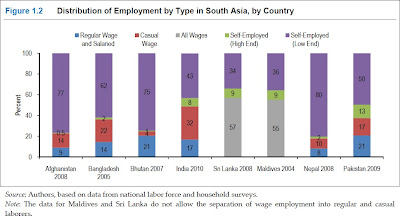
A 2012 World Bank report titled "More and Better Jobs in South Asia" shows that 63% of Pakistan's workforce is self-employed, including 13% high-end self-employed. Salaried and daily wage earners make up only 37% of the workforce. Even if one chooses to consider just the 13% who are high-end self-employed as entrepreneurs, it's still a significant population willing to take risks who can do better with greater availability of venture and private equity money.
A recent Pew Survey of 21 countries reported that 81% of Pakistanis believe in hard work to achieve material success. Americans are the second most optimistic with 77% sharing this belief followed by Tunisians (73%), Brazilians (69%), Indians (67%) and Mexicans (65%).
Conclusion:
Promoting venture capital and private equity investments in Pakistan is a welcome initiative. It has the potential to unleash funding of new profitable ideas in small and medium size entrepreneurial businesses for significant returns to investors while also helping Pakistan achieve much needed economic stimulus with new jobs to lift more people out of poverty.
Related Links:
Haq's Musings
Pakistanis Lead the World in Faith in Hard Work
Entrepreneurial Pakistanis
Financial Services Sector in Pakistan
Venture Capital Investing in Pakistan
Minorities are Majority in Silicon Valley
String Food and Beverage Demand Draws Investments to Pak Agribusiness
Strong Earnings Propel Pak Shares to New Highs
Pakistan's Underground Economy
Tax Evasion Fosters Aid Dependence
Poll Finds Pakistanis Happier Than Neighbors
Pakistan's Rural Economy Booming
Pakistan Car Sales Up 61%
Resilient Pakistan Defies Doomsayers
Polish Model:

US AID's Theodore Heisler said that co-investment was essential in bringing the size of each fund to a level where it can cover operating expenses. The funds will focus on investing in small and medium entrepreneurial companies which, the US Silicon Valley experience has demonstrated, are major drivers of innovation, economic growth and job creation.
History of VC and PE Funds:
In 2010, the Overseas Private Investment Corporation (OPIC) provided JSPE Private Equity Fund II $50 million with a target capitalization of $150 million.
Venture capital investing is not entirely new in Pakistan, according to Venture Beat. Silicon Valley insiders like Reid Hoffman, Mark Pincus and Joe Kraus, along with Draper Fisher Jurvetson (DFJ) and EPlanet Ventures have already started. In 2003, Hoffman, Pincus and Kraus invested in Monis Rahman, a Pakistani-American who left Intel for entrepreneurship. Rahman had successfully launched and sold a start-up in the Bay Area, eDaycare.com.
There are several investment firms in Pakistan, such as BMA Capital, Indus Basin Holdings and JS Private Equity, that offer examples of professionally managed funds. In addition, there are Social Entrepreneurial Funds like Acumen Fund, Dawood Foundation and Kashf Foundation which are very active in the SME sector in Pakistan.
Opportunity in Pakistan:
Pakistan has the world’s sixth largest population, seventh largest diaspora and the ninth largest labor force. With rapidly declining fertility and aging populations in the industrialized world, Pakistan's growing talent pool is likely to play a much bigger role to satisfy global demand for workers in the 21st century and contribute to the well-being of Pakistan as well as other parts of the world.
With half the population below 20 years and 60 per cent below 30 years, Pakistan is well-positioned to reap what is often described as "demographic dividend", with its workforce growing at a faster rate than total population. This trend is estimated to accelerate over several decades. Contrary to the oft-repeated talk of doom and gloom, average Pakistanis are now taking education more seriously than ever. Youth literacy is about 70% and growing, and young people are spending more time in schools and colleges to graduate at higher rates than their Indian counterparts in 15+ age group, according to a report on educational achievement by Harvard University researchers Robert Barro and Jong-Wha Lee. Vocational training is also getting increased focus since 2006 under National Vocational Training Commission (NAVTEC) with help from Germany, Japan, South Korea and the Netherlands.
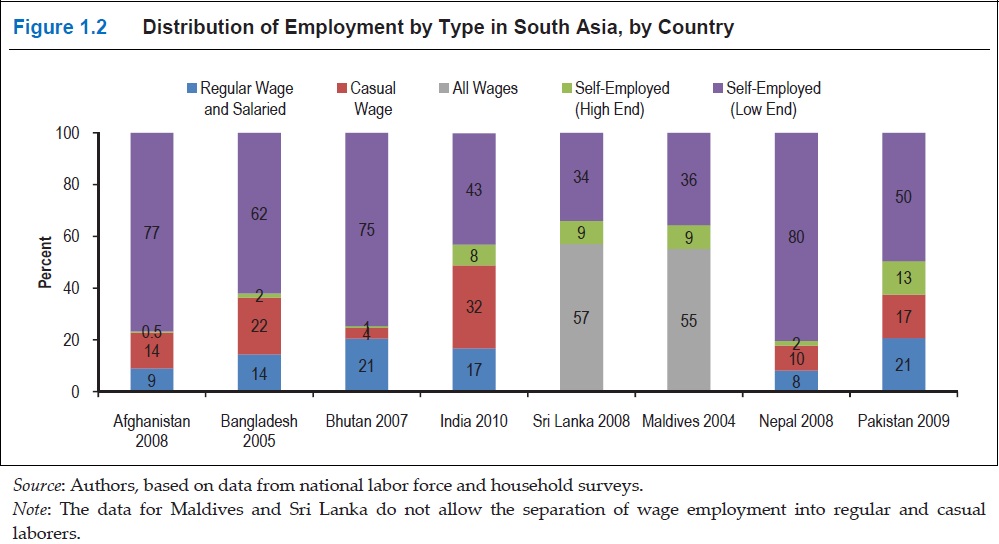
A 2012 World Bank report titled "More and Better Jobs in South Asia" shows that 63% of Pakistan's workforce is self-employed, including 13% high-end self-employed. Salaried and daily wage earners make up only 37% of the workforce. Even if one chooses to consider just the 13% who are high-end self-employed as entrepreneurs, it's still a significant population willing to take risks who can do better with greater availability of venture and private equity money.
A recent Pew Survey of 21 countries reported that 81% of Pakistanis believe in hard work to achieve material success. Americans are the second most optimistic with 77% sharing this belief followed by Tunisians (73%), Brazilians (69%), Indians (67%) and Mexicans (65%).
Conclusion:
Promoting venture capital and private equity investments in Pakistan is a welcome initiative. It has the potential to unleash funding of new profitable ideas in small and medium size entrepreneurial businesses for significant returns to investors while also helping Pakistan achieve much needed economic stimulus with new jobs to lift more people out of poverty.
Related Links:
Haq's Musings
Pakistanis Lead the World in Faith in Hard Work
Entrepreneurial Pakistanis
Financial Services Sector in Pakistan
Venture Capital Investing in Pakistan
Minorities are Majority in Silicon Valley
String Food and Beverage Demand Draws Investments to Pak Agribusiness
Strong Earnings Propel Pak Shares to New Highs
Pakistan's Underground Economy
Tax Evasion Fosters Aid Dependence
Poll Finds Pakistanis Happier Than Neighbors
Pakistan's Rural Economy Booming
Pakistan Car Sales Up 61%
Resilient Pakistan Defies Doomsayers


Comments
The Pentagon quietly notified Congress this month that it would reimburse Pakistan nearly $700 million for the cost of stationing 140,000 troops on the border with Afghanistan, an effort to normalize support for the Pakistani military after nearly two years of crises and mutual retaliation.
The biggest proponent of putting foreign aid and military reimbursements to Pakistan on a steady footing is the man President Barack Obama is leaning toward naming as secretary of state: Senator John Kerry, Democrat of Massachusetts. Mr. Kerry, the chairman of the Senate Foreign Relations Committee, has frequently served as an envoy to Pakistan, including after the killing of Osama bin Laden, and was a co-author of a law that authorized five years and about $7.5 billion of nonmilitary assistance to Pakistan.
The United States also provides about $2 billion in annual security assistance, roughly half of which goes to reimburse Pakistan for conducting military operations to fight terrorism.
Until now, many of these reimbursements, called coalition support funds, have been held up, in part because of disputes with Pakistan over the Bin Laden raid, the operations of the C.I.A., and its decision to block supply lines into Afghanistan last year.
The $688 million payment — the first since this summer, covering food, ammunition and other expenses from June through November 2011 — has caused barely a ripple of protest since it was sent to Capitol Hill on Dec. 7.
The absence of a reaction, American and Pakistani officials say, underscores how relations between the two countries have been gradually thawing since Pakistan reopened the NATO supply routes in July after an apology from the Obama administration for an errant American airstrike that killed 24 Pakistani soldiers in November 2011.
-----------
Despite the easing of tensions in recent months, there are still plenty of sore spots in the relationship.
Lt. Gen. Michael D. Barbero, who heads the Pentagon agency responsible for combating roadside bombs, known as improvised explosive devices, or I.E.D.’s, told a Senate hearing last week that Pakistan’s efforts to stem the flow of a common agricultural fertilizer, calcium ammonium nitrate, that Taliban insurgents use to make roadside bombs had fallen woefully short.
“Our Pakistani partners can and must do more,” General Barbero told a Senate Foreign Relations subcommittee hearing.
American officials have also all but given up on Pakistan’s carrying out a clearing operation in North Waziristan, a major militant safe haven.
“Pakistan’s continued acceptance of sanctuaries for Afghan-focused insurgents and failure to interdict I.E.D. materials and components continue to undermine the security of Afghanistan and pose an enduring threat to U.S., coalition and Afghan forces,” a Pentagon report, mandated by Congress, concluded last week.
http://www.nytimes.com/2012/12/18/world/asia/pentagon-to-reimburse-pakistan-688-million.html?pagewanted=2&_r=0
Pakistan received the second tranche of $688 million Coalition Support Fund (CSF) from the US on Friday. This second CSF tranche is expected to provide relief to the ailing economy, supporting the country’s macroeconomic indicators positively in short-term.
Analysts said that Pakistan’ depleting foreign exchange reserves have been enhanced with inflows of much-awaited funds dedicated mainly for the expense of military operations in the war against terrorism. This was the second instalment received by the country after it got $1.12 billion in July.
The foreign reserves will be improved along with balance of payment and rupee position against dollar on temporary basis.
The current account balance failed to sustain its surplus position as it turned into a deficit of $365 million in November due to trade imbalance of trade and services that stood at $6.3 billion and $8.2 billion, respectively in the first five months of the current financial year. The rupee, which neared the Rs 100 mark against the dollar, will likely get some respite. The macroeconomic situation will be improved for a quarter with inflows of millions of dollars into the country’s reserves, analysts said.
In the short-term, the country will benefit from the millions of dollars inflows but its impact will not be sustainable for the long-term, they added.
The overall CSF pledged by US government is $2.5 billion in which remaining amount will be expected in future to be received by the country depending on diplomatic relationship with the US government. The persistent inflows are important for the country mainly for the payment of $7.9 billion it borrowed from the International Monetary Fund (IMF), otherwise, the economic situation will get severe and the country will again go to the IMF.
http://www.dailytimes.com.pk/default.asp?page=2012\12\29\story_29-12-2012_pg5_13
Friday, January 11, 2013 - Islamabad—US Ambassador Richard Olson affirmed that the United States will continue to support the development of Pakistan’s entrepreneurs, including through the U.S. Ambassador’s Fund, during a visit to the National University of Sciences and Technology’s (NUST) Technology Incubation Center on Thursday.
“We all know that societies thrive when their people have ample opportunity, and this is why the United States supports young entrepreneurs in Pakistan,” said Ambassador Olson during a tour of NUST’s state-of-the-art Technology Incubation Center.
While at NUST, Ambassador Olson announced that the U.S. Ambassador’s Fund, which supports small-scale, high-impact programs for communities throughout Pakistan, will now also focus on support to Pakistan’s entrepreneurs. The U.S. Embassy also recently unveiled an entrepreneurship program called Khushhali Ka Safar (Journey to Prosperity), which provides support to innovative Pakistani entrepreneurs by connecting them with American investors and mentors, particularly from the Pakistani-American diaspora and academic institutions.
Ambassador Olson highlighted NUST’s future Center for Advanced Studies, which will focus on Pakistan’s energy needs, and is being established together by the Governments of Pakistan and the United States. Three Centers will eventually be established across the country. “These Centers, a five-year, $127 million program funded by the U.S. Agency for International Development, will promote the development of Pakistan’s water, energy, and agriculture sectors through applied research, training, university linkages, and contributions towards policy formation. We look forward to promoting entrepreneurship and innovation through the strong links each center will have with the private sector,” said the Ambassador.
In addition, the United States recently launched the multi-year Pakistan Private Investment Initiative. Drawing on public-private partnerships, this initiative will spur job growth and economic development by expanding access to capital for Pakistan’s small- to medium-sized companies.Another U.S. program, the Pakistan Firms Project, helps to increase the profitability and incomes of small and medium-sized businesses in vulnerable areas by identifying and removing constraints to private-sector job growth in key areas such as agriculture, livestock, minerals, and tourism.
http://pakobserver.net/detailnews.asp?id=191116
KARACHI: Pakistan’s economy has the ability to navigate through choppy waters and the economic potential this country holds encourage all to become a part of the country’s future.
The Governor State Bank of Pakistan (SBP) Yaseen Anwar at Pakistan Navy War College Lahore said while our current economic situation was less than optimal and it was also very far from what might be described as an economic calamity.
Anwar said in 65 years, Pakistan has never gone through an episode of hyperinflation, Pakistan has never defaulted on its international and domestic debts, in fact our economy has grown consistently, but not spectacularly, over the past six decades.
This has been despite periods of international alienation and sanctions, three expensive wars, two hostile fronts, regular political upheaval, social unrest, sharp increases in the price of oil, and much, much more, he added.
State Bank has always ensured that the financial system of the country remains safe and stable. The robustness of our financial system is a direct consequence of the reforms process and the State Bank’s constant vigilance, he said.
There is a lot that can be improved in our financial system. He called for the development of efficient debt markets, even better regulatory and reporting practices and the broadening of the financial sector’s scope to include largely unbanked sectors of the economy, such as agriculture, small and medium enterprises and housing.
‘Despite this wish-list, the fact remains that our financial system is, by design, secure and does not pose any threat to the economy as a whole,’ he added.
The size of Pakistan’s undocumented economy is by some estimates, as large as the formal economy. The informal economy does not file taxes and while it does absorb a significant chunk of the labour force, it also evades corporate and labour laws, he said.
Although close informal relationships do make the economy more resilient, they do so at a cost to the overall economy, by eroding the ambit of the regulators.
He stressed the need for the greater integration of country’s domestic market with global markets but observed it does not mean that we should not have proper controls and mechanisms in place to safeguard our own interests. ‘Greater integration with financial markets will mean that capital will flow more quickly through our borders. It’s definitely something that will boost the national economy, but, as most East Asian countries learned in the 90s, it can be a double-edged sword.
Therefore having some capital controls in place, which reduce the volatility of capital flows, is a necessary regulation in this day and age, Anwar added.
More effective regulation is the need of the hour for our own economy, he said, adding it is an essential part of what is needed today to get the economy on a track for steady and sustainable growth.
He said the government’s footprint in some sectors of the economy was very large and quite negligible in other sectors.
Such divergence is unhealthy. Effective regulation is sorely lacking in other sectors. The tax machinery can be tightened considerably. One of the country’s most challenging problems today is the size of the fiscal deficit-and a large part of the solution lies in increasing our tax base by enacting regulation that encourages tax compliance, and punishes tax evasion, he added.
The government will need to borrow less money from the central bank. Borrowing from the central bank is popularly known as printing money, he said, adding if government borrowing from the central bank falls, inflation will follow suit.
Therefore, better tax collection is a necessary condition for faster economic growth. And for that we need to have more effective tax regulation, he added.
....
http://www.dailytimes.com.pk/default.asp?page=2013\03\06\story_6-3-2013_pg5_1
Originally founded in California, Startup Grind is an international community with a global presence in more than 40 cities and 20 countries.
Its mission is dedicated to celebrate the success stories of founders and innovators of business startups and encourage entrepreneurship.
The monthly interviews and startup mixers provide a great opportunity to entrepreneurs-in-making to network with ambitious people and benefit from the ‘pearls of wisdom’.
The official launch in Pakistan took place on Friday, the 3rd of May at T2F (The Second Floor).
It was hosted by Mr. Fawaad Saleem, the Chapter Director for Startup Grind and chaired Mr. Farzal Ali Dojki as the guest of honour. Mr. Farzal is the CEO of Next Generation Innovations, a consulting company that specializes in customized IT solutions and often partners with startup businesses to support their launch and operations.
The event started off with tea and networking as professionals across different spectrums of the industry engaged in meaningful networking. Before the interview began, Mr. Farzal gathered the prime issues that plagued the audience’s minds regarding startups.
The concerns focused on lack of funding opportunities, successful team-building, and making the choice between entrepreneurship and employment in the early stages of one’s career.
He concluded his talk with three lessons.
Firstly, as a startup you need to work hard and with dedication.
Secondly, it is important to hire carefully and ‘fall in love’ with the people you are hiring.
Thirdly, in order to launch a startup, it is important to work in a startup first. The learning curve of working in a successful small team is extremely high. One gets the opportunity to engage directly with the customers, take decisions, and explore areas of growth.
http://dawn.com/2013/05/06/startup-grind-launches-in-pakistan/
The United States and the government of Pakistan hosted the ‘US-Pakistan Business Opportunities Conference’ in Dubai, where USAID in association with the Abraaj Group and JS Private Equity Management (JSPE) announced the creation of the ‘Pakistan Private Investment Initiative’ which will launch two new private equity funds focused solely on Pakistan’s dynamic and fast-growing small- and medium-sized businesses.
USAID Administrator Dr Rajiv Shah announced that USAID will provide a seed investment to capitalise the funds which will be matched by Abraaj Group and JSPE with investments of their own, as well as private funds raised from other limited investors.
“We are seeding individual funds with $24 million each. The Abraaj Group and JSPE will match or exceed our commitment. We fully expect them to exceed that contribution,” said Dr Rajiv Shah. “Pooled funds will initially be $100 million which we expect will grow many fold into hundreds of millions of dollars in investment for small and medium businesses.”
The announcement came at the end of the first day of the conference. “By partnering with Abraaj and JS Private Equity Management, USAID capitalises on these companies’ expertise to make smart investment decisions that will grow the Pakistani economy, create jobs, and generate profits for investors who seize the economic opportunities that Pakistan presents,” Shah said.
Speaking at the conference US Ambassador Richard Olson said, “The United States is one of the largest investors in Pakistan, and the US government supports Pakistani business leaders by offering access to finance, facilitating business deals, and strengthening business education.”
“With 190 million potential customers, Pakistan is a huge emerging market opportunity for US companies,” Ambassador Olson observed.
The conference, sponsored by the US government, was attended by 200 American, Pakistani and Emirati businesses including Gillette, Citibank, General Electric, Procter and Gamble, Abraaj Group, Big Bird Group, Coca-Cola, Conoco Phillips, Engro, Estee Lauder, Goldman Sachs, IBM, Monsanto, Nishat Group, and the Saif Group.
http://tribune.com.pk/story/568796/access-to-finance-usaid-launches-private-equity-fund-for-pakistan/
With his new financing scheme for the youth, Prime Minister Nawaz Sharif on Saturday unveiled a plan to enable budding entrepreneurs to run their business ventures.
The Youth Business Loans initiative is the government’s delivery of a promise made during the election campaign. “During the election campaign, I witnessed the vigour and enthusiasm that the youth showed, and promised that if voted to power, the PML-N would empower the youth of Pakistan so they can contribute effectively towards the development of the country,” he said at the launch of the scheme.
The chairperson of the prime minister’s Youth Business Loans scheme, Maryam Nawaz, said the aim was to convert young ‘dependents’ into ‘providers’.
-------------
The scheme is designed to provide subsidised financing at eight percent mark-up per annum for 100,000 beneficiaries through National Bank of Pakistan and First Women Bank.
The total mark up rate would be 15 per cent but the government would pay the remaining seven percent on behalf of the applicants.
Those falling in the age group of 21 and 45 years are eligible to apply for loans from Rs100,000 to Rs2,000,000.
Small business loans with a tenure of up to seven years plus one-year grace period and a debt-equity ratio of 90:10 will be disbursed across the country including Gilgit-Baltistan‚ Azad Jammu and Kashmir and the Federally Administered Tribal Areas.
Youth will have an eight-year payback period with the first year as a grace period for repayment.
http://tribune.com.pk/story/642764/pm-business-loans-scheme-govt-launches-initiative-to-empower-youth/
To promote and assist the local entrepreneurships across the country, the 2015 Pakistan Start-Up Cup, an intensive, nationwide business competition launched here on Saturday.
The Start-Up Cup is locally driven business model competition open to any idea. This innovative community-based approach is designed to increase the quality and quality of entrepreneurs in the community.
The US Embassy in Islamabad and the Islamabad Indus Entrepreneurs (TiE) Chapter, in collaboration with the US Pakistan Women’s Council, launched the 2015 Pakistan Start-Up Cup, an intensive, nationwide business competition. Entrepreneurs selected to participate in Start-Up Cup will receive coaching through multi-day “Build-a-Business” workshops and regular mentoring to help turn their ideas into a commercial reality. Prize money of $10,000, $7,500, and $5,000 will be awarded to the winner and two runners-ups with the best Start Up concept.
At the opening ceremony, Deputy Chief of Mission of the US Embassy in Islamabad Thomas E Williams, said, “Programs like Start Up Cup foster greater inclusiveness in Pakistan’s economy, particularly for women. The entrepreneurial solutions that arise from competitions such as Start-Up Cup foster inclusiveness, grow economies, promote stability, expand the international supply chain, and spread the exchange of ideas.”
Over the course of the seven-month programe, aspiring Pakistani entrepreneurs will learn to design viable business models, develop customers, and launch their start-up business concepts in the marketplace.
This year’s programme will build on the success of last year’s Start-Up Cup, which saw over 400 entrepreneurs compete for one of the top three prizes. Last year’s winning team went on to defeat 170 other entrepreneurs to win the first-ever World Start-Up Cup competition in Yerevan, Armenia.
The 2015 Start-Up Cup in Pakistan will introduce new partnerships with entrepreneurship centres across Pakistan, including the world’s first Women’s Entrepreneurial Centre of resources, education, access, and training for Economic Empowerment (WECREATE) in Islamabad sponsored by the US Department of State in collaboration with the US Pakistan Women’s Council; the Lahore University for Management Science (LUMS) Centre for Entrepreneurship; and Karachi-based technology incubator “The Nest I/O.”
The partnerships between Start-Up Cup and these centres will ensure that newly established businesses receive sustained support and mentoring, essential tools for long-term success. Numerous US Embassy programmes assist Pakistan’s entrepreneurs by increasing their access to financial resources, supporting opportunities for entrepreneurship education, and nurturing an entrepreneurial culture.
There are four base stations for this program, Islamabad, Lahore, Peshawar and Karachi with overall prize money of Rs22.5 million.
During the opening ceremony esteemed businessman and Islamabad TiE Board member Imtiaz Rastgar said, “StartUp Cup has only came to Pakistan two years ago and already tremendous feats have been achieved as new voices and ingenious minds have been brought to the fore. One can only imagine how much advantage this competition will bring as the years progress”.
http://www.dailytimes.com.pk/islamabad/22-Feb-2015/pakistan-s-2nd-annual-start-up-cup-competition-launched
http://www.dawn.com/news/1289957/saudi-arabia-softbank-plan-100-billion-tech-fund-one-of-the-worlds-biggest
Saudi Arabia and Japan's SoftBank Group (9984.T) said they will create a technology investment fund that could grow as large as $100 billion, aiming to create one of the world's largest private equity funds.
The plan is part of a series of dramatic business initiatives launched by Riyadh this year as Saudi Arabia, its economy hurt by low oil prices, deploys huge financial reserves in an effort to move into non-oil industries.
SoftBank's founder and chairman Masayoshi Son, who has built his company into a $68bn telecommunications and tech investment behemoth from a $50,000 start-up, has been seeking to expand in new areas.
The Public Investment Fund (PIF), Saudi Arabia's top sovereign wealth fund, is set to be the lead investment partner and may invest up to $45bn over the next five years while SoftBank expects to invest at least $25bn, the Japanese company said in a statement.
Several other large investors are in talks on their possible participation and could bring the total size of the new fund up to $100bn. The investors were not identified.
"With the establishment of the SoftBank Vision Fund, we will be able to step up investments in technology companies globally. Over the next decade, the SoftBank Vision Fund will be the biggest investor in the technology sector," SoftBank Chairman Masayoshi Son said.
The fund would be managed in Britain by a subsidiary of SoftBank.
Investment power
Saudi Arabia's Deputy Crown Prince Mohammed bin Salman, leading an economic reform drive in the kingdom, has revealed a string of high-profile investment plans this year.
He has said he aims to expand the PIF, founded in 1971 to finance development projects in the kingdom and until this year little known abroad, from $160bn to about $2 trillion, making it the world's largest sovereign fund.
In June, the PIF departed from Saudi Arabia's traditional strategy of low-risk investments and took a step into the tech world by announcing the $3.5bn purchase of a stake in United States ride-hailing firm Uber.
The deal illustrated how Riyadh now hopes to use its investments to develop the economy: Uber is a popular form of transport for Saudi women, who are banned from driving, and is creating badly needed non-oil jobs for Saudi citizens.
SoftBank's tech and telecommunications portfolio ranges from U.S. carrier Sprint (S.N) to a stake in Chinese e-commerce giant Alibaba (BABA.N).
Its $32bn purchase of British company ARM in July established its first major presence in chip making, driven by expectations for a shift to the so-called "internet of things" – networks of connected devices, vehicles and sensors.
Son said earlier this year that he wanted to "cement SoftBank 2.0" by working on unconventional ideas.
Ijara Capital Partners Limited has been granted a license to a private venture capital fund and equity under the newly promoted Private Funds Regulations 2015 by the Securities and Exchange Commission of Pakistan (SECP), reports Dawn Media.
Ijara Capital Partners Limited is the second firm to receive this license. Lakson Investments Ltd. was also granted a similar license a few days ago. The license issued will be valid for a period of three years and the firm will be required to launch the fund within six months of license approval.
CEO of Ijara group Farurukh Ansari told Dawn that the fund will be worth $100 million dollars and is expected to launch in December. The fund will focus on verticals including energy, healthcare, education, infrastructure, fashion and lifestyle.
The fund will be raised by encouraging local and international VCs to invest by sharing insights and information about the business industry and opportunities in Pakistan.
Venture Capital fund shops have started to crop up in the country and deal flow has started too. Just yesterday, while presiding a meeting of information technology leaders in Lahore, Chairman PITB Dr. Umar Saif mentioned that the government is inching close to launching a government-backed venture capital fund in the country. The fund is also expected to be north of $3 million dollars and will be dubbed as ‘Innovation Fund’ because government doesn’t want equity in startups but it wants to accelerate entrepreneurship and encourage local and international investors to put their money in the business industry of Pakistan.
Published on June 6, 2017
LikePAKISTAN’s FIRST VC FIRM22Comment4ShareShare PAKISTAN’s FIRST VC FIRM6
Babar Lakhani
Babar Lakhani
FollowBabar Lakhani
CEO @ Lakson Investments
I am excited to announce that Lakson Investments (“LI”) has been awarded the first VC license in Pakistan.
LI is one of the largest private sector asset managers in Pakistan with over US$300mn under management with a rating of AM2+.
In Q4 2016, LI launched Lakson Investment Private Equity (“LI PE”) , which is led by a senior team of partners who were previously Directors at Goldman Sachs and Abraaj. This PE Fund is currently in pre-launch and expects to be investing by the fall of 2017.
LI is actively seeking to build another high-calibre investment team for Lakson Investments VC (”LI VC”) combining local knowledge with international experience. The Fund will invest alongside entrepreneurs and local businesses to build new enterprises and through investing seed capital, take ideas to the next stage. LI VC will work with LI’s team of over 50 experienced professionals while at the same time, leverage the operational experience of the Lakson Group. Over 14,000 people are employed by Lakson in Pakistan in businesses across sectors such as: Technology (CyberNet & Sybrid), Broadcast and Print Media (Express Media Group), FMCG (Colgate-Palmolive Pakistan), Insurance, and QSR (McDonald’s Pakistan).
Pakistan today has incredible opportunities in the IT space and LI VC is excited to announce that Sybrid will be their key technology partner to review both the IT capabilities of the firms that the Funds invest in and as well, evaluate how IT will create scalable opportunities. Teams and offices will be based around Pakistan in Karachi, Lahore and Islamabad.
https://www.linkedin.com/pulse/pakistans-first-vc-firm-babar-lakhani
business incubators and accelerators – it has quickly evolved
since then.
By 2019, the country had 24 incubators and
accelerators and around 20 key investors
with many funds
catering to early stage start-ups.
https://twitter.com/bilalgilani/status/1385738041575227396?s=20