Dairy Revolution Draws Investors to Pakistan's Agribusiness
US venture investor Tim Draper, Swiss food giant Nestle, and American beverage titan Coca Cola are investing heavily in Pakistan's agribusiness.
Silicon Valley private equity investor Tim Draper, a well-known international venture capitalist, is quietly investing in Pakistan's agribusiness, the largest provider of food commodities in the Middle East, according to San Francisco Examiner.
The share of livestock in Pakistan's agriculture output nearly doubled from 25.3 percent in 1996 to 49.6 percent in 2006, according to FAO. As part of the continuing livestock revolution, Nestle is investing $334 million to double its dairy output in Pakistan, according to Businessweek. Reuters is reporting that the company has already installed 3,200 industrial-size milk refrigerators at collection points across the country to start the kind of cold storage chain essential for a modern dairy industry, and give farmers a steady market for their milk. In another development on the infrastructure front, Express Tribune has reported that Pakistan Horti Fresh Processing (Pvt) Limited has invested in the world's largest hot treatment plant to process 15 tons of mangoes per hour for exports. Hot water treatment will also help reduce waste of fruits and vegetables by increasing shelf-life for domestic consumption.
 The Coca-Cola Company is planning to invest another US$280 million by 2013 in
Pakistan, according to BMI's Q3 2012 Food & Beverage Report for Pakistan. Coke plans to channel the bulk of its
capital expenditures towards increasing the production of its existing
brands as well as expanding its overall beverages portfolio. Coca-Cola
plans to introduce more juices and mineral water in the Pakistani market
over the coming years. This strategy could diversify Coca- Cola’s
presence beyond the carbonates sector and help it secure early footholds
in the higher-value bottled water and fruit juice segments, which boast
tremendous long-term promise.
The Coca-Cola Company is planning to invest another US$280 million by 2013 in
Pakistan, according to BMI's Q3 2012 Food & Beverage Report for Pakistan. Coke plans to channel the bulk of its
capital expenditures towards increasing the production of its existing
brands as well as expanding its overall beverages portfolio. Coca-Cola
plans to introduce more juices and mineral water in the Pakistani market
over the coming years. This strategy could diversify Coca- Cola’s
presence beyond the carbonates sector and help it secure early footholds
in the higher-value bottled water and fruit juice segments, which boast
tremendous long-term promise.

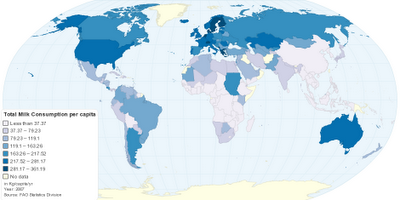
In addition to foreign investors, big name Pakistani companies like Dawood Group's Engro, billionaire industrialist Mian Mansha's Nishat Group and former minister Jahangir Khan Tareen's JK Dairies are placing big bets on food and beverage market in the country. Annual milk consumption in Pakistan reached 230 kg per capita in 2005, more than twice India's per capita consumption, according to FAO.
Business Monitor International expects "Pakistani agriculture sector to reap record harvests for key crops such as rice, sugar and cotton owing to favorable weather in 2011 and the year-on-year increase in crop area following floods in 2010". "We expect the dairy, poultry and wheat industries to be the biggest beneficiaries of increased investment in the agriculture sector", adds BMI's report.
Pakistan is world’s eighth largest consumer of food and food is the second biggest industry in the country, providing 16 per cent employment in production, according to report published in Express Tribune. In addition to rising domestic demand, growth in agribusiness is supplemented by increased exports as Pakistan expands trade with new partners. BMI expects basmati rice to take up a greater share of the trade as production increases. Cotton production to 2015/16: 45.5% to 12.8 million bales. Increased demand from Europe and emerging markets will drive output. BMI also expect an increase in domestic farmers switching from rice and sugar to cotton cultivation. Sugar production to 2015/16: 22.1% to 4.8 million tons. Large-scale consumers such as confectioners, candy makers and soft drink manufacturers account for about 60% of the total sugar demand and will be the main drivers of growth.
Pakistan witnessed a livestock revolution follow Green Revolution. Here's how International Livestock Research Institute puts the dramatic changes in Pakistan's agriculture sector since the mid 1960s:
Since the mid 1960s, investment in Green Revolution technologies – high-yielding varieties of cereals, chemical fertilizers, pesticides, irrigation and mechanization of farm operations – significantly increased cereal crop productivity and output. Success in the crop sector created a platform for diversification of farm and non-farm activities in the rural areas including the livestock sector, especially the dairy sector. Some of the Green Revolution technologies had a direct impact on the dairy sector while others had an indirect impact. Increased cereal productivity and output helped to reduce prices of cereals relative to other commodities in both rural and urban areas. This, along with increased income from high crop-sector growth, created demand for better-quality foods including livestock products. This created market opportunities and incentives for crop producers to diversify into higher-value products, such as milk, meat, vegetables and fruits.
Pakistan has made significant progress in agriculture and livestock sectors showing that it has the potential to feed its people well and produce huge surpluses to fuel exports boom. The continuation of this progress will depend largely on success in making needed public and private investments in energy and water infrastructure and education and health care.
Related Links:
Haq's Musings
FMCG Consumption Boom in Pakistan
Music Drives Coke Sales in Pakistan
World Bank Report on Pakistan Agribusiness
Pakistan's Sugar Crisis
FAO Livestock Sector Brief 2002
Recurring Floods and Droughts
Poll Finds Pakistanis Happier Than Neighbors
Pakistan's Rural Economy Booming
Pakistan Car Sales Up 61%
Resilient Pakistan Defies Doomsayers
Land For Landless Women in Pakistan
Growing Water Scarcity in Pakistan
Political Patronage in Pakistan
Corrupt and Incompetent Politicians
Pakistan's Energy Crisis
Culture of Tax Evasion and Aid Dependence
Climate Change in South Asia
US Senate Report on Avoiding Water Wars in Central and South Asia
Silicon Valley private equity investor Tim Draper, a well-known international venture capitalist, is quietly investing in Pakistan's agribusiness, the largest provider of food commodities in the Middle East, according to San Francisco Examiner.
The share of livestock in Pakistan's agriculture output nearly doubled from 25.3 percent in 1996 to 49.6 percent in 2006, according to FAO. As part of the continuing livestock revolution, Nestle is investing $334 million to double its dairy output in Pakistan, according to Businessweek. Reuters is reporting that the company has already installed 3,200 industrial-size milk refrigerators at collection points across the country to start the kind of cold storage chain essential for a modern dairy industry, and give farmers a steady market for their milk. In another development on the infrastructure front, Express Tribune has reported that Pakistan Horti Fresh Processing (Pvt) Limited has invested in the world's largest hot treatment plant to process 15 tons of mangoes per hour for exports. Hot water treatment will also help reduce waste of fruits and vegetables by increasing shelf-life for domestic consumption.


In addition to foreign investors, big name Pakistani companies like Dawood Group's Engro, billionaire industrialist Mian Mansha's Nishat Group and former minister Jahangir Khan Tareen's JK Dairies are placing big bets on food and beverage market in the country. Annual milk consumption in Pakistan reached 230 kg per capita in 2005, more than twice India's per capita consumption, according to FAO.
Business Monitor International expects "Pakistani agriculture sector to reap record harvests for key crops such as rice, sugar and cotton owing to favorable weather in 2011 and the year-on-year increase in crop area following floods in 2010". "We expect the dairy, poultry and wheat industries to be the biggest beneficiaries of increased investment in the agriculture sector", adds BMI's report.
Pakistan is world’s eighth largest consumer of food and food is the second biggest industry in the country, providing 16 per cent employment in production, according to report published in Express Tribune. In addition to rising domestic demand, growth in agribusiness is supplemented by increased exports as Pakistan expands trade with new partners. BMI expects basmati rice to take up a greater share of the trade as production increases. Cotton production to 2015/16: 45.5% to 12.8 million bales. Increased demand from Europe and emerging markets will drive output. BMI also expect an increase in domestic farmers switching from rice and sugar to cotton cultivation. Sugar production to 2015/16: 22.1% to 4.8 million tons. Large-scale consumers such as confectioners, candy makers and soft drink manufacturers account for about 60% of the total sugar demand and will be the main drivers of growth.
Pakistan witnessed a livestock revolution follow Green Revolution. Here's how International Livestock Research Institute puts the dramatic changes in Pakistan's agriculture sector since the mid 1960s:
Since the mid 1960s, investment in Green Revolution technologies – high-yielding varieties of cereals, chemical fertilizers, pesticides, irrigation and mechanization of farm operations – significantly increased cereal crop productivity and output. Success in the crop sector created a platform for diversification of farm and non-farm activities in the rural areas including the livestock sector, especially the dairy sector. Some of the Green Revolution technologies had a direct impact on the dairy sector while others had an indirect impact. Increased cereal productivity and output helped to reduce prices of cereals relative to other commodities in both rural and urban areas. This, along with increased income from high crop-sector growth, created demand for better-quality foods including livestock products. This created market opportunities and incentives for crop producers to diversify into higher-value products, such as milk, meat, vegetables and fruits.
Pakistan has made significant progress in agriculture and livestock sectors showing that it has the potential to feed its people well and produce huge surpluses to fuel exports boom. The continuation of this progress will depend largely on success in making needed public and private investments in energy and water infrastructure and education and health care.
Related Links:
Haq's Musings
FMCG Consumption Boom in Pakistan
Music Drives Coke Sales in Pakistan
World Bank Report on Pakistan Agribusiness
Pakistan's Sugar Crisis
FAO Livestock Sector Brief 2002
Recurring Floods and Droughts
Poll Finds Pakistanis Happier Than Neighbors
Pakistan's Rural Economy Booming
Pakistan Car Sales Up 61%
Resilient Pakistan Defies Doomsayers
Land For Landless Women in Pakistan
Growing Water Scarcity in Pakistan
Political Patronage in Pakistan
Corrupt and Incompetent Politicians
Pakistan's Energy Crisis
Culture of Tax Evasion and Aid Dependence
Climate Change in South Asia
US Senate Report on Avoiding Water Wars in Central and South Asia


Comments
Russia is seeking direct award of a construction contract for the $13 billion Diamer Bhasha Dam in a government-to-government deal without resorting to international competitive bidding, sources say.
Faced with water and power shortages, Pakistan is looking for funds from China and Russia, who in turn want a government-to-government deal without international bidding.
The government’s search for funds came after multilateral donors asked Pakistan to get a no-objection certificate from India for the dam’s construction.
China and Russia want a similar arrangement for undertaking the Iran-Pakistan gas pipeline project, which has faced fierce opposition from the United States.
According to sources, Pakistan and Russia are likely to strike a final deal on the dam during visit of Russian President Vladimir Putin to Islamabad next month.
“A meeting of Pak-Russia inter-ministerial commission will be held before the visit of Russian president, which will work out a mechanism for financing mega projects,” a government official said.
In a meeting of the Inter-governmental Commission (IGC) held here on Monday, government officials gave a detailed briefing to the Russian team on planned energy projects. However, sources said, Russia made no firm commitment to the dam.
According to the official, it was just a preparatory meeting to discuss different projects, which could be tabled during deliberations with the Russian president.
In the IGC meeting, the Russian side was told that Bhasha Dam was a strategic project with power generation capacity of 4,500 megawatts to overcome the energy crisis. It will have water storage capacity of 8.5 million acre feet to feed the agricultural sector.
Chinese offer
The Chinese government has already offered Pakistan skilled labour for the construction of Bhasha Dam. China has 17,000 skilled workers, who have worked on the giant Three Gorges Dam, which is producing 30,000 megawatts of electricity.
On the other hand, multilateral donors have asked Pakistan to seek a no-objection certificate from India to pave the way for financing the dam, which they say is situated in a disputed territory. Instead, they have offered to finance another project – Dasu hydropower, but the government has rejected the plan and wants to complete Bhasha Dam first.
On Monday, a delegation of the World Bank, headed by Country Director Rachid Benmessaud, called on Federal Water and Power Minister Ahmed Mukhtar and once again offered to finance phase-I of the Dasu project.
Dasu hydropower project is situated 7 km upstream of Dasu village on Indus River and 350 km from Islamabad. The project is located in Kohistan district of Khyber-Pakhtunkhwa.
http://tribune.com.pk/story/435035/diamer-bhasha-dam-russia-wants-to-take-up-project-without-bidding/
The United States on Friday announced a multi-year Pakistan Private Investment Initiative worth $80 million in financial support to promote economic activities in the country.
Drawing on public-private partnerships, this initiative will spur job growth and economic development by expanding access to capital for Pakistan’s small to medium sized companies, according to a statement by the US embassy.
“Pakistan has a wealth of talented entrepreneurs that desperately needs capital to fully realise their potential,” said US Charge d’affaires in Pakistan, Richard E Hoagland.
He said that through this initiative, the United Stated can move beyond the traditional foreign assistance by playing a constructive role to help entrepreneurs expand their businesses, provide new jobs to Pakistan’s fast-growing population, and by improving lives in the country.
He said that market-oriented, commercial solutions which support Pakistan’s economic development have been a priority for the United States.
The US Charge d’affaires said that the “Pakistan Private Investment Initiative” will generate investment funds catalysed by US assistance.
The initiative seeks private or other qualified sources of capital for matching investments and funding management services. The investment funds will make equity investments in promising Pakistani companies, under-served by existing sources of capital.
The Pakistan Private Partnership Initiative welcomes proposals from qualified Pakistani, regional, and international fund managers keen on investments in Pakistan by October 12, 2012, said a statement of from the United States embassy.
http://tribune.com.pk/story/436968/us-announces-80-million-for-pakistan-private-investment-initiative/
Prime Minister Raja Pervaiz Ashraf on Saturday said that Pakistan regarded its relations with the United States as “very important” and that Pakistan valued it as a major development partner.
Ashraf’s remarks came after he held talks with US special envoy to Afghanistan and Pakistan Marc Grossman, who arrived in the Pakistani capital on Friday for talks with top officials.
“The prime minister said that relations between Pakistan and the United States are very important and we value the United States as a major development partner,” a statement issued by Ashraf’s office said.
“We have a shared objective in fighting terrorism and need to cooperate more to get rid of this menace,” the statement said.
Ambassador Grossman said that future relations between Pakistan and the United States should be based on market access and trade.
The US government was working on a bilateral investment treaty to “facilitate” US investment in Pakistan and improve market access, according to the Pakistani statement.
It said that the United States has promised $200 million for the construction of Diamer-Basha dam in northern Pakistan.
Ties between Islamabad and Washington have been rocky for years, and have only just resumed after nosediving following the secret raid that killed Osama bin Laden and an air raid that accidentally killed 24 Pakistani troops.
Washington considers Pakistan’s semi-autonomous northwestern tribal belt as the main hub of Taliban and al Qaeda militants plotting attacks on the West and in Afghanistan.
http://tribune.com.pk/story/437202/pakistan-sees-us-as-major-development-partner-pm-ashraf/
ISLAMABAD — You are going to have to take Pakistan’s newest health fad with a grain of salt. Actually, several tons of it.
A newly opened spa in the capital touts amazing curative powers for a mineral better known as a table seasoning. In fact, the spa’s chief executive, Sabkahat Qadeer Butt, is so convinced of its medicinal magic that he’s created the entire facility from salt.
And not just any salt, but pink salt mined from the foothills of the Himalayas.
Nearly everything in the cave-like space is carved from the rose-hued crystal -- from the bricks in the walls to the tiles of the steam bath, it is all hewn from slabs of salt. Patrons leave their shoes at the door. Even the pink pebbles of the floor are all rock salt, which is absorbed through the skin.
Pakistan is the number one producer of pink rock salt in the world, according to the government’s Ministry of Petroleum and Natural Resources. Butt, the Pakistani businessman who is CEO of the Khaas Health Care and Cure Club in Islamabad, says he used 1,400 tons of the substance to create the spa in the city’s Diplomatic Enclave.
---------
Butt, 48, said salt baths originated as an old Greek method of treatment. Alexander the Great took loads of the stuff back home after conquering parts of modern-day Pakistan, he said. Salt became known as white gold and was even used as currency: “The Greeks would pay their armies in salt. It was the major component of the barter system.”
Some of the historical uses of salt are widely known. It is a natural antiseptic, proponents say, and a natural preservative. Salt has been used to preserve everything from meat and fish to sensitive documents.
But new-age spas like the one in Islamabad tout salt therapy as a veritable cure-all. Pink rock salt contains 84 minerals and can help skin ailments, upper and lower respiratory functions and, when combined with heat, can be used for pain management, Butt said.
In Hollywood, salt wraps and baths are used for quick weight loss when stars need to slim down for roles or to walk the red carpet. “It is also good for high blood pressure,” Butt claimed.
And low blood pressure? Yes, that too. In fact, Butt declared, salt can treat 125 disorders and diseases.
Qutbuddin Kakar, an Islamabad-based doctor who specializes in tropical diseases and is associated with the World Health Organization, said he has heard of people taking salt baths as a cure for skin maladies. But otherwise, he said, “There has been no scientific evidence which shows or proves that pink salt is a cure for so many or all diseases.”
While blanket curative claims are dubious, that hasn’t kept some fad followers from developing an appetite for the blush-tinted condiment. Ordinary table salt costs about 3 cents an ounce in U.S. grocery stores, whereas the pink stuff can fetch $1 an ounce.
There is one catch: Salt disintegrates when exposed to water and steam. So what happens when the spa melts? Not a problem, said Butt. He also owns a salt mine. “If the walls dissolve, I can replace them.”
http://www.washingtonpost.com/world/asia_pacific/in-pakistan-a-pink-salt-spa/2012/09/18/75ea6d0c-ff7a-11e1-b153-218509a954e1_story.html
Vice-Chancellor, University of Veterinary and Animal Sciences (UVAS) Prof Dr Talat Naseer Pasha said that despite lack of a proper mechanism of semen prodcution in the country and around 3.5 million poor semen doses, Pakistan has the best buffalo breed producing 67 percent milk from them.
Talking to APP on Sunday, he said the private sector was producing 3.5 million semen doses against the government's 2.5 million doses. He deplored that it was very alarming that the quality of bulls being used for semen collection was inferior as the private sector was just doing business without covering the aspect of animal genetics.
Whereas the public sector dose after a sample check of around 5,000 doses in the quality lab, it is commercialised. If we provide quality semen to small farmers on their doorsteps it will bring a revolutionary change in the fast growing livestock sector, he added. He said Pakistan had the best buffalo breed in the world and 67 per cent milk was being produced from elite dairy animals. But, he said, there was lack of awareness about the selection of best bulls for breed improvement and absence of progeny testing which was causing low productivity of dairy animals. The VC also highligted major constraints in the livestock sector including lack of genetic improvement, poor nutrition, health constraints, unorganized marketing and lack of human resource at various levels.
Steps to overcome these constraints are vital to upgrade the livstock sector in the country, he added.
http://paktribune.com/business/news/Pakistan-has-best-buffalo-breed-in-world-10392.html
1. Mobile Phones:
KARACHI: Pakistan is a land of opportunities and the credit for this goes to the huge youth population and the rich pool of talent available in the country. These sentiments were expressed by All India Management Association Senior Vice President and Nokia IMEA VP D Shiva Kumar during his recent visit to Pakistan. He was one of the key speakers from India at the two-day management conference between the two countries in Lahore.
http://www.dailytimes.com.pk/default.asp?page=2012\09\27\story_27-9-2012_pg10_5
2. Agri:
ISLAMABAD: Sixty-four specialists from the ministries of agriculture from Khyber Pukhtunkhwa, Gilgit Baltistan, Azad Jammu and Kashmir (AJK), Sindh, and Balochistan have completed a 10-day course on modern farm business and irrigation methods sponsored by the US. The participants will help farmers increase their profits by approaching farming as a business: farmers will be able to identify higher-value crops and access new markets and customers. The US Agency for International Development (USAID) organised this training session to help increase profits through better product quality and water management.
At the completion of the training course in Islamabad, USAID Country Director Jonathan Conly said, “By using modern techniques, Pakistani farmers can capture new customers and increase their profits. The United States is committed to helping Pakistan modernise its agriculture sector so that farmers can improve their livelihoods.” After the workshop, an agricultural specialist from AJK Amina Rafi added “Farming in mountain areas has always been a challenge. I am glad that this training has provided me with skills to help farmers in AJK improve their businesses.”
http://www.dailytimes.com.pk/default.asp?page=2012\09\27\story_27-9-2012_pg5_4
Pakistan is a huge and growing market for food. In big cities like Karachi and Lahore, restaurants of all types and sizes are jam-packed during opening hours. Looking at the restaurant business, it appears that very little, including economic uncertainty, has adversely affected food consumption. The popular media has also picked up on this culinary zeitgeist and almost all the TV channels in the country have programmes on cooking and other aspects of food.
For some years a number of ‘food streets’ have sprouted up in different cities, most notably Karachi, Lahore and Islamabad. In terms of growth potential and expansion, Lahore offers exciting opportunities. The area that stands in the shadow of the historical Badshahi Mosque is a great example of regeneration that the government of Punjab successfully undertook. Such regeneration projects in different parts of the country are not only developing a culture of sophisticated culinary habits, but are also creating sustainable employment opportunities for many.
Other newly-established food streets and similar developments include Sea View restaurants and Port Grand Food Street.
Creating business opportunities around the consumption of food is arguably the foundation of a sustainable economy, especially in a country the size of Pakistan. There are numerous examples of successful global food businesses that have contributed immensely to the economies of their respective countries of origins. McDonald’s is perhaps the best example of such a success story, with gross revenues of over $34.17 billion (2012 figures). In terms of financials, McDonald’s is bigger than Latvia, as the latter’s GDP of $26.14 billion (2011 figures) was smaller than McDonald’s annual revenue for the same year ($27 billion). Although Subway is the largest restaurant chain in the world in terms of the number of restaurants (37,000 outlets), McDonald’s remains the largest in terms of total revenue.
http://tribune.com.pk/story/444750/culinary-zeitgeist-the-food-business-in-pakistan/
NEW DELHI/MUMBAI: Pakistan has allowed the export of an extra 200,000 tonnes of sugar, on top of the 300,000 tonnes already allowed, as the government aims to trim surplus stocks and bolster local prices.
Higher stocks and expectations of robust output next year encouraged the Islamabad government to allow the export of the additional sugar, Ali Raza Bashir, spokesman for the Finance Ministry, said, though the permission was for less than had been sought.
"There was a request to allow (extra) exports of 400,000 tonnes but the cabinet gave its permission for 200,000," Shunaid Qureshi, chairman of the Pakistan Sugar Mills Association, said by telephone.
The move came as neighbour India sealed deals to import about 5,000 tonnes of white sugar, despite expectations of a domestic surplus, as some traders seek to capitalise on lower prices in Pakistan and higher prices in India.
In Pakistan, sugar output in the crop year starting Oct. 1 is likely to remain steady at last year's level of around 4.7 million tonnes, Qureshi said.
The country's sugar consumption is between 4 million tonnes and 4.2 million and it started the 2012/13 year with around 400,000 tonnes of stock, said a dealer in Karachi who declined to be named.
Most sugar so far has gone to Afghanistan, Saudi Arabia and east Africa.
"These countries will again show interest due to lower prices. Millers in Pakistan want cash to start the crushing season ... They can give discounts to world prices," the dealer said.
INDIA BUYS WHITES
A New Delhi-based trader, who did not wish to be named, said: "The (Indian) traders who have contracted imports from Pakistan perhaps found the FOB price of $545 per tonne attractive enough to buy.
"They stand to gain $15 to $20 a tonne after paying a duty of 10 percent," the trader added.
The sugar price in western India is around $680 per tonne, while in northern and eastern parts of the country it is as high as $720.
India, the world's top consumer and the biggest producer behind Brazil, has been an exporter for the past two years. Exports in the year to September 2012 totalled 3.3 million tonnes.
Traders in India, which levies a 10 percent tax on sugar imports, have booked whites from Pakistan for delivery at the eastern Haldia port, a second Indian trader said.
India is expected to have a small exportable surplus in 2012/13, though higher production costs could make it difficult to find buyers at prices acceptable to mills.
Last month, Indian mills signed deals to buy up to 450,000 tonnes of Brazilian raw sugar because of the attractive gap between domestic and overseas prices.
The strengthening Indian rupee and a wide gap between Indian and Pakistani prices made these deals attractive, said a Mumbai-based trader with a global trading firm.
India could buy more for delivery in October and November to meet higher festival demand, traders said.
http://economictimes.indiatimes.com/news/economy/foreign-trade/pakistan-allows-more-sugar-exports-india-to-import-5000-tonnes/articleshow/16673077.cms
1. Harvard Business School picks Pakistan's K&N for case study:
Karachi: World’s most prestigious business school in the United States of America, Harvard Business School (HBS) has selected a Pakistani company, K&N’s, as a case study.
HBS faculty members select companies from around the world for a written account of a company focusing on strategic business issues, of interest to a global audience, which are then used for classroom discussions. HBS case studies are world renowned, and not only used by HBS faculty, but also by majority of leading business schools and universities around the world for teaching.
----------
K&N’s is greatly honoured with this achievement, as for any company, becoming a HBS case study is a great honour. While felicitating K&N’s, Pakistan Poultry Association (PPA) said is proud to have its founding member featured as a HBS case study as it is the only company from Pakistan to have been chosen by HBS to write the case study and use it in its executive education programs. This is also a great achievement as a very positive image of Pakistan will be reflected through the K&N’s case study reading and discussions by thought-leaders and key decision makers from the global food and agribusiness industry, and university students alike, around the world.
--------
K&N’s integrated poultry operations include grand parent breeding, parent breeding, hatching, feed milling, broiler growing, poultry processing, and production of ready-to-cook & fully cooked chicken products. K&N’s Quality Assurance Lab monitors and regulates the integrated poultry operations to ensure K&N’s chicken products are wholesome, safe and healthy. K&N’s manages its own product distribution (including Pakistan’s most extensive cold-chain distribution system) and a chain of chicken stores for its range of chicken products.
http://www.thenewstribe.com/2012/10/02/harvard-business-school-selects-pakistani-company-kns-for-case-study/#.UIbRNdfCeSo
2. Japan's JICA helping build vapor heat treatment facility for mango exports to Japan:
Japan International Co-operation Agency (JICA) is likely to extend its help to Pakistan for setting up a vapor heat treatment (VHT) plant worth Rs 170 million in order to tap the higher end Japanese market. The offer was made by Yuji Aoki (Japanese Consultant, TDAP) while speaking at a meeting held at the Pakistan Horticulture Development and Export Company (PHDEC), says a spokesperson here on Monday.
The meeting was informed that PHDEC had already succeeded in sending mangoes to Japan on trial basis in its endeavours to tap higher-end Japanese market. Yuji Aoki speaking on this occasion said that the plant could be installed in Pakistan before the next mango season. He said mango was liked by Japanese people for its sweet taste but there is need to develop certain infrastructure facilities for standardisation at production, packaging and processing level to meet the SPS requirements of Japanese market.
Akram Khalid, Sr. G M Co-ordination, PHDEC chairing the meeting said that PHDEC will network with stakeholders to get their feedback and to assess the viability of this costly initiative. Nudrat H Khan Senior Manager (Marketing) PHDEC said that a comprehensive marketing campaign can be organised in Japan with the collaboration of commercial section of Pakistan Embassy in Japan.
Sarfraz H Iqbal Sr Manager apprised AOKI about the projects and services of PHDEC. It is important to note that in Japanese market mangoes are sold in pieces at a comparatively higher price which is approximately 4 times greater than the price Pakistani mangoes fetch in its traditional markets, concludes the PHDEC spokesperson.
http://www.brecorder.com/agriculture-a-allied/183/1250459/
Vice Chancellor of the University of Veterinry and Animal Sciences (UVAS) Professor Dr Talat Naseer Pasha has said the poultry sector was most attractive for investment as it had become the second largest industry after textile in the country.
Dr Pasha said that livestock growth was not satisfactory a decade ago. When the university was established, the government as well as investors paid due attention with the association of university’s academia, reports the Nation.
It brought about a revolution in poultry and dairy sectors. Farmer also have to realize the importance of the livestock sector, he added.
Ten years ago the share of livestock in agriculture GDP was 39 per cent which has now risen to 55.1 per cent, according to Dr Pasha.
The vice chancellor said the private sector had also contributed a lot to the livestock sector and set up modern slaughter houses.
However, the vice chancellor called for setting up joint laboratories to ensure the quality of food and feed of livestock. He said the government should evolve a joint system to gauge the quality of food and feed as well as meat.
http://www.thepoultrysite.com/poultrynews/27241/pakistan-poultry-industry-attractive-for-investment
LAHORE:
It was an announcement made so quietly that it did not even make the headlines: having already invested $172 million in Pakistan this past year, The Coca Cola Company – one of the world’s largest beverage companies – is planning on investing another $248 million in the country over the next two years.
It may have something to do with the fact that Pakistanis are estimated to have spent approximately Rs110 billion ($1.3 billion) on carbonated beverages in 2011, according to an analysis by The Express Tribune based on figures compiled from industry sources. Coca Cola currently enjoys a 30% market share, second only to arch-rival PepsiCo.
“We see great potential in Pakistan’s future, which is why the company is investing significantly in upgrading infrastructure and adding value to allied industries,” said Rizwan Khan, general manager for The Coca Cola Company in Pakistan and Afghanistan.
The money will be spent on two new bottling plants, one each in Karachi and Multan, as well as investing in more coolers, which will be distributed amongst retailers to help with the company’s retail sales efforts. Company officials were quick to point out that the investment is not simply the recycling of profits and cash flows from existing operations in Pakistan, but green-field foreign direct investment that will flow into the country over the next two years.
The expansion plans come as rising demand makes it difficult for Coca Cola to keep pace with its existing production capacity in Karachi and Punjab. The new plants will follow the establishment of a Coca Cola facility, already completed in 2011, which manufactures Coke cans. Previously, Coca Cola used to import cans from its factories in other countries.
Coca Cola’s business model in Pakistan is somewhat unique. The global US-based parent owns a subsidiary called The Coca Cola Export Company, which has a Pakistan branch. That Pakistan branch conducts all marketing and brand building activities and manufactures the concentrate for the company’s signature beverages from a plant it owns and operates in Raiwind.
The concentrate is then sold to Coca Cola Beverages Pakistan, a joint venture between the US-based parent and Coca Cola Içiçek, a Turkey-based partner of the group. Coca Cola Beverages Pakistan operates six bottling factories in Pakistan, located in Karachi, Gujranwala, Multan, Lahore, Rahimyar Khan, and Faisalabad.
Coca Cola used to have eight franchisees for its bottling facilities in Pakistan, but in the mid-1980s the company felt that the business model was not working. It then spent the next decade buying out every single franchisee in Pakistan, consolidating them under one umbrella to form Coca Cola Beverages Pakistan. This entity was a wholly-owned subsidiary of the US-based parent until 2008, when Coca Cola Içiçek took a 49% share.
The company declined to provide a precise revenue figure or growth numbers, but said that it buys close to Rs13 billion in raw materials from its 300 local suppliers. According to Coca Cola Içiçek’s annual report, the company’s revenue growth rate in Pakistan is in the high teens. Coca Cola has over 4,000 employees in Pakistan, and employs another 6,000 indirectly. Company officials say that it paid Rs11 billion in taxes last year.
---
“Our aim is to inspire economic activity, create employment and increase tax revenue for the government. However, it is the government’s responsibility to ensure that a productive investment and business operating environment is provided to local and international companies,” said Khan.
....
http://tribune.com.pk/story/463423/beverages-why-coca-cola-is-investing-another-248m-in-pakistan/
Pepsi depends heavily on emerging markets for growth. It experienced a growth of 14% in emerging markets for the quarter. Organic net revenue in Europe grew by 7%, and in Asia, Middle East and Africa it grew by 10%. The company has significant international exposure, which means that the company's top and bottom lines are affected by foreign currency movements. This is made evident by a 5% decrease in company revenues due to foreign currency movement in the recent third quarter.
------
Asia, Middle East & Africa (AMEA) unit experienced strong growth for the quarter. Organic net revenue grew by 10%. Within this unit, snacks experienced double-digit volume growth rate. Beverages' volume experienced high single digit growth rate. India and Pakistan experienced snacks volume growth of 12% and 27%, respectively. Beverage volume for India and Pakistan was up 23% and 25%, respectively. Constant currency operating profit for the unit grew by 14%.
http://seekingalpha.com/article/935611-pepsico-or-coca-cola
Thursday, November 29, 2012 - Islamabad—Fruit and vegetable export from the country during the first four months of current financial year recorded increase of 4.21 percent and 10.97 percent respectively.
During the period from July-October 2012 about 120,794 metric tons fresh fruits of different varieties worth US$ 81.48 million exported as compared to the 135,323 metric tons valuing US$ 78.18 million during the same period of last year.
According the data of Pakistan Bureau of Statistics (PBS), during first four months of current financial year about 65,113 metric tons vegetables costing US$ 31.75 billion exported which was up by 10.97 percent as compared to 106,752 metric tons of US$ 28.6 million during same period of last year.
The export of fruit and vegetables witnessed increase in their exports in dollars term, however, the export in quantity term witnessed reducing trend during last four months of current financial year, the data revealed. Meanwhile, the export of sugar during the period under review recorded 100 percent increase as about 126,819 metric tons of sugar worth US$ 70.29 million exported.
From the period from July-October 2012, the export of meat and meat preparations also increased by 30.64 percent as about 22,836 metric tons of meat and meat preparations valuing US$ 7.37 (73.7?) million exported as compared to 19,062 metric tons worth US$ 59.4 million exports of same period last year,, it added. The data revealed that during the first four months of current financial year the export of all other food items recorded 30.64 percent increase as against the last year’s export.
During the period from July-October country earned US$ 343.26 million by exporting different food commodities where as it was recorded at 328.15 million during same period last year.
http://pakobserver.net/detailnews.asp?id=184461
Pakistan and Malaysia have decided to further enhance bilateral cooperation in the field of agriculture with Malaysia agreeing to import more livestock, fish, rice, beef, fruits and vegetables from Pakistan.
“We are already importing a considerable amount of rice, fruits and other food products from Pakistan and we want this cooperation to grow further in the coming months,” said Malaysia’s Agriculture and Agro-based Industry Minister Datuk Seri Noh Omar during a meeting with Pakistan’s Minister for National Food Security and Research Israrullah Zehri in Kuala Lumpur.
During the meeting, Malaysia’s Agriculture and Agro-based Industry Minister Datuk Seri Noh Omar recalled his visit to Pakistan in December 2009 and his meeting with the then Minister for Agriculture Nazar Mohammad Gondal. He also mentioned about 171 buffalos which were given to Malaysia by the Government of Punjab and called for relaxing the procedure for importing more animals from Pakistan as Malaysia was in need of many more.
He also appreciated the quality of Pakistani fruits specially mangoes and kinoos and hoped that the quantum of fruits being imported from Pakistan will increase with the passage of time.
Datuk Seri Noh Omar noted that following his visit to Pakistan, three separate Memorandum of Understandings (MoUs) had been signed between the two governments for exchange of scientific knowledge and technology cooperation as well as for the import and distribution of fruit juices, fruit-based consumer products and frozen beef from Pakistan to Malaysia. Similarly, a Letter of Intent had also been signed between the Government of Punjab and the Department of Veterinary Services Malaysia for expanding cooperation in the veterinary sector.
Datuk Seri Noh Omar said the Malaysian government had moved swiftly on implementing these MoUs and it had already granted license for export of Pakistani beef to Malaysia while a total of 171 animals, including Neeli Ravi buffaloes, had also been imported from Pakistan for developing “our buffalo industry and improving their gene pool”. He also referred to the growing import of Pakistani rice to Malaysia which imported 43,000 MT of Pakistani rice in 2009 but increased it to 123,000 MT in 2010 and to a sizeable 148,000 MT in 2011 respectively.
Federal Minister for National Food Security and Research Israrullah Zehri thanked his Malaysian counterpart for inviting him to attend the Malaysian Agriculture, Horticulture and Agro-tourism Show (MAHA) 2012 and urged the Malaysian government to consider increasing import of beef and mutton from Pakistan as quality of meat was very good and the slaughtering of animals was in accordance with Halal standards. He also invited his Malaysian counterpart to visit Pakistan in February 2012 to attend the livestock fair held in Sibi Balochistan.
Later, Israrullah Zehri visited various pavilions and stalls set up at MAHA 2012. He evinced keen interest in various products, food items and livestock put on display. Later, he also spoke to the local media and shared with them various proposals and measures currently being pursued by Pakistan and Malaysia to enhance mutual cooperation in a diverse range of fields, including import of agricultural machinery and equipment; techniques of horticulture fruit-growing and vegetable gardening; plant protection and fertilizers; livestock farming and breeding; Green House technology; feed and feedstuff production; veterinary medicine; fish farming; energy-saving technologies for agriculture; production of biomass fuel, biogas, biodiesel, renewable and alternative energies (Biofuel); and water management and forestry.
http://www.pakistantoday.com.pk/2012/11/30/news/profit/malaysia-eyes-pakistani-livestock-food-products/
Exports of Pakistani mandarin may reach the figure of $100 million around in 2012-13. Exports will start from December 1st 2012 and continue till the end of March 2013.
According to Ahmad Jawad, CEO of Harvest Tradings, heavy rains should help increase Kinnow exports for the 2012-13 season compared to last year, despite the fact that this year production is less than last year in Kinnow the farms of Sargodha district, the biggest citrus producing hub.
"For this season, around 1.8 million tons of production are expected and there are prospects that country's exports would be good. A target of 0.2 million tonnes has been fixed this season for Kinnow export."
He explains that Kinnow export to Iran will not take place because of non availability of e-forms by banks.
Indonesia and India have been added as new markets for the coming season. The export of Kinnow from Pakistan to Indonesia is expected to reach 40,000 tonnes during the coming season. Pakistan and Indonesia have already signed a preferential trade agreement to enhance trade between the two countries this year.
Jawad expects a tough time from China on the Indonesian market in terms of price, but in taste he says, "our product is far better than the Chinese Mandarin. Similarly good volumes are expected to go to India as well in the light of Most Favored Nation Status (MFN) which is granted by the Government of Pakistan to increase trade activities on both sides."
Similarly Malaysia also a favorite market for Kinnow due to Free Trade Agreement signed between two countries.
He goes on to say that, "over a period of time, Russia and Ukraine have also emerged as leading importers of Pakistani Kinnow. Total exports to both countries may now contribute to almost half of Pakistan's total exports, provided we deliver required quality to the Russian authorities."
Mr Jawad urged the support of respective commercial counselors for better promotion and level playing field.
He also sees bright prospects for future of Kinnow exports, but says this is subject to proper dedication and more research as the Kinnow is the only fruit whose juice costs as little as a cup of tea.
http://www.freshplaza.com/news_detail.asp?id=103695
The 2012 monsoon season was relatively kind to Pakistan’s farmers, especially in comparison with the devastating floods of 2010. Although localised flooding caused severe destruction in parts of Sindh and Balochistan, the main breadbasket region of Punjab enjoyed late rains after a dry start to the season, improving the prospects of rice, corn and cotton in particular.
Key Forecasts:
- Corn production to 2016/17: up 30.0% to 5.6mn tonnes. Continually improving yields and high prices on world markets will support an impressive increase in corn production.
- Cotton consumption to 2016/17: up 23.2% to 12.5mn tonnes. Demand for cotton will surge in the early years of our forecast as the EU lifts tariffs for a year, before falling back to steady yearon-
year (y-o-y) growth.
- Rice production to 2016/17: up 16.5% to 7.3mn tonnes. Pakistan will retain its place among the world’s most important exporters of the commodity as its producers look to expand into new markets.
- 2013 real GDP growth: 4.0%. Up from 3.7% y-o-y in 2012.
- Consumer price inflation: 12.4% in 2013 (up from 11% y-o-y in 2012).
Industry Outlook:
The 2012 monsoon season was relatively kind to Pakistan’s farmers, especially relative to the devastating floods of 2010. Although localised flooding caused severe destruction in parts of Sindh and Balochistan,
the main breadbasket region of Punjab enjoyed late rains after a dry start to the season; this has improved the prospects of rice, corn and cotton in particular.
In a major boost to the cotton industry, the EU has finally enacted a long-discussed measure that will suspend import duties on a range of cotton products from Pakistan. The European Parliament finalised the move in September, although the regulation will only apply until the end of 2013, rather than the two-year period initially pushed for by the EU. According to the Pakistan Cotton Ginners Association, the EU is one of Pakistan’s largest trading partners, accounting for more than 30% of the country’s total exports. Of this, the 75 items allowed under the deal contribute about EUR921mn, or 30% of the country’s total exports into the EU. ...
http://www.researchandmarkets.com/research/bgtf4x/pakistan
US assists rural Pakistan increase productivity
Staff Report
ISLAMABAD: United States Agency for International Development (USAID)’s Pakistan Strategy Support Programme (PSSP) launched a 2-day First Annual Conference entitled ‘Productivity, Growth and Poverty Reduction in Rural Pakistan’ on Thursday.
The aim of this conference is to review the first year’s results from PSSP activities. The International Food Policy Research Institute (IFPRI) implements the PSSP. This is a four-year USAID funded, multi-dimensional, multi-partner initiative under the Pakistan Planning Commission’s framework for economic growth.
USAID is proud to support the Planning Commission’s efforts to achieve high standards of excellence in policy formulation and research through capacity building of researchers and analysts in Pakistan, said USAID Deputy Director Rodger Garner at the inaugural session of the conference. These efforts will contribute to a stronger, brighter future for all Pakistan, he added.
A National Advisory Committee chaired by Dr Nadeem ul Haque Deputy Chairman of the Planning Commission of Pakistan with members including Abdul Wajid Rana, Principal Officer and Secretary of Finance government of Pakistan supervises PSSP.
USAID assistance will enable Pakistan to modernise its policy formulation by improving research based policy analysis. This will create a more favourable enabling environment for investments and enterprise growth, Dr Nadeem ul Haque said.
USAID’s other economic growth activities include creating over 200,000 acres of irrigated land by the end of 2013, as well as increasing the incomes of 250,000 farmers and female agricultural workers by increasing their production and connecting them with markets throughout the country to improve sales and ultimately expand their businesses.
http://www.dailytimes.com.pk/default.asp?page=2012\12\14\story_14-12-2012_pg5_14
...India’s government was grappling with growing pressure to increase the dependability of its electricity service — for the growing numbers who have intermittent power and the 400 million who live without it.
As a solution, the government proposed constructing 292 dams throughout the Indian Himalayas — roughly a dam every 20 miles. If completed, the 7,000- to 11,000-megawatt dams would double the country’s hydropower capacity and meet about 6 percent of the national energy needs projected for 2030 (based upon 8 percent annual growth of the nation’s domestic product). The dams, the reasoning goes, would provide electricity to needy people as well as offset carbon dioxide emissions from coal-fired power plants.
Scientists and citizens alike are crying foul, however, pointing out that the dams will probably displace millions and wreck ecosystems throughout the Himalayas.
No binding provisions are in place to ensure that displaced people receive adequate compensation and help with resettlement — and most of the projects are proceeding without adequate environmental impact surveys.
“The key issue is that there’s no requirement in India’s law to do cumulative impact assessments,” said R. Edward Grumbine, a senior international scientist at the Chinese Academy of Science’s Kunming Institute of Botany. Dr. Grumbine and his colleague, Mahara Pandit at the University of Delhi, wrote one of the first scientific papers discussing the dams, recently published in Science.
--------------
How these dams may affect communities and ecosystems in neighboring downstream countries like Bangladesh and Pakistan is little discussed.
Climate change offers a further strike against the projects. By 2050, scientists predict, the water supply from the Brahmaputra and Indus — two major rivers among the 28 that would receive dams — will decrease by about 20 percent and 8 percent, respectively. Those reductions would in turn cut the rivers’ capacity to produce electricity, undermining the dams’ purpose.
http://green.blogs.nytimes.com/2013/01/07/hobbled-on-energy-india-ponders-a-multitude-of-dams/
KARACHI:
In the food business, there is one strategy that works better than most others: disintermediation, or in layman’s terms, cutting out the middleman.
That is exactly the strategy being pursued by one of the world’s largest privately-held food companies, which is in the process of entering into an agreement to buy its supply of rice directly from Pakistani corporatised farms, cutting out the dozens of layers of commodity traders in between, increasing profits for both the Pakistani farmer and the foreign retailer.
The food company, one of the most significant players in the North American and European markets, has decided that it will source up to 30% of its basmati rice requirements from Pakistan through a company called Rice Partners, a corporate farming outfit being financed by Indus Holdings, an Islamabad-based venture capital and private equity firm.
With all the brouhaha about companies and governments from richer countries coming into poorer nations and buying up agricultural land, the arrangement being pursued by Rice Partners is a decidedly interesting one: the company will not own the farms, but instead will have contracts with farmers for both quality and quantity of produce that it will buy.
Rice Partners has selected about 27 farmers small and medium sized farms that collectively spread over 2,500 acres in and around Muridke in Punjab, in collaboration with their foreign partner. (Rice Partners has asked The Express Tribune not to disclose the name of their partner, since it is not a publicly listed company.)
The company will provide equipment to the farmers, assist them in improving their growing techniques and improve their overall productivity. The rice grown will be expected to meet some of the most rigorous regulatory standards and its quality will be audited by URS Pakistan, a leading quality certification and assurance company.
As a result of the higher quality and strict audits, the farmers will be paid a premium over market rates.
The difference in farm-gate prices (what the farmer gets) and retail prices (what the end user pays), are some of the highest in rice, with the retail price often being four to five times higher than the farm-gate price. Since Rice Partners will be selling directly to a retail brand, instead of going through the 10 to 12 intermediaries, it can afford to pay a much higher price while still remaining competitive.
For its part, the foreign food giant gets an assurance of quality that reduces its rejection rates which, company executives say, can reach as high as 50% in India. Rice Partners will be placing radio-frequency identification (RFID) tags in every bag of rice produced, which will offer its foreign partner an unmatched level of traceability – the ability to know precisely where the rice was grown in case there is ever a problem.
The first shipments of rice under the project are expected to be dispatched in early 2012.
While Pakistan is only the 11th largest producer of rice, according to the United Nations Food and Agriculture Organisation, it is the world’s fourth largest exporter, since rice is not a staple part of the Pakistani diet. Yet most of the exports are commodity based, rather than value-added.
...
http://tribune.com.pk/story/281091/cutting-out-the-middleman-global-food-giant-to-buy-pakistani-rice-directly-from-the-paddy/
ISLAMABAD - The Pakistan Agriculture Storage and Supply Corporation (PASSCO) is working on a plan to end the role of middle-man to purchase wheat in bulk rather than bardana.According to sources the move will go a long way to help reduce the rising trend of corruption in wheat procurement process and will help to discourage the role of middle-man in wheat purchase operation. It has also plan to register farmers and issue PASSCO cards during wheat sale operation and under the proposed plan wheat can only be procured in bulk without bardana in order to curtail the role of middle-man.It proposed by PASSCO to minimize the subsidy burden on the government of Pakistan and also to minimize the carrying cost wheat procurement targets allocated to PASSCO should be need driven and wheat procurement target to be given keeping in view the average requirement of dependent provinces .Armed forces plus strategic and any unforeseen factors."A payment mechanism be developed wherein the cost of wheat dispatched to Gilgit-Baltistan and Government of Azad Jammu and Kashmir (AJK) are directly paid at source in advance to PASSCO by the Federal government which, will save the national exchequer heavy mark-up which keeps accumulating due to present payment mechanism," sources said."PASSCO requires minimum storage capacity of 1.5 million tons because its godowns has the capacity of only 0.431 million (28 per cent) tons and the remaining 72 per cent wheat stocks were stored in open under tarpaulins," official date reveals." the situation is precarious at 2.039 million tons wheat stocks are lying in the open in far-flung areas (as on 24.09.2012) which has more susceptible to climatic hazards and pest attack,".It said there was a dire need to create additional storage facilities for PASSC and in this regard proposal and offer of Islamic Development Bank for construction of silos with capacity of .65 million tons need to be persuade at war footing on government level.It is quite relevant to mention here that PASSCO has to pay Rs12 billion mark-up on Rs93.54 billion of loans taken from commercial banks in current financial year 2011-12 to run its operations whereas it has to recover Rs19.7 billion dues from regional and provincial governments and other organisations, including the Pakistan Army, on account of wheat supply. In addition to these, PASSCO was to receive Rs3.8 billion on account of mark-up and financial charges from different agencies.
http://www.nation.com.pk/pakistan-news-newspaper-daily-english-online/business/27-Oct-2012/passco-for-ending-middle-man-role-in-wheat-sale-operation
A recent article in Wired, Danger Room highlighted the resurgence of the US drone campaign in Pakistan. While it focuses on the war, a lot was left untold about the nation’s story that is as heartening as it is heartrending, and as inspiring as it is seemingly dismaying.
---------
The story of four of these start-ups, that launched in 2012 speak volumes about the resilience, commitment and resourcefulness of its founders.
The first is Vital Agri Nutrients, a young, agricultural Research and Development focused company that is working on developing innovative products for farmers. It has had some recent breakthroughs with their micro-nutrients and soil amendments which are currently in field trials. Given the expected shortage of water and growing prices of fertilisers world-wide, the company and its products present a promising opportunity for small and large farmers to improve the crop yield and lower their input cost per acre by employing soil amendments that help with more efficient use of fertilisers and water in plants.
Next, four young entrepreneurs at Eyedeus, aided by decades of joint research in computer vision, have developed technology that enables mobile devices to have eyes and intelligently process real-world imagery using an increasingly powerful mobile processors. Unlike the cameras on mobile devices that just allow ‘dumb’ recording of images or videos, Eyedeus technology allows developers to augment the reality around users. The company’s first product, called ‘Groopic’ (beta available on the AppStore) is already getting rave reviews. Groopic allows group pictures to be taken in a way never before possible. The person taking the picture can now be part of the group picture, go figure!
Eyedeus, by the way, is part of a full-service technology incubator called Plan 9, that’s a visionary initiative of the government of Punjab, and it hosts at least a dozen other start-ups alongside Eyedeus, working on equally innovative products and services.
Similarly, Invest2Innovate is another accelerator that is supporting at least five entrepreneurial ventures focused on businesses with a large social impact.
Third is a new age production house called JugnooMedia, developing interactive, digital musical toys for mobile devices with an aim of providing toddlers and young children new avenues of learning that are more fun and effective than the traditional, classroom teaching. The demos of their first title are very impressive and the company has announced that it will be released on the Apple AppStore and Android Marketplace soon.
And finally, there is BLISS – a social venture that is aimed at improving the livelihood of women in Pakistan alongside educating them. BLISS has already done a pilot program in a small village of Pakistan where women were taught embroidery skills alongside formal school education in the first phase. In the second phase, BLISS provided the same women an opportunity to co-op with the company and develop handbags designed by professional designers which were then marketed by BLISS through its online store as well as an impressive list of global brand ambassadors. The women who made the bags got the lion’s share of the revenue from those sales and the rest of the money is being used to sustain the operations of the organisation and scale the program.
----------
The next time a story is told about the problems Pakistan is having with the political instability, corruption, energy shortage and terrorism the world must know, that to the same land belong some of the best, battle-tested and inventive entrepreneurs working on shaping the future of the world!
http://blogs.tribune.com.pk/story/15611/pakistan-more-than-just-drones-blasts-and-terrorism/
Tetra Pak sees tremendous potential for growth in Pakistan as its liquid packaged food industry (dairy and beverage) will grow on an average compound annual growth rate of 15 to 16 percent over the next five years. Pakistan is the 6th largest market in terms of population and for the past several years has consistently registered one of the highest growth rates globally.
Tetra Pak factory will meet the rapidly growing demands of Pakistan's dairy and beverage industries as well as growing demand from other emerging markets in the cluster 'greater middle east', said Tetra Pak factory Production Manager Ihsan Ullah Khan while talking to members of the Agricultural Journalists Association (AJA) at factory premises on Wednesday.
He said that the factory which was constructed with an investment of over Rs 10 billion started its operations on December 01, 2010 has been declared 'Factory of the Year Award' in recognition of its achievement in operational efficiency, environment and safety performance within two years since it commenced operation. The factory has production capacity of eight billion packages per year, with the potential to double production to 16 billion packages.
He said hard work and dedication of local people have proved Tetra Pak administration right in their taking decision of investment in Pakistan. By pursuing continuous improvement in operation, our factory has outperformed previous benchmarks in world class performance and productivity. "I am pleased to be a part of the winning team and I believe, passion of our people and mental fortitude is the driving force behind our success in such a short span of time," remarks Tahir Hafeez, Factory Director.
The selection process for the Factory of the Year Award is based on a selection of key performance indicators, employee satisfaction and management voting. The Lahore factory is World Class Manufacturing (WCM) certified, following manufacturing best practices, for leaner production such as limiting waste level to a minimum, reducing energy consumption by almost 20 percent from 2011. The factory has successfully established a working environment that aims at zero accidents.
http://www.brecorder.com/agriculture-a-allied/183/1151541/
Tuesday, March 12, 2013 - Islamabad—The U.S. Agency for International Development (USAID), the International Maize and Wheat Improvement Center (CIMMYT), and the Pakistan Agricultural Research Council (PARC) launched a new project to expand the use of modern technologies in Pakistan’s agriculture sector.
“Boosting Pakistan’s economy is one of our top assistance priorities. That’s why this project will work to modernize agricultural practices to increase the production and quality of livestock and horticultural goods. This in turn will enhance economic development in the country,” said USAID Country Director Jonathan M. Conly at the launch of the project in Islamabad on March 8.
Innovative technologies, introduced in Pakistan with support from the U.S. Government, spurred the Green Revolution in the 1960s and 1970s. The adoption of improved rice and wheat varieties, combined with strategic policies and investments, led to a doubling of yields and output in those two decades. With investment in research, Pakistan transformed its agricultural sector into a driver for economic growth.
Currently, Pakistan’s agricultural sector is growing at a much slower pace than other sectors. “Pakistan’s agricultural productivity has fallen behind comparable countries with similar agro-ecologies,” said Thomas Lumpkin, Director General of CIMMYT. “There is a tremendous potential for growth, but we must act now.”
Through its new four-year, $30 million project, USAID will sponsor research to encourage adoption of new technologies in agriculture, such as laser land leveling, zero tillage, residue management, introducing short duration legumes into rice-wheat cropping systems, and custom service systems for machinery.
The project will also offer short and long-term training. The U.S.-funded project will be implemented by CIMMYT and PARC in cooperation with the International Livestock Research Institute, the World Vegetable Center, the International Rice Research Institute, and the University of California, Davis.
Promoting economic growth is one of the many ways that the United States is helping to create a brighter future for the people of Pakistan. The United States funds large-scale energy projects that will provide electricity to two million households by the end of 2013. The U.S. has rebuilt and renovated 800 schools and has provided scholarships to 12,000 students to attend universities in Pakistan.
http://pakobserver.net/detailnews.asp?id=199817
American scientists and Pakistani wheat experts are collaborating to increase Pakistan’s wheat harvest and ensure greater prosperity to farmers nationwide.
A bi-national team of scientists, sponsored by the US Department of Agriculture (USDA), met in Faisalabad last week to evaluate wheat varieties for disease-resistance, according to a statement issued by the US Embassy.
In order to determine which wheat varieties will perform best in Pakistan’s unique ecosystem, US and Pakistani researchers studied the effects of heat and other types of environmental stress on the different varieties of wheat that can be planted in Pakistan.
USDA, through its Wheat Productivity Enhancement Project (WPEP), currently helps evaluate 60 wheat varieties planted in 115 wheat trials throughout Pakistan. In order to increase the quality of this joint research, last week USDA also provided Pakistani research institutions specialized wheat planting and harvesting equipment. The new machines, which replaced equipment over 25 years old, will allow scientists to study more wheat varieties each year and more rapidly improve Pakistani farmers’ harvest yields.
“Wheat is critical to the food security of both Pakistan and the United States,” said USDA Plant Health Advisor Ian Winborne after a ceremony at Ayub Agricultural Research Institute (AARI) celebrating the handover of the new equipment. He added, “Lasting links between Pakistani and US scientists can help improve and protect agricultural harvests in both our countries.”
WPEP facilitates scientific collaboration between USDA, the International Maize and Wheat Improvement Center (CIMMYT), and Pakistan’s national wheat programs. WPEP funds scientific exchanges to develop, introduce, and test disease-resistant wheat varieties; improve agronomic practices; and upgrade research capacity in Pakistan.
This initiative is just one part of a comprehensive US economic growth assistance program which includes expanding irrigation by more than 200,000 acres near the Gomal Zam and Satpara dams; constructing more than 1,000 km of roads to connect communities and facilitate trade; modernizing dairy farms in Punjab; and launching private equity investment funds to help small and medium businesses grow.
http://www.pakistantoday.com.pk/2013/03/20/news/profit/us-pakistani-scientists-increase-pakistans-wheat-harvest/
AHORE – SALMAN ABDUHU - The Nestle Pakistan has announced the completion of its new milk powder drying facility plant with additional investment of $104 million at Nestle Sheikhupura factory.
Nestlé Executive Vice President and Operations and Globe System In-charge Joze Lopez, who is on three three-day visit to Pakistan, inaugurated the $104 million Egron Project and visited the whole plant.
Lopez, addressing the opening ceremony, said that the existing Milk Powder Plant has now been modified with new technology and has an additional yearly capacity of 30,000 tons. The power generation capacity and waste water management system have also been upgraded and additional filling lines have been set up, he added.
He stated the Nestlé is the largest food and beverage company in the world and the Sheikhupura dairy, juice and water factory embodies Nestlé’s increased investment in Pakistan. As part of its three-year plan to expand the production capacity in the country, Nestlé has invested a total of $148 million over the past two years in various factory expansion projects to meet rising consumer demands.
He added that wherever Nestlé is present, the company works and invests in the long term. We are convinced that in order to be successful in the long-term we have to create value for our shareholders, as well as for society. This Creating Shared Value approach encourages businesses to create economic and social value simultaneously by focusing on the social issues that they are uniquely capable of addressing. He observed that Nestlé Pakistan is committed to creating shared value for the communities it works and lives with. The company has made many contributions in this regard, by providing free technical and veterinary advisory and training support to thousands of dairy farmers in the milk districts who now have more sustainable opportunities to gain their living.
Lopez said, “Pakistan is an important growth market for us and we are dedicated to meet the growing demands of our consumers. Major capacity increases, such as the one just inaugurated in Sheikhupura, allow us to constantly upgrade our facilities to the latest standards in global technology.”
MD Magdi Batato, on this occasion said that Nestlé Pakistan is the leading food and beverage company in Pakistan and meets international standards in the manufacturing of its products. In 2012, the company grew by 22 per cent to reach an annual turnover of Rs79 billion (Approximately $800million). Nestlé Pakistan is serving the Pakistani consumers since 1988 and it also associates itself with 200,000 farmers in collecting milk and engages in a number of rural development programme for community development.
“Our reality is ‘Har Dam Pakistani’, (Every Moment Pakistani) and we are delighted to provide our consumers with products manufactured in Pakistan. More than one million Pakistanis, mostly dairy farmers, participate in our value chain and this investment is a further commitment to Pakistan and its people, and to our vision of providing Behtar Kal Hamara, (A Better Tomorrow For Us) to all,” said Magdi Batato, Managing Director, Nestlé Pakistan.
http://www.nation.com.pk/pakistan-news-newspaper-daily-english-online/business/23-Mar-2013/nestle-brings-104m-additional-investment-to-pakistan
Karachi: Unilever Plc., through its wholly owned subsidiary, Unilever Overseas Holdings Limited on Tuesday committed to invest circa €400 Million (US$514m Million, Rs.50 Billion) in acquiring the 24.92% of issued shares in its Pakistan subsidiary, Unilever Pakistan Limited, that it does not already own.
This follows price and buyout threshold determined by the Special Committee constituted at the Karachi Stock Exchange as per applicable delisting regulations.
€400 Million is the single largest foreign direct investment in the recent history of Pakistan and underlines Unilever’s commitment to a business established in the country in 1948.
For the last 65 years, Unilever has been working to create a better future every day for millions of Pakistanis, with brands and services that help people make sustainable living a common place. There is hardly a household that does not daily use one of its 27 brands in the home care, personal care, foods, beverages and ice cream categories.
It directly employs 2,000 individuals in addition to generating a further 6,000 jobs in the value chain. Over 95% of what it sells is manufactured in Pakistan. The company ranks as the Most Preferred Employer amongst business graduates.
Under the Unilever Sustainable Living Plan, the company focuses on improving health and well-being, enhancing livelihoods and reducing the environmental impact.
The aforementioned investment is subject to approval by Unilever Pakistan’s shareholders at an Extraordinary General Meeting to be held shortly.
http://www.thenewstribe.com/2013/04/02/unilever-commits-e400-million-investment-in-pakistan/
Here's the link to it: http://www.meatone.net/
Here's a description from its website:
With a vow to supply supreme quality meat, Meat One is the very first of a new, specialized chain of meat stores in Karachi. Meat One is a subsidiary of the Al Shaheer Corporation, a very successful venture that has been exporting meat to the Middle East and GCC countries since 2008. We presently operate 12 outlets across the city of Karachi with plans to open additional shops. Retailing export quality beef, lamb and mutton, Meat One is the first of its kind in the meat shop space. The meat is supplied by our own abattoir located in Karachi, which currently exports beef and mutton to the Middle East. This plant is certified by health and food import departments of most Middle East and GCC countries. The free range, lean meat that Meat One offers you every day is natural and wholesome!
KARACHI:
As anticipated for long, Burger King is finally coming to Pakistan, most likely in mid-2014, as MCR Pakistan, the franchisee of Pizza Hut in Pakistan, has entered into a master franchise agreement with Burger King Worldwide Inc, The Express Tribune has learnt.
While BK and MCR didn’t disclose the details of the agreement, sources familiar with the matter said that the bidding took place in Dubai a few weeks ago. Three parties, including a Dubai-based investor, participated in the bidding, which went in favour of the MCR Group.
There is not much skilled staff in the market, which may require engaging foreign trainers and the company hasn’t yet identified locations. According to the Dawn ad, BK’s first outlet will be opened in Karachi.
http://tribune.com.pk/story/577335/fast-food-boom-burger-king-finally-comes-to-pakistan/
Related ET story on fast food:
The fast food boom in Pakistan is a really practical example. It was well-received by the local community and now enjoys healthy growth and stellar profitability despite fierce competition.
Introduction of multinational food franchises, initiated in the 1990s, was in the midst of non-existent local fast food restaurants. Today, the trend is spreading fast and the industry experts believe this to be just the beginning for the flourishing industry.
Some reasons for the spectacular rise of the industry are that Pakistani middle-class has welcomed the cuisine due to variety of bargain deals, products, atmosphere, attitude and strict hygiene standards, not to mention more disposable income.
-----------
“It is true that the middle-class is now the priority for many franchisers. At lease for us (McDonalds) the middle-class is the real target as they spend more on fast food of their disposable income,” said Sohail Malik, country manager of McDonalds Pakistan, while speaking to The Express Tribune. “With the introduction of plenty of choices available in the industry, the masses have gained awareness and this awareness is the key to healthy competition, he added.
Marketing is the other key for franchises to grow their respective businesses. Previously amid insignificant competition, the restaurants did not really latch on to the importance of marketing, but it is completely inverse in the present scenario as competition has grown and major international brands such as Hardees Incorporated, Fatburger and Kentucky Fried Chicken already operate in the country.
“Tough competition also proves to be a blessing for the consumers because of the choices and great bargain and promotional deals available,” said Bilal Hanif, a fast food enthusiast.
As far as the growth of the industry is concerned, according to McDonalds Pakistan’s country director, this is just the beginning...
http://tribune.com.pk/story/576600/fast-food-industry-competition-helps-middle-class-contribute-to-growth/
The researchers calculated the human trophic level for each year from 1961 to 2009 using a data on 102 types of food compiled by the Food and Agriculture Organization (FAO) of the United Nations.The metric puts plants and algae, at trophic level 1, and polar bears and orcas, on top positions at levels of up to 5.5.
India's trophic level has now risen to 2.1 while Pakistan's is 2.4.
The countries with the highest trophic levels include Mongolia, Sweden and Finland, which have levels of 2.5, and the whole of Western Europe, USA, Australia, Argentina, Sudan, Mauritania, Kazakhstan, Pakistan and Turkmenistan, which all have a level of 2.4.
http://www.nature.com/news/humans-are-becoming-more-carnivorous-1.14282
The scope of corporate farming in Pakistan is growing, showing even greater potential for this sector in the coming years, mainly due to product diversification from many local and multinationals in food, beverages and dairy segments. But are the human resources of Pakistan related to this particular sector ready to convert threats in to opportunities, in terms of technology, innovation, researches.
For local companies and corporate farmers, finding such human resources might be a little tough, unlike multinationals which can rely on the transfer of knowledge from their global headquarters. Take for example the recent diversifications in the juices and dairy sectors in the past few years, from local and multinational consumer goods and food companies. Although these companies are now making profits, they are perturbed by the increasing gap of knowledge and human resources.
A few universities and government/NGO-supported institutions are working in this sector, providing basic and slightly advanced education and field training to students and farmers.
“There are basically two groups at the business level in this sector, corporate farmers who don’t know how to improve productivity and make greater financial gains; and those who know about business but don’t know much about practical farming,” said Magdi Batato, Nestle Pakistan’s Managing Director, while talking with The Express Tribune. Pakistan as an agrarian economy needs to develop a class of professionals educated and trained in the relevant discipline, he added.
One such initiative however has already been taken by Lahore university of Management Sciences (Lums) with collaborations of Nestle Pakistan. Economic development, poverty alleviation, enhancing productivity, managing supply chain issues, and research for further innovations through agribusiness is what the market wants. The success of the initiative taken by Lums and Nestle might force other business schools to introduce similar or more up to date courses.
“Such courses/certifications will have a cascading effect on the market as more entrepreneurs will be formed which will deliver much better then now”, said Doctor Arif Nazir Butt, Dean Suleman Dawood School of Business, Lums.
Companies related to dairy segments like Nestle, Engro Foods, Haleeb Foods are all contributing positively in rural economy by involving local dairy farmers in their network. Many locals have started successful modern dairy farming, JDW dairies among which is a prominent example.
Companies have now started projects of modern orchard farms for their survival. This once again is providing opportunities for locals to start modern orchard and tunnel farming. This portfolio would benefit low line farmers in future in terms of technical assistance, education, innovation, though the high price factor which the end consumer will pay to buy such products, as in case of dairy segment, is another story.
http://tribune.com.pk/story/663433/agri-business-educating-executives-key-towards-growth/
Engro Foods Ltd., Pakistan’s second-largest dairy company, expects sales to increase 20 percent this year as an expanding middle class boosts demand for processed milk products in a nation where most people still buy the liquid raw and boil it.
Engro is seeking to almost quadruple annual revenue to 150 billion rupees ($1.52 billion) in seven years by adding higher-margin products such as infant formula and yogurt to cater to the world’s sixth-largest population, Chief Executive Officer Sarfaraz Ahmed Rehman said in an interview.
....Billionaire Mian Muhammad Mansha and the Fauji Foundation, a business group run by retired military officers, are seeking to enter the market dominated by Engro and Nestle Pakistan Ltd.
“I think the market will open up again, and there will be some growth coming through,” Rehman, 56, said. “Some of it might mean new competitors.”
Engro Foods shares rose 1.6 percent to 104.2 rupees at 9:35 a.m. in Karachi. They have declined 1 percent this year, valuing the company at 79.4 billion rupees. The KSE-100 Index has gained 15 percent.
Pakistan’s middle class has doubled to 70 million people in the past decade, driven by booms in agriculture and residential property, as well as jobs in telecom and media, according to Sakib Sherani, chief executive officer at Macroeconomic Insights in Islamabad. South Asia’s second-largest economy has a population of about 196 million.
----
Engro Foods is controlled by Engro Corp. a holding company with eight different businesses that has its origins in fertilizer manufacturing. Engro Corp. is controlled by Chairman Hussain Dawood, one of Pakistan’s most prominent businesspeople. Engro Foods started operating in 2006.
Among Engro Food’s most-popular products are liquid tea whitener Tarang and UHT milk Olpers. It also sells juice, ice cream and lassi, a flavored milk drink. Since February, the company has manufactured powdered milk. Engro may collaborate with global consumer companies in the future, Rehman said.
----
Consumer Spending
The company has about a dozen shops in Karachi under the Mabrook brand that sell pasteurized fresh milk.
The growth of Engro Foods and the prospects for greater sales of processed dairy products have drawn major Pakistani business groups to announce plans to enter the sector.
Consumer spending in Pakistan has increased at a 9.4 percent average annual pace in the last three years, compared with 4.3 percent for the Asia-Pacific region, according to Euromonitor International.
In addition to the planned dairy investments by billionaire Mansha and Fauji, Prime Minister Nawaz Sharif’s business group has said it will start to make cheese and butter and import Australian buffaloes.
ICI Pakistan Ltd. plans to buy 40 percent of the Pakistani distribution rights for fortified infant formula made by Japan’s Morinaga Milk Industry Company Ltd. from Unibrands Pvt. for 960 million rupees. The company expects to complete the deal in the next few weeks.
“There is huge potential,” ICI Pakistan CEO Asif Jooma said in an interview in Karachi on June 24. “I think we have just touched the tip of the iceberg.”
Tapal, a Pakistani manufacturer of tea products, may enter the dairy business, said Arfa Khatoon, a spokeswoman for Tapal in Karachi.
“In the end, all these consumer businesses are function of volume, you get enough volume, you’ll get profits way above,” said Rehman, who used to be the Pakistan country head for PepsiCo Inc. “Grab volume. That’s what I have grown up with.”
http://mobile.bloomberg.com/news/2014-06-25/dung-free-milk-desire-drives-demand-for-engro-foods-in-pakistan.html
Aquaculture in Pakistan is a recent development and in many parts of the country the management of the sector is still poor with culture practices varying across the different provinces. Two Asian Development Bank (ADB) assisted projects have assisted in strengthening the institutional structure, with infrastructure development such as the development of hatcheries and juvenile production, model farms, transfer of technology, human resource development as well as the strengthening of extension services.
Aquaculture has also received a substantial amount of government investment over the past decades and facilities are now in place that can provide the basis for a major future expansion in aquaculture production.
With the exception of trout culture in NWFP and the northern region, virtually all aquaculture currently carried out in Pakistan is pond culture of various carp species. Pakistan has not yet begun any coastal aquaculture operations although there is good potential all along Pakistan's 1 100 km coastline. Efforts have been made in the past to start shrimp farming along Sindh coast, which did not succeed, the main constraints being the non-availability of hatchery produced seed and a lack of expertise.
Freshwater fish culture in earthen ponds, both small and large reservoirs as well as community ponds was initiated in late 1960s by the provincial fisheries departments. From 1980 onwards the polyculture of Indian major carps and Chinese carps has been carried out in Punjab, Sindh and to some extent in NWFP.
According to the latest estimates, the total area covered by fish ponds across all provinces is about 60 470 ha, with Sindh having 49 170 ha, Punjab 10 500 ha, NWFP 560 ha and the other provinces (Balochistan, Azad Jammun Kashmir [AJK] and Northern Area [NA]) 240 ha.1.2Human resources:About 13 000 fish farms have so far been established across Pakistan, the size of these farms varies considerably, however, the average farm size ranges form 5-10 ha. No direct data on the number of fish farmers employed in this sector is available as fish farming in most parts of the country is carried out as an integral part of crop farming. According to a best estimates, about 50 000 people are either directly or indirectly employed in the sector.
-----------
About 13 000 fish farms have so far been established across Pakistan, the size of these farms varies considerably, however, the average farm size ranges form 5-10 ha. No direct data on the number of fish farmers employed in this sector is available as fish farming in most parts of the country is carried out as an integral part of crop farming. According to a best estimates, about 50 000 people are either directly or indirectly employed in the sector.
-----------
There has been a decreasing trend in inland fish production during the period between 2001 and 2003 resulting from severe drought and degradation of natural resources through pollution. Production from the inland capture fisheries has been affected most, inland aquaculture has, however, witnessed a relatively rapid increase....
http://www.fao.org/fishery/countrysector/naso_pakistan/en
During a week-long visit to Indonesian cities last month, a 15-member delegation of the Sargodha Chamber of Commerce and Industry found that the demand for kinnow is rising there. Kinnow exports to Indonesia surged last year after a mutual recognition agreement on sanitary and phyto sanitary measures for agricultural products became effective. Besides this, the waiver of customs duty on purchase of Pakistani kinnow under the preferential trade agreement should continue to boost exports to Indonesia.
Meanwhile, the recent Russian move to ban imports of fruits and vegetables from the US and the EU is also fuelling optimism among kinnow exporters, who believe that the ban would eventually benefit fruit and vegetable exporters of Pakistan and other Asian nations. Last year, Russia had lifted the ban it had imposed earlier on Pakistani citrus fruits, but only after the export season had already peaked. Exporters anticipate a real rise this season.
They also expect larger orders from Malaysia, UAE, Saudi Arabia and other GCC nations, in addition to some European countries, because of improved processing, grading and packaging of citrus fruits.
After the successful launching of mango farm tracking earlier this year, Pakistan is now replicating this initiative with citrus fruits. Relevant officials began surveying kinnow farms in Punjab from early October. The survey is aimed at identifying the farms eligible for certification and standardisation for EU markets.
A higher projected production of 2.1-2.2m tonnes, up slightly from last year, is sure to enhance export volumes, say officials of the Pakistan Horticulture Development and Export Company.
Final official figures for last season’s exports are not available, but exporters claim they surpassed the target of 300,000 tonnes. This season’s target remains the same, and leading exporters claim that actual shipments will reach 400,000 tonnes.
http://www.freshplaza.com/article/132677/Pakistan-eyeing-citrus-fruit-export
Suttar, in an interview with The News, said the company is already producing a variety of edible and organic grades of salt for domestic and industrial use. It has a total installed capacity of 620 tons/day.
The major industrial consumers include chloralkali, pharmaceutical, textile dyeing, leather processing, oil drilling and petrochemical industries.
“With the new plant, the company can export $500 million worth of salt every year around the world,” Suttar said. “The project will have a foreign partnership with the local management.”
Currently, the company’s annual sales stand at Rs1.5 billion; 70 percent of incomes come from exports.
He said once the plant is built a dedicated jetty to export bulk salt will also be established.
Pakistan possesses huge reserves of all three grades of salt: rock salt, lake salt and sea (solar) salt.
“The international demand of salt is around 80 million tons and Pakistan can earn huge foreign exchange if it only meets the yearly shortfall of seven to eight million tons,” CE Hub Salt said.
Mexico and Australia are largely meeting the world’s demand. “Pakistan can capture the market share if policy makers think beyond textile and give attention to other potential-laden sectors, which can generate huge foreign exchange for the country,” he said.
He pointed lack of logistics and road network as the major reasons, making the exports unviable.
The company has been operating since 1985 with its plant at Hub Industrial Trading Estate. In 2008, it ventured in two more plants in Tharparkar. One of which was built in Ankerio, four kilometers from Rann of Kutch, with the investment of Rs300 million. It is solely catering to industries. The other plant is 80-kilometer away from the Islam Kot at Mukhai Salt Lake.
Suttar said building plants close to a lake and a mine helps the company to reduce cost of production and transportation.
Hub Salt has also built more than 80 organic salt therapy rooms around the globe, including Pakistan.
http://www.thenews.com.pk/Todays-News-3-295803-Salt-refinery-plans-$130m-investment
The additional one-year of funding allows WISHH to create even more demand for soy-based feeds, building upon the success of local fish farmers as well as private investment by the Pakistani feed industry.
“USDA support of FEEDing Pakistan boosts the growing soy-based feed industry in Pakistan, which has the sixth largest population in the world,” said WISHH Vice Chairman Lucas Heinen, a Kansas soybean grower. “WISHH’s strategy complements the U.S. Soybean Export Council’s work as Pakistan’s poultry industry now buys U.S. soybean meal and processing industry leaders import U.S. soybeans.”
Launched in 2011, WISHH’s FEEDing Pakistan has assisted approximately 2,000 Pakistani fish farmers and helped increase the market value of fish produced—tilapia—from zero at the beginning of the project to an estimated 450 mill rupees ($4.5 million USD) in 2014.
Photo: ASA WISHH’s FEEDing Pakistan project develops Pakistan’s aquaculture sector and its use of feeds made with soy. A 2013 U.S. Department of Agriculture Report projected a 525 percent increase in aquaculture production in Pakistan and a complementary increase in the demand for fish feed between 2012 and 2022.
FEEDing Pakistan tilapia averaged 600 grams per fish–double the weight of traditional Pakistan fish harvests.
“Pakistani fish farmers had never seen such results,” said R.S.N. Janjua, who leads the project as ASA/WISHH Country Representative. “The tilapia received a premium in the local market place and increased enthusiasm for further development of Pakistan’s aquaculture industry with soy-based fish feeds.
“Phase One of FEEDING Pakistan also demonstrated that Pakistan’s fish farmers, academics, private sector, and government officials are ready to help aquaculture fill the protein gap in Pakistan where 44 percent of children under the age of five experience stunting,” Janjua added.
The Kansas Soybean Commission supported WISHH’s Phase One work in Pakistan. Kansas State University conducted training courses on fish feed manufacturing and best management practices. A trainee and co-owner of a Pakistani company learned about potential for growth in the aquaculture industry. As a result, he ordered feed extrusion equipment from Extru-Tech International of Sabetha, Kansas and formally inaugurated Pakistan’s first extruder for the production of floating fish feed in July 2013. USDA’s funding allowed WISHH to ship 25 metric tons of U.S. hi-protein soybean meal, which jump-started the floating fish feed manufacturing.
A 2013 USDA Global Agricultural Information Network report projected a 525 percent increase in aquaculture production in Pakistan and a complementary increase in the demand for fish feed. Aquaculture production would increase from 120,000 tons in 2012 to 750,000 tons in 2022. The demand for fish feed will increase from 210,000 tons to 1.3 million tons, and soybean meal demand from 42,000 tons to 260,000 tons.
Phase Two will allow WISHH to provide additional training to improve feed management and increase feed production as well as feed demand, largely in Punjab and Sindh. Training will reach both large-holder farmers with 20-200 acres of ponds as well as farmers with 1-2 acres. WISHH will also assist the private sector that is interested in expanding feed manufacturing.
http://m.kmaland.com/ag/usda-funds-phase-of-asa-wishh-s-feeding-pakistan/article_ecc5cdb8-1511-11e5-9ddc-ab529a6ab095.html
A spokesman of the agriculture department told here on Wednesday that summer vegetables like cucumber, tomato, sweet chilies, green chilies, pumpkin, sponge gourd, bitter gourd, vegetable marrow, red gourd, Brinjal, water melon, musk melon could easily and successfully be grown in low, walk-in and high tunnels.
He said that the tunnel grown vegetables were covered by green fiber sheets to protect these vegetables from severe cold and frost during December and January. He recommended the vegetable growers to get proper training of tunnel farming and start nursery cultivation of tomato, sweet chilies, green chilies, and Brinjal from the mid of September.
http://www.pakistanherald.com/news/7562/09-september-2015/tunnel-technology-being-introduced-among-farmers
“Why is there so much negativity in what we read about Pakistan,” he asked. “Why is it that the good things about business and the economy don’t get the same amount of coverage?”
Samad sounded upbeat for a man whose family business, by its own standards, went down post 1960s.
The Dawoods were either the first or the third richest business family in Pakistan in terms of assets owned, as per two separate researches cited by Stanley A. Kochanek in his extensive book “Business and Politics in Pakistan”.
They were everywhere – from the production and distribution of textiles, paper, rayon, chemicals and fertiliser to banking and shipping. But the nationalisation of the 1970s and division among family interests relegated them to the sidelines.
Their re-emergence came about when the family branch, led by Hussain Dawood, acquired a controlling stake in Engro Corporation, one of Pakistan’s largest private sector conglomerates.
But that came at a price that saw them re-invent themselves and forgo legacy.
Even after the nationalisation, Dawood Group kept a few businesses with itself – the Dawood Hercules Fertiliser and textile units, which included Burewala Textile Mills, Dawood Lawrencepur and Dillon, which were their mainstay for years.
It is said that Burewala owes its development to Ahmed Dawood, the group’s founder, who established massive textile mills in the city.
But now they are not in the textile business and Dawood Hercules’s fertiliser has been sold off. “We had a choice to make as far as textile operations were concerned. They required significant amount of capital to be globally competitive,” said Samad, Hussain’s youngest son.
Another option was to pump additional liquidity into Engro. They opted for the latter.
Since the mid-2000s, Engro has expanded massively – first came a $1.1-billion investment in a new urea plant, then the launch of a food division with Olper’s packaged milk, a unique 217MW power plant that uses permeate gas, building the country’s first LNG terminal and finally, the $2-billion investment plan to develop a coal mine and power plant in Tharparkar.
Dawood Hercules, the holding company, which has a majority stake in Engro, also has substantial shareholding and management control of Hub Power Company, another cash-cow.
Most of its focus is on energy projects.
“Why should a small SME entrepreneur invest in a generator?”
“Good businesses have to solve large problems … and better the solution the more value gets created for stakeholders.”
Dawood’s three power projects in the pipeline include two 660MW plants that will be built by Hubco and will use imported coal, the Thar power plant and a 50MW wind farm.
http://tribune.com.pk/story/964022/the-dawoods-growing-bet-on-pakistan/
A delegation of the Coca Cola Company led by its President Eurasia & Africa Group, Nathan Kalumbu, met Finance Minister Senator Ishaq Dar on Thursday and briefed him about the company’s investment plans in Pakistan.
Finance Minister Ishaq Dar welcomed the delegation and said the present government offered a liberal investment regime and facilitated all foreign investors in accordance with existing regulations of the country. He briefed Kalumbu about the economic achievements of the government and said having achieved economic stability it was now on the path of economic growth and job creation.
Nathan Kalumbu apprised the finance minister that encouraged by the economic turnaround and stability achieved by Pakistan in the last two years and the positive rating accorded to it by international rating agencies, the Coca Cola Company has already started implementing its plan to invest over US$350 million in the country. He added that Coca Cola was already a leading US investor in Pakistan.
Unveiling the investment plan, Kalumbu stated that three new Coca Cola plants were being established at Karachi, Multan and Islamabad and the fresh investment would further contribute to strengthening of economy and job creation. He said Pakistan was ranked 7th in size in Coca Cola’s Eurasia and Africa group which includes 84 countries and the company accords it due importance in terms of production, marketing and other commercial activities.
Members of the delegation which also included Curtis A. Ferguson, President Coca Cola Middle East & North Africa (MENA), Rizwanullah Khan General Manger Pakistan and Afghanistan Region, John Mathew Galvin, General Manger Coca Cola Beverages Pakistan Ltd and Fahad Qadir, Director Public Affairs & Communications Pakistan & Afghanistan Region, thanked the finance minister for sparing time out of his busy schedule to meet them and assured that the Coca Cola company would do its utmost to contribute positively to Pakistan’s economy.
Trade Development Authority of Pakistan's (TDAP) Chief Executive Officer S M Munir told the Senate Standing Committee on Commerce on Monday 27 June, that during the current season, over 120,000 tonnes of mangoes would be exported as compared to the 84,000 tonnes exported last year.
S M Munir told the committee that due to the untiring efforts of the authority, mango export was opened for Australia, Libya, Mauritius and South Korea after being banned for 13 years.
He said the demand for Pakistani mango in these countries, especially in Japan, had increased drastically where the mango export increased from five metric tonnes in 2014 to 81MT in 2015.
The meeting, which was held under the Chairmanship of Senator Syed Shibli Faraz, was informed that export of perishable commodities like vegetables and fresh fruits would further increase after the completion of China-Pakistan Economic Corridor. Munir said Pakistani exhibitions held abroad were also gaining more and more attention.
Senator Karim Khawaja proposed that new markets in Africa and Latin America should be explored where huge potential was available. Khurram Dastgir Khan said that the government was planning to ask a Dutch company to train Pakistani companies enhance their exports.
http://www.freshplaza.com/article/159927/Pakistan-Trade-body-predicts-120,000-tonnes-of-mango-export
The livestock sector contributed more to GDP value addition in FY16 than large-scale manufacturing, according to the State Bank of Pakistan’s annual State of the Economy report.
The contribution of livestock was 11.6pc against 10.9pc of large-scale manufacturing (LSM), the report reveals; but the sector itself grew only 3.6pc, below the 4pc level growth it had recorded in FY15.
Since the beginning of this century, the livestock sector has been growing steadily however more growth in the sector has come through value-addition in meat and milk processing and less through increase in animal headcount.
“Between FY01-10 we saw a growth (in the livestock sector) supported largely by milk processing; from then on both milk and meat processing have been fuelling growth,” says a senior official of the Ministry of National Food Security and Research.
Milk and meat production, processing and value-addition have achieved several development milestones over the years. The dairy manufacturing industry, which took root though packaged milk still accounts for 5pc of our total milk production.
The establishment of the Pakistan Halal Authority and a set of incentives including tax exemptions and the reduction in customs duty on the import of machinery for meat processing for setting up fresh abattoirs are expected to further boost livestock growth.
Immediately after the authority started issuing Halal certificates, four meat exporting companies got supply order conformations from Malaysia, a hitherto unexplored meat export market, industry sources say.
----
While milk and dairy product companies continue to thrive, mainly on local demand, meat processing firms are more dependent on exports. They are now able to explore new markets after having access to Halal certification facility at home. Previously, they had to get their export consignments certified as Halal from foreign sources.
Fauji Meat a subsidiary of Fauji Fertiliser that commenced operations this April — has come in as a big morale booster. With a daily production capacity of 100 tonnes of meat (85 tonnes beef and 15 tonnes mutton), the company has started exporting both frozen and chilled meat products primarily to Kuwait and a few other countries, officials say. Al-Shaheer Corporation, an old meat exporting company, has not only maintained its market share in Bahrain, Kuwait, Oman, Qatar, Saudi Arabia and the UAE but its Meat One and Khaas Meat are doing a roaring business in local markets as well.
In addition to selling its meat products through upscale superstores and its own outlets, the company also makes bulk sales to local institutions, including top hotels and restaurants.
Both Fauji Meat and Al-Shaheer Corporation have their own large animal breeding farms to ensure uninterrupted supply of healthy animals for regular slaughtering. The fact that after 2010, meat processing and exports have made real big progress is evident in several developments. First, it was towards the end of 2010 that the All Pakistan Meat Exporters and Processors regrouped as a formal trade association and now boasts 33 registered members engaged in meat exports to GCC nations, Afghanistan and some North African countries.
Second, meat exports have grown rapidly—from 72$m in FY09 to $269m in FY16. Besides, during the current decade local sales of processed meat have taken a quantum leap so that one can find neatly-arranged frozen and chilled primal cuts of red meat in most sizeable superstores in the big cities.
Pakistan exported around 201,000 kilograms (kg) of mushroom with a total export price of $12.930 million in 2016. Not only was the increase in the value of mushroom exports phenomenal but mushroom exports also contributed over 25 percent to the overall vegetables exports of over $101 million the same year.
In Pakistan, mushrooms are grown in farm houses, including but not limited to state owned national logistic cell. Farm production contributes around 1 percent to overall mushroom exports, while the rest of it comes from natural production in Khyber Pakhtunkhwa.
The global mushroom production according to Food and Agriculture Organization's statistics was estimated at 4.99 million tons in 2016 with major producers being China with 60 percent production, followed by United States, Canada, United Kingdom, France, Italy, The Netherlands, Spain, Poland, Ireland, Indonesia and India. Talking to the Daily Times, Akhtar Usmani, Chairman Mann-O-Salva Pakistan Private Limited who are the pioneers for the cultivation of mushroom commercially in Pakistan, are not only meeting the demand of the local market, but also earn foreign exchange by selling fresh and dehydrated mushroom to Europe and America. The export market rate while in the Canadian stores was $14 for a kilogram against our cost of $4.
There is a huge export market around the world, some private sector companies export thousands of kilograms, grown in Swat at a lurative price of over $1,000 for a kg.
With absolutely 100 percent export for the same we got our product quality approval from a German firm, and got export permission from the US. It occurred to us on holidays while having pizza for lunch with an extra topping of mushroom. We established this company in 1985 on 16 acres of land allotted by the Government of Sindh in Korangi Industrial Area. National Development Finance Corporation not only agreed for a loan but it was the first time the bank participated as equity partners in an agribusiness.
Mateen Siddiqui, Chairman of Fruits, Vegetables Processors and Exporters Association said mushroom export helped boost overall vegetables exports.
Mushrooms are playing a significant role in the national economics by earning substantial foreign exchange from exports.
In Punjab and Sindh it is found after the monsoon rains, while in the valleys of Balochistan it is found to grow in large numbers in March and April. Local people refer to it as "khamiri". They not only do they eat it, but sell it in the small villages and vegetable markets. A part of the crop is dried and sent to large towns. Edible mushroom once called 'Food of God' is still treated as a garnish or delicacy the world over due to its delicious taste and nourishment value. It is rich in proteins and has most of the essential amino acids with about 90 percent digestive co-efficient. In addition to being low in calories and an ideal food for diabetics, heart and cancer patients. The umbrella-shaped vegetation grows under the trunk of a tree, among sparse vegetation, and sprinkled in grasslands after the rains. However, the umbrella-shaped fungus with a little stalk tickles the taste-buds of millions around the world.
P&G Chairman of the Board, President and Chief Executive Officer, David Taylor met the Prime Minister of Pakistan, Mr. Mohammad Nawaz Sharif in Davos on the sidelines of the recent World Economic Forum confirming P&G’s commitment to serve Pakistani consumers and expressing optimism about the potential and business climate of Pakistan. David Taylor shared with the Prime Minister facts about P&G’s operations in Pakistan which has enabled P&G to celebrate 25 years of its presence in the country with great success.
He said P&G’s presence in Pakistan is strong and getting stronger. Since its first shipment in Pakistan in August 1991, P&G has grown to be amongst the top fast moving consumer goods companies in Pakistan and has launched premium quality brands which are amongst leading household names in their categories. “For the past 25 years, we have improved Pakistani lives through P&G’s iconic and consumer-preferred brands, our investment in local manufacturing facilities, the creation of direct and indirect employment, and our contributions to help communities in need.
With the potential Pakistan has to offer as well as the strong partnership we enjoy with the both the Government of Pakistan and local retailers, we remain committed to serving Pakistani consumers in the years ahead.”
Across super markets worldwide, a new product is showing up rather unobtrusively called “rice bran oil” (RBO). For the healthy shopper, the labeling on the product will usually reveal its health benefits in terms high omega fatty acids which promote cardiovascular stability. The origins of this new product can be traced back to Asia as well but not any particular traditional diet but to a salubrious confluence of resource economics and chemical engineering. The diminutive rice grain has multiple layers. The outer layer is referred to as the hull and is often discarded for animal feed. There is also an inner layer of bran, which is only 8% of the weight of the grain capsule but contains over 75% of the oil content. Over the past three decades, Indian and Chinese scientists have developed complex chemical engineering processes to extract this oil in edible form.
India can claim ascendancy in developing rice bran oil as a commercially viable alternative to other high temperature oils from soybeans, cottonseeds and peanuts. The country is now the world’s largest producer and the Indian rice bran oil market size was valued over $600 million in 2014. This market is likely to continue growth as the country has 1.4 million tons of RBO production potential of which only around 900 kilotons is currently produced. In 2015, Government of India lifted ban on RBO exports, thus opening the way for major international competition for world markets.
The rice bran industry in India has added considerable value to the most ubiquitous of agricultural products but the other major rice producer of South Asia – Pakistan (the world’s fourth largest producer of rice) – has not been a beneficiary of this new growth opportunity. Enter, Abid Butt, a self-made serial entrepreneur from Karachi and a World Economic Forum “Young Global Leader.” When Abid saw the rise of RBO products on his grocery store shelves, he saw an opportunity for growth in this sector for Pakistan. Moving from his usual comfort zone of logistics supply chain commerce, he took the plunge in developing Pakistan’s first rice bran oil extraction plant.
Soon, Abid was on a steep learning curve in complex solvent extraction technologies and industrial catalysts that are needed to extract the precious oil from the thin layer of rice bran that coats the kernel of the grain. The complexity of the process was daunting but the nearest supplier of the equipment was of course in neighboring India. The only challenge was that the lack of trust between India and Pakistan at the political level made technology transfer between the two countries highly contentious. Yet, Abid was not deterred by the saber-rattling that warrior hawks from both countries frequently display. He managed to work through a business visa process to get Indian engineers to Lahore over a period of several months to literally build the RBO plant in Pakistan on a fair contract for the Indian suppliers.
Earlier this year, I had a chance to visit the facility an hour’s drive from Lahore, near Muridke, which is in the heart of northern Punjab’s rice growing district. The facility stands as a beacon of hope for economic diplomacy between these two acrimonious nuclear powers. If commercializable chemical engineering technology can be shared and developed between the two countries, there are clearly many other opportunities for knowledge-sharing that can bring mutual benefit. All we need is a willingness to see creative synergies of cooperation rather than constant fear-mongering of competition and discord.
http://www.freshplaza.com/article/173789/Pakistan-urged-to-export-apples-to-Russia
Pakistan has an opportunity to capture the Russian market, as importers have expressed an interest in importing Pakistani apples. According to a private news channel report, Pakistan, with a production of 1.495 million tonnes of apple, stands at number 10 in global ranking.
The overall trade of apple has surpassed 6.5 million tonnes. Analysts believe that Pakistan can earn foreign exchange by capturing the soaring global apple market. They urge the government to facilitate farmers with the provision of the latest technology in this field and help them discover new markets. A spokesperson for the Apple Growers and Exporters Association said that demand for Pakistani apples was surging in the international market.
He said that with the adoption of modern techniques in farming, apple production could be increased by two tonnes per acre and the country could earn Rs30 billion additional income from apple exports. He said that France, Belgium, Chile, the Netherlands and the US were countries that topped the list in apple production.
source: nation.com.pk
agriculture (in Pakistan). Its role is pivotal towards rural
socio economic development. Nearly 8
million families involved in livestock raising
deriving more than 35% income from
livestock production activities. It is central
to the livelihood of the rural poor in the
country. It is a source of cash income,
providing a vital and often the only
source of income for the rural and most
marginal people. It can play an important
role in poverty alleviation and foreign
exchange earnings for the country.
Livestock contributed approximately
58.6% to the agriculture value added and
11.6% to the overall GDP during 2015-
16 compared to 56.4% and 11.7%
during the corresponding period last year,
respectively. Gross value addition of livestock
at constant cost factor of 2005-06
has increased from Rs. 1247 billion
(2014-15) to Rs.1292 billion (2015-16),
showing an increase of 3.63% over the
same period last year.
Livestock of Pakistan include cattle,
buffalo, sheep, goat, camels, horses, asses
and mules and they produce milk, meat,
wool, hair, bones, fat, blood
eggs, hides and skins
among which milk and meet
are the major products.
Besides production, these
animals are also used for
draught purposes. As per
IFCN (International Farms
Comparison Network) Dairy
Report 2014, Pakistan is 3rd
largest milk producing country
in the world. Milk is produced
by buffalo, cattle, sheep, goat and
camel but being major contributor in milk
production, cattle and buffalo are considered
as major dairy animals.
More than 96% of the milk produced
in Pakistan comes from cattle and buffalo.
The rest of it is collectively produced by
sheep, goat and camel which, most of the
time, is not sold as such, rather consumed
domestically or mixed with buffalo and
cow milk. Estimated current National
livestock Population based on National
Livestock Census 2006 and Economic
Survey of Pakistan 2014-15 are given in
Table-1.
http://www.foodjournal.pk/2016/May-June-2016/PDF-May-June-2016/Dr-Noor-Exclusive-Milk.pdf
https://tribune.com.pk/story/1484291/cpec-provides-avenues-target-100b-chinese-agri-market/
The China-Pakistan Economic Corridor (CPEC) is a golden opportunity for overall development of this region and Pakistan should reorganise its agriculture sector to get a major slice of the $100 billion worth of agriculture produce imports by China, suggested Muhammad Mehmood, Punjab Agriculture Secretary.
Speaking at the launch of a study on “CPEC – Prospects & Challenges for Agriculture”, Mehmood pointed out that nearly one-fourth of the world’s population was living in China and most of its exports would be routed through Pakistan after the completion of CPEC. “Containers full of exportable surplus will be sent to various international markets, but on their return, these containers will be empty and we must capitalise on the opportunity to export our surplus agriculture produce to China,” he said.
Mehmood revealed that per capita income of China was increasing substantially, bringing a visible change in people’s lifestyle and food habits there. “Like other affluent societies, they also prefer rich and costly food and fruits,” he said, adding Pakistan could get maximum benefit of the emerging change.
“We are concentrating on high-value crops and a 10-year programme has been evolved to develop one lakh acres of land in the Potohar region for planting grape and other high-value crops.”
Major Chinese importers will also be invited to utilise this land for growing high-value fruits in addition to developing the agriculture processing industry on modern scientific lines.
“Its trickle-down effect will provide an opportunity to our farmers to upgrade their technologies and develop agriculture as a profitable business by shunning centuries-old practices,” Mehmood said.
He told the audience that foreign consultants had been engaged to analyse why Pakistan had not been able to get its due share in Chinese imports despite its friendly relations and close proximity.
He suggested that Pakistan should renegotiate the bilateral trade agreement and a meeting was expected in the current or next month. After that, “we would be in a position to decide which strategy is suitable for Pakistan to enhance its share in Chinese imports.”
Responding to a question about a research project on the China-Pakistan agricultural technical cooperation, the agriculture secretary insisted that the Punjab Agriculture Research Board was extending liberal grants to the viable projects planned by the public and private sectors.
“Initially, Rs259 million had been allocated for this purpose. The funding was immediately increased to Rs750 million and it would be further enhanced to Rs3 billion in the next three years,” he said.
He asked the Faisalabad Chamber of Commerce and Industry president to send the project to the research board where a group of experts would review its viability and approve the requisite grant.
Balochistan can earn Pakistan up to $1 billion a year
https://tribune.com.pk/story/1543268/2-balochistan-can-earn-pakistan-1-billion-year/
Balochistan alone has the potential to earn Pakistan up to $1 billion a year from fruit and vegetable exports, according to initial findings of All Pakistan Fruit and Vegetable Exporters, Importers & Merchants Association (PFVA).
But this will happen if international good practices are adopted, added the representative organisation of fresh food exporters that has recently completed a consultative process with stakeholders in Balochistan to develop a road map for the sector.
“The PFVA’s vision would provide long-lasting solutions of problems like food security,” a press release quoted former PFVA chairman Waheed Ahmed as saying.
A PFVA delegation recently met Balochistan Governor Mohammad Khan Achakzai, growers and trade organisations and briefed them about the vision of the association to develop a national policy of horticulture.
The PFVA is gathering support throughout the country for its upcoming “National conference on Horticulture” which will be organised in February 2018.
The association briefed the governor and held consultative meetings at the Quetta Chamber of Commerce to increase the participation of farmers and other stakeholders in highlighting issues of the sector.
The current share of export volume of fruits and vegetables from the province is $45 million, which can be enhanced to $1 billion by establishing Research and Development facilities, Ahmed said.
Pakistan suffers due to low volume of exports overall, aggravating economic issues like a widening trade and current account deficit. Experts have time and again highlighted the need to increase exports and tap sectors other than textile to address economic issues.
The PFVA says that the establishment of grading, processing and packing plants as common facilities in various parts of Balochistan is imminent to achieve this objective. The governor assured to render full support and assistance is setting up common facilities centres in Balochistan, the release added.
Pakistan exported $641 million worth of horticulture products in fiscal year 2016. However, PFVA officials say the country can touch a volume of up to $7 billion within a decade if the federal and provincial governments frame friendlier policies.
01-Jun-2016 By Shahid Husain, in Karachi
Pakistan’s largest conglomerate, the Fauji Group, has launched the country’s biggest halal abattoir, meat processing and exporting unit near Port Qasim, Karachi.
HTTPS://WWW.GLOBALMEATNEWS.COM/ARTICLE/2016/06/01/PAKISTAN-LAUNCHES-ITS-BIGGEST-HALAL-PLANT
Fauji Meat — a subsidiary of Fauji Fertiliser that commenced operations in April 2015 — and Al-Shaheer Corporation, an old meat exporting company, are doing big business in meat marketing at home and abroad.
Both companies have their own large animal breeding farms to ensure uninterrupted supply of healthy animals for regular slaughtering.
Exports of meat and meat preparations have grown rapidly — from 72$m in FY09 to $269m in FY16 though a decline has set in during the first seven months of FY17, due to a growing consumption in local markets and smuggling of live animals to neighbouring countries.
Marketing infrastructure of dairy and meat products has also seen a big improvement over the years. Large milk processing companies are successfully operating hundreds of milk collection centres in the country. Small dairy farmers also have more access to better ways of dairy farming and marketing now than in the past, thanks to targeted public-private partnership programme.
In January this year, dairy farmers in Punjab celebrated successful completion of a five-year $21m project of sustainable dairy development. Through a partnership with the Punjab government and Nestle Pakistan, the project improved the lives of over 50,000 small dairy farmers through its skills-based training programmes, resulting in a 17pc increase in the average milk yield and an over 10pc boost in farmers’ incomes, according to media report.
The project generated income for small farmers and created jobs for rural men and women. The project also upgraded 118 farms, now serving as training hubs for small dairy farmers.
It also helped install a pilot 50 cubic metre biogas plant for a dairy cooperative milk chiller in Vehari and constructed a 375 cubic metre biogas plant at the government-owned Bahadurnagar Farm in Okara.
https://www.dawn.com/news/1318665
November 11, 2017 By:Samaa Web Desk Published in Blogs Be the first to comment!
https://www.samaa.tv/blogs/2017/11/pakistani-farmers-fast-adopting-tunnel-farming-techniques/
Tunnel farming is not less than a windfall for farmers in Punjab and other upper parts of Pakistan as vegetables grown two months ahead of the actual time window fetch three to five times more price.
Recent uppish trends in the prices of the kitchen crops especially tomatoes and onions have made off-season veggies technology more popular among the farmers.
“I sold cucumbers grown at my farm at a rate of Rs 50 per kilogram last month. But these are now fetching now Rs 22 per kilogram in the whole sale market, almost twice the prices these are sold for in season,” says Allah Rakha, an owner of a farm in Kharianwala in Central Pakistan province of Punjab.
Tunnels, the structures comprising steel pipes covered by plastic sheets have lately mushroomed in Pakistan’s plains, mostly in central Punjab districts of Sheikhupura, Nankana Sahib and Gujranwala, following the suit of farms in Khyber Pakhtun Khawa, the north-western province.
Besides Cucumbers, other high-value vegetables grown in Pakistan through tunnel farming include- tomatoes, chilies, Caspicum (Shimla Mirch) and gourds.
The nurseries of tomatoes, chilies and caspcus are being transplanted these days in Punjab and the crop is expected to be at fruiting stage by February.
The technology not only helps produce the crop at least two months earlier than the traditional cultivation season but also saves the crop from all sorts of severe weather and handling related problems. In Punjab, the provincial government is providing subsidy for the purchase of drip irrigation gadgets while USAID is providing technical and financial assistance to growers in Khyber Pakhtun Khawa. But due to lack of awareness, the area under tunnel farms in Punjab is not more than 350 acres which is just iota when compared to millions of acres of agriculture land in the province.
“More and more growers should turn to this technology; We are ready to provide all sorts of assistance,” says Dr. Zafaryab Hyder , Director General Agriculture Extension, Punjab.
In spite all the constraints, the new technology has opened new vistas of prosperity for the farmers who had been victim of subsistence culture over the last several decades. Just a decade ago, the people of Punjab had to relish on the vegetables grown in the neighboring provinces of Sindh, Khyber PakhtunKhawa and Balochistan at exorbitant prices. The vegetables like bitter gourd, okra, peas , tomatoes, chilies , cucumbers from other provinces fetched atleast twice as compared to those produced in the Punjab just a couple of months later. However, the introduction of tunnel farming has produced new array of opportunities, initially for the progressive farmers who can get price for tomatoes, capsicum (Bell Peppers) thrice in early time window than the traditional season of cultivation. The owners of land tracts with tunnel farming are mostly educated youth, mostly agriculture graduates and Masters’ in Business Administration. They are no more being exploited by the middle man.
Rather, they provide high-value off-season vegetables directly to hotels and departmental stores. Besides vegetables, even the growers of strawberry in Lahore and Sheikhupura districts have adopted the tunnel farming to protect their crops from the severe weather conditions. With the passage of every day, the future of this new technology is becoming more and more bright especially the fertile agricultural lands of Punjab. The future of tunnel farming seems bright in Pakistan as growers have started embracing the technology lately.
However, the ongoing smoggy weather in the Central Pakistan has cast ill-effects on the crop with hindering the photosynthesis process much needed for the plant growth. Growers fear that per acre yield may decline drastically if the unfavorable weather conditions continue.
https://www.thenews.com.pk/latest/246635-usaid-helping-boost-pakistans-chili-production
The U.S.-Pakistan Partnership for Agricultural Market Development (AMD), along with the Trade Development Authority of Pakistan (TDAP) and Government of Sindh held a conference in Karachi that brought together public-private stakeholders to discuss issues and challenges pertaining to Pakistan’s chili sector.
USAID Deputy Mission Director Oghale Oddo, Federal Secretary Ministry of National Food Security & Research, Fazal Abbas Mekan, and Secretary Agriculture, Government of Sindh, Sajid Jamal Abro, participated.
“We are proud of the role USAID has played for many years to support the development of Pakistan’s agriculture sector. The U.S. government is hopeful that these efforts will help Pakistan emerge as a major player in the international market,” said Deputy Mission Director Oghale Oddo. “We are confident that we can help Pakistani chili exports become more competitive in the international arena by introducing innovative technology and providing technical assistance.”
Through discussions and interaction during the conference, stakeholders reviewed and endorsed AMD’s efforts and shared solutions to problems faced by the industry.
USAID launched the U.S.-Pakistan Partnership for Agricultural Market Development in February 2015 to improve the ability of Pakistan's commercial agriculture and livestock sectors to compete in international and national markets in the four target product lines; meat, high value and off season vegetables, mangoes, and citrus.
This partnership acts as a catalyst for development and investment in the target product lines, helps improve the quality and increase the quantity of exportable agricultural produce, and promotes cooperation among farmers, processers, exporters, and buyers of Pakistani agricultural products in international (non-U.S.) markets thus resulting in increased incomes and generating employment opportunities for Pakistani people working in the targeted product line.
Amin Ahmed Updated June 01, 2017
https://www.dawn.com/news/1336575
ISLAMABAD: The Food and Agriculture Organisation (FAO) of the United Nations says Pakistan is among the three countries in Asia and Pacific region which are the world’s top dairy producing countries.
The total value of Asian dairy production exceeded $110 billion in 2013, and figured in the three top commodities in the region in terms of gross value of production. While the dairy production in Pakistan, India and China largely meet domestic consumption, Australia and New Zealand produce a surplus, FAO says on the occasion of World Milk Day being celebrated on June 1 (Thursday).
According to latest figures published in Pakistan Economic Survey 2016-17, milk production in the country is on the increase and during the current fiscal year the gross production of milk was estimated to be 56,080,000 tonnes.
FAO warned that while dairy has big potential, the sector needs to be more sustainable and competitive in Asia and Pacific region. This means helping smallholder farmers gain greater access to markets and services and develop successful dairy business models to increase domestic production.
The aim is to create a sector, which is socially responsible and produces safe and healthy food making more efficient use of the natural resources and reduces the effects on the environment. Only by doing so, will the sector become more sustainable for the benefit of future generations. FAO remains committed to working with all stakeholders to achieve a dairy sector that contributes to health and prosperity of the world.
An Asia Pacific Regional Audit done by the International Osteoporosis Foundation has concluded that the average dietary calcium intake in Asia is well below the FAO-WHO recommendation of 1,000 to 1,300 milligrams per day and most Asian countries have seen a two-to-three fold increase in the incidence of hip fractures during the past 30 years.
In order to facilitate dairy farmers, duty free import of calf milk replacer and cattle feed premix was allowed. During the current fiscal year, 310.2 metric tonnes of calf milk replacer and 298.9 metric tons of cattle feed premix was imported.
Last December, the Royal Friesland Company acquired 51 per cent of Engro Foods Pakistan, which was one of the largest private sector foreign direct investments in Pakistan’s dairy sector, amounting to $450 million.
Under the new deal and 2020 strategy arrangements, Engro Foods will aim for higher milk quality, variety of milk packages and products and farmers’ capacity building leading to a reduction in poverty.
In addition, regulatory duties to the tune of 25pc have been imposed on the import of skimmed milk powder and whey powder. This is to attract further investments in the dairy sector along with protecting small dairy farmers.
Cargill renewed its long standing commitment to Pakistan by announcing plans to invest more than US$200 million in the next three-to-five years.
The announcement was made soon after Cargill’s global executive team, led by Marcel Smits, head of Global Strategy and Chairman, Cargill Asia Pacific region, and Gert-Jan van den Akker, president, Cargill Agricultural Supply Chain, met with the Prime Minister Imran Khan and other senior government officials to discuss the company’s future investment plans.
Being a global food and agriculture producer with a strong focus on Asia, Cargill aims to partner on Pakistan’s growth by bringing its global expertise and investment into the country.
The company’s strategy includes expansion across its agricultural trading and supply chain, edible oils, dairy, meat and animal feed businesses while ensuring safety and food traceability.
Cargill will bring world class innovations to support the flourishing dairy industry in Pakistan, which is already moving toward modernization, as well as the rising demand for edible oils backed by evolving consumption patterns and a growing market for animal feed driven by sustained progress made by the poultry industry in Pakistan.
Cargill’s proposed investments will support Pakistan’s overall economic development and contribute to local employment.
The visiting delegation informed the Prime Minister that M/s Cargill intended to invest in Pakistan as back as 2012 but were discouraged by mismanagement, corruption and non-availability of level playing field during the previous governments. However, investor’s confidence has restored after the incumbent Government and the policies being pursued by it.
The prime minister welcomed investment plans of M/s Cargill in the area of agriculture development, import substitution and enhancement of agricultural products.
He highlighted the efforts of the government towards ensuring transparency, providing the business community with level playing field and improving ease of doing business in the country.
The PM assured the delegation full support from the government.
PepsiCo plans to invest US$1 billion in Pakistan over the next five years, the PepsiCo Chief Executive Officer (CEO) for Asia, Middle East and North Africa (AMENA) Mike Spanos told Prime Minister Imran Khan in a meeting held in Islamabad late last month.
Mr. Spanos led a delegation of senior executives, which included Aamer Sheikh, chief financial officer, PepsiCo AMENA and Furqan Ahmed Syed, vice president and general manager, PepsiCo Pakistan. Demonstrating PepsiCo’s ongoing commitment to Pakistan, Mr Spanos discussed plans for the PepsiCo system to invest US$1 billion over the next five years.
The Prime Minister welcomed PepsiCo’s continued investment, and Mr. Spanos extended the company’s full support to the government on its socio-economic and reform agenda. The PepsiCo delegation noted the company’s appreciation for the government’s focused efforts towards providing a positive business climate for all companies operating in Pakistan.
PepsiCo has been part of the business community in Pakistan for more than fifty years. The PepsiCo system (including company-owned snacks business and franchised bottling partners and distributors) brings more than 60,000 direct and indirect employment opportunities to the citizens of Pakistan. Together, the system has invested more than US$800 million in the last five years.
As one of the nation’s leading food and beverage companies, the company works with 160 Pakistani growers to purchase only locally-grown potatoes and corn for its products such as Lay’s and Kurkure. This supports an estimated 4,000 jobs while providing critical support for rural economies and empowering farmers with critical training on sustainable farming practices.
Mr. Spanos extended an invitation to Prime Minister Imran Khan to inaugurate PepsiCo’s new snacks manufacturing facility in Multan early next year. The state-of-the-art facility represents an investment of US$66 million and is expected to create more than 1,500 direct and indirect employment opportunities for Pakistani citizens.
August 8, 2019
https://www.sentinelassam.com/editorial/dairy-sector-time-to-go-all-out-for-bolstering-performance/
in Asia, strong output growth is forecast in the large traditional milk producers: India is expected to sustain its normal growth, while Pakistan looks set to increase production as high internal prices have stimulated investments in the sector. However, all of Pakistan’s increased production will be absorbed domestically. South America is all set to be the fastest-growing milk production region. Argentina’s milk production growth has been limited by lower returns due to large export taxes on milk products, whereby taxes are adjusted to maintain lower domestic prices. This policy-induced some milk producers to participate in national strikes and blockades in early 2008. Brazil may soon be the second largest exporter in the region, or even the largest if current trends continue over the next several years. In other parts of Latin America and the Caribbean, Mexico, one of the world’s largest importers of milk powders, will post limited milk production gains given high feed costs and a shortage of domestic available feed.
As a whole milk production in Africa is anticipated to be consistently below world average growth, showing weaker supply response to the price spike. But the United States’ dairy sector responded significantly to attractive internal and external prices in the last couple of years. However, this growth is lower than expected, due to the downturn in profitability experienced so far this year, as indicated by the milk to feed price ratio. This has limited milk yield growth and has induced higher culling of cows. In addition, the recent appreciation of the United States dollar has lowered the competitiveness of the United States’ industry on international markets compared with the situation of even a couple of years back. In Canada, higher feed costs have induced yet higher target prices, and this has limited domestic market growth; production is expected to remain stable.
Global food and beverage company Nestlé has expanded its juice production capacity in Pakistan with the opening of a $22m plant at its Sheikhupura Factory.
Punjab Governor Chaudhry Mohammad Sarwar inaugurated the company’s Nestlé Fruita Vitals plant.
The plant is the newest edition to the company’s facilities operating in Pakistan and has 24,000 units per hour production capacity. It produces Nestlé’s range of juices, nectars and drinks.
Sarwar said: “We aim to create conditions in which foreign companies are attracted towards making new investments. At present, the government is making concerted efforts to revive the nation’s economy.
“I am really pleased to see that Nestlé, one of the world’s leading food and beverage companies, is making such good progress in Pakistan.”
The investment is reported to be one of the largest investments made by Nestlé in Pakistan in recent times.
Nestlé Pakistan CEO Samer Chedid said: “Nestlé’s recent investment is a testament to our continuous trust in Pakistan and its growth potential. We are also excited about integrating our Chaunsa value chain.
“We are procuring Chaunsa mangoes from the 110 farms that we introduced interventions to improve their yield’s quantity and quality.
“This integration demonstrates our Creating Shared Value approach in which we ensure that our activities and products are making a positive difference to society while contributing to Nestlé’s ongoing success.”
Last month, Nestlé Malaysia opened its expanded Milo manufacturing facility at Chembong, Negeri Sembilan.
The facility is claimed to be the world’s largest Milo manufacturing site, with the capacity to export the product to more than 20 countries worldwide.
Trade churn: Who will milk the benefits?
https://www.financialexpress.com/opinion/trade-churn-who-will-milk-the-benefits/1750285/
According to the Food and Agriculture Organisation 2017, India is the largest milk producer in the world which contributes 21% to the world milk production followed by the United States (12%), Pakistan (5.3%), China (4.2%), Brazil (4%), Germany (3.9%), Russia (3.7%), New Zealand (2.5%), Netherlands (1.7%) and Australia (1%). In terms of numbers of dairy farmers, India is followed by Pakistan (7 million), the United States (0.038 million), China (0.013 million), New Zealand (0.012 million) and Australia (0.005 million).
India has around 73 million dairy farmers mostly holding one or two milch animal per farmer. Also, in India, farmers share in the retail price of milk is around 60%, the highest amongst other countries (International Farm Comparison Network, Dairy Report, 2018). Whereas, in the case of New Zealand and Australia, where average holding is 430 and 263 milch animals per farmer, respectively, price share is only 23% and 24%. Similar is the situation in the United States, Germany, France, and Denmark, where farmers receive only 43%, 45%, 34% and 43% of consumers’ price on milk and milk products, respectively.
------------------------
India’s livestock sector ensures food security, provides employment, which leads to a reduction poverty and, more importantly, rural inequity. This is also evident from the increasing dependence of Indian farmers on livestock. Share of livestock sector to Gross Value Added (GVA) increased from 4% in 2011 to 4.6% in 2016. While share of agriculture and allied sector to gross value added consistently declined from 18.5% to 17.9%, during this period share of livestock in agricultural and allied gross value added increased from 22% to 26%. Among the livestock products, milk and milk product consist the highest share (67%) in the value of output from the livestock sector. Besides, this sector has been growing 11%, compounded annually, whereas the agricultural and allied sectors have grown 9% over this period. In recent years, milk and milk products are the largest agricultural commodity generating 32% more output than combined output of paddy and wheat.
https://www.freshplaza.com/article/9273974/pakistan-strives-for-210-mln-kinnow-exports-this-season/
Pakistan exporters have set a target of exporting 350,000 tons of the fruit this season as compared to the 300,000 tons exported last year. The All Pakistan Fruit & Vegetable Exporters Association (PFVA) commenced the kinnow export on December 1. The association expects to fetch foreign exchange worth $210 million this season.
Pakistan’s total production of kinnow is estimated to be around 2,100,000 tonnes this year; however, the production of exportable quality kinnow is far less. Of the total produce, 75pc consists of B and C grade kinnow that are not up to exportable standards. This is because the orchards are 60 years old and susceptible to various diseases.
Talking to Profit, PFVA Chairman Waheed Ahmed said that the overall export of citrus fruits and value-added products can be enhanced to $1 billion in five years, but it is imperative to explore new varieties of disease-free citrus fruits and establish new orchards with a higher yield per acre through extensive research & development (R&D).
https://www.intechopen.com/books/agricultural-value-chain/citrus-value-chain-s-a-survey-of-pakistan-citrus-industry
The overall trend for all fruit production in Pakistan is increasing except for the year 2006–2007, when a great decrease of production of all fruits as well as citrus fruits was observed due to unfavourable weather (hailstorm) and water shortage, as shown in Figure 1. The area under all fruits and production both has been increasing gradually. Citrus fruit is prominent in terms of its production followed by mango, dates and guava. The total citrus production was 2.4 million tonnes in 2014–2015 that constitutes 35.2% of total fruit production) [3]. Citrus fruit includes mandarins (Kinnow), oranges, grapefruit, lemons and limes, of which mandarin (Kinnow) is of significant importance to Pakistan.
Above 90% of citrus fruits are produced in Punjab province and distributed through different value chains in domestic as well as in international markets. A large part of citrus fruit produced in Pakistan is mostly consumed locally without much value addition; however, 10–12% of total production is exported after value addition. The value chains are very diverse, and a number of different players actively participate in these chains, which ultimately decide the destination of citrus fruit in these supply chain(s). Knowing all these facts, the main aim of this research is to identify different value chains of citrus fruit (Kinnow) in Pakistan and also to identify and discuss the role and function of different value chain players in the citrus industry in Pakistan. A survey involving of different players of Pakistan’s citrus industry was conducted in 2013–2014 to better understand the citrus value chain(s). Using a convenience sampling technique, a total of 245 respondents were interviewed during a period of 4–5 months from three leading citrus-producing districts. It was found that citrus value chains can be classified into two major types: unprocessed citrus value chain and processed citrus value chains. It was also found that in the past, a large number of citrus growers were involved in preharvest contracting for their orchards and only a small number of citrus growers sold their orchards directly into local and foreign markets. The proportion has been gradually changed now and growers are becoming progressive and more market oriented.
--------
Pakistan’s total production of citrus fruit (primarily Kinnow) is approximately 2.0 million metric tonnes annually. Although there is no remarkable increase in area under citrus production, the production has increased up to 30.8% since 1991–1992. In 1991–1992, Pakistan produced 1.62 million tonnes citrus, which increased to 2.1 million tonnes in 2008–2009 and 2.4 million tonnes in 2014–2015 [3].
http://agriexchange.apeda.gov.in/MarketReport/Reports/Apple%20Product%20Brief_Islamabad_Pakistan_1-22-2015.pdf
--------------FRUIT 2011-12 2012-13 2013-14 2014-15 2015-16 Citrus 2147340 2001685 2167719 2395550 2344086 Mango 1700010 1680388 1658562 1716882 1336473 Banana 96545 115552 118756 118044 134634 Apple 598804 556307 606016 616748 620481 Grapes 64317 64353 66244 66036 65854 Pomegranate 48589 46081 45318 42641 40125 Guava 495231 499845 496008 488017 522573 Dates 557279 524612 526749 537204 467756 Apricot 189420 178489 177630 170504 172933 Peach 54378 55621 60880 66792 70750 Pear 19071 18789 18726 17012 16569 Plum 56223 55701 55241 54304 54634 Almond 21440 22330 21649 21881 21451 Fig 525 494 500 459 423 Jaman 7536 7398 6407 6364 5453 Litchy 1736 1811 1666 1644 1755 Phalsa 3991 3902 3851 4063 3848 Walnut 10640 9926 10094 14831 13751 Ber 28377 25634 25309 24635 24320 Loquat 8731 9304 9002 8823 9900 Mulberry 2615 2325 2530 2100 2134 Strawbery 292 312 591 609 767 Chikoo 6789 6890 6647 6677 6782 Coconut 10027 10010 10007 10030 10040 Cherry 1999 1981 2027 2083 2140 Pistachio 655 659 659 659 706 Papaya 6861 6932 6898 6743 6185 Percimen 21828 24355 24580 26760 26879 Melons 597296 583820 567506 544966 537198 Others(K+R) 56494 48099 62480 49899 46686 Total 6815037 6524522 6637831 7018002 6567286
http://www.amis.pk/files/F&V%20Statistics%202015-16.pdf
Fruits and Vegetables Market in Pakistan is expected to register a CAGR of 5.9% during the forecast period of (2020-2025). Pakistan has a wide range of agro-climatic conditions which is allowing the country to produce a wide variety of tropical and sub-tropical fruits and vegetables. According to FAO, Fruits accounts for 9 million tons in 2018. Mangoes with the highest production of 2.3 million metric tons followed by oranges with the production of 1.5 million metric tons. Similarly, vegetable production accounts for 5.4 million tons where 40% of production is only attributed to onions with 2.1 million tons of production followed by tomatoes, carrots, and turnip. According to the Pakistan Bureau of Statistics, in 2018 Pakistan exported 768,200 metric tons of fruit worth of USD 415 million.
https://www.mordorintelligence.com/industry-reports/pakistan-fruits-and-vegetables-market
https://www.mordorintelligence.com/industry-reports/pakistan-fruits-and-vegetables-market
PAKISTAN FRUITS AND VEGETABLES MARKET - GROWTH, TRENDS, AND FORECAST (2020 - 2025)
Pakistan Fruit and Vegetable market is segmented on the basis of Production, Consumption and Trade in terms of Import and Export of Fruits and Vegetables. Some of the major fruits and vegetables produced in Pakistan are mangoes, oranges, apples, onions, tomatoes, carrots and watermelons among others.
Fruits and Vegetables Market in Pakistan is expected to register a CAGR of 5.9% during the forecast period of (2020-2025). Pakistan has a wide range of agro-climatic conditions which is allowing the country to produce a wide variety of tropical and sub-tropical fruits and vegetables. According to FAO, Fruits accounts for 9 million tons in 2018. Mangoes with the highest production of 2.3 million metric tons followed by oranges with the production of 1.5 million metric tons. Similarly, vegetable production accounts for 5.4 million tons where 40% of production is only attributed to onions with 2.1 million tons of production followed by tomatoes, carrots, and turnip. According to the Pakistan Bureau of Statistics, in 2018 Pakistan exported 768,200 metric tons of fruit worth of USD 415 million.
https://dailytimes.com.pk/603906/pakistans-cash-crops-vegetable-production/
Vegetables constitute an integral component of our cropping pattern but the increasing pressure on food and cash crops has limited the area under vegetables to about 3.1% of the total cropped area. Because they have a shorter maturity period vegetables fit well in most farming systems. Vegetables provide proteins, minerals and vitamins required for human nutrition. In Pakistan though, the daily per capita intake is low, being about 100 grams compared to the recommended consumption of about 285 grams. Vegetables are very important due to their higher yield potential, higher return and high nutritional value while being suitable for small land holding farmers. Most Pakistanis prefer cooked vegetables over raw vegetables, use plenty of fat during cooking and like to stir-fry their vegetables but high heat kills many of the beneficial nutrients and vitamins, and the excessive fat intake encourages obesity and high cholesterol.
However, according to the Asian Development Bank until today Pakistan remains a low level producer of vegetables basically for the domestic market only. In some instances, Pakistan has to import vegetables. One such example is pulses. Pulses are the most important source of vegetable protein in Pakistan. The demand for pulses is increasing because of the population growth and the fact that dal is cheap staple food for the poor. There is a need to develop varieties with higher yield potential that respond to improved management practices so as to meet the increasing demand of pulses and for import substitution. Pakistan Agricultural Research Council has started a program in order to develop varieties of chickpea, lentil, mung bean and black gram through breeding, molecular techniques and selection. The new varieties should be responsive to high inputs like irrigation, fertilizers and inoculation and be resistant to disease, drought and cold. Last year a four-person U.S. pulse industry team visited Karachi during April 29-May 1 to attend the first U.S. pulses seminar, hold industry meetings, visit a processing facility, see a traditional grain market and tour a hypermarket. But instead of helping Pakistani agro-industry the visit resulted in Pakistani buyers contracting for import of American pulses for the coming year. Overall, Pakistan is spending Rs. 102 billion annually on import of pulses. Among the reasons for that is that pulses were grown in marginalized land which has low productivity due to lack of water.
As can be seen there are multiple factors constraining not only the production of pulses but of all vegetables. One important factor apart from seeds quality, diseases and others is the human factor. The majority of the population in Pakistan lives in rural areas where poverty is deep and widespread. People are not only poor but mostly uneducated. Whatever knowledge farmers have is from their fathers and grandfathers. Not or insufficiently able to read and write is another major constraint. New seeds and how to handle them, use of new fertilizers are incomprehensible to them. Moreover, many of them are landless or small farmers with holdings too small to be profitable. And the number of such people is increasing with the passage of time. Has there ever been an attempt to bring small landowners in a cooperative together? That would solve the problem of too small holdings, access to credits, training-on the job and others.
the Need for Modern Marketing Infrastructure:
The Case of Pakistan
https://www.adb.org/sites/default/files/publication/534716/dysfunctional-horticulture-value-chains-pakistan.pdf
Total cereal production in the country increased to 38.34 million
MT in 2016 from 25.99 million MT in 2001, registering a growth of
47.52%. More than 70% of this growth was contributed by growth
in yield, while the rest was contributed by growth in cultivated land.
The country produced 6.64 MT vegetables and 5.89 MT of fruits in
2001, which increased to 9.77 MT and 6.8 MT, respectively, in 2015.
Yields of fruits and vegetables remain low. For example, yield
of potato (in tons per hectare) in Pakistan is significantly lower
compared to European countries like Belgium, the Netherlands,
Spain, and Turkey; and the United States (US) (Figure 2). Overall,
growth of yield played a small role in the growth of production of
fruits of vegetables during 1990–2016.3
Total production of potato, onion, and tomato was about 6.23 MT
in 2015, which accounted for about 64% of quantity and about 70%
of value of all vegetables produced in Pakistan. Punjab, Sindh, Khyber
Pakhtunkhwa, and Balochistan provinces accounted for 83%, 1%,
9%, and 7%, respectively, of total potato production. Shares of these
provinces in total tomato production were 9%, 10%, 45%, and 26%,
respectively. Sindh (40%) and Balochistan (28%) led in total onion
production, followed by Punjab (21%) and Khyber Pakhtunkhwa (11%).
Pakistan exports different types of fruits and vegetables. The value
of the country’s export of fruits and vegetables in 2016–2017 was
about $568 million. Per capita consumption of fruits and vegetables
in Pakistan is low compared to Europe and America, and roughly at
par with South Asian comparators like Afghanistan and Bangladesh.
In 2013, per capita consumption of fruits was only about 29
kilograms (kg) in Pakistan compared to 95 kg in Europe and 105 kg in
the US. Per capita consumption of vegetables was 26 kg in Pakistan
compared to 115 kg in the European Union and 114 kg in the US in
the same year.4
Current Horticulture Value Chain
Several players are involved in different segments of the horticulture
value chain in Pakistan.
Collection and Shipment
Majority of the farmers sell their produce at wholesale markets. Most
farmers contract out fruit orchards during the flowering stage to the
middlemen, commission agent, and/or wholesalers who provide
loans to the farmers over the course of production. Vegetables and
fruits are transported by the same cart or truck from farms to the main
markets in the absence of specialized vehicles for specific products.
The same vehicle is used for many other purposes including animal
transportation. Recently however, reefer trucks have been introduced
on a limited scale in some parts of Pakistan. In the absence of direct
access of carrier vehicles to the farms, farmers gather their products
in a convenient spot along the roadside for pickup. When middlemen
or contractors are involved, it is their responsibility to collect and
transport the produce. The unsold or unauctioned produce in one
market is sent to other markets in the same locality.
Fruits and vegetables are packaged using local materials before
shipment. In most cases such packaging fails to preserve the
freshness and quality of the products. Another problem is absence of
cooling and packaging centers, and inadequate cold storage facilities
to preserve the produce at or near the wholesale markets. More than
555 cold storage units have been identified in Pakistan with about
0.9 million MT storage capacity, against more than 15 million MT of
production of fruits and vegetables. There are no available cooling
and packaging houses, and cold storage facilities close to the farms
that can be used by the producers.
the Need for Modern Marketing Infrastructure:
The Case of Pakistan
https://www.adb.org/sites/default/files/publication/534716/dysfunctional-horticulture-value-chains-pakistan.pdf
Negative Impacts of the Current Value Chain The negative impacts of the current value chain can be assessed in terms of the low share of farmers in consumer prices . Usually producers get 15% to 20% of the retail price. Production of perishables like potato, onion and tomato suffers from a major setback every 3–4 years. Usually two or three good harvests are followed by a bad harvest. Besides, natural factors like unfavorable weather also negatively affect production. Producers do not get price dividends when production is low, shooting the retail price. Benefits of high retail prices are disproportionately expropriated by the middlemen. When there is a market glut where perishables and their prices fall, producers suffer as their share in retail prices also falls significantly. Sometimes producers throw away their perishable produce to protest their low prices. It emerged from discussions with the traders in Badami Bagh Ravi Link wholesale market that producers’ share in retail prices is inversely related with the perishability of the crop. Both seasonal and spatial price fluctuations of fruits and vegetables are high in Pakistan. For instance, in 2017, the price of 100 kg of tomato in Lahore fluctuated between 1,450 Pakistan rupees (PRs) to PRs13,150, or more than 800%. In the same year, price fluctuation for fresh potato was between PRs1,550 to PRs4,300 for 100 kg, or 177%. The annual cost of price fluctuations of fruits and vegetables is estimated to be about $825 million. Postharvest losses in fruits and vegetables due to mishandling of the perishable product, poor transportation, and inadequate storage facilities and market infrastructure account for about 30%–40% of total production. The annual value of postharvest losses of potato, tomato, peas, cauliflowers, carrots, turnip, radish, brinjal, squash, okra, onion, grapes, and mango in Balochistan, Khyber Pakhtunkhwa, Punjab, and Sindh, valued at the respective 2016 provincial wholesale prices, is about $700 million to $934 million. An alternative estimate suggests that a reduction of around 75% of the current postharvest loss, when valued at export premium prices, would be equivalent to an annual saving of approximately $1.13 billion.
Due to low economies of scale, lack of synergies and collaboration among traders, high loading and unloading time, and hightransportation cost, overall marketing cost is very high. A reduction of marketing cost by $0.025 per kilogram would save about $55 million annually in the Ravi Link wholesale market in Lahore. It is difficult to comply with food safety, sanitary, and phytosanitary standards with the current value chain. The income and corporate tax revenues foregone due to the current value chain and marketing structure are also potentially high. Current Situation of the Main Wholesale Markets in Lahore The situation of four wholesale markets located in Lahore were analyzed, namely, (i) Badami Bagh Ravi Link, (ii) Akbari Mandi, (iii) a fish market at Urdu bazaar, and (iv) a flower market in Sughian Pul Shekhopura Road. The key findings are as follows. Physical Limitations The main problem is inadequate space for activities, forcing the commission agents and wholesalers to operate in open spaces with consequent spoilage. The average size of stalls is about 16 square meters only, which makes sorting, grading, and display of products difficult. Most of the corridors and offices in the premises have little active ventilation as required by international standards.
https://www.dawn.com/news/1611075
“If we can capture just one percent of the Chinese market by providing components, raw materials [and] intermediate goods to the Chinese supply chain,” he had said, “we can get 23 billion dollars in exports to China, which is very favourably inclined towards Pakistan...”
From the looks of it, others were on the same page as Husain. Last month, it was reported by China Economic Net (CEN) that China will import dairy products from Pakistan. The Commercial Counsellor at the Pakistan Embassy in Beijing, Badar uz Zaman, told CEN that Pakistan got this opportunity due to its high quality dairy products, available at a low price.
Pakistan is the fourth largest milk producer globally, Zaman pointed out.
Indeed, the country’s dairy industry has great potential and can prove to be ‘white gold’ for Pakistan. Unfortunately, the sector is currently struggling due to various reasons but, if its export potential is realised, it can transform not only the sector itself but Pakistan’s economy as well.
According to the Food and Agriculture Organisation at the United Nations, in the last three decades, global milk production has increased by more than 59 percent, from 530 million tonnes in 1998 to 843 million tonnes in 2018.
This rise in global milk consumption is an opportunity for countries such as Pakistan to earn foreign exchange by exporting milk and dairy products to countries which have insufficient milk production. According to a Pakistan Dairy Association estimate, with support from the government, Pakistan can earn up to 30 billion dollars from exports of only dairy products and milk.
Unfortunately, this potential is being wasted. As per statistics provided by the Pakistan Dairy Association, livestock and dairy currently make up approximately only 3.1 percent of Pakistan’s total exports; which would mean about a mere 0.68 billion dollars in FY2020.
0uFetSbtr32u8ary1s 1600, 2202d1 ·
Pakistani Beverages (1/3)
Pakola was the creation of seven brothers from the Teli family of Dhoraji in India who migrated to Pakistan in 1947. The idea of Pakola came from its founder Haji Ali Mohammad, who dreamed of developing a drink that portrayed the true reflection and taste of Pakistan. In order to pursue his dream, Haji Ali Mohammad opened a small factory with only two machines at Lawrence Road in Karachi, Pakistan with Pakola Ice-cream Soda being the initial product.
The drink was launched at Pakistan Air Force base on the anniversary of Pakistan’s Independence, 14 August 1950, in the presence of the first Prime Minister, Liaquat Ali Khan.
Later when Pakistan Beverages (PB) came into existence at SITE (Karachi), the brand Pakola was produced there. In 1979, when Pakistan Beverages location was announced as a production facility for Pepsi, Mehran Bottlers came into existence and continued to produce the drink along with other products such as Apple Sidra and Bubble Up.
Pakola is now available in America, Africa, Australia, Canada, Middle East, New Zealand and the United Kingdom. It is the only carbonated beverage manufactured in Pakistan that is exported globally.
https://www.eurasiareview.com/05072023-land-information-and-management-system-game-changer-in-mitigating-food-crisis-oped/
By Sarah Saeed
Land is an essential resource and one of the primary elements of statehood which ensures the survival of a nation-state.Administrative inefficiencies, corruption, and lack of transparency that afflict conventional land management practices can lead to land conflicts and poor management. The cumulative impact of past negligence has made economic revival, a question of survival for Pakistan.
Looking back, Pakistan’s First Green Revolution was launched in the mid-sixties. Through the use of innovative technologies, timely application of high-yielding varieties (HYV) seeds, chemical fertilizers, and irrigation water, the output of food grains increased by three times. At that time, Pakistan scored far better than other South Asian nations, where the production of wheat surged by 79%, from 3.7 MMT to 6.8 MMT.
As of now, population-production gap is widening while area under cultivation is declining, and agriculture-related imports are now estimating at $10 billion,creating economic stress. Simply put, Pakistan’s productivity is currently below average. According to the World Food Program, 18.3% of Pakistanis—36.9% of the population—are experiencing acute food crises. With the entire wheat demand exceeding 30.8 MMT, the wheat shortage problem is becoming worse. There is now a shortage of about 4 MM as output is just 26.4 MMT. Over the past ten years, cotton output has decreased by 40%, from 14.8 million bales to 5 million bales.
With all these challenges in view, there is a dire need to take a promising initiative, aimed at enhancing Modern Agro Farming utilizing over 9 million hectares of uncultivated waste state land. In this regard Land Information and Management System – Center of Excellence has been established under Director General Strategic Projects by Adjutant General Branch, GHQ. LIMS is a digital platform to manage land related data with the mission to ensure Food Security and Optimize Agricultural Production inPakistan through innovative technologies and sustainable precision-guided agricultural practices based on agro-ecological potential of land, while ensuring well being of rural communities and preservation of environment.
LIMS is keen to contribute significantly in Agriculture sector and has recently initiated Modern Agriculture farming projects, starting from Punjab. In coordination with all provinces, thus far total land identified is almost 4.4 million acres in which Punjab and Sindh both separately have 1.3 million acres of land, whereas Khyber Pakhtunkhwa has 1.1 million acres of land and Balochistan contains 0.7 million acres of land. The project is well expected to deliver a paradigm change in terms of land management and agricultural growth, triggering a system revolutionization. System revolutionization refers to the use of real-time data on land, crops, weather, and pest management under one roof to guide agricultural progress.
As planned, Research & Development in Seeds, Fertilizers, and Artificial Intelligence-based solutions through public/private collaborations and agreements with foreign and domestic partners will improve effectiveness, productivity, and sustainability by ensuring food security through large-scale farming, including livestock. Precision farming, biotechnology (genetic engineering, seed coating, and seed inoculation), irrigation management, pest management, agro-forestry, and aquaculture are some of the contemporary farming practices introduced by LIMS. These practices will further increase production yield, decrease input costs, minimize environmental impact, and support research and development.
https://www.eurasiareview.com/05072023-land-information-and-management-system-game-changer-in-mitigating-food-crisis-oped/
By Sarah Saeed
The world is currently using 80 % hybrid seed while Pakistan is using only 8% of the same. Pakistan’s seed requirement is 1.77 million tons, whereas seed availability is only 0.77 million tons. LIMS efforts are in hand to use certified hybrid seeds with concurrent development of seed involving Japan Vegetables (JVs) with Multi-National companies, which can pay rich dividends.
By leveraging the expertise, resources, and technology of various entities coupled with modern irrigation systems, Pakistan is in desperate need to revolutionize its agricultural sector horizontally and vertically as well as ensure food security for its rapidly growing population. As an immediate and well calibrated project which promises introduction of transparency, efficiency, and equality to the system, LIMS has the potential to revolutionize land management in Pakistan.
Planned under LIMS, real-time data gathering, processing, and reporting will be useful for identifying problems and putting into place prompt solutions for increased output. In turn, this will not only solve the constantly lingering threat of food security but also make it possible for the country to ecplo export possibilities and support the expansion of economy. Additionally, by allowing Modern Agro Farming access to state property, it will help in drawing investment, foster innovation, and provide job possibilities.
https://sdgs.un.org/sites/default/files/2023-05/B65%20-%20Tariq%20-%20Sustainable%20Dairy%20Production%20in%20Pakistan.pdf
Dairy sector in Pakistan plays a pivotal role in the national economy and its value is more than the
combined value of major cash-crops i.e. wheat and cotton. Annual milk production during 2021/2022 was
estimated approximately 65.7 million tonnes, giving Pakistan a place in the list of world’s top 5 milk
producing countries. Dairy farming in Pakistan is fragmented and practiced on various scales both in rural
and peri-urban areas mainly by private sector. However, this industry is facing challenges (nutrition,
healthcare, breeding, government support and public health) that threaten its sustainability and
livelihoods of millions of people involved in the sector