Pakistan's Troubled Public Education Sector & State-owned Enterprises
"...under 1.5% of GDP [is] going to public schools that are on the front line of Pakistan's education emergency, or less than the subsidy for PIA, Pakistan Steel, and Pepco." Pakistan Education Task Force Report 2011
Pakistan has ordered 5 Boeing 777s and 75 train engines for its state-owned companies in a bid to catch up with rising passenger and cargo service demands, according to media reports.
Boeing, the American aerospace giant, has announced the $1.5 billion deal with Pakistan International Airline (PIA) which includes a firm order of five 777-300ER (extended range) jets as well as the purchase rights for an additional five, according to Fox News.
Separately, The News is reporting that Pakistan Railway is purchasing 75 Chinese-made train engines for $105 million.

Highways have now become the most important segment of transport sector in the country, according to the Economic Survey of Pakistan. At the time of Pakistan's independence in 1947, transportation by roads accounted for only 8% of all traffic. Today, it accounts for 92% of national passenger traffic and 96% of freight.
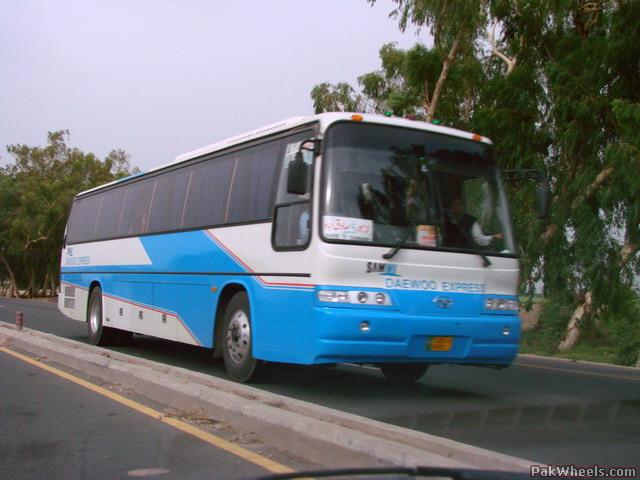
The last decade has seen major competition coming from first-class private bus services now operated on modern motorways in all parts of Pakistan. The best known of these is Daewoo bus service with its comfortable luxury coaches and stewardesses offering meal services. With the construction and expansion of national highways and motorways, the trucking industry has also grown by leaps and bounds in the last few decades.

In mid-90s, Pakistan Railway had 10.45% share of passenger traffic and 5.17% of freight traffic, which has declined to 9.95% and 4.72% respectively by the year 2006-07, according to Economic Survey of Pakistan.
Pakistan Railway has been weighed down by heavy expenses of payroll and rising corruption and incompetence. As a result, a large number of engines are no longer operational and there have been big cuts in service.
After gaining domestic and international traffic market share for several decades after independence, Pakistan International airline has been losing it in recent decades because of serious problems of corruption and mismanagement by the cronies of the ruling politicians. PIA is now losing hundreds of millions of dollars a year while being hit by lean and mean domestic private airlines and international competition from rising Gulf giants like Emirates, Etihad and Qatar Airways.
Today, PIA's employee to aircraft ratio of 450 is more than twice as much as some of its competitors. "Politically motivated inductions have been the major cause of the significant increase in human resource burden in this organization," the State Bank of Pakistan said recently.
Pakistani taxpayers are heavily subsidizing the national airline at the expense of much more crucial public sectors like education. Last year, a Pakistani government commission on education found that public funding for education has been cut from 2.5% of GDP in 2007 to just 1.5% - less than the annual subsidy given to the various PSUs including PIA, the national airline that continues to sustain huge losses.
The latest example of the use of public funds to buy support for the government is Rs 366 million given in "discretionary development funds" as reward to senators for passing the 20th Constitutional Amendment with more than two-third majority, according to Pakistani media reports.
The crux of the issue for the bloated public sector units like PIA, Pakistan Steel Mills and Pakistan Railways is the reprehensible system of political patronage which puts the wrong people in charge of them. The sooner PIA, PR and other PSUs become privatized, the easier it will be to revive them for better service and improved profitability. It will turn them into a source of much needed revenue for the public treasury, just as the denationalization of banks did in the last decade.
From an after-tax loss of Rs. 9.77 billion in 2001 (when MCB, Habib, UBL and Allied were government owned) the earnings of these privatized banks rose to a profit after-tax of Rs. 73.115 billion in 2007. Higher earnings meant increased tax contribution by these banks to the government from Rs 10.8 billion in 2001 to Rs. 33.8 billion in 2007, according to data provided by former State Bank governor Mr. Shahid Kardar.
Even if privatization of the heavily subsidized public sector units does not yield higher tax revenue from them, it will at least free up public funds for more pressing needs like education, health care, energy, water and public infrastructure development.
Related Links:
Haq's Musings
Pakistan's Infrastructure
British Aid for Pakistani Schools
Pakistan's Twin Energy Shortages
Cycles of Floods & Droughts
Resilient Pakistan Defies Doomsayers
Political Patronage Trumps Public Policy in Pakistan
Pakistan's Tax Evasion Fosters Aid Dependence
Finance Minister Shaukat Tarin Resigns
Musharraf's Legacy
US Fears Aid Will Feed Graft in Pakistan
Pakistan Swallows IMF's Bitter Medicine
Shaukat Aziz's Economic Legacy
Power and Patronage in Pakistan
Pakistan's Energy Crisis
Karachi Tops Mumbai in Stock Performance
Comments
Daewoo Pakistan Express Bus Service is a trusted name among people because it has revolutionised concept of road transport in Pakistan.
Journey on luxurious buses of Daewoo Pakistan Express, are secure, memorable and comfortable.
Renowned for punctuality and safety, we are first choice of families who enjoy journey with us as much as the enjoy picnic.
People's trust has not been built overnight.
It has taken a decade plus of professional competency, a teamwork and never ending eagerness to seek continuous improvement.
Patronage by people and extra work by our team has created a legend.
Daewoo Pakistan Express made a humble start in 1998 on Rawalpindi-Lahore Route.
Today, it's truly country wide transport system which serves millions of people, living in 40 cities and 45 destinations.
We operate 266 buses which carry approximately 22,000 people daily.
Our most recent endeavour has been linking Murree with 10 other cities so that families can travel to the most famous hill station in comfort and style.
Similarly a new route Lahore to Dera Ismail Khan via Sargodha, Mianwali has been introduced.
Our other preferred services include Cargo and Lahore City Bus Service, each providing its unique advantages to the customers.
Our Cargo service is preferred choice for fast and secure transportation of documents and goods.
Our Lahore City Bus Service is only Foreign A/C Urban Bus Operator in Urban Transport Sector of Pakistan in the cosmopolitan city of Lahore.
Daewoo Pakistan Express has many futuristic plans which shall contribute towards Pakistan economic development and people's comfort.
Daewoo Pakistan Express is not just a transport company but a concept where we are fully engaged with our partner people.
We have never hesitated to fulfil our corporate social responsibility and have stood shoulder to shoulder with Pakistani nation in time of need.
We made all possible contributions during earth quack of 2005 and recent floods.
Our success is based upon our 400 men/women team which is highly motivated, professional and dedicated.
Each member of our work force is important and their well knit team actions have earned us reputation of best transport company in the country.
http://www.brecorder.com/supplements/88/1158234/
I disagree with them, as do many others like me who have seen India and Pakistan first hand & compared.
Here are some of their observation:
1. Indian journalist Hindol Sengupta in the Hindu:
"Yes. Yes, you read right. The roads. I used to live in Mumbai and now I live in Delhi and, yes, I think good roads are a great, mammoth, gargantuan luxury! Face it, when did you last see a good road in India? Like a really smooth road. Drivable, wide, nicely built and long, yawning, stretching so far that you want zip on till eternity and loosen the gears and let the car fly. A road without squeeze or bump or gaping holes that pop up like blood-dripping kitchen knives in Ramsay Brothers films. When did you last see such roads? Pakistan is full of such roads. Driving on the motorway between Islamabad and Lahore, I thought of the Indian politician who ruled a notorious —, one could almost say viciously — potholed state and spoke of turning the roads so smooth that they would resemble the cheeks of Hema Malini. They remained as dented as the face of Frankenstein's monster. And here, in Pakistan, I was travelling on roads that — well, how can one now avoid this? — were as smooth as Hema Malini's cheeks! Pakistani roads are broad and smooth and almost entirely, magically, pot hole free. How do they do it; this country that is ostensibly so far behind in economic growth compared to India? But they do and one of my most delightful experiences in Pakistan has been travelling on its fabulous roads. No wonder the country is littered with SUVs — Pakistan has the roads for such cars! Even in tiny Bajaur in the North West frontier province, hard hit by the Taliban, and a little more than a frontier post, the roads were smoother than many I know in India. Even Bajaur has a higher road density than India! If there is one thing we should learn from the Pakistanis, it is how to build roads. And oh, another thing, no one throws beer bottles or trash on the highways and motorways."
http://www.thehindu.com/opinion/columns/hindol_sengupta/article429776.ece
2. Alaistair Scrutton of Reuters:
At times foreign reporters need to a give a nation a rest from their instinctive cynicism. I feel like that with Pakistan each time I whizz along the M2 between Islamabad and Lahore, the only motorway I know that inspires me to write.
Now, if the M2 conjures images of bland, spotless tarmac interspersed with gas stations and fast food outlets, you would be right. But this is South Asia, land of potholes, reckless driving and the occasional invasion of livestock.
And this is Pakistan, for many a "failed state." Here, blandness can inspire almost heady optimism.
Built in the 1990s at a cost of around $1 billion, the 228-mile (367-km) motorway -- which continues to Peshawar as the M1 -- is like a six-lane highway to paradise in a country that usually makes headlines for suicide bombers, army offensives and political mayhem.
Indeed, for sheer spotlessness, efficiency and emptiness there is nothing like the M2 in the rest of South Asia.
It puts paid to what's on offer in Pakistan's traditional foe and emerging economic giant India, where village culture stubbornly refuses to cede to even the most modern motorways, making them battlegrounds of rickshaws, lorries and cows."
http://www.reuters.com/article/2009/12/16/us-witness-pakistan-motorway-idUSTRE5BF01220091216
And others including Yoginder Sikand, William Dalrymple, Tom Wright have offered similar assessments of infrastructure in Pakistan versus India.
Pakistan is a country in which social entrepreneurs and businesses fill urgent public needs. As one Pakistani told us, “We are a culture of problem solvers, and we are a country of entrepreneurs.’’ Despite violence, corruption, weak governance, and many social challenges, this country of more than 180 million has moved forward in growing its economy. Many Pakistanis are investing in their own and their country’s future - small business owners, industrialists, social entrepreneurs, and investors - under deeply challenging circumstances and not without risk.
In a country where public services are in shambles, private-sector innovations are abundant - in agriculture, education, health, social services delivery, and IT. We met middle-class families running schools, philanthropists building universities and hospitals, investors increasing their investment inside Pakistan, and CEOs whose businesses are thriving. Nestle has one of its largest dairy production facilities in the world based in Pakistan. And as Pepsi notes, the second-largest consumer of Mountain Dew in the world after the United States is Pakistan.
The US Chamber of Commerce and the Pakistan Business Council could promote dialogue, explore business ventures, and identify opportunities for mutually profitable market development. Our networks of entrepreneurs and businesses can forge relationships with counterpart networks in Pakistan to find opportunities for collaboration and joint investment, information exchange, and mentoring.
Another area that offers great potential is the opportunity to support Pakistanis in deepening their ongoing democratic transition. Parliamentary elections tentatively set for next year offer an opportunity for Pakistan to hold the second legitimate democratic elections in a row for the first time since the country was founded in 1947. The opportunity for citizen engagement and cooperation comes as US and Pakistani civil society organizations work together to address a wide range of challenges in Pakistan, including good governance, religious pluralism, and women’s rights.
Pakistan’s media - increasingly free and vocal – are interested in exchanging views with American counterparts on how to better educate the public and hold those in power accountable.
For the past two years, the United States has engaged the Pakistani government in several rounds of a strategic dialogue, and tripled the funding for non-military assistance to Pakistan. But because of the Afghanistan war and the threats posed by Al Qaeda and its affiliates, the US government also adopted a more aggressive military strategy in Pakistan, including the controversial drone strikes.
The efforts to move beyond a transactional relationship with Pakistan fell short, however, not just because of what the governments did or did not do. They fell short because governments are constrained in what they can achieve given how they view the threats posed to their citizens.
Without greater citizen involvement to deepen our ties, the United States and Pakistan will remain trapped in mutual mistrust.
http://bostonglobe.com/opinion/2012/02/25/shock-absorbers-for-pakistan/7baJKG7N3rwKnzkumED2HK/story.html
The other day my son, a class five student in one of the most sought-after schools in Karachi, came to me for help in a school project. Having read on several parenting websites that I should be participating in my son’s scholastic life, I eagerly agreed. The project was on famous explorers, and given that I’m my nuclear family’s resident amateur historian, my interest was piqued. He obediently rattled off the list of the explorers he had to pick from: Marco Polo, Vasco da Gama, Magellan and so on. “What about Ibn-e-Batuta?” I asked “Who?” he replied. “Ibn-e-Batuta,” I pressed on. “You know, the guy who actually covered more ground than Marco polo? That Ibn-e-Batuta. He also happened to be a Berber and a Muslim.”
“Oh”, he said, probably ruing the moment he asked for my help, ‘no, he’s not on the list.’
Since then, I related this story to a few people, and the most common response was: Ibn-e-Batuta? Isn’t that the mall in Dubai? A couple of my more Bollywood inclined friends remembered his name as the title for a song in the Naseeruddin Shah movie Ishqiya.
Ironically, if you Googled anything at all a few weeks back, you’d have seen that even Google, that infamous tool of Zionist oppression, celebrated his 707th birthday with a doodle commemorating his travels. And why not? After all, this is a man who went all the way from Morocco in the West to China in the East. He travelled to the Byzantine Empire, Spain and the steppes of the golden horde in the north to Somalia in the south. He even got to Sindh, where he famously encountered a rhino before getting as far as Chittagong. That effectively means that he covered more ground than anyone else until the invention of the steam engine, some 450 years later. Sadly, if you went to one of Pakistan’s elite schools, chances are you’ve never even heard of him. Worse, you may have grown up thinking that everything of value in human history came from Europe. Except for paper of course; that’s Chinese.
I don’t blame my son, or any of the similarly schooled people I spoke to. I went to the same school and, by the time I finished my O-levels, I could have told you how many wives Henry VIII had, and what Marie Antoinette’s famous (almost) last words were, but I couldn’t have told you who Timurlane was (is that the next street over from Park Lane?), and I certainly couldn’t tell a Khwarezm-shah from a Shahenshah (you know, the Amitabh movie where he has his arm wrapped in chain mail). I knew Machiavelli and Napoleon, but not Kautiliya and Sun Tzu.
I don’t even blame the schools. The only usable and attractive textbooks are understandably Anglo-centric. The East appears on the periphery, and when it does, it is always through the eyes of the discoverers. All of whom are, of course, dead white males. Our poor little subcontinent appears as a footnote in the conquests of Alexander, or as the land the search for which inadvertently lead to the decimation of the Native Americans.
It wasn’t until the advent of Pakistan Studies that this part of the world made a poorly-written, and even more poorly-edited, appearance. We met the whitewashed and utterly neutered versions of Muhammad Bin Qasim (who, by the way, was absolutely not tortured to death by the Caliph) and Mahmud of Ghazni (who was absolutely not in it for the loot)...
http://tribune.com.pk/story/342988/so-who-was-ibn-e-batuta/
Private carrier, Bhoja Air, a defaulter in the past, will start domestic flights from Monday after it held a test flight here on Saturday.
Bhoja airline was a defaulter of more than Rs6.9 million of the Civil Aviation Authority but it was allowed to resume operations by the Ministry of Defence.
Due to financial difficulties, the Bhoja Air suspended its operations in 2001 although its Airline Licence, issued by the CAA, remained valid and it maintained a fully functional headquarter office in Karachi and an operations and ramp office at the Karachi airport. However, the Bhoja Air announced in November 2011, that it plans to restart operations in 2012. Bhoja Air’s founder Chairman M. Farouk Omar Bhoja has installed a new management which includes the former managing director of Shaheen Air, M. Arshad Jalil, as the airline’s Managing Director.
Initially the airline has acquired two Boeing 737-400 on lease for scheduled flights on domestic sectors of Karachi, Lahore, Islamabad, Multan and Sukkur.
Later the carrier with the induction of few more planes mostly on lease will launch operations to Dubai and beyond.
Bhoja will become fourth airlines to operate in Pakistan. The others are, Pakistan International Airlines, Shaheen Air and airblue. Another airline given permission to start commercial flights Indus Air has yet to launch its operation.
http://www.khaleejtimes.com/displayarticle.asp?xfile=data/international/2012/March/international_March102.xml§ion=international&col=
The European Union (EU) has decertified the maintenance certification of the Pakistan International Airlines (PIA) and issued a notice to the Civil Aviation Authority (CAA) to improve its maintenance standards within a couple of months; otherwise, the airline would have to stop operations in the EU countries, sources in the airlines said on Saturday.
It is worth mentioning that the standard of the PIA engineering and maintenance was equal to that of any European country after obtaining the certification from the EU-sponsored European Aviation Safety Agency (EASA) in 2004. Within the first year of the EASA’s approval, the national flag carrier started repairing foreign aircraft and earned $5 million, as it became a continuous source of income.
A senior aviation expert said the move could be complete or partial, since the last EU ban on the PIA flights was partial; however, certain aircraft were cleared by the EU inspectors after check to fly to the European countries.
In 2007, some PIA planes, including A-310 and B-747, were banned for the EU destinations.
-----------
Sources in PIA said the reason behind the current mess was poor supply mechanism for spare parts, as the protocol set by the aircraft manufacturers was not being followed.
When contacted, a PIA spokesman Tahir Khalique rejected the reports of decertification, saying the airline had not received any letter on the subject, as only a verbal warning was issued to the CAA.
The EU warning was motivated the PIA’s plan to purchase B-777 from the Boeing Company, while the EU-based Airbus wanted to pressurise the airline through EU to consider its aircraft as well, he added.
He said negotiations were also underway to purchase five Airbuses, which would end the pressure game automatically, he concluded.
http://www.nation.com.pk/pakistan-news-newspaper-daily-english-online/national/11-Mar-2012/caa-gets-maintenance-warning-from-eu
KABUL, Afghanistan -- More than a century ago, fearing that his country might be swallowed up in the Great Game rivalry between the British empire to the east and the Russian army to the north, an Afghan king made a radical decision: He banned railroads.
That edict effectively kept out foreign troops for a number of years. But it also left the Afghan economy, once a wealthy crossroads of the ancient Silk Road trading routes, largely cut off from the world at a time when trains were the engines of development.
Now, Afghanistan has just opened its first major railroad and is planning a half dozen more. The government is also inviting other countries to build tracks, part of plans for a "New Silk Route" that the U.S. hopes will help stabilize the region by promoting trading links.
China, Iran, Pakistan and India all have government or corporate plans for separate railroad projects across Afghanistan. Turkmenistan is completing its own plans for another line. And Uzbekistan has already built the first major rail link, a 47-mile line from the border town of Hairatan to Mazar-i-Sharif in Afghanistan's north.
One reason so many countries are helping Afghanistan belatedly join the rail age: They need trains if their companies hope to export the country's vast, untapped mineral wealth, estimated by U.S. surveys at nearly $1 trillion.
Both the railway projects and the prospects for future mining wealth will depend largely on whether the country can keep violence from escalating once the international military force withdraws most of its troops by the end of 2014. For investors, it's a question of whether the increased commerce is worth the risk and effort.
------------
Soviet occupiers abandoned a few rail projects in the 1980s, and later years of civil war made such construction impossible.
Now, the Afghan government, seeking to lift the country out of poverty, is trying to catch up to its neighbors by building links to Central Asia's fairly well-developed rail networks.
The plan is to build a series of short, cross-border tracks to Uzbekistan, Turkmenistan, Tajikistan, Pakistan and Iran. The tracks would connect to each other inside the country's north by railways built by Iran from the west and China from the east.
"We would be able to import and export to Russia, Turkey, and even European countries," says Noor Gul Mangal, Afghanistan's deputy public works minister. Opening new transport gateways would also reduce Afghanistan's dependence on neighboring Pakistan as its only link to sea ports.
Only one line is finished and several of the rest are delayed or face funding problems. But already, the prospect of restoring Afghanistan's status as the crossroads for goods traveling from India, China and Europe has kindled enthusiasm.
Instead of silk, spices and tea, the New Silk Route would carry washing machines from India, heavy machinery from Europe and T-shirts from Pakistan over interconnecting railroads that are faster than container ships and cheaper than air freight.
"Afghanistan is the key. It's the hub," Starr says.
It can all sound like a far-fetched dream for Afghanistan, with Taliban violence spiraling and international troops preparing to withdraw from the decade-long war. If President Hamid Karzai's government cannot prevent the country from plunging further into civil war, the mining companies may cut their losses. In which case more railroad projects will gather dust.
http://www.semissourian.com/story/1824648.html
DUBAI -- Emirates, one of the world’s fastest growing airlines, has strengthened its commitment to Pakistan by announcing the addition of a fifth daily flight to and from the city of Karachi. Effective August 1, 2012, the airline will be operating to Jinnah International Airport in Karachi five times a day.
This move reinforces Emirates’ presence in the Pakistani landscape and provides passengers with more flexibility and options when travelling to the country’s commercial hub.
“This is very exciting news for us as Karachi was the inaugural destination of Emirates when the airline began operations in 1985,” said Badr Abbas, Vice President Pakistan & Afghanistan, commenting on the development.
“Today we are proud to have announced a fifth daily flight to Karachi in a move to better serve our Pakistani passengers and strengthen the historic relationship between Pakistan and UAE. We hope to continue on this path by further expanding our services in Pakistan and are grateful to all the relevant government and aviation authorities for making this possible,” he added.
Karachi is known as the financial capital of Pakistan and the additional flight will not only further leisure and business travel but also boost economic activity by providing increased cargo capacity for popular Pakistani exports to many destinations on Emirates’ global network.
The additional frequency will be operated by a Boeing 777-300ER in a two-class configuration.
In the past six months, Emirates has experienced robust growth and increased its presence in Northern Pakistan by starting additional flights to Peshawar, Lahore and Islamabad. Starting August, Emirates will be operating 54 weekly flights to and from four cities in Pakistan - Karachi, Lahore, Islamabad and Peshawar - of which two frequencies are subject to Government approval.
http://www.khaleejtimes.com/DisplayArticle08.asp?xfile=data/theuae/2012/March/theuae_March567.xml§ion=theuae
The National Accountability Bureau (NAB) has arrested General Manager Operations of Pakistan Railways (PR) Saeed Akhtar, on alleged misuse of authority and other charges in relation to a multi-billion scrap scandal.
Sources said that some accused including the PR officials and contractors have already been arrested while some were released on bail after depositing back the plundered money.
Minister for Railways Haji Ghu-lam Ahmad Bilour and former secretary Samiul Haq Khilji were also named in the scrap scandal. They are accused of giving per-mission for awarding tenders to certain contractors after receiving bribes from them.
The same allegation was also levelled against Akhtar by an-other accused, former Controller of Stores PR Khalid Mohiuddin during the ongoing investigation.
It is pertinent to mention that Prime Minister Yusaf Raza Gilani gave one-year extension to Akhtar’s contract, who had re-tired recently.
NAB Chairman Admiral (retd) Fasih Bokhari had established a special operations division, headed by Director General Colonel retired Shahzad Bhatti to investigate all the high-profile corruption cases referred to the NAB by the Supreme Court, including cases against Akhtar.
http://pakobserver.net/detailnews.asp?id=147516
CEO Bhoja Air Muhammad Arshad Jalil has stated that 900 airlines operating from 1700 airports worldwide were earning US $ 650 billion in direct revenue & contributed US $ 2.9 trillion to global economy annually while generating 29 million jobs. He was delivering a lecture on Air Transport in the 21st Century to the members of Royal Aeronautical Society Pakistan Division here.
-----------------
Studying the case of Emirates, Muhammad Arshad Jalil informed that it commenced its operation with a startup capital of US $ 10 million in 1985 using two leased aircraft from PIA and now it was the most profitable aircraft in the world operating to 115 destinations. He noted that Dubai - similar to Karachi - was an ideal gateway between Europe and Asia with 4.8 billion people living within eight-hour flight. Speaking about Emirates’ widespread market he observed that 63.7% of British Airways’, 47.29 % of Lufthansa’ and 68.6% of Air France/KLM passengers were from Europe, while Emirates that handled 39.9% from Europe & America & 25.4% from Africa & Middle East was not dependent on a small market. He told that Emirates had been a key factor in contributing 34% of UAE’s GDP.
Pondering over Emirates’ unparalleled success Muhammad Arshad Jalil further noted that despite its profitability Emirates’ maintenance cost was 1.5% of overall expenditure versus British Airways’ 7.5%. He said that since Emirates did not have any labor laws it was able to source cheap labor; While other airlines had to cut back on advertising due to significant losses, Emirates made significant investments in this domain; In addition, believing that if airline was not making profit it could contribute towards making indirect profit, Emirates made significant effort enabling Dubai Duty Free generate US $ 1.1 billion (that is 7% of entire world’s duty free). He also cited the example of Aero Asia that gave a boost to tourism etc and as a result at the end of the day group was making a lot of money through indirect business. Jalil maintained that whenever capacity had been added passenger numbers grew.
Studying a model of low-cost carrier (LCC) he observed that passengers sought after safety, schedule and reliance. He said that LCC generated ancillary revenue through various means including levying charges on services, baggage, meals & sometimes even for water. Besides dismantling the fare structure they also earn through third party’s sales. Introducing Ryanair as the world’s largest airline in terms of traffic that operates point to point with no frills offered he told that it started its business by carrying only eleven thousand passengers. Now it operates at an average fare of 39 Euros per passenger and carried over 70 million passengers in 2011.
Giving an example of its ancillary revenue he told that only through car hire via website Ryanair generated 26.51 million in 2007; Aéroport de Pau (in France) paid 1.4 Euros to Ryanair anticipating that additional traffic would benefit local economy; Ryanair had been using technology to reduce cost, for instance in October 2009 it stopped offering check-in desks. However, Muhammad Arshad Jalil admitted that Ryanair was not in compliance with EU law for handling customer complaint; though Ryanair (that employees 6900 people) had a ratio of 1 employee to 10,000 passengers, its cost-cutting measures could be gauged by the fact that company employees are not allowed to use mobile charger.
http://pakobserver.net/detailnews.asp?id=149217
Often they are bursting with enthusiasm for some social entrepreneurship project: making a cheap water-purification system, starting a company that will empower Rwandan women by selling their crafts in boutiques around the world.
These people are refreshingly uncynical. Their hip service ethos is setting the moral tone for the age. Idealistic and uplifting, their worldview is spread by enlightened advertising campaigns, from Bennetton years ago to everything Apple has ever done.
It’s hard not to feel inspired by all these idealists, but their service religion does have some shortcomings. In the first place, many of these social entrepreneurs think they can evade politics. They have little faith in the political process and believe that real change happens on the ground beneath it.
That’s a delusion. You can cram all the nongovernmental organizations you want into a country, but if there is no rule of law and if the ruling class is predatory then your achievements won’t add up to much.
Furthermore, important issues always spark disagreement. Unless there is a healthy political process to resolve disputes, the ensuing hatred and conflict will destroy everything the altruists are trying to build.
There’s little social progress without political progress. Unfortunately, many of today’s young activists are really good at thinking locally and globally, but not as good at thinking nationally and regionally.
Second, the prevailing service religion underestimates the problem of disorder. Many of the activists talk as if the world can be healed if we could only insert more care, compassion and resources into it.
History is not kind to this assumption. Most poverty and suffering — whether in a country, a family or a person — flows from disorganization. A stable social order is an artificial accomplishment, the result of an accumulation of habits, hectoring, moral stricture and physical coercion. Once order is dissolved, it takes hard measures to restore it.
Yet one rarely hears social entrepreneurs talk about professional policing, honest courts or strict standards of behavior; it’s more uplifting to talk about microloans and sustainable agriculture.
In short, there’s only so much good you can do unless you are willing to confront corruption, venality and disorder head-on. So if I could, presumptuously, recommend a reading list to help these activists fill in the gaps in the prevailing service ethos, I’d start with the novels of Dashiell Hammett or Raymond Chandler, or at least the movies based on them.
The noir heroes like Sam Spade in “The Maltese Falcon” served as models for a generation of Americans, and they put the focus squarely on venality, corruption and disorder and how you should behave in the face of it.
A noir hero is a moral realist. He assumes that everybody is dappled with virtue and vice, especially himself. He makes no social-class distinction and only provisional moral distinctions between the private eyes like himself and the criminals he pursues. The assumption in a Hammett book is that the good guy has a spotty past, does spotty things and that the private eye and the criminal are two sides to the same personality.
He (or she — the women in these stories follow the same code) adopts a layered personality. He hardens himself on the outside in order to protect whatever is left of the finer self within.
http://www.nytimes.com/2012/04/13/opinion/brooks-sam-spade-at-starbucks.html
The Pakistani government mandated Sunday that all airplanes operated by private airlines must undergo a new inspection to determine whether they are safe to fly, days after a crash near the capital killed 127 people.
The Bhoja Air crash Friday was the second in Pakistan in less than two years involving a private Pakistani airline. In both cases, the planes went down in bad weather as they approached the main airport in Islamabad.
The crashes have raised concerns about the safety of aviation in a country saddled by economic problems.
A passenger jet operated by a third private airline, Shaheen Air, faced potential disaster Sunday when its left tire burst as it touched down, said a spokesman for the Civil Aviation Authority, Pervez George. The pilot applied the emergency break, causing the landing gear to buckle and the left wing to scrape along the ground as the plane came to a halt. None of the more than 170 passengers was injured, Mr. George.
The planes operated by private airlines will be inspected one by one, and any aircraft that fail will be grounded, Pakistani Defense Minister Chaudhry Ahmed Mukhtar told state TV. Planes currently in operation will be allowed to fly as they await inspection, he said.
The largest airline in the country is state-run Pakistan International Airlines, which has suffered from serious operational and financial problems. Pakistan also has a handful of private airlines that fly both domestic and international routes.
The airline involved in Friday's crash, Bhoja Air, only recently received a permit and began flying last month after it lost its license in 2001 because of financial difficulties.
It's still unclear what caused the Boeing 737-200 to crash in wheat farms about five kilometers from Benazir Bhutto International Airport on Friday evening. It was arriving from the southern city of Karachi.
The violent storm that was lashing Islamabad when the plane went down has led some experts to speculate that "wind shear," sudden changes in wind speed or direction that can lift or smash an aircraft into the ground during landing, may have been a factor.
Some in the media and the government have suggested that the age of the aircraft may have been a factor. An industry website indicated the jet was 32 years old, not especially old for an aircraft, according to experts. Also, age by itself is rarely an important factor in crashes, they said.
Pakistan has barred the head of the airline, Farooq Bhoja, from leaving the country and has launched a criminal investigation into the crash, alongside the probe being conducted by aviation authorities.
Bhoja Air has declined to comment and said it would discuss the case after the investigation was complete.
The last major plane crash in the country—and Pakistan's worst—occurred in July 2010, when an Airbus A321 aircraft operated by domestic carrier Airblue crashed into the hills overlooking Islamabad, killing all 152 people aboard. A government investigation blamed the pilot for veering off course in stormy weather.
Dozens of mourners walked through the streets of Karachi on Sunday, carrying coffins holding victims of the Friday crash. One distraught young boy was comforted by a relative as he stood over his brother's wooden coffin, which was draped in a green cloth covered in Islamic prayers. Other mourners stopped to pray in the street during the funeral procession.
http://online.wsj.com/article/SB10001424052702303592404577360033580984656.html?mod=googlenews_wsj
Five public sector enterprises are either operating without a governing board, or are run by unskilled persons. In the latter case, retired or serving bureaucrats, or unqualified but politically well-connected individuals, have been appointed to run these enterprises. According to sources, these entities have collectively caused Rs393 billion in losses to the national exchequer during four years of the Pakistan Peoples Party government.
These entities include Pakistan Railways (PR), Pakistan International Airlines (PIA), Pakistan Steel Mills (PSM), Pakistan Agriculture Storage and Services Corporation (Passco), and the National Highway Authority (NHA).
Furthermore, losses incurred by Pepco due to subsidies– estimated at Rs1.2 trillion by the finance ministry – are not included in this assessment.
-----------
National Highway Authority
The entity recorded Rs150 billion in losses during the four years under review – the highest among the five. When the PPP took over the government, the NHA recorded annual losses of Rs30 billion. These surged to Rs33.5 billion in 2008, Rs35.3 billion in 2009, Rs44.4 billion in 2010 and Rs36.5 billion in the last fiscal year, according to the official report.
Pakistan International Airlines
The national flag-carrier’s accumulative financial losses in three years and nine months stood at Rs81 billion. In 2007, the entity’s annual losses had been registered at Rs13.4 billion. These surged to Rs36.1 billion in 2008, Rs4.9 billion in 2009, Rs20.8 billion in 2010 and Rs 19.3 billion losses in nine months of last year.
Pakistan Steel Mills
From 2009 to 2011, PSM’s accumulated losses stood at Rs49.5 billion. The country’s largest industrial unit was in profit up to 2008, but political appointments have led to the near collapse of the behemoth. In 2009, it suffered Rs26.5 billion in losses; the figure came down to Rs11.5 billion in 2010, and was ‘sustained’ at this level in 2011.
Pakistan Railways
PR incurred Rs96 billion in losses during the reviewed period. Before the government took over, its annual losses stood at Rs15.2 billion. This figure ballooned to Rs16.9 billion in 2008, Rs23 billion in 2009, Rs25 billion in 2010 and Rs31.1 billion during the last fiscal year. The government has only recently constituted a board of directors for the entity.
PASSCO
Passco recorded Rs34.6 billion in losses during the reviewed period. During the last year of the Musharraf government, Passco suffered Rs2.5 billion losses. The figure swelled to Rs3.4 billion in 2008, Rs3.3 billion in 2009, Rs 13.8 billion in 2010 and Rs14.1 billion in 2011..
http://tribune.com.pk/story/368926/bleeding-the-country-dry-five-public-entities-lose-rs393b-over-four-years/
On Thursday, Aviation Minister Ajit Singh told the parliament that the airlines are expected to report a combined loss of nearly $2bn for the last financial year. Independent analysts peg last fiscal's losses at $2.5bn.
All airlines - there are six main operators - barring budget carrier Indigo are in the red and further losses are expected in 2011-12, he said.
India's biggest airlines - the private Jet and the the national carrier Air India - are struggling.
Private airline Kingfisher has shut down overseas operations, pruned domestic flights, downsized and is desperately hunting for funds. Things are so bad that the government is mulling a proposal to allow foreign airlines to buy stakes in India's airlines to help revive them. But this is not expected to happen soon.
What is wrong with one of the world's fastest growing aviation markets? Aviation and telecoms are held up as leading examples of industries which have bloomed after the unshackling of India's economy.
Serious challenges
But in less than eight years the boom is beginning to look like a bust. What went wrong?
Total losses since 2004 are estimated to be around $8bn, and the airlines are groaning under accumulated debts of up to $18bn, according to independent analysts.
Most believe the industry has been hit by steep fuel prices, punishing taxes, tough competition and the general economic slowdown. Airport charges are also on the upswing - Delhi airport has already seen a fat rise and Calcutta, Chennai and Mumbai are expected to follow suit - and flying is going to become more expensive.
Consider aviation fuel, which comprises more than half of the operating cost of an airline.
In early March, global aviation analyst Centre for Asia Pacific Aviation (Capa) calculated that a kilolitre of aviation fuel cost 67,000 rupees ($1,247) in Mumbai, compared to 44,000 rupees ($819) in Dubai and 43,400 rupees ($808) in Singapore. India imports the bulk of its oil, so with the rupee falling, it is paying more for it. On top of that, oil is also also heavily taxed domestically.
The situation is not likely to improve in the near future unless oil prices drop, the rupee strengthens and taxes are cut. "There are serious fiscal challenges linked to the slowing economy and punitive taxes, but there are equally serious structural issues with industry and the infrastructure," Kapil Kaul, chief of Capa India told me.
------------
India has more than 400 aircraft - flying on both domestic and international routes - and some 3,500 pilots. More than 60 million Indians flew domestically in 2011, and some 37 million flew internationally. Passenger traffic grew by a healthy 17% last year, though it has slowed down a bit since.
On the face of it, the industry should be booming. Instead, it seems to have become a victim of a slowing economy, shoddy fiscal management, punitive taxes, poor management and the hubris of the operators.
http://www.bbc.co.uk/news/world-asia-india-17950561
....According to Agility Logistics Director Commercials Aamir Haroon, the field of supply chain has undergone a drastic transformation in Pakistan during the last 10 years. “We used to have a storekeeper, godown manager and in charge of transport a decade ago. Today, we have a logistics officer, supply chain manager and chief turning officer,” Haroon told the audience.
Stressing the need for outsourcing non-core activities, he urged companies to make their balance sheets leaner by getting rid of unnecessary assets and liabilities. “It’s no more a company versus another company these days. It’s basically one supply chain competing against another supply chain,” Haroon said, adding up to 70% of a typical company’s annual budget was managed by supply chain professionals.
Referring to an internal study carried out by Unilever Pakistan to gauge consumer reaction to an inefficient supply chain, company’s Logistics Director Faheem Khan said most consumers would not go back to a retail outlet if they did not find their desired brand there first time around. “It’s bad for you as a retailer if you’re selling a brand that has a poor supply chain.”
Making a presentation on the role of cold chain in the contemporary world and its implications for Pakistan, Raaziq International CEO Muhammad Nadeem Khan said horticulture formed 12% of the country’s gross domestic product, adding 30% of it was wasted annually because of an inefficient supply chain.
Similarly, he said only 6% of livestock produced in Pakistan was actually sold after value addition. With the global market for frozen food worth about $175 billion, Khan said Pakistan could benefit immensely by improving its supply chain, especially in horticulture and meat segments.
http://tribune.com.pk/story/376043/supply-chain-experts-find-networking-opportunity/
Consul General William Martin, on behalf of the US Trade and Development Agency, along with Captain Haleem Siddiqui of PMS inked the agreement that will enable the private sector company to help Pakistan's rail system handle the growing volume of cargo between Lahore and Karachi.
The initiative is central to improving the capacity of one of Pakistan's most important trade corridors and promoting continued economic growth.
To remedy a shortage of properly maintained locomotives, Pakistan Railway has agreed to allow PMS to deploy and operate a fleet of locomotives using PR's existing rolling stock and railway infrastructure.
The assistance will also provide PMS with an assessment of future freight volumes, financing requirements for the project, and other technical assistance.
Speaking on the occasion, CG Martin said that the "United States remains committed to partnering with the Pakistani transportation sector," because of its importance in supporting economic growth in the country, while also "increasing and strengthening US-Pakistani commercial ties." The US Trade and Development Agency aims to create sustainable infrastructure and economic growth in partner countries.
Brian McCleary, Commercial Counsellor, US Embassy Islamabad, and Aasim Siddiqui, MD, Marine Group of Companies, were also present on the occasion
http://www.brecorder.com/business-a-economy/189/1189982/
PIA management is going to purchase nine new planes to resume its certain routes like Houston, Chicago, Los Angeles in the US to put PIA on the path of progress while unlike past the procurement process will be monitored by Transparency International (TI) a Germany based watchdog , said well informed sources in the national flag carrier on Friday.
Sources disclosed that newly appointed Chairman PIA, Rao Qamar Suleman has himself decided to take TI on board to maintain maximum transparency in the procurement process.
New planes scheduled to be purchased included five B-737-800, two B-777-LR and two Jumbo planes. Sources claimed that Jumbo planes would be used for Haj purpose while B-777 for long haul flights like Huston, Chicago and Los Angeles while B-737-800 for other routes.
A well informed officer of PIA seeking anonymity said that MD PIA was also keen in revamping of routes like Nairobi, Johannesburg, Glasgow and Bangkok etc.
He said that Rao Qamar was in negotiations with American Transport Security Administration (TSA) to get permission for direct flight from Pakistan to US destinations. He said Rao has also successfully exempted from another security check imposed by the United States on PIA flights operating between the two countries at Manchester.
TSA had given deadline to PIA for detailed checking to be started at Manchester which could force the passengers to opt for an airline other than PIA, as the security check could increase the travel time from 16 to 25 hours, sources in PIA said. As per details, the US Transportation Security Administration (TSA) had warned PIA that after April 22nd, 2012 all passengers and luggage on board PIA aircrafts would be subjected to another security check at the Manchester airport prior to arriving in US destinations.
When contacted TI Pakistan head Adil Gillani said that though PIA management has tried to get TI on board regarding procurement of two Jumbo planes which were supposed to be used for Haj purpose but TIP has objected on procurement process and said why management was not going to purchase planes from Airbus rather than Boeing Company.
He said that as per Public Procurement Regulatory Authority (PPRA) every procurement should be made through tender.
Whereas sources in PIA were of the view that MD PIA was trying to purchase two Jumbo from Saudi Airlines against throw away price and secondly the airline has all sort of infrastructure of jumbo planes including, trained crew members, wide body hanger, spare parts and engines etc.
“It is matter of national interest and TIP should support such steps of PIA MD to pull the airlines out of losses” a senior PIA officer said.
A head of Association of PIA and also office-bearer of Joint Action Committee of Pakistan International Airlines (JACPIA) said on condition of not to be named that Rao was moving in the right direction. He said MD takes officer-bearers of different associations in PIA into confidence while taking any important decision. He also appreciated other steps taken by MD in the near past.
http://www.nation.com.pk/pakistan-news-newspaper-daily-english-online/national/21-Jul-2012/pia-to-purchase-nine-new-planes-for-different-routes
“Our passenger base is growing continuously in Pakistan and we felt the need to increase flights for customer convenience,” he added.
The new flight from Karachi will start from November 30, from Islamabad it will begin from December 1 and from Lahore the flight will start from February 20, 2013.
Responding to a question about fares, Manager Sales and Marketing Pakistan Asad Farooqui said despite financial constraints and rising operating cost, the airline kept its fares competitive in Pakistan over the years to keep up with competition.
After the addition of one more flight, the total number of weekly flights from Karachi will be five, from Islamabad the number will rise to four and from Lahore it will be six in a week.
With six flights a week, Lahore tops among three major cities of Pakistan. Giving the reason for this, Farooqui said most of the Pakistanis from upcountry areas preferred to travel from Lahore to Bangkok and beyond.
To a question about annual growth rate of the airline in Pakistan, Farooqui said he could not immediately tell the growth figure for the air carrier. “Definitely, we are growing in Pakistan,” he said, “from three flights at our launch 37 years ago, today we are operating 15 flights a week.”
Pakistani passengers were mostly business-related people, tourists and students, he said, adding most Pakistani businessmen used Thai Airways to travel to China, while tourists usually visited Thailand and neighbouring countries. In addition to these, a number of Pakistani students travelled to Australia through Thai Airways.
The air carrier started operations from Karachi 37 years ago, added Lahore to its network 15 years ago and Islamabad eight years ago.
http://tribune.com.pk/story/459522/as-demand-grows-thai-airways-increases-flights-from-pakistan/
UAE budget carrier Air Arabia on Wednesday announced the expansion of services to Karachi in Pakistan.
The four weekly flights from Sharjah to Karachi have been increased to daily flights, the airline said in a statement.
"We are extremely pleased to announce the expansion of services to Karachi in Pakistan," said Adel Ali, Group CEO, Air Arabia.
"Since launching operations to Pakistan, it has always been a market of focus for us, and the launch of additional services is a result of increasing customer demand from the market.
"The ever growing appeal for Air Arabia flights, underpinned by the value for money services, signals that Air Arabia continues to be the airline of choice for millions of passengers who travels between Pakistan and the UAE," he added.
Air Arabia started operations to Pakistan in 2007 with a launch of direct service to Karachi. Today, the carrier offers services Karachi and Peshawar.
Earlier this month, Air Arabia saw its net profit more than double to AED226m ($61.5m) in the third quarter of 2012 compared to the year ago quarter.
The airline, which operates out of Sharjah International Airport, posted revenues of AED836m for the three-month period ending September 30, up 19 percent from the corresponding quarter in 2011.
Passenger traffic rose 14 percent to 1.37m, while average seat load factor stood at 82 percent.
http://m.arabianbusiness.com/uae-s-air-arabia-ups-flights-pakistan-481150.html
Pakistan International Airlines Corp. (PIAA), the flag carrier reeling from seven straight years of losses, sought financial assistance from the government for at least a third time since 2007 to pare debt.
The carrier, also known as PIA, has asked for 25 billion rupees ($257 million) from the government, Managing Director Muhammad Junaid Yunus said in a Jan. 1 interview at his office in Karachi, Pakistan. The management is in talks with the finance ministry to raise the capital before March, he said.
“I’m praying that we get this,” Yunus said. “This is a government airline, it’s a national asset.”
PIA plans to lease 12 fuel-efficient planes this year, Yunus said, as the company turns for funds to the government, which itself is trying to repair state finances after recording the highest budget deficit in two decades. South Asian carriers Air India Ltd. and SriLankan Airlines Ltd. have also won state funding amid competition from Emirates and Middle East carriers.
Pakistan’s national carrier got government loans of 25 billion rupees in 2007 and about 8 billion rupees in the year ended in June 2009, Yunus said.
“The cash injection won’t bring PIA out of trouble but it will still make things better for them,” said Khurram Schehzad, the Karachi-based head of research at brokerage Arif Habib Ltd. “The implementation of this should be gradual considering the looming elections and the coming budget.”
PIA fell 14 percent to 3.82 rupees at close of trading in Karachi yesterday. The benchmark KSE 100 index fell 1.8 percent. The stock more than doubled in 2012, ending eight straight years of annual declines.
Kingfisher Losses
Fuel costs and rising competition have also hurt other carriers in the region. The Indian government said it may provide as much as 300 billion rupees ($5.5 billion) to unprofitable Air India through 2020. Kingfisher Airlines Ltd. (KAIR), India’s second-biggest carrier by market share in 2011, has halted operations since October after five years of losses.
PIA plans to lease eight A320s and four turboprops, Yunus said. The Airbus planes would be used for services to cities including Dubai, Abu Dhabi, Kuwait and Mumbai. The company will raise bank loans to fund the fleet upgrade after government approval, he said.
The carrier has a debt of 150 billion rupees, Yunus said. PIA posted a loss of 26 billion rupees in 2011, according to data compiled by Bloomberg. It previously reported an annual profit in 2004.
http://www.bloomberg.com/news/2013-01-02/pakistan-airlines-seeks-government-support-after-losses.html
Here's an APP report on proposed revival of Karachi Circular Railway:
The ECC which met here under the chairmanship of Minister for Finance and Economic Affairs Dr. Abdul Hafeez Shaikh was informed that Japan International Cooperation Agency (JICA) has already agreed to provide 93.5pc ($2.4 billion) of the estimated cost through soft loan at a markup of 0.2pc payable in 40 years including 10 years grace period. The remaining 6.5pc ($169.6 million) will be borne by the Ministry of Railway (60pc equity), Government of Sindh (25pc equity) and the City District Government Karachi (15pc equity); the stakeholders of KUTC as per their share.
The track of the KCR will be 86 km long with 27 stations to be built around the city.
This important project will be a milestone in improving the quality of life of the citizens.
The ECC also approved the summary with special appreciation for the Ministry of Railways, the Government of Sindh and Karachi City Government for their efforts to get approved the most economic and viable project of Circular Railway for Karachi.
The ECC also discussed various agenda items of national importance. The following decisions were taken in the meeting;
At the outset of the meeting the ECC members offered special prayers for departed soul of Senior Minister of the KPK Government Mr. Bashir Bilour who lost his life in a terrorist attack in Peshawar recently.
The ECC prayed to Almighty God for resting the departed soul in eternal peace and for granting courage to the bereaved family to bear this precious loss.
Ministry of Railways moved a summary seeking the approval of the ECC for waiver of on-lending charges to Karachi Urban Transport Corporation for the Project "Revival of Karachi Circular Railways as Modern Commuter System".
Japan International Cooperation Agency (JICA) has already agreed to provide 93.5pc (US$2.4 billion) of the estimated cost through soft loan at a markup of 0.2pc payable in 40 years including 10 years grace period.
The remaining 6.5pc (US$169.6 million) will be borne by the Ministry of Railway (60pc equity), Government of Sindh (25pc equity) and the City District Government Karachi (15pc equity); the stakeholders of KUTC as per their share.
The track of the KCR will be 86 km long and 27 stations will be built around the city.
This important project will be a milestone in improving the quality of life of the citizens.
The ECC approved the summary with special appreciation for the Ministry of Railways, the Government of Sindh and Karachi City Government for their efforts to get approved the most economic and viable project of Circular Railway for Karachi.
The ECC also approved a summary by Ministry of Railways for changes in the composition of Business Express.
Ministry of Railways submitted a summary for ECC approval back in July 2012.
http://www.brecorder.com/top-news/1-front-top-news/98665-ecc-approves-revival-of-karachi-circular-railways-.html
LAHORE:
The cash-strapped Pakistan Railways (PR) appears to be benefiting from its joint ventures with private companies: officials at the state-owned company admitted that the partnerships accounted for 26% of total passenger revenues for the railways, despite accounting for less than 1% of passenger traffic, during the first six months of financial year 2013.
Revenues for the Railways were up by 19.9% to Rs7.7 billion during the period between July 1 and December 20, 2012, compared to the same period in the previous year. Nearly 89% of that increase came from rising revenues in the passenger segment of the Railways, and nearly all of that increase came from the two public-private partnerships, where companies have leased out routes from Pakistan Railways. Passenger services account for nearly three-quarters of all Railways revenue.
In February 2012, Pakistan Railways signed an agreement to allow the Four Brothers Group, a diversified conglomerate, to run the Business Express, a refurbished train to that travels between Karachi and Lahore. The Railways gets Rs3.1 million per day for the service as a flat fee for the use of its stations and tracks. In March, a similar agreement privatised the newly revitalised Shalimar Express, operated by Air Rail Services, which provides the Railways with Rs1.5 million in lease revenues per day.
----------
The Privatisation Commission lists Pakistan Railways as a state-owned entity that is up for sale. Yet the left-leaning government led by the Pakistan Peoples Party seems to loathe privatising an entity that – with over 82,000 employees – is one of the largest employers in the country. An outright privatisation would almost certainly mean massive job losses, since the Railways have massive redundancies in their workforce.
And so the government appears to be pursuing what can only be described as a backdoor privatisation, where certain routes are leased out to private companies to run in exchange for fixed revenues. In addition to the two that started last year, a third train – the Night Coach – has also started service from Karachi to Lahore. It is also operated by Air Rail Services and its lease payments are set at Rs1.7 million per day.
“In the coming days, we are hoping that passenger revenues will reflect the expected increase from the latest joint venture,” said Zubair Shafi Ghauri, the spokesperson for Pakistan Railways. “We are now looking for some short-distance joint ventures from remote junctions to facilitate the rural population, though nothing is final yet.”
Whether or not this business model is sustainable is an open question. The management of the Business Express claims that their operational breakeven occurs at 55% occupancy levels, which they are only marginally above, despite operating on the popular Lahore-Karachi route. The Shalimar Express is faring a little better, with a 71% occupancy rate on the same route, with a slightly smaller train.
http://tribune.com.pk/story/492719/pakistan-railways-private-trains-contribute-26-to-passenger-revenue/
(Beijing) – Shanghai-listed railway equipment manufacturer CSR Corp. Ltd. won bids for contracts in Pakistan and Turkmenistan on February 4.
CSR's subsidiary in Ziyang, Sichuan Province, will make 50 locomotives for Pakistan. CSR expects to deliver the first 10 by the end of the year and the rest by the end of May 2014.
Turkmenistan ordered 154 passenger cars and they will be delivered this year. CSR's wholly owned subsidiary in Nanjing will make the cars.
CSR did not say how much the contracts were worth. However, a CSR source said the usual price for 50 locomotives was about 600 million yuan, and that for 154 cars was 400 million yuan.
Last month, CSR's subsidiary in Qingdao, Shandong Province, won a 3.43 billion yuan contract to make electric train units for Argentina. It was the largest South American contract by value for a Chinese railway equipment manufacturer.
CSR is in talks with several international clients for other contracts, the source at the company said. This year its overseas sales are expected to surpass those of 2012.
CSR's revenue in the first half of last year was 42.4 billion yuan, up 5.8 percent compared to the same period in 2011, its financial report shows. Its revenue from overseas over that period was 4.8 billion yuan, rising 95.58 percent. The company's overseas revenue over the first six months of 2012 accounted for 11.33 percent of its total revenue, the first time the figure reached double-digits.
http://english.caixin.com/2013-02-05/100489915.html
Islamabad Carriage Factory has rehabilitated 690 old coaches during the last three years, making them durable for another 20 years, an official said on Tuesday.
The factory which was established with the cooperation of the German government is capable of manufacturing 150 German-designed coaches each year.
"The Carriage Factory rehabilitated 20 coaches of meter gauge for Senegal Railway and manufactured new six slipper coaches for the Pakistan Army," an official told APP.
He said out of 400 dysfunctional coaches, 275 had been rehabilitated whereas work on the rest was already in progress. He added that the restoration of these coaches would help Pakistan Railways achieve progress.
The official said that Pakistan Railways would receive also 202 new coaches against a cost of around Rs 16 billion to improve its operations and to facilitate its passengers.
Out of the 202 coaches of various types, Pakistan Railways received 65 coaches in Completely Built Unit condition which are being utilised with different trains plying across the country.
He said the new coaches had the capacity to run at the speed of 160 km per hour but due to the dilapidated rail track it would run at 120 km.
http://www.pakistantoday.com.pk/2013/03/19/city/islamabad/carriage-factory-rehabilitates-690-coaches/
The government directed the Privatisation Commission on Thursday to immediately start the process for sale of 31 public sector entities (PSEs) through initial and secondary public offering and transfer of 26 per cent shares, along with management control, to the private sector.
The decision was taken at a meeting of the Cabinet Committee on Privatisation, presided over by Finance Minister Ishaq Dar, to comply with a structural benchmark agreed to under the IMF programme.
Minister of Water and Power Khawja Asif, Minister for Petroleum and Natural Resources Shahid Khaqan Abbasi, Minister for Planning and Development Ahsan Iqbal, Minister of State for Privatisation Khurram Dastagir, federal secretaries, the governor of the State Bank of Pakistan and chairmen of the Securities and Exchange Commission of Pakistan and the Board of Investment attended the meeting.
An official said the Council of Common Interests had approved these transactions in 2006, 2009 and 2011 and the CCOP just reiterated the government’s approval to go ahead with the ambitious privatisation programme.
The meeting considered a list of public sector companies submitted by the Privatisation Commission.
“After thorough deliberations, the committee agreed to initiate the process of privatisation and directed the commission to ensure that the interests of employees were to be protected at all cost,” said a statement issued by the ministry of finance.
“Most of the PSEs will be offered to the private sector through strategic divestment, including up to 26pc stakes along with management control, while shares of other companies will be offloaded through public offering,” an official told Dawn.
He said the committee did not take a decision on which companies be sold through strategic disinvestment because this was something the Privatisation Commission would propose after in-house deliberations and consultations with financial advisers.
The companies cleared for divestment include the Oil and Gas Development Company Limited, Pakistan Petroleum Limited, Mari Gas, Pak-Arab Refinery, Pakistan State Oil, Sui Southern Gas Company Limited, Sui Northern Gas Pipelines Limited, Pakistan International Airlines, PIA-Roosevelt Hotel, New York, Pakistan Railways, Gujranwala Electric Power Company, Lahore Electric Supply Company, Islamabad Electric Supply Company, Faisalabad Electric Supply Company, Northern Electric Generation Company, Pakistan Steel Mills, National Power Construction Company and Pakistan National Shipping Corporation.
The financial sector entities selected for sale in the first phase include National Bank of Pakistan, First Women Bank, Small and Medium Enterprises Bank, National Investment Trust Limited, National Insurance Company Limited, Pakistan Reinsurance Company Limited, State Life Insurance Corporation and House Building Finance Corporation.
The Civil Aviation Authority, Karachi Port Trust, Port Qasim Authority and National Highway Authority are also on the list.
The government has made a commitment with the IMF to announce a strategy for the sale of 30 firms by the end of September as a benchmark for disbursement of second tranche of the IMF loan. Under the commitment, the government is to announce privatisation plans for remainder of total 65 entities by the end of 2013.
“We are developing medium-term action plans to restructure the PIA, Steel Mills and Railways. The action plans include partial privatisation of companies through initial or secondary public offering,” the government had told the IMF....
http://www.dawn.com/news/1047333/31-enterprises-up-for-sale
Regardless who they are sold to at whatever price, Pakistani taxpayers will be better off. These state-owned companies are used by politicians for political patronage by hiring large numbers of incompetent and corrupt people. These enterprises are sucking up a lot of tax money year after year.
http://www.riazhaq.com/2011/07/political-patronage-trumps-public.html
ISLAMABAD (Reuters) - Mohammad Zubair was on a cruise dinner with Pakistani Prime Minister Nawaz Sharif in Thailand when he was offered the hardest job of his life: privatizing a huge chunk of the economy while fighting resistance from the opposition and trade unions.
When the prime minister left the table, a colleague of former IBM executive Zubair rushed to his side.
"Are you mad? Three privatization ministers have gone to jail and most have corruption cases hanging over their heads," he said. "Don't take this job."
But Pakistan's new privatization tsar is determined to find buyers for 68 public companies, most of them loss-making, including two gas companies, an oil company, about 10 banks, the national airline and power distribution companies - all within the next two years.
The government sees the sell-offs as a life saver for Pakistan's $225 billion economy crippled by power shortages, corruption and militant violence. Successful privatization is Sharif's top political and economic goal.
"We lose 500 billion rupees ($5 billion) annually because of failing enterprises," Zubair told Reuters. "Every day a file lands on a bureaucrat's desk and he has to take a decision he isn't qualified to. This can't go on, no matter what."
Pakistan can raise up to $5 billion in privatization revenue in the next two years to ease pressure on strained public finance, Zubair said.
Last September, the International Monetary Fund saved Pakistan from a possible default by agreeing to lend it $6.7 billion over three years. In return, Pakistan must make good on a longstanding promise to privatize loss-making state companies.
--------
Asad Umar, an opposition lawmaker and former chief executive of one of Pakistan's largest conglomerates, said privatization was being pursued on an unrealistic time frame and the criteria for identifying entities was inconsistent.
For Umar, it makes no sense that on the list with a bleeding airline are Oil and Gas Development Co. Ltd and Pakistan Petroleum Ltd , which made profits of 91 billion and 42 billion rupees respectively in 2013, and have zero debt.
Not all sell-offs are expected to go smoothly.
A nine-year dispute between the government and Etisalat, the United Arab Emirates' largest telecoms firm, over payments from the privatization of Pakistan Telecommunication Company Ltd, is seen as a discouragement for investors.
But Zubair says no plan is without risk.
"There is no magic wand to ensure that all these ventures will be successful," he said. "But the bottom line is that I'm not going to hold off privatization for anyone."
http://ca.reuters.com/article/topNews/idCABREA110M520140202
The mass transit project will feature modern trains with automatic signalling and telecommunication system. An automatic train control (ATC) system will be set up. The train stations will feature computerized ticketing and vending machines, automated ticket gates and elevators. It will be run by Karachi Urban Transport Corporation (KUTC).
http://www.riazhaq.com/2014/02/japan-to-finance-and-build-modern-mass.html
PIA, as the airline is known, dates back to the creation of Pakistan itself, when it was formed at the urging of country founder Mohammad Ali Jinnah. For most of the last decade, though, it has been losing money, thanks to combination of mismanagement, political turmoil, and general economic woes. Pakistan agreed to sell off 26% of the airline last year, as one of many conditions attached to loan of nearly $7 billion from International Monetary Fund.
Now five consortia are vying to run the PIA sale. The list of players includes more than two dozen different advisers, including Ernst & Young, McKinsey, Deloitte & Touche, Apco, Freshfields, Jefferies, and Rothschild (a full breakdown of the five groups was reported by Pakistan’s Express Tribune earlier this week).
The winning group is tasked with finding a strategic partner that can take managerial control—in other words, turn around an airline that has been run into the ground. They may have a tough time—PIA’s losses are getting progressively
Losses have been mounting in part because of the challenging “law and order” situation in the country, PIA said in its 2013 annual report. What’s more, because it cannot afford to buy new aircraft, the number of flights are dropping:
PIA downsized its business again significantly in early June, cutting 26 foreign and domestic flights a day because it did not have enough planes to service them.
As if the business challenges weren’t difficult enough, there has been a recent surge in violence at Pakistan’s airports. Pakistan’s Taliban staged two attacks in early June on Karachi airport, killing several people. On June 24, a PIA aircraft was hit by gunfire as it was landing in Peshawar, killing one. Because of the attacks, several airlines that had pledged to lend PIA planes—which could have helped it restore the routes it trimmed—have rescinded the offer, Dawn reported today.
Still, managing PIA the stake sale may be attractive to the banks and accounting firms because Pakistan is planning to privatize billions of dollars worth of state-owned assets, including oil and gas companies, power companies and banks in the coming months. The country hopes to raise as much as $4 billion from privatizing state assets in the fiscal year that started July 1, despite recent aggressive attacks by the Taliban.
The consortium that can sell off a stake in money-losing PIA in this challenging environment stands to win a lot more of that business.
http://qz.com/229765/pakistan-couldnt-have-picked-a-worse-time-to-sell-its-national-airline/
KARACHI, Pakistan — It was a scene out of a cinema farce. Pakistan International Airlines Flight PK-370 was scheduled to take off from Karachi to Islamabad early one evening in September, but it had been delayed for two hours — a mechanical problem, the crew claimed.
Then a crew member confessed: The plane was waiting for a V.I.P. passenger. When a senator from the opposition Pakistan People’s Party, former Interior Minister Rehman Malik, finally showed up to board the flight, passengers mutinied and booed him away from the plane’s door. As if to keep things even, Ramesh Kumar Vankwani, a National Assembly member from Prime Minister Nawaz Sharif’s governing party, showed up even later, reached his seat, and was then chased off the plane by the passengers.
A video of the episode went viral on social media the next day, and many Pakistanis applauded the vigilante justice against V.I.P.s who use their status to lord it over ordinary citizens.
At the same time, the episode pointed to the malaise that has overtaken P.I.A., once a national asset whose crack pilots and sound management helped establish dozens of international routes. The state-owned airline is now all but lost in a morass of financial liability, political favoritism and technical disrepute. The pressing question: whether P.I.A. has passed the point of no return and can no longer be saved.
---
It wasn’t always this way. P.I.A. began flying internationally in 1955 as the country’s government-run carrier and received early technical assistance from Pan American World Airways. It quickly became a regional leader — the first Asia-based airline to operate jets, in 1960 — and it helped Singapore Airlines, Emirates and Royal Jordanian Airlines, among others, to establish their own fleets. In the 1960s, Pierre Cardin designed its flight attendants’ uniforms, while travel posters showcased exciting destinations and the romance of international travel.
P.I.A. showed profits back then, and being nationally subsidized, it could promise job security for all employees. But the future was slowly being compromised. Ticket prices were artificially low, the airline paid high taxes on jet fuel, and its flights were not allowed to sell alcohol. Then, in the 1990s, the first Gulf War drove fuel prices and insurance rates sky-high. Subsequent tensions with India and the war against the Taliban led to repeated closures of Pakistani airspace and airports.
But not all of the airline’s problems can be laid at war’s doorstep. One of the largest is overemployment: With only 36 planes and about 17,000 employees (who fly free with their families), the airline has a ratio of employees to aircraft that is reportedly among the highest in the world. This is not a managerial strategy: It is a result of the government’s using P.I.A. as an employment reservoir. Plum jobs go to well-connected people, reflecting a larger governmental ethos of nepotism, favoritism and corruption.
Continue reading the main storyContinue reading the main storyContinue reading the main story
Meanwhile, poor maintenance has rendered some P.I.A. planes inoperable, limiting the number of routes P.I.A. can fly. In September, according to the newspaper Dawn, 10 of the airline’s 36 aircraft were grounded for lack of spare parts. Departures have been scaled back or eliminated on unprofitable routes. These factors allowed officials to report that P.I.A.'s annual loss — about $310 million last year — is estimated to be about $175 million this year. But those numbers indicate that the airline remains a huge drain on the national exchequer.
http://www.nytimes.com/2014/11/19/opinion/bina-shah-flying-feckless-in-karachi.html?smid=fb-share&_r=0
During the meeting, the Citi Bank team informed the minister that it was after seven years that the US EXIM Bank had undertaken financing activity in Pakistan, which reflected a growing confidence of international institutions or foreign stakeholders in Pakistan’s improved economic stature.The amount, the minister was further told, would be utilised for the overhauling engines of PIA aircraft by the General Electric Company.
http://www.thenews.com.pk/Todays-News-13-36757-US-EXIM-Bank-IDB-to-provide-$120-million-for-engine-overhaul-to-PIA
https://www.reuters.com/article/us-pakistan-airlines-pakistan-intl/pakistan-aims-to-sell-national-airline-before-election-idUSKBN1F30NX
Pakistan International Airlines (PIAa.KA)(PIA), hemorrhaging money and losing market share to Gulf-based rivals such as Etihad and Emirates, has been hit by management turmoil in recent years and a 2016 plane crash that led to 47 deaths.
The privatization of loss-making entities that were draining the exchequer was a key priority for the Pakistan Muslim League-Nawaz (PML-N) party when it swept to power in 2013.
PIA was among 68 state-owned companies earmaked for privatization in return for a $6.7 billion International Monetary Fund package that helped Pakistan to stave off a default in 2013.
Despite some initial success, the process stalled in 2016 after staff protests caused havoc with PIA operations and the government passed a law that effectively made it impossible to privatize the airline.
But Aziz, chairman of the Privatisation Commission, told Reuters that new plans have been drawn up to sell off PIA and he would take the proposals to the cabinet committee on privatization, chaired by Prime Minister Shahid Khaqan Abbasi.
“Next step would be going to the cabinet committee ... and that’s imminent, maybe even next week,” Aziz said in his Islamabad office this week.
The new plans focus on splitting up the carrier, with the core airline business being separated from vast peripheral operations such as catering, hotels and maintenance, Aziz said. The core airline would then be sold.
HEAVY LOSSES
But to complete the transaction, Aziz said, the government would have to pass laws in parliament to reverse the 2016 legislation that converted PIA into a limited company and effectively barred the government from giving up management control.
The impetus to sell PIA has grown as the airline has piled up huge losses estimated by its former CEO in March at about $30 million a month. Total debt stood at 186 billion rupees ($1.8 billion) at the end of 2016.
When asked how soon could a buyer could acquire PIA, Aziz said: “Tomorrow morning. If you have the money, come and buy it.”
Both Emirates and Etihad had shown interest in buying PIA before the government backed down from privatization in 2016, the English-language Express Tribune newspaper reported, citing an unnamed official.
Analysts have been skeptical about the government’s ability, or willingness, to take on powerful unions and embark on a privatization process so close to general elections likely in July or August.
Aziz said that, owing to time restraints ahead of the elections, the privatization commission will focus on one state company per sector, including a bank and an energy company.
He added that there has been “huge interest” in buying Pakistan Steel Mills, once the pride of Pakistan’s industrial output but now shut and bleeding cash.
“We will get runs on the board, but the real challenge is to bring to fruition the two big animals: one is PIA and the other one is Steel Mills,” Aziz said.
https://www.globalvillagespace.com/new-bus-service-giving-daewoo-a-tough-time/
More and more bus services in Pakistan are competing against Daewoo style of luxury services. With the decline of Railway services, bus travel has become the chief source of intercity travel in Pakistani. The transit market is becoming overly competitive in Pakistan with new companies offering more comfort and facilities opening at a fast pace all over the world. Al Halal Travels, a new Bus Terminal, in Faisalabad, built at an estimated cost of Rs.500 million, is an interesting new addition to this burgeoning expanding market in Pakistan.
This newly constructed terminal, with international standard facilities, is located at the main Sargodha Road, opposite Crescent Textile Mills, in an area that is often called, “Bolay di Chuggi” after a local saint. Three bus companies – Faisal Motors, Shuja Motors and Silk Line – are offering services from this terminal. Silk Line is affiliated with Al Halal Travels that owns and operates the terminal. Connecting Faislabad with Rawalpindi, Lahore and Multan this terminal is already offering luxury services to more than a thousand passengers daily.
Luxury services being offered are not only air-conditioned coaches and comfy realign chairs but a choice of snacks and movies and more importantly Wi-Fi. Providing internet in buses is the latest feature across Pakistan. Internet has now become a necessity in the world with over 140 million handsets across Pakistan among which nearly half are smartphones. Handheld devices are becoming one of the biggest sources of media and entertainment in the country. 65% of the Pakistani population is reportedly under the age of 30 so airplane style video services are now merely an entertainment fad for older generation.
Fast developing motorways are transforming lifestyle and travel dynamics across Pakistan – especially in Punjab. Buses from Faisalabad now reach Lahore in less than two hours and Rawalpindi in four. Multan, which at the moment is at a four hours bus distance, will be reachable in two and a half hours once the new motorway is complete and operational. Credit for the motorways will go to Pakistan Muslim League-Nawaz (PML-N) government who first conceived the idea, and kick started the work on Lahore – Islamabad motorway in 1993.
The real idea behind the motorways was to inspire the nation that Pakistan, too, can compete with the rest of world when it comes to infrastructure development. The government’s idea of introducing a service provider like Daewoo into Pakistani transport system in 1997 lead to a revolution of its own kind. Today increasing number of indigenous service providers like Al Halal Travels is competing to provide services often better than Daewoo at affordable prices.
The federal government has so far disbursed Rs58 billion to the Pakistan Steel Mills (PSM) through five bailout packages since 2008-09 to ensure survival of the country’s largest industrial unit, said a report compiled by the Ministry of Industries and Production.
The report was submitted to the Supreme Court on Saturday – days after the Economic Coordination Committee (ECC) of the Cabinet – the country’s top forum for economic decision making – decided to terminate all employees of the PSM which is not functioning since 2015.
A three-judge apex court bench, headed by Chief Justice of Pakistan Gulzar Ahmed is also going to take up on June 9 a slew of petitions filed against the ECC decision.
The ministry compiled the report to respond to a query of CJ Gulzar who while heading a three-judge bench on March 12 wondered why the PSM had employed thousands of people and how it was giving salaries to them when the mills was not operating for years.
The bench had also asked the federal government to attend to all PSM affairs immediately.
According to the report, the PSM owes Rs22 billion to the Sui Southern Gas Company –a state owned gas supply company – as principal amount. The National Bank of Pakistan (NBP) – a state owned bank – also extended a loan of Rs36.42 billion to the PSM and the loan is yet to be paid.
The report said the PSM stopped commercial function in 2015 without formulating any human resource plan of its 14,753 employees. The number of PSM employees declined to 8,884 in 2019 wherein 2,233 are officers and 6,651 are workers.
The government of Pakistan pays Rs355 million for monthly net salaries of the PSM employees and it doesn’t include the component of leave encashment, provident fund and gratuity.
So far the government has released Rs34.01 billion as net salaries to the PSM employees. The government has also made a payment of Rs1. 266 billion to deceased employees on compassionate grounds to mitigate suffering of families.
It said the government constituted Expert Group in 2018 with an object to invite professional recommendations for the revival of PSM.
The group primarily recommended that the government should establish a Public Private Partnership (PPP) to raising the necessary capital investment and obtaining technical expertise for revival of PSM.
It recommended that government should appoint a technical advisory consortium (TAC) to design an appropriate public-private partnership structure after ensuring a transparent international competitive bidding process to select a preferred bidder and propose and implement liability settlement plan.
The report revealed that a financial adviser has been appointed and working in collaboration with the Privatization Commission. The PSM board of directors on April 16 approved a Human Resource Retrenchment Plan that was presented before the ECC of the Cabinet.
The ECC directed the PSM to resubmit the proposal after reformulating it with consultation of the PSM management so that its scope could be extended to the maximum number of the PSM employees along with disbursement and payment plan.
Later, the PSM with the approval of its board of directors shared revised Human Resource Rationalization Plan to retrench 100 per cent workforce. The ECC on June 3 approved this plan with direction that payment to the PSM employees shall be contingent upon the decision of the apex court.
“The payment calculated by the PSM shall be final once and for all and shall not accrue any further liability against the government of Pakistan and the PSM in this regard,” said the report.
The project will require around 1600 Acres of land and it will be operational by June 2022 with the initial capacity of carrying 3.80 MTPA coal from Thar coal mine. By 2025 it will have the capacity to transport 10.80 MTPA coal, the source said. The cost of laying of 105-kilometer long new railway line from Thar coal mines to Chhor station on Hyderabad-Mirpurekhas, Khokhropar section of Pakistan railway is around Rs24.50 billion, cost of rolling stock is Rs65 billion, O&M cost is Rs4 billion and cost of improvement of the existing 149 KM track from Hyderabad to new Chhor station is Rs3.8 billion. The source said that rail transportation of coal from Thar mines is the most feasible and three times cheaper option as compared to road transportation. The project will help saving foreign exchange reserves of $432 million per annum which can increase up to $1.2 billion per annum at ultimate mine capacity. Moreover the transportation by rail will protect the road infrastructure from damage and will save the environment.
Even airlines in good financial health have been left reeling because of the coronavirus, which has caused dozens to collapse and thousands of job losses globally. In its latest outlook last week, the International Air Transport Association said carriers worldwide will lose about $48 billion in 2021 as virus flareups and mutations extend the timeline for a restart of global air travel.
PIA had 30 aircraft as of Sept. 30, including 12 Boeing Co. 777s and 11 Airbus SE A320s. Hussain didn’t specify what changes would be made to the fleet, which also includes ATR aircraft, but he said the size would be “kept under 30” and include more fuel-efficient planes. PIA will no longer serve destinations such as Tokyo and Manila, Hussain said.
Pakistan vowed to cut jobs and sell non-core assets after a series of bailouts, including one of 3.2 billion rupees in June so the airline could meet interest payments. About 2,000 employees have taken voluntary redundancy already, according to the airline. Meanwhile, non-core operations such as catering and engineering will be outsourced, said Hussain, a former central bank governor.
Other assets are also being assessed, including the Roosevelt Hotel in New York, which the airline acquired during its loftier days as a symbol of Pakistani prestige. The hotel was closed last year and may be sold or redeveloped.
Two countries plan to upgrade line from Karachi to Peshawar
Pakistan officials have said they expect funding from China
By Faseeh Mangi
https://www.bloomberg.com/news/articles/2022-11-02/china-pakistan-agree-to-launch-10-billion-railroad-project
Chinese President Xi Jinping and Pakistani Prime Minister Shehbaz Sharif agreed in a meeting in Beijing to launch a high-speed rail project that could cost $9.85 billion, a move that comes as the world’s No. 2 economy moves to slow some of its lending due to growth concerns.
The two nations agreed to get started on the Main Line-1, according to a statement from Sharif’s office, which described it as “a project of strategic importance.”
That project involves upgrading a 1,163-mile, colonial-era track from Karachi to Peshawar to carry high-speed trains. Earlier this week, Pakistan formally approved the project, which has been in discussion for years, without saying where the funding would come from or providing technical details.
Officials in Pakistan have previously said they expected to get loans from China for the upgrade.
The US has in the past criticized China for using what it calls “debt diplomacy” to make developing nations more dependent on Beijing. Still, earlier this year China delayed a bailout for Pakistan as its debt soared, and it has been scaling back lending in Africa as its economy slows.
About 30% of Pakistan’s foreign debt is owed to China, including state-owned commercial banks, the International Monetary Fund said in a report in September.
In June, Moody’s Investors Service downgraded its outlook on Pakistan to negative from stable, citing financial concerns.
See: Xi Kicks Off Third Term With Flurry of Diplomatic Activity
In their talks, Xi and Sharif agreed to finalize details on an inner-city rail line in Karachi. The Chinese leader also said his nation would provide 500 million yuan ($68.7 million) to Pakistan to help it rebuild after flooding over the summer that displaced more than half a million people.
Also Wednesday, the two countries’ central banks signed a memorandum of cooperation on a yuan clearing in Pakistan, the People’s Bank of China said in a statement. It didn’t give more details.
Sharif is wrapping up a two-day visit to Beijing. China is hosting a flurry of foreign leaders this week, as Xi kicks off a norm-busting third term during which he’s vowed to increase his nation’s global influence.
Vietnam’s Communist Party chief Nguyen Phu Trong became the first foreign leader to meet Xi since the Chinese president removed rivals and installed loyalists at a leadership reshuffle last month.
Xi and his top officials are then expected to hold talks in the capital with German Chancellor Olaf Scholz and Tanzanian President Samia Suluhu Hassan. Later this month, he will likely travel to Indonesia and Thailand for major summits attended by global leaders including President Joe Biden and Russia’s Vladimir Putin.
Islamabad says $10bn revamp of colonial-era line is essential even as it faces risk of default and forex reserves plunge
https://www.ft.com/content/44c26d5c-97d2-4181-b5a4-9ef66ce776db
Ahsan Iqbal, Pakistan’s planning minister, said the ML1 upgrade was vital to keep trains running and an example of the transformative work that Chinese credit had made possible.
“If we do not undertake this project, in a couple of years Pakistan will lose its railway logistics,” Iqbal told the Financial Times.
“The whole railway system will break down, this main line will break down. It will be very risky to run commercial operations on this track. It is no longer a choice. It is an imperative.”
-----
Iqbal, who oversees Pakistan’s involvement in the Belt and Road Initiative, China’s international infrastructure scheme, said it would take six to nine years to complete the ML1 upgrade. The work will include replacing track, modernising signalling, converting level crossings into underpasses or flyovers and building fences to stop cattle crossing the line.
The planning minister said the project would proceed in phases “to make it more manageable”, with an initial cost of $3bn. The loan from China would be repayable over 20 to 25 years and would be “concessional”, he said, without providing further details.
Chinese lending to Pakistan goes back years, part of an effort to forge economic and military ties that will help to counter their mutual rival India. The ML1 upgrade is part of the China-Pakistan Economic Corridor, a BRI centrepiece with an estimated total cost of $60bn.
The CPEC also includes Chinese development of a deep-sea port at Gwadar in south-western Pakistan, among other projects. Beijing is separately supplying Pakistan’s military with eight submarines and advanced J-10 C fighter jets.
A western diplomat in Islamabad said that for such projects to have continued even as Beijing saw growing financial distress in BRI recipient countries pointed to the importance it put on ties with Pakistan.
“Even if the rest [of BRI] lags behind, China wants to stay the course with Pakistan,” the diplomat said, adding that the relationship had “important military aspects developed over the long term”.
The projects — and Chinese financing — have also stoked domestic tensions. Police in Gwadar last month imposed emergency measures and dismantled a protest camp that had obstructed operations at the port with demands, among others, for Chinese nationals to leave.
Projects such as ML1 have also fuelled analyst concerns over whether excessive Chinese lending is exacerbating strains on Pakistan’s precarious finances. Chinese state lenders are together among the largest creditors to Islamabad, accounting for about $30bn of its outstanding debt.
----
Sakib Sherani of advisory firm Macro Economic Insights said it was unfair to single out China’s role in Pakistan’s debt woes, with the largest repayments in the current financial year actually due to multilateral lenders.
But Chinese loans tend to carry higher interest rates than multilateral or other bilateral creditors, according to the AidData research lab at William & Mary college in the US. Chinese annual interest is typically 3-4 per cent compared with 1-2 per cent from OECD lenders, AidData said.
Even as it taps Beijing for the ML1 project, Pakistan is looking elsewhere for funds to help stabilise its shrinking reserves. The finance ministry is in talks with the IMF to secure the next tranche of a $7bn assistance programme, and has said it will approach “friendly” countries such as Saudi Arabia for more loans.
Sharif’s government is betting it can steady the economy in time for parliamentary elections that must be held before the end of this year.
Iqbal said he was confident the country would pull through. “Pakistan is facing economic [and] fiscal difficulties, but it is not in the range that it is a default economy yet. We are managing very prudently.”
https://www.thenews.com.pk/print/1026277-ml-1-kcr-upgrade-projects-to-start-in-march
He (Ambassador Non Rong) recalled that under the CPEC, 192,000 jobs were created, 6000MW of electricity was generated, 510 km of highway was constructed and 886 km of transmission was set up, which laid a solid foundation for Pakistan’s socio-economic development. “In fact, Pakistan’s trade surplus of agricultural products is expected to exceed a record high of $1 billion in 2022,” the ambassador said.
The Chinese sources said the ML-1 is the largest infrastructure project of CPEC worth $6.86 billion. The project involves the up-gradation and dualization of ML-1 to increase the operating speed from the current 60 km/h and 105 km/h to a proposed 160 km/h. The project also involves the establishment of a dry port near Havelian. ML-1, the Karachi to Peshawar line, is one of four main railway lines in Pakistan, operated and maintained by Pakistan Railways. The line begins from Karachi City Station or Kiamari station and ends at Peshawar Cantonment Station. The total length of this railway line is 1,687 kilometers. There are 184 railway stations from Kiamari to Peshawar Cantonment on this line. The line serves as the main passenger and freight line of the country. 75 percent of the country’s cargo and passenger traffic uses the ML-1. The existing timeline for the completion of ML-1 extends to December 2024. Under the umbrella of this project, level crossing will be converted into flyovers or underpasses so that the speed can be increased by getting rid of the obstacles.
The project could not be started during the PTI government due to China’s concerns over debt repayment plan, the sources pointed out. ML-I railway line project is very important to achieve connectivity between Gwadar (Pakistan) and Kashgar (China) through a train track that will provide the easiest and safest way to transport oil between China and the Middle East, saving China travel costs. The railway line upgrade will provide faster travel facilities to the people of Pakistan and commercial benefits like bringing raw materials to the Special Economic Zone (SEZ) and faster delivery of finished goods to remote areas of the country as well Gwadar port. Another great benefit is that coal will be delivered for fuel to the power plants through the railway track, which will also generate good revenue for the railways. Due to unnecessary delays, the cost of this historic project has increased. The Imran’s PTI government failed to convince the IMF and the Chinese government to start the project. Another reason for the increase is the recent floods in Pakistan, which has destroyed the railway lines of most parts of the country. As soon as the new government was formed in April, 2022, Pakistan’s Minister for Planning Ahsan Iqbal restarted the discussion with the Chinese authorities on revival of the project.
The revived KCR operation is intended to become an inter-regional public transit system in Karachi, with an aim to connect the city centre with several industrial and commercial districts within the city and the outlying localities. In May 2017, the then government approved Rs27.9 billion ($120 million) restoration package for the KCR. However, delays and disputes with the Sindh provincial government ultimately led to cancellation of the funding. KCR would be constructed with the cost of Rs294 billion and used by 500,000 passengers/day, which would increase to 1 million in later years. KCR will have 250 modern driverless electric bullet trains, which would run 17-hours a day throughout a week. The KCR project would be run by the Sindh government through Karachi Urban Transport Corporation (KUTC) and likely to be completed by 2025.
https://www.reuters.com/business/aerospace-defense/pakistan-privatise-loss-making-national-airline-2023-08-07/
The privatisation decision was taken at a meeting of the Cabinet Committee of Privatisation chaired by Finance Minister Ishaq Dar.
The committee "after deliberation decided to include Pakistan International Airlines Co. Ltd in the list of active privatisation projects of the ongoing privatisation programme, following an amendment in the law by the Parliament," a finance ministry statement said.
The committee also backed the hiring of a financial adviser to process the transaction of Roosevelt Hotel, New York, an asset of the PIAInvestment Limited, it added.
Pakistan hopes to resume PIA flights to Britain in the next three months after services were suspended following a fake pilot scandal.
The PIA flights to Europe and the UK have been suspended since 2020 after the European Union's Aviation Safety Agency revoked the national carrier's authorisation to fly to the bloc following the pilot licence scandal.
The privatisation of a state-owned enterprise, the PIA, which has accumulated hundreds of billions of rupee in losses and arrears, comes after Pakistan agreed to fiscal discipline plans with the International Monetary Fund.
Pakistan secured a $3 billion IMF bailout in June.
Reporting by Asif Shahzad in Islamabad and Baranjot Kaur in Bengaluru Editing by David Goodman, Mark Potter and Alistair Bell