Hospital Fire Casts Shadow on India Medical Tourism
A deadly hospital fire claiming 91 patients' lives in India last week is raising serious concerns about the safety of foreigners being wooed by the nation's growing medical tourism industry.
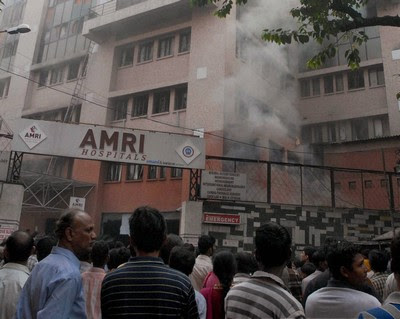
The fire swept through AMRI, a 180-bed, state-of-the-art facility regarded as one of the best hospitals in India. There were no exit doors or evacuation plan, the windows were sealed, and the local fire department took more than 90 minutes to arrive. Trapped, many of the patients died from smoke inhalation, according to a report in Christian Science Monitor. Most died in their beds, unable to escape the inferno that raged for hours. Residents living in the neighborhood accused the hospital guards of not taking any measures to control the fire and of even preventing others from rushing to the rescue of the victims who were abandoned by the hospital staff. The hospital is known to attract many foreign patients. However, it's too early to tell if any foreigners died in the blaze because most of the charred remains have yet to be identified.
“Large numbers of hospitals are coming up in a big way across India. What we need to look into when issuing the licenses for running the hospitals is that building construction has complied to safety building codes and a safety plan is in place in case of fire,” said Dr. Muzzafer Ahmed, a member of the country's National Disaster Management Authority, speaking to the media.
Though Indians remain among the most under-served in the world in terms of health care, growing for-profit Indian hospital industry has been promoting itself as an inexpensive alternative to high-cost surgery in the United States and Europe. There are a large number of foreign-trained highly-skilled physicians and surgeons in India. And the heart bypass surgery that costs $6,000 in India costs more than $20,000 in the US, according to Yaleglobal. There are similar deep discounts available for joint replacement, in vitro fertilization (IVF), and surrogate mothers' womb rental services.
Many Indians are expecting exponential growth in foreign demand to take advantage of the opportunity to combine medical treatment with vacations at significantly lower costs. "With health care costs going north," says Dr Alok Roy of Fortis Hospital, one of the leading service providers in the medical tourism sector, "patients are compelled to look at cost-effective destinations for medical treatments. And what could be better if they can combine that with sightseeing at scenic locations?"
The safety concerns about India go beyond the fear of being burned in a fire. Other major concerns include:
1. Fake pharmaceuticals are a big worry. In fact, 75 percent of counterfeit drugs supplied world over have origins in India, according to a report released by the Organization for Economic Co-operation and Development (OECD).
2. Lack of proper hygiene contributes to a large number of infections in hospital settings. A recent investigation into the death of 13 women in a Rajasthan hospital found that the poor hygiene standard in the hospital were flagrantly overlooked, according to Times of India.
Will the latest incident at AMRI in Kolkatta, combined with general concerns about unhygienic practices and widespread use of fake pharmaceuticals, hurt India's efforts at growing its medical tourism industry? The short answer is yes. However, the growth prospects could improve in the future when the Indian government and the hospital industry begin to improve the safety situation to regain the trust of prospective foreign customers.
Related Links:
Haq's Musings
Indians Carry Heavy Disease Burdens
India Leads the World in Open Defecation
WHO Says India Leads the World in TB Cases
Infectious Diseases Kill Millions in South Asia
Infectious Diseases Cause Low IQ
Malnutrition Challenge in India and Pakistan
Hunger: India's Growth Story
Google Baby Boom in India
WHO Report on Medical Tourism in India
The fire swept through AMRI, a 180-bed, state-of-the-art facility regarded as one of the best hospitals in India. There were no exit doors or evacuation plan, the windows were sealed, and the local fire department took more than 90 minutes to arrive. Trapped, many of the patients died from smoke inhalation, according to a report in Christian Science Monitor. Most died in their beds, unable to escape the inferno that raged for hours. Residents living in the neighborhood accused the hospital guards of not taking any measures to control the fire and of even preventing others from rushing to the rescue of the victims who were abandoned by the hospital staff. The hospital is known to attract many foreign patients. However, it's too early to tell if any foreigners died in the blaze because most of the charred remains have yet to be identified.

“Large numbers of hospitals are coming up in a big way across India. What we need to look into when issuing the licenses for running the hospitals is that building construction has complied to safety building codes and a safety plan is in place in case of fire,” said Dr. Muzzafer Ahmed, a member of the country's National Disaster Management Authority, speaking to the media.
Though Indians remain among the most under-served in the world in terms of health care, growing for-profit Indian hospital industry has been promoting itself as an inexpensive alternative to high-cost surgery in the United States and Europe. There are a large number of foreign-trained highly-skilled physicians and surgeons in India. And the heart bypass surgery that costs $6,000 in India costs more than $20,000 in the US, according to Yaleglobal. There are similar deep discounts available for joint replacement, in vitro fertilization (IVF), and surrogate mothers' womb rental services.
Many Indians are expecting exponential growth in foreign demand to take advantage of the opportunity to combine medical treatment with vacations at significantly lower costs. "With health care costs going north," says Dr Alok Roy of Fortis Hospital, one of the leading service providers in the medical tourism sector, "patients are compelled to look at cost-effective destinations for medical treatments. And what could be better if they can combine that with sightseeing at scenic locations?"
The safety concerns about India go beyond the fear of being burned in a fire. Other major concerns include:
1. Fake pharmaceuticals are a big worry. In fact, 75 percent of counterfeit drugs supplied world over have origins in India, according to a report released by the Organization for Economic Co-operation and Development (OECD).
2. Lack of proper hygiene contributes to a large number of infections in hospital settings. A recent investigation into the death of 13 women in a Rajasthan hospital found that the poor hygiene standard in the hospital were flagrantly overlooked, according to Times of India.
Will the latest incident at AMRI in Kolkatta, combined with general concerns about unhygienic practices and widespread use of fake pharmaceuticals, hurt India's efforts at growing its medical tourism industry? The short answer is yes. However, the growth prospects could improve in the future when the Indian government and the hospital industry begin to improve the safety situation to regain the trust of prospective foreign customers.
Related Links:
Haq's Musings
Indians Carry Heavy Disease Burdens
India Leads the World in Open Defecation
WHO Says India Leads the World in TB Cases
Infectious Diseases Kill Millions in South Asia
Infectious Diseases Cause Low IQ
Malnutrition Challenge in India and Pakistan
Hunger: India's Growth Story
Google Baby Boom in India
WHO Report on Medical Tourism in India

Comments
Seven UAE-funded hospitals and clinics will be built in Pakistan at a cost of nearly Dh63 million, Wam, the state news agency, reported yesterday.
After a signing ceremony between Abdullah Khalifa Al Ghafli, director of Emirati projects to assist Pakistan, and Maj Gen Zahir Shah, commander of the GOC 45th Engineers Division of the Pakistani Armed Forces, it was announced that two hospitals will be built under the names of Sheikh Khalifa and Sheikha Fatima.
Mr Al Ghafli said the UAE would also fund medical equipment for both hospitals and all of the clinics.
The increasing number of healthcare projects in Pakistan was a sign of the strong co-operation between Pakistan and the Emirates, said Sheikha Fatima bint Mubarak, chairwoman of the General Women's Union and of the Family Development Foundation.
"Pakistan was one of the first three countries in the world to recognise the UAE, following the declaration of the Union on December 2, 1971," she said.
Sheikha Fatima said the active role the UAE plays in places of crisis was due to the generosity of the president, Sheikh Khalifa.
"We thank Allah that when humanitarian work anywhere worldwide is mentioned, the name of the UAE comes up, thanks to its generosity and its strong commitment to shoulder its responsibilities and to preserve human dignity," she said....
--------
In February of this year, a medical team from the RCA and 400 local volunteers initiated a programme to provide measles and polio vaccines to Pakistani children.
The Campaign to Cure One Million Children, sponsored by Sheikha Fatima, also provided free medical treatment to more than five million children who suffered from malnutrition and digestive and respiratory diseases as a result of the flooding.
The UAE ambassador to Pakistan, Eissa Abdullah Al Nuaimi, noted that last month a UAE-funded school for 400 pupils was completed.
It will take 18 months to build the hospitals.
http://www.thenational.ae/news/uae-news/health/uae-to-fund-hospitals-in-pakistan
DHAKA: Bangladeshi patient is among the 73 killed so far in the massive fire at AMRI private hospital in Kolkata, the foreign ministry says.
However, a number of foreign and Indian media put the death toll at 90 in the hospital inferno, saying nearby hospitals were providing emergency treatment to the seriously wounded AMRI hospital victims.
The process to bring back the body of Gauranga Mandal through the Bangladesh Deputy High Commission in Kolkata is underway, the South Asia Department director general Mashfi Binte Shams told the reporters.
Family members had identified the body, Shams said.
She, however, did not have Gauranga's address or other information about him immediately.
Nearly 160 patients were admitted in the facility, The Times Of India said quoting hospital sources.
Additional director general, Fire Services, D Biswas was quoted as saying that patients who died were admitted in the critical care and orthopaedic units and were unable to move.
Only 85 patients were rescued and removed to two other units of the same hospital located at Mukundapur and Saltlake, they told the Indian daily. It said the hospital authority could not confirm the condition of remaining 75 patients....
http://www.theindependentbd.com/international/asia/83826-20-killed-in-kolkata-hospital-fire.html
Convincing Americans to jet off to third-world India is a bit of a harder sell, though. By buying a 23.9% stake in Parkway from U.S. private equity firm TPG for $687 million, Fortis has now positioned itself to become the regional leader in medical tourism, with a strong presence in India (where it has 46 hospitals) for the most price-sensitive patients and a new base in Singapore for higher-end customers aiming for more luxury. Investors are pretty upbeat about the deal: Fortis shares today hit a twelve-month high of 187.4 rupees and are up 35% so far this year. Parkway investors are happy, too. The Singapore company hit a 52-week high of 3.3 Singapore dollars today.
http://www.businessweek.com/blogs/eyeonasia/archives/2010/03/india_hospital.html
medical vacation
NDM-1 bacteria are propagating most lushly in India. The NDM-1 gene circulates in a family of bacteria called “Gram-negative” (after the Gram test used to identify them) whose unique cell envelopes make them both more toxic and harder to treat than “Gram-positive” bacteria. Many Gram-negative bacteria colonise the human gut and thrive in places with poor sanitation, where gut bacteria can pass from host to host through food and water contaminated with faecal matter. Basic sanitation remains rudimentary in many places in India. Only 65% of Delhi’s sewage is adequately treated and 20% of the population live in overcrowded slums highly exposed to contaminated water and food (9). Uncollected trash and teeming crowds abound just outside Medanta’s gates. Hawkers sell freshly squeezed fruit juice and vegetables from carts and, in a dusty lot next to the hospital, men sit on overturned buckets, eating rice and curry. A narrow stream emerges from near the hospital gates; its weedy banks are lined with trash. In a nearby slum, barefoot children play in narrow alleyways lined by open gutters carrying waste water and excrement.
In April 2011 researchers found NDM-1 bacteria in samples of Delhi’s drinking water and in puddles around the city. University of Cardiff microbiologist Tim Walsh suspects that between 100 million and 200 million Indians now carry NDM-1 bacteria in their guts. NDM-1 bacteria flourish at tropical temperatures, so the warm weather and floods of the monsoon season expose even more people.
Better healthcare for the poor, improved hospital hygiene and more judicious use of antibiotics could help contain NDM-1. But the politics of national pride may make such measures impossible. Indian medical authorities and politicians have both denied the public health relevance of NDM-1, and accused scientists working on the issue of a “conspiracy to hurt Indian medical tourism”, as The Indian Express put it. After initial reports on the bacteria appeared, Indian government authorities sent threatening letters to Indian researchers who had collaborated with British scientists on NDM-1 studies, according to the UK’s Channel 4 News (10). Walsh, who led many of the studies, said that his Indian collaborators were pressured to disavow their research and he became persona non grata in India: “I’m the devil incarnate and eat babies for breakfast according to the Indian government. It’s a witch hunt.”
The Indian government first complained that the bacteria gene was named after their capital city. Then, as the controversy grew, it convened an advisory committee on antibiotic resistance, and floated an ambitious proposal to ban the sale of antibiotics without a physician’s prescription, and restrict the use of last-resort intravenous antibiotics to tertiary hospitals. But after pharmacists went on strike in August 2011, the proposal was withdrawn (11). “The committee was a knee-jerk response,” said Ramanan Laxminarayan, of the Public Health Foundation of India. Wattal, Laxminarayan and others agree that the proposed restrictions would have affected a wide range of drugs besides antibiotics, and would have impeded access to life-saving antibiotics for the rural poor. In fact, the policy had little chance of being enforced: health policy is implemented at state level in India, not federal level.
http://pulitzercenter.org/reporting/india-global-health-crisis-super-antibiotic-resistant-bacteria-ndm-1-medical-tourism-poverty
Lill-Karin Skaret, a 67-year-old grandmother from Namsos, Norway, was traveling to a lakeside vacation villa near India’s port city of Kochi in March 2010 when her car collided with a truck. She was rushed to the Amrita Institute of Medical Sciences, her right leg broken and her artificial hip so damaged that replacing it required 12 hours of surgery.
Three weeks later and walking with the aid of crutches, Skaret was relieved to be home. Then her doctor gave her upsetting news. Mutant germs that most antibiotics can’t kill had entered her bladder, probably from a contaminated hospital catheter in India. She risked a life-threatening infection if the bacteria invaded her bloodstream -- a waiting game over which she had limited control, Bloomberg Markets magazine reports in its June issue.
“I got a call from my doctor who told me they found this bug in me and I had to take precautions,” Skaret remembers. “I was very afraid.”
Skaret was lucky. Eventually, her body rid itself of the bacteria, and she escaped harm from a new type of superbug that scientists warn is spreading faster, further and in more alarming ways than any they’ve encountered. Researchers say the epicenter is India, where drugs created to fight disease have taken a perverse turn by making many ailments harder to treat.
India’s $12.4 billion pharmaceutical industry manufactures almost a third of the world’s antibiotics, and people use them so liberally that relatively benign and beneficial bacteria are becoming drug immune in a pool of resistance that thwarts even high-powered antibiotics, the so-called remedies of last resort.
Medical Tourism
Poor hygiene has spread resistant germs into India’s drains, sewers and drinking water, putting millions at risk of drug-defying infections. Antibiotic residues from drug manufacturing, livestock treatment and medical waste have entered water and sanitation systems, exacerbating the problem.
As the superbacteria take up residence in hospitals, they’re compromising patient care and tarnishing India’s image as a medical tourism destination.
“There isn’t anything you could take with you traveling that would be useful against these superbugs,” says Robert Moellering Jr., a professor of medical research at Harvard Medical School in Boston.
-----------
India is susceptible because it has many sick people to begin with. The country accounts for more than a quarter of the world’s pneumonia cases. It has the most tuberculosis patients globally and Asia’s highest incidence of cholera.
Most of India’s 5,000-plus drugmakers produce low-cost generic antibiotics, letting users and doctors switch around to find ones that work. While that’s happening, the germs the antibiotics are targeting accumulate genes for evading each drug. That enables the bugs to survive and proliferate whenever they encounter an antibiotic they’ve already adapted to.
India’s inadequate sanitation increases the scope of antibacterial resistance. More than half of the nation’s 1.2 billion residents defecate in the open, and 23 percent of city dwellers have no toilets, according to a 2012 report by the WHO and Unicef.
Uncovered sewers and overflowing drains in even such modern cities as New Delhi spread resistant germs through feces, tainting food and water and covering surfaces in what Dartmouth Medical School researcher Elmer Pfefferkorn describes as a fecal veneer..
http://www.bloomberg.com/news/2012-05-07/drug-defying-germs-from-india-speed-post-antibiotic-era.html
Do I describe the lovely hotel in Goa when my strongest memory of it was lying hunched in a fetal position, holding a pair of scissors with the door bolted shut, while the staff member of the hotel who had tried to rape my roommate called me over and over, and breathing into the phone?
How, I ask, was I supposed to tell these stories at a Christmas party? But how could I talk about anything else when the image of the smiling man who masturbated at me on a bus was more real to me than my friends, my family, or our Christmas tree? All those nice people were asking the questions that demanded answers for which they just weren't prepared.
When I went to India, nearly a year ago, I thought I was prepared. I had been to India before; I was a South Asian Studies major; I spoke some Hindi. I knew that as a white woman I would be seen as a promiscuous being and a sexual prize. I was prepared to follow the University of Chicago’s advice to women, to dress conservatively, to not smile in the streets. And I was prepared for the curiosity my red hair, fair skin and blue eyes would arouse.
But I wasn't prepared.
There was no way to prepare for the eyes, the eyes that every day stared with such entitlement at my body, with no change of expression whether I met their gaze or not. Walking to the fruit seller's or the tailer's I got stares so sharp that they sliced away bits of me piece by piece. I was prepared for my actions to be taken as sex signals; I was not prepared to understand that there were no sex signals, only women's bodies to be taken, or hidden away.
I covered up, but I did not hide. And so I was taken, by eye after eye, picture after picture. Who knows how many photos there are of me in India, or on the internet: photos of me walking, cursing, flipping people off. Who knows how many strangers have used my image as pornography, and those of my friends. I deleted my fair share, but it was a drop in the ocean-- I had no chance of taking back everything they took
For three months I lived this way, in a traveler's heaven and a woman's hell. I was stalked, groped, masturbated at; and yet I had adventures beyond my imagination. I hoped that my nightmare would end at the tarmac, but that was just the beginning. Back home Christmas red seemed faded after vermillion, and food tasted spiceless and bland. Friends, and family, and classes, and therapy, and everything at all was so much less real than the pain, the rage that was coursing through my blood, screaming so loud it deafened me to all other sounds. And after months of elation at living in freedom, months of running from the memories breathing down my neck, I woke up on April Fool's Day and found I wanted to be dead.
http://ireport.cnn.com/docs/DOC-1023053
A 22-year-old photojournalist has been gang-raped by five men in the Indian city of Mumbai, police say.
The woman, who was on assignment on Thursday evening in the Lower Parel area when she was attacked, is in hospital with multiple injuries.
She was accompanied by a male colleague who was beaten by her attackers. Police have arrested one of the suspects.
In a similar case last December, a 23-year-old student was gang-raped on a bus in the capital, Delhi.
In that case, the woman and her male friend were brutally assaulted and she later died in hospital from her injuries.
The attack sparked nationwide protests and forced the authorities to introduce tougher laws for crimes against women.
'Reprehensible'
The victim of Thursday's attack worked as an intern with a Mumbai-based English magazine and had gone to the Shakti Mills - a former textile mill that now lies abandoned and in ruins - for a photo shoot, police said.
She has been admitted to Jaslok hospital in Mumbai, which said that she was stable and able to speak.
"She went through a minor investigation procedure today [Friday] morning. She had both internal and external injuries," the statement said.
Hundreds of demonstrators have staged a silent protest in the city.
Mumbai police commissioner Satyapal Singh said the incident took place between "6pm and 6:30pm on Thursday" and described it as "reprehensible".
"The man [victim's male colleague] was clicking pictures on a camera while the girl was taking pictures on her mobile phone in the dilapidated building when one accused accosted them and inquired why they were there at the railway property," he said.
"He later called four more men to the spot. They tied the male colleague's hands with a belt and took the girl to the bushes and raped her."
Mr Singh said nearly 20 teams had been formed to investigate the case and that all the accused had been identified.
Earlier, police said 35 people had been detained and were being questioned. Sketches of the five accused were also released....
http://www.bbc.co.uk/news/world-asia-india-23806871
Indian regulators’ findings that samples of Nestlé SANESN.VX +0.24% Maggi instant noodles contained impermissibly high levels of lead stunned middle-class consumers this month. But long before India yanked the product off store shelves, U.S. food-safety inspectors had deemed hundreds of made-in-India snacks unfit for sale in America.
Data on the website of the U.S. Food and Drug Administration show that it rejected more snack imports from India than from any other country in the first five months of 2015. In fact, more than half of all the snack products that were tested and then blocked from sale in the U.S. this year were from India. Indian products led the world in snack rejects last year as well.
Mexico, a much larger trading partner of the U.S., was second in terms of rejections this year, followed by South Korea. China — whose exports to the U.S. are worth ten times as much as India’s — was a distant eighth.
And it’s not just snack foods. The U.S. FDA has rejected all sorts of imports from India, including everything from cosmetics to drugs to ceramics.
--------
Most Indian snacks rejected by the FDA this year were from the Nagpur-based food company Haldiram’s. Among the rejected Haldiram’s products were some sugar candies and salty Indian snack mixes. The FDA said on its website that it rejected the Haldiram’s products because it found pesticides in them.
A.K. Tyagi, a senior-vice president at Haldiram’s, said its food “is 100% safe and complies with the law of the land.” Discrepancies, he said, arise because food-safety standards differ in India and the U.S. “A pesticide that is permitted in India may not be allowed there. And even if it is, they may not allow it in the same concentration as it is here,” he said.
Indian baked snacks also had troubles getting into the States. Out of 217 imported baked products rejected by the U.S. FDA so far this year, more than half were made in India. One of them was a biscuit pack manufactured by India’s largest biscuit-maker, Britannia Industries Ltd.
Dr Reddy's Laboratories Ltd, India's second-largest drugmaker, has received a "warning letter" from US regulators over inadequate quality controls at three manufacturing plants producing drugs for cancer and other diseases.
The warning is the latest in a string of incidents that have hurt the industry's reputation and slowed its growth in the world's largest drug market, where India supplies more than 40% of the generic and over-the-counter medicines.
Dr Reddy's said the FDA warning meant it would not receive US approvals for drugs made at the plants until it fixed the problems, a blow for business at a company that relies on the US for a majority of its sales.
The affected plants account for more than 10% of the company's sales.
Dr Reddy's said a production halt may not be required, but the news caught investors by surprise, sending shares to their lowest level in four months.
"We are probably looking at flat to declining earnings in FY 2017, while earlier we were expecting growth," said analyst Nimish Mehta, founder of Research Delta Advisors.
Analysts warned the move by the US Food and Drug Administration would hit US sales for at least the next two years, as the launch of key products may be delayed.
"There is no indication in the warning letter that we need to stop manufacturing, but we will be examining the contents and deciding our strategy," Dr Reddy's CFO Saumen Chakraborty told the Indian television news channel ET Now.
The FDA inspected the company's Srikakulam, Miryalaguda, and Duvvada drug-manufacturing sites in November, January, and February, and it almost immediately issued initial notices asking the group to rectify some problems.
But the company was unable to fix the issues to the satisfaction of the FDA, and it was hit with a warning letter. Such letters are issued by the agency when it finds a manufacturer has "significantly violated" its regulations.
"We had absolutely no idea it could escalate to this level," Siddhanth Khandekar of ICICI Securities said.
Dr Reddy's said the agency's concerns with the plants related to quality-control procedures and how data was recorded. It did not provide details.
The FDA has already banned plants of other Indian firms, such as Wockhardt Ltd and Ranbaxy Laboratories Ltd, a unit of the country's largest drugmaker Sun Pharmaceutical Industries Ltd, after finding faulty, fudged, or incomplete data records in recent years.
Both companies have been unable to get their plants cleared by the agency, more than two years after the bans.
But analysts say the FDA considers data integrity issues to be the most serious, typically requiring at least two years to be remedied to its satisfaction.
Dr Reddy's CEO G V Prasad said the group was revamping its quality systems as a result.
The FDA has increased the number of inspections of foreign plants supplying to the US over the past year, exposing quality-control issues at several Indian drugmakers. India plants of multinational drugmakers, such as Novartis and Mylan, have also come under fire.
Industry executives say they have been improving their manufacturing and systems, but sanctions continue.
Dr Reddy's makes drug ingredients at the Srikakulam and Miryalaguda plants, and cancer medicines at the Duvvada plant.
Sun Pharmaceutical Industries Ltd., India’s largest drugmaker by sales, said Saturday that one of its factories is under increased scrutiny from U.S. regulators.
The generic-drug maker’s factory in Halol, in the western Indian state of Gujarat, received a warning letter from the U.S. Food and Drug Administration. Warning letters are issued when the FDA isn't satisfied with a drugmaker’s plan to fix quality issues spotted by the regulator.
This is the latest setback for India’s pharmaceutical companies, which have struggled with quality issues under the increased scrutiny from the FDA. Indian companies account for around 40% of generic drug sales in the U.S.
U.S. inspectors in September last year said they were concerned with how Sun Pharma workers at its plant handled quality-test data and the plant’s “sterile environment,” said Dilip Shanghvi, Sun Pharma’s managing director.
If Sun Pharma is unable to assure the FDA that it can fix the problems, the regulator will issue an import alert, barring that factory from producing medicines for the U.S.
Sun Pharma makes some of its most profitable products at the Halol factory, including pre-filled syringes that need to manufactured in a sterile environment.
The Halol factory is continuing to produce drugs as it tries to fix quality issues, better train its staff and automate more of the manufacturing process, Mr. Shanghvi said.
The company has already moved production of some of the drugs produced at Halol to mitigate any impact on sales should the Halol plant be unable to export to the U.S., he said.
These infants are born with bacterial infections that are resistant to most known antibiotics, and more than 58,000 died last year as a result, a recent study found. While that is still a fraction of the nearly 800,000 newborns who die annually in India, Indian pediatricians say that the rising toll of resistant infections could soon swamp efforts to improve India’s abysmal infant death rate. Nearly a third of the world’s newborn deaths occur in India.
“Reducing newborn deaths in India is one of the most important public health priorities in the world, and this will require treating an increasing number of neonates who have sepsis and pneumonia,” said Dr. Vinod Paul, chief of pediatrics at the All India Institute of Medical Sciences and the leader of the study. “But if resistant infections keep growing, that progress could slow, stop or even reverse itself. And that would be a disaster for not only India but the entire world.”
In visits to neonatal intensive care wards in five Indian states, doctors reported being overwhelmed by such cases.
“Five years ago, we almost never saw these kinds of infections,” said Dr. Neelam Kler, chairwoman of the department of neonatology at New Delhi’s Sir Ganga Ram Hospital, one of India’s most prestigious private hospitals. “Now, close to 100 percent of the babies referred to us have multidrug resistant infections. It’s scary.”
These babies are part of a disquieting outbreak. A growing chorus of researchers say the evidence is now overwhelming that a significant share of the bacteria present in India — in its water, sewage, animals, soil and even its mothers — are immune to nearly all antibiotics.
Newborns are particularly vulnerable because their immune systems are fragile, leaving little time for doctors to find a drug that works. But everyone is at risk. Uppalapu Shrinivas, one of India’s most famous musicians, died Sept. 19 at age 45 because of an infection that doctors could not cure.
While far from alone in creating antibiotic resistance, India’s resistant infections have already begun to migrate elsewhere.
“India’s dreadful sanitation, uncontrolled use of antibiotics and overcrowding coupled with a complete lack of monitoring the problem has created a tsunami of antibiotic resistance that is reaching just about every country in the world,” said Dr. Timothy R. Walsh, a professor of microbiology at Cardiff University.
Indeed, researchers have already found “superbugs” carrying a genetic code first identified in India — NDM1 (or New Delhi metallo-beta lactamase 1) —around the world, including in France, Japan, Oman and the United States.
Anju Thakur’s daughter, born prematurely a year ago, was one of the epidemic’s victims in Amravati, a city in central India. Doctors assured Ms. Thakur that her daughter, despite weighing just four pounds, would be fine. Her husband gave sweets to neighbors in celebration.
Three days later, Ms. Thakur knew something was wrong. Her daughter’s stomach swelled, her limbs stiffened and her skin thickened — classic signs of a blood infection. As a precaution, doctors had given the baby two powerful antibiotics soon after birth. Doctors switched to other antibiotics and switched again. Nothing worked. Ms. Thakur gave a puja, or prayer, to the goddess Durga, but the baby’s condition worsened. She died, just seven days old.
“We tried everything we could,” said Dr. Swapnil Talvekar, the pediatrician who treated her. Ms. Thakur was inconsolable. “I never thought I’d stop crying,” she said.
A test later revealed that the infection was immune to almost every antibiotic. The child’s rapid death meant the bacteria probably came from her mother, doctors said.
http://www.nytimes.com/2014/12/04/world/asia/superbugs-kill-indias-babies-and-pose-an-overseas-threat.html?_r=0
https://www.washingtonpost.com/news/worldviews/wp/2016/04/21/how-bad-are-most-of-indias-medical-schools-very-according-to-new-reports/
In a country with the world's heaviest health burden, and highest rates of death from treatable diseases like diarrhea, tuberculosis and pneumonia, corruption at medical schools is an extremely pressing issue. The Indian Medical Association estimates that nearly half of those practicing medicine in the country do not have any formal training, but that many of those who claim to be qualified may actually not be.
a couple of recent studies and reports have cast serious doubts on the quality and ethics of the country's vast medical schooling system. The most recent revealed that more than half of those 579 didn't produce a single peer-reviewed research paper in over a decade (2005-2014), and that almost half of all papers were attributed to just 25 of those institutions.
The 2011 court case against a man, Balwant Arora, was one of the earlier indications of the massive levels of fraud. Arora brazenly admitted to issuing more than 50,000 fake medical degrees at around $100 apiece from his home, saying that each of the recipients had "some medical experience" and that he was doing it in service to a country that desperately needs more doctors. He had served four months in jail in 2010 for similar offences.
Private medical colleges have proliferated rapidly in India. When in 1980 there were around 100 public colleges and 11 private, the latter now outnumber the former by 215 to 183. Most are run by businessmen with no medical experience. Last January, the British Medical Journal found that many private medical colleges charged "capitation" fees, which are essentially compulsory donations required for admission. Jeetha D'Silva, who authored that report, wrote, "Except for a few who get into premier institutions of their choice purely on merit, many students face Hobson's choice — either pay capitation to secure admission at a college or give up on the dream of a medical degree."
The best public medical colleges have acceptance rates that are minuscule, even compared to Ivy League universities. Those colleges also tend to be the ones that produce the most research papers, as well as handle the most patients, which would seem to eliminate the possible excuse that overwhelming patient burdens prevent private colleges from producing valuable research.
The most productive medical college in India is also its largest public health institution, the All India Institute of Medical Sciences, or AIIMS. In the 10-year period that Samiran Nundy and his colleagues examined, AIIMS published 11,300 research papers. For context, that is about a quarter of what Massachusetts General Hospital produced in the same time frame.
http://gulfnews.com/news/uae/health/saudi-german-hospitals-to-foray-into-pakistan-1.1847262
The Saudi German Hospitals (SGH) group will build and manage hospitals in Bahria Town gated-communities in Pakistan, top management of the two companies announced on Thursday in Dubai.
The partnership will revolutionise Pakistan’s health care sector, eliminating the need for Pakistanis to travel to the West for treatment, Riaz Malik, chairman of Bahria Town, said at a press conference at Saudi German Hospital Dubai, where Sobhi Batterjee, president of Bait Al Batterjee (BAB) Medical Company, the founder of SGH, also spoke.
Under the agreement, SGH will build a 150-300 bed hospital in each Bahria Town development, starting with Lahore, Karachi and Islamabad in the first stage. BAB will also take over the upcoming new hospital of Bahria Town in Lahore as an operator and possibly also manage all hospitals of Bahria Town.
Each SGH-built hospital will have an investment of $100 million (Dh367 million), Batterjee said, and be built on a 12-acre plot of land provided for free in Bahria Town communities.
Malik said Bahria Town hospitals “will not stop treatment because of [patients’] financial problems. Bahria Town will put in its own money [to cover the remaining cost]”.
Batterjee said the partnership will lead to “reverse medical tourism” where patients and doctors from outside Pakistan will travel to SGH and SGH-managed hospitals in Pakistan. He said SGH’s foray in Pakistan will set a benchmark to which all other health care facilities will be compared.
“This will increase the corporate investment injection into health care, which is missing in Pakistan. Health care is an industry in itself, many people miss that fact,” Batterjee added.
Malik said Bahria Town hospitals meanwhile will gain from the 30-year expertise of SGH. “Unfortunately, there are too many health issues in Pakistan. We wanted to focus on this sector and after researching for the best health care provider, we found that SGH would be our ideal partner,” Malik added. “We are one team and I commit to giving Pakistan the best treatment ever,” said Batterjee.
http://www.cnn.com/2016/08/26/asia/india-man-carries-wifes-body/index.html
A grieving man in India carried his wife's body for miles after the hospital where she died allegedly failed to provide a way to transport her body back to their village.
Without the money to hire a vehicle, Dana Manjhi walked for 6.2 miles (10 kilometers) by foot Wednesday.
In the humid and sweltering summer temperatures, he hoisted his wife's body, wrapped in a blue sheet, over his shoulder. He was accompanied by his weeping 12-year-old daughter.
His wife, Amang Dei, 42, died of tuberculosis Tuesday night at a hospital in the eastern state of Odisha.
On-lookers intervene
Manjhi and his daughter had about 50 kilometers (31 miles) to go before reaching their village when passersby called a local journalist.
Odisha TV journalist Ajit Singh found them and recorded video of the pair that has been widely-shared across the nation.
"I am carrying the dead body of my wife as I am poor and cannot afford a vehicle. I told the same to the hospital authorities. They said they could not offer any help," Manjhi said in the video.
Singh described the story to CNN.
"Some locals ... spotted Mr. Manjhi carrying the dead body of his wife accompanied by his 12-year-old daughter, Sanadei Manjhi, and called me," he said. "We filmed him carrying the dead body and asked him what happened.
A car was eventually organized for Manjhi.
A government-provided transport van should have been available to Manjhi, affiliate CNN News 18 reported. However, he said he was refused help and told by the hospital to take the body and leave.
The hospital denied reports it withheld a car from him. A hospital official told CNN they did not even know when Manjhi took his wife's body.
"No one knows when her husband carried her out of the hospital," said Dr. Jaghu Lal Agarwal, assistant district medical officer at the Kalahandi hospital.
"Her death was not confirmed by the on-duty doctor and no discharge slip was issued. The hospital staffs on duty were not informed by Mr. Manjhi."
A government inquiry had been launched into the incident, said Brundha D, a district official.
"We have ordered a probe and due actions will be taken if any wrongdoing has been done," she said.
Odisha is one of the remotest states in India. A 2011 UN report that examined 19 Indian states gave it the lowest ranking on the Human Development Index.
India ranks 106 out of 140 countries for health care, according to the World Economic Forum Global Competitiveness Index.
http://www.mirror.co.uk/news/world-news/woman-who-returned-surgery-india-9619602
An American woman who travelled to India died after contracting a superbug resistant to all forms of antibiotic, doctors have said.
The victim, aged in her 70s, died in Nevada after medics in the US were unable to find any drug that could treat her.
A report into the incident says it is believed she contracted the superbug NDM-1.
"The patient developed septic shock and died in early September," it read.
"During the two years preceding this US hospitalization, the patient had multiple hospitalizations in India related to a right femur fracture and subsequent osteomyelitis of the right femur and hip; the most recent hospitalization in India had been in June 2016,"
The lethal bug NDM-1 first came to the attention of doctors in Britain around 2010.
Scientists writing in the journal Lancet Infectious Diseases said there had been 37 cases in the UK of a bug resistant to all antibiotics.
All patients had travelled from Asia after cosmetic surgery, cancer treatment and transplants.
New Delhi-Metallo-1 (NDM-1) also has an "alarming potential to spread and diversify."
Experts said there are currently no drugs in development to counter NDM-1 meaning it was likely to spread.
Randall Todd of the Washoe County, Nevada health department, said: "We have a shrinking world.
"Hospitals should be reminded that they have got to take a travel history and be open to the possibility that an uncommon infection might be responsible."
http://www.bbc.com/news/world-asia-india-41092466#
Two doctors in India were temporarily released from their duties after a video surfaced of them arguing while standing over a pregnant patient during an operation, their hospital says.
Footage of the incident, at the Umaid hospital in north Rajasthan, has been widely circulated, causing outrage.
A senior hospital official told the BBC that the woman and her baby are fine.
The source of the leaked video is unclear, but the official confirmed that it came from within the hospital.
Trading insults
After the video emerged online, many media reports claimed the woman pictured on the operating table gave birth to a baby who did not survive.
But Dr Ranjana Desai, the superintendent of Umaid Hospital in Jodhpur, said this was inaccurate. "By the time I saw the video and conducted an internal inquiry, the media had already reported that this baby had died," she told the BBC.
A baby did die, but not the one the media reported, she said. A few feet away, on another operating table within the same room, a different woman gave birth to a stillborn baby. "These two incidents are not linked," Dr Desai told the BBC.
In the video, which has been shared widely across media and online, the two doctors can be heard slinging insults at each other in Hindi before arguing over whether the patient had eaten before surgery.
Dr Desai identified the two doctors as Dr Ashok Nanival and Dr Mathura Lal Tak.
She said that the two doctors were not formally suspended, but had been released from their duties at the hospital while they proceed with an internal inquiry. Additionally, the hospital is in the process of collecting statements from staff to find out who shot the video and how it came to be leaked.
The Rajasthan High Court has ordered the hospital to submit a report, while they proceed with a separate state level investigation into the incident.
When countries go to war, even diplomatically, it's always the people who suffer. This is exactly what's been happening to the people as Indo-Pak ties have become frosty. India's imposition of restrictions on the issue of medical visas to Pakistanis has not just affected hundreds of patients from across the border but also dealt a body blow to medical tourism in India.
It's hard to find out precisely how many people travelled to India from Pakistan for treatment, but several laboratories TOI spoke to in Islamabad revealed that before visa restrictions were imposed, over 600 Pakistani patients used to visit India.
Most of them suffering from liver and heart ailments would go to major hospitals in Delhi, Mumbai, Chennai and other cities. But in February, there was a sharp drop in the numbers. And in the last two months, not a single Pakistani was granted a medical visa.
India took this decision after a Pakistani court sentenced Indian national and retired naval officer Kulbhushan Jadhav to death on the charge of espionage. Islamabad has reacted strongly to this, while Pakistani civil society has appealed to human rights organisations to take it up with India and international bodies.
On this side of the border, business has been affected a bit. Even though more people come from Bangladesh, Iraq and Maldives for treatment, Pakistanis spend the most in India. A recent report by ministry of commerce and industry says an average Pakistani spends Rs 1.87 lakh on treatment in India. Those from Bangladesh spend Rs 1.34 lakh on an average, followed by those from Commonwealth countries (Rs 1.25 lakh), Russia (Rs 1.04 lakh) and Iraq (Rs 98,554).
"This is because Pakistani patients mostly come for organ transplants and heart surgeries for children that are costly," said Manish Chandra, co-founder of Vaidam medical travel assistance company.
In 2015-16, he added, nearly 166 Pakistanis received treatment in India every month. Top Delhi hospitals, which are frequented by foreign nationals, confirmed this.
"We have observed a decrease in the number of patients coming from Pakistan. Patients have also informed us that visas have become hard to get. Issuing of visas is in the domain of the two governments and we would not like to comment on the policy of the central government on this," said a spokesperson of Max healthcare.
Dr Subhash Gupta, senior liver transplant surgeon at the hospital, added that there hasn't been a single patient from Pakistan for a month as against up to 30 earlier.
At Fortis, sources said, at least 20 patients who had contacted the hospital for various procedures have failed to come due to visa issues.
Officials at Apollo hospital said they used to get 30 Pakistani patients each month till last year, but not a single one has come in the last month.
http://www.bbc.com/news/world-asia-india-42194192#
A newborn baby, declared dead by a hospital in the Indian capital Delhi, was found to be alive while they were on their way to his funeral.
Doctors at the privately run Max Hospital had pronounced the baby dead hours after his twin who was stillborn.
The parents said they noticed one of the babies squirming inside the plastic bag that doctors placed the infants in.
The incident has sparked outrage and a debate over the quality of private healthcare which is often costly.
Delhi Chief Minister Arvind Kejriwal tweeted that he had ordered an inquiry into the matter. The state health minister has also described the incident as "shocking criminal negligence".
According to the twins' grandfather, the stunned family rushed the newborn to a nearby hospital where they were told that their baby was still alive, local media reported.
In a statement to reporters, Max hospital said they were "shaken" and "concerned" over the incident, and added that the doctor has been asked to go on leave, pending an inquiry.
According to ANI news agency, Delhi police have begun to investigate the case and have consulted legal experts.
This is the second instance in recent months where a private hospital in India has been called out for negligent care. Last month, a girl died of dengue fever in another hospital and the parents allege they were overcharged for her treatment.
After a 70-year-old American woman died of the superbug NDM-1 (New Delhi Metallo-beta-lactamase-1) in November last year, health officials recently revealed that her infection was resistant to all the available antibiotics, raising major concerns in the health community.
https://www.hindustantimes.com/health-and-fitness/what-is-superbug-ndm-1-s-india-connection/story-7uwo0eUZjr1S5xRICIfWdP.html
Here’s all you need to know about the superbug, the infection it causes, where it’s found and its effects:
NDM-1 (New Delhi Metallo-beta-lactamase-1) is an enzyme that makes bacteria resistant to a wide range of powerful antibiotics, including the carbapenem class of antibiotics that are used to treat multidrug-resistant infections.
The gene for NDM-1 encodes beta-lactamase enzymes called carbapenemases, which makes bacteria resistant to antibiotics, including carbapenem, which is used to treat other superbugs such as methicillin-resistant Staphyloccus aureus (MRSA).
Bacteria that produce carbapenemases are popularly referred to as superbugs because they are difficult to treat and result in the infection spreading easily within the body, especially in people who are ill or recuperating from an illness or a surgery.
People die of septic shock after the infection enters the bloodstream and reached the heart, lungs, kidneys, bones or joints to cause multi-organ failure.
The enzyme that makes bacteria drug resistant got New Delhi in its name because it was first detected in 2008 in Swedish patient of Indian origin who had travelled to India.
NDM-1 has been detected in bacteria in the UK, US, India, Pakistan, Croatia, Canada and Japan.
The first death was recorded in Belgium, where a man who was treated in a hospital in Pakistan died in August 2010.
The most common bacteria that make this enzyme are E. Coli and K. pneumoniae, but the NDM-1 gene can spread to other bacterial strains.
https://www.wired.com/2011/10/ndm1-india-politics/
It's been more than a year since the "Indian superbug" NDM-1 – not actually a bacterium, but a gene that directs production of an enzyme – hit the news. The enzyme, whose acronym is short for New Delhi metallo-beta-lactamase-1, disables almost all antibiotics directed against it, leaving the bacteria in which the gene appears vulnerable to only two imperfect and sometimes toxic drugs.
The enzyme and its gene, blaNDM-1, were first identified in 2008 in people who had traveled in India or sought medical care in South Asia. Hence its name: Many beta-lactamases, enzymes that denature the very large class of everyday antibiotics known as beta-lactams, are named for countries and cities where they were first identified. Since its identification, NDM-1 has been discovered in patients in more than a dozen countries and has also been found to be widely harboured outside hospitals in India, and in surface waters and sewage there.
The unveiling of NDM-1 clearly caused embarrassment for India, and media and lawmakers there struck back, throwing around intemperate language and claiming the naming of the enzyme was a plot to derail the subcontinent's medical-tourism industry — even though the Indian doctors hadattempted to raise the alarm earlierand had been ignored.
So it seemed like a promising signal of openness when an international conference on antibiotic resistance opened in New Delhi a week ago. But in its wake, just what is going on in India – and whether its government is willing to face up to what might be an international crisis – is less clear than ever.
------------------
If India is moving to contain NDM-1, it is doing so barely in time. Dr. Timothy Walsh, who first isolated the gene and enzyme in a resident of Sweden who had been hospitalized in India, told the Times of India:
We estimate that the carriage rate of NDM-1 in India is between 100 and 200 million, which means that NDM-1 has become a very serious public health issue... With globalization, NDM-1 will continue to spread unchecked around the world and once established in higher enough numbers in a particular country, will further disseminate.
We are desperate to help in any way we can to initiate studies to realize the full impact of NDM-1 on Indian society... I cannot say whether the Indian government is finally taking the issue seriously – only they can answer that charge. However, what is clear is that we have lost a year fighting amongst ourselves when our energies and resources should have been focused elsewhere – on NDM-1.
Many in India face a similar fate – they get admitted to hospitals with seemingly treatable illnesses, only to contract HAIs caused by superbugs.
https://www.hindustantimes.com/india-news/the-growing-peril-of-drug...
Manoj Ghamandayan, 21, has little memory of the month he was hospitalised and nearly died.
It started out as a fever in the first week of October 2019. Then he began to have trouble breathing. Soon, Ghamandayan, an undergraduate Arts student from Haryana’s Jhajjar district, was admitted to Sunflag Global Hospital in Rohtak. He was diagnosed with dengue, a viral infection spread by the Aedes mosquito and scrub typhus, a bacterial infection. To help him recover, the hospital hooked him to multiple devices: a mechanical ventilator to aid breathing, a catheter for draining urine, and a central line to pump medicines into his body.
But Ghamandayan got sicker. During his two-week stay at the hospital, he caught three healthcare-associated infections (HAIs) or infections that patients catch at hospital. Invasive devices like ventilators, central lines and catheters pose the risk of HAIs because they breach the body’s protective barriers.
For example, a ventilator’s breathing tube could easily transfer bacteria from a nurse’s hands to the patient’s lungs, triggering pneumonia.
Ghamandayan came down with two bacterial infections, Escherichia coli and Acinetobacter baumanii, and a fungal species called Candida.
These pathogens were superbugs — i.e, resistant to multiple antimicrobial drugs — which make them hard to treat. His family moved him to New Delhi’s Sir Gangaram Hospital, where his doctor, Atul Gogia, deployed two last-line antibiotics called colistin and meropenem —both expensive, with toxic side effects. Yet these drugs are the only hope for patients when all else fails.
Ghamandayan eventually got better and was discharged nearly a month after he was first hospitalised. In all, he had spent Rs 6 lakh on his treatment.
Many in India face a similar fate – they get admitted to hospitals with seemingly treatable illnesses, only to contract HAIs caused by superbugs.
Few Indian hospitals track their HAI rates, which is why it is hard to get a countrywide picture of this problem.
But several stand-alone studies show that India has higher rates compared to richer countries like the US. For example, a study by the International Nosocomial Infection Control Consortium, which surveyed data from 40 hospitals in 20 cities in India, between 2004 and 2013, found that for every 1,000 days that patients were hooked to ventilators in Indian cardiac Intensive Care Units, there were around 11 times as many pneumonia cases as in American hospitals. “The rates of infections in Indian hospitals are just unacceptably high,” says Ramanan Laxminarayan, a public-health expert at Washington DC’s Center for Disease Dynamics, Economics & Policy (CDDEP).
But that’s just part of the problem. Many of the bugs that cause these infections have learnt to tolerate powerful antimicrobial drugs. Unpublished 2019 data from a 20-hospital surveillance network run by the Indian Council for Medical Research (ICMR) shows that key hospital bugs, like Acinetobacter baumanii and Klebsiella pneumoniae, have grown widely drug-resistant.
Patients infected with any of these bugs often have to be treated with last line drugs, which are both expensive and toxic. Many of them succumb: A 2018 study, carried out in 10 Fortis Group hospitals found that patients with multidrug resistant infections were almost thrice as likely to die as those with susceptible ones.
https://theconversation.com/what-islamic-hygienic-practices-can-teach-when-coronavirus-is-spreading-133221
The series focuses on Syra Madad, a Muslim public health specialist in a New York hospital, who takes a break to say her prayers at the Islamic Center of New York University. Before entering the prayer room, Madad stops to perform wudu, and washes her mouth and face as well as her feet.
Islamic law requires Muslims to ritually purify their body before praying. As a scholar of Islamic studies who researches ritual practices among Muslims, I have found that these practices contain both spiritual and physical benefits.
Ritual purity
The Prophet Muhammad left detailed guidance for Muslims on how to live their lives, including how to pray, fast and stay ritually pure. This guidance is available in collections called the Hadith.
According to Islamic law, there are minor and major impurities. Minor impurities involve urinating, defecating and sleeping, among other practices. A person of Muslim faith is supposed to perform a ritual washing of their bodies before praying to get rid of these minor impurities.
Wudu is to be performed, as was done by the Prophet Muhammad, in a specific order before praying, which takes place five times a day. Before each prayer, Muslims are expected to wash themselves in a certain order – first hands, then mouth, nose, face, hair and ears, and finally their ankles and feet.
-----------------
Muslim institutions have begun to recommend that people make sure to wash their hands for 20 seconds with soap before doing wudu. Emphasizing that wudu alone cannot prevent the virus from spreading, other Islamic institutions recommend that mosques supply extra soap and hand sanitizer near the washing area.
They have issued rulings to cancel Friday prayers, urged Muslims to wash their hands with soap regularly, refrain from touching their face and practice social distancing.
While people have cleared local store shelves of hand sanitizers, wipes, cleaning supplies, gloves and masks, basic hygiene practices remain the best way to prevent the spread of the coronavirus and other viruses.
At this time, Islamic practices that emphasize purity of body could help reiterate the importance of hygienic practices along with the use of soap or hand sanitizer, to reduce one’s vulnerability to the virus.
Ten newborn babies died in a hospital fire in the western Indian state of Maharashtra on Friday, according to the country's state-run broadcaster Doordarshan.
The fire broke out in a local hospital's Sick Newborn Care Unit (SNCU) in Maharashtra's Bhandara district, Doordarshan said in a tweet on its verified Twitter account. Firefighters rescued seven other babies from the unit.
The fire was caused by a short circuit in the SNCU, said CNN affiliate CNN-News18, citing Maharashtra Health Minister Rajesh Tope.
"The investigations are going on," Tope said, adding that $6,813 (5 lakh Indian rupees) would be paid in compensation to each of the families affected. The state will also bear funeral and counseling costs.
"Whosoever is guilty in this will not be spared at all," Tope said. "It should be ensured that such type of incidences do not occur henceforth."
Indian Prime Minister Narendra Modi mourned the incident on Saturday morning. "Heart-wrenching tragedy in Bhandara, Maharashtra, where we have lost precious young lives. My thoughts are with all the bereaved families. I hope the injured recover as early as possible," he wrote on Twitter
The office of Indian President Ram Nath Kovind also tweeted in Hindi, "I am deeply saddened by the untimely death of infants in a fire accident in Bhandara, Maharashtra. My heartfelt condolences to the families who lost their children in this heartbreaking event."
Home Minister Amit Shah said in a tweet that he was "pained beyond words" by the "irreparable loss."
The country's Health and Family Welfare Minister, Harsh Vardhan, said he was in touch with Tope about the incident.
As India intensifies its vaccination effort amid fears of another wave of the coronavirus, officials are investigating allegations that perhaps thousands of people were injected with fake vaccines in the financial capital, Mumbai.
The police have arrested 14 people on suspicion of involvement in a scheme that administered injections of salt water instead of vaccine doses at nearly a dozen private vaccination sites in Mumbai over the past two months. The organizers, including medical professionals, allegedly charged between $10 and $17 per dose, according to the authorities, who said they had confiscated more than $20,000 from the suspects.
“Those arrested are charged under criminal conspiracy, cheating and forgery,” said Vishal Thakur, a police officer in Mumbai.
More than 2,600 people came to the camps to receive shots of the Oxford-AstraZeneca vaccine, manufactured and marketed in India as Covishield. Some said that they became suspicious when their shots did not show up in the Indian government’s online portal tracking vaccinations, and when the hospitals that the organizers had claimed to be affiliated with did not match the names on the vaccination certificates they received.
“There are doubts about whether we were actually given Covishield or was it just glucose or expired/waste vaccines,” Neha Alshi, who said she was a victim of the scam, wrote on Twitter.
Siddharth Chandrashekhar, a lawyer who has filed a public interest lawsuit in Mumbai’s high court, described the scenario as “heartbreaking.” The court said it was “really shocking that incidents of fake vaccination are on the rise.”
Medical scams are nothing new in India, where, during the country’s mammoth outbreak this spring, profiteers targeted vulnerable Covid patients with fake drugs and oxygen. The police in West Bengal state are also investigating whether hundreds of people, including a local lawmaker, received fake vaccines there.
India has administered more than 340 million vaccine doses, but less than 5 percent of the population is fully vaccinated, according to the Our World in Data project at the University of Oxford. The country is reporting nearly 50,000 new cases daily and nearly 1,000 Covid deaths, numbers that are far lower than two months ago, although experts have always believed India’s official tallies to be vastly undercounted.
On Saturday, the pharmaceutical company Bharat Biotech reported that its Covaxin shot — the other vaccine in wide use in India — was 77.8 percent effective in preventing symptomatic illness, according to the results of a late-stage trial. Those results were published online but have not been peer-reviewed.
NEW DELHI — Eleven people died after a fire broke out in a coronavirus intensive care unit in the western state of Maharashtra, the latest in a series of fatal disasters in Covid-19 wards in India.
Hospital staff tried to douse the fire that started Saturday morning with fire extinguishers, but the flames spread quickly in the airtight room, cutting the power out and forcing people to flee to safety, said Shankar Misal, the fire chief in the Ahmednagar district.
“It created huge, black smoke inside. It was completely dark,” he said.
Within minutes, firefighters had shattered windowpanes and lifted out 15 patients from the 17-bed facility. Most of the 11 patients who died suffocated from smoke, Mr. Misal said. The survivors’ medical condition was not immediately known.
The fire department is investigating whether an electrical short circuit caused the blaze. The Covid-19 ward was among many built hastily across India to accommodate a deluge of patients through the pandemic.
India’s infection curve is down sharply from the peak of its second wave in June, but the country is still reporting about 13,000 new cases daily.
Maharashtra’s top elected official, the chief minister Uddhav Thackeray, wrote on Twitter to express his “deep anguish over the incident.”
India’s health system — fragile and underfunded even in normal times — has experienced enormous strain during waves of the pandemic. In June, hospitals in the capital, New Delhi, and the state capital of Maharashtra, Mumbai, ran out of beds, medical oxygen and staff, and turned away patients who died outside the gates.
The government of Prime Minister Narendra Modi has ramped up the country’s health care infrastructure, but health is managed at a state level in India, and the standard of care and conditions at hospitals vary greatly from one region to the next.
https://www.aljazeera.com/economy/2022/10/5/india-made-cough-syrups-may-be-tied-to-66-deaths-in-gambia-who
The WHO also issued a medical product alert asking regulators to remove Maiden Pharma goods from the market.
The deaths of dozens of children in The Gambia from kidney injuries may be linked to contaminated cough and cold syrups made by an Indian drug manufacturer, the World Health Organization said on Wednesday.
WHO Director-General Tedros Adhanom Ghebreyesus told reporters that the UN agency was conducting an investigation along with Indian regulators and the drugmaker, New Delhi-based Maiden Pharmaceuticals Ltd.
Maiden Pharma declined to comment on the alert, while calls and Reuters messages to the Drugs Controller General of India went unanswered. The Gambia and India’s health ministry also did not immediately respond to a request for comment.
The WHO also issued a medical product alert asking regulators to remove Maiden Pharma goods from the market.
The products may have been distributed elsewhere through informal markets, but had so far only been identified in The Gambia, the WHO said in its alert.
The alert covers four products – Promethazine Oral Solution, Kofexmalin Baby Cough Syrup, Makoff Baby Cough Syrup and Magrip N Cold Syrup.
Lab analysis confirmed “unacceptable” amounts of diethylene glycol and ethylene glycol, which can be toxic when consumed, the WHO said. The Gambia’s government said last month it has also been investigating the deaths, as a spike in cases of acute kidney injury among children under the age of five was detected in late July.
Medical officers in The Gambia raised the alarm in July, after several children began falling ill with kidney problems three to five days after taking a locally sold paracetamol syrup. By August, 28 had died, but health authorities said the toll would likely rise. Now 66 are dead, WHO said on Wednesday.
The deaths have shaken the tiny West African nation, which is already dealing with multiple health emergencies including measles and malaria.
Maiden Pharmaceuticals manufactures medicines at its facilities in India, which it then sells domestically, as well as exporting it to countries in Asia, Africa and Latin America, according to its website.
Things are so worrying that only 43% of the pneumonia infections caused by one pathogen in India could be treated with first line of antibiotics in 2021, down from 65% in 2016, the ICMR report says.
Saswati Sinha, a critical care specialist in AMRI Hospital in the eastern city of Kolkata, says things are so bad that "six out of 10" patients in her ICU have drug-resistant infections. "The situation is truly alarming. We have come to a stage where you are not left with too many options to treat some of these patients."
----------
At the 1,000-bed not-for-profit Kasturba Hospital in the western Indian state of Maharashtra, doctors are grappling with a rash of antibiotic-resistant "superbug infections".
This happens when bacteria change over time and become resistant to drugs that are supposed to defeat them and cure the infections they cause.
Such resistance directly caused 1.27 million deaths worldwide in 2019, according to the Lancet medical journal. Antibiotics - which are considered to be the first line of defence against severe infections - did not work on most of these cases.
Millions are dying from drug-resistant infections
India is one of the countries worst hit by what doctors call "antimicrobial resistance" - antibiotic-resistant neonatal infections alone are responsible for the deaths of nearly 60,000 newborns each year. A new government report paints a startling picture of how things are getting worse.
Tests carried out at Kasturba Hospital to find out which antibiotic would be be most effective in tackling five main bacterial pathogens have found that a number of key drugs were barely effective.
These pathogens include E.coli (Escherichia coli), commonly found in the intestines of humans and animals after consumption of contaminated food; Klebsiella pneumoniae, which can infect the lungs to cause pneumonia, and the blood, cuts in the skin and the lining of the brain to cause meningitis; and the deadly Staphylococcus aureus, a food-borne bacteria that can be transmitted through air droplets or aerosols.
Doctors found that some of the main antibiotics were less than 15% effective in treating infections caused by these pathogens. Most concerning was the emergence of the multidrug-resistant pathogen called Acinetobacter baumannii, which attacks the lungs of patients on life support in critical care units.
Hidden pandemic of antibiotic-resistant infections
"As almost all our patients cannot afford the higher antibiotics, they run the real risk of dying when they develop ventilator-associated pneumonia in the ICU," Dr SP Kalantri, medical superintendent of the hospital, says.
A new report by Indian Council of Medical Research (ICMR) says that resistance to a powerful class of antibiotics called carbapenems - it defeats a number of pathogens - had risen by up to 10% in just one year alone. The report collects data on antibiotic resistance from up to 30 public and private hospitals every year.
"The reason why this is alarming is that it is a great drug to treat sepsis [a life-threatening condition] and sometimes used as a first line of treatment in hospitals for very sick patients in ICUs," says Dr Kamini Walia, a scientist at Indian Council of Medical Research (ICMR) and lead author of the study.
“What happened in Gambia is happening in other African countries without us even knowing,” said Michel Sidibé, the African Union special envoy for the African Medicines Agency, a new body aimed at harmonizing drug regulation across the continent.
“Most African countries don’t have testing capacities nor well-trained regulatory bodies,” Mr. Sidibé said. “The African market is very fragmented, but because of poor regulations, drugs move from one country to another.”
-------------
They had fevers, aches, runny noses, the normal stuff of childhood. The kind of illnesses for which a doctor would prescribe cough syrup.
But the children’s condition only worsened. They developed persistent diarrhea, then could no longer urinate, as their kidneys failed. The very medicines that were supposed to make them better, simple cough syrups imported from India, were instead killing them, because they turned out to be poison.
In all, 70 children in the tiny West African nation of Gambia are suspected to have died in recent months from contaminated Indian-made cough syrups. Among them was 2-year-old Muhammad Lamin Kijera, who died on Aug. 4.
“He was lively and likable — he was everybody’s friend,” said his father, Alieu Kijera, who works as a nurse at an eye clinic in Banjul, the Gambian capital. “How can they allow something like this into the country, destroying lives?”
India has taken to calling itself “the world’s pharmacy” as its drug industry has expanded rapidly, providing a lifeline to the developing world by selling medicines, many of them generics, for an array of illnesses like malaria and AIDS at prices lower than those of American or European drugs.
But the deaths in Gambia have raised alarm over what one expert called a “dangerous cocktail”: on one side, a $50 billion Indian pharmaceutical industry whose regulation has remained loose and chaotic despite repeated calamities, and on the other, poor nations with little or no way to test the quality of the medicines they import.
India’s drug industry, experts say, is rife with data fraud, inadequate testing and substandard manufacturing practices. While people around the world take Indian medicines every day without incident, the regulatory weaknesses give the country’s drug makers openings to cut corners and increase profits, experts say.
That has created a hazardous reality far more widespread than the occasional tragic cases of mass poisonings, and could shake faith in Indian medicines in the places that need them most.
----------
India is the world’s third-largest drug manufacturer by volume, producing 60 percent of global vaccines and 20 percent of generic medicines. In a sign of the world’s reliance on Indian drugs, the country’s pharmaceutical exports increased nearly 20 percent during the first year of the pandemic, reaching $24 billion, despite lockdowns that disrupted global supply chains.
As a stamp of approval for the quality of Indian medicines, officials point out that more than half of the drugs manufactured in India go to highly regulated markets — “every third pill in the U.S. and every fourth pill in Europe is sold from India,” according to the Indian Pharmaceutical Alliance.
https://www.statnews.com/pharmalot/2022/11/15/vaccine-covid19-india-bharat-covaxin-transparency-protocols/
However, a STAT review of documents detailing the steps taken toward government approval found that regulators endorsed the vaccine, called Covaxin, despite discrepancies in the number of clinical trial participants. Moreover, questionable changes were made to the trial protocols — which are established procedures for testing a vaccine or medicine — to expedite the approval process.
For instance, the number of people enrolled in the Phase 1 portion of the trial differed from what was later published in a medical journal. There were also important changes made to the protocol for Phase 2 testing, when immunogenicity data from the previous Phase 1 stage were not yet available.
In addition, the protocol for Phase 3 was approved while Phase 2 was still underway and the final vaccine candidate was selected without Phase 2 data, according to protocol documents and minutes of meetings held by an expert committee that reported to India’s Central Drugs Standard Control Organization (CDSCO), the national regulator responsible for approving medicines. This was the agency that authorized the vaccine for emergency use in January 2021, two months before Phase 3 results were known.
-------
More controversy erupted last spring. Brazilian authorities raised concerns about Bharat Biotech manufacturing. Then, the WHO, which listed the vaccine for emergency use in November 2021, suspended supplies after an inspection of the facilities found unspecified problems. The decision meant United Nations procurement agencies, such as UNICEF, would no longer be able to supply the shot to other countries. A WHO spokesperson declined to offer an update on the findings.
For now, it remains unclear whether the newly disclosed issues surrounding the clinical trial will trigger still more questions about the willingness of the Indian government to boost its oversight. The CDSCO and the Drugs Controller General of India, which oversees the CDSCO, did not respond to emails seeking comment about the changes made to the Covaxin trial protocols and subsequent government approval.
In reviewing the documents, there was a clear discrepancy in the number of enrollees. In reporting the Phase 1/2 data, the protocol stated 402 participants were given the first dose and 394 got the second dose. But results published in Lancet Infectious Diseases in January 2021 stated 375 people were given a first dose and 368 received a second dose. (See Figure 1 on page 640.)
https://aje.io/6v4rpw
Asbestos – a cheap, heat-resistant mineral – was once used widely in building materials all around the world. Today, it is banned in 70 countries which have deemed that this construction material is a “silent killer” since its fibres are carcinogenic.
While there are six types of asbestos, chrysotile – white asbestos – is the most common form, used especially in roofing houses.
According to the World Health Organization, all types of asbestos cause “lung cancer, mesothelioma, cancer of the larynx and ovary, and asbestosis [fibrosis of the lungs]”.
Exposure to the fibres and handling or inhaling them could also result in death.
Yet some countries like India continue trading it.
In 2011, India banned asbestos mining and asbestos waste used in ships. But it continues to trade in raw asbestos and asbestos-based products, commonly found in the roofs of houses, especially in poorer regions of the country.
According to a November 2021 report by the Indian government, between 2019 and 2020, India imported 361,164 tonnes of asbestos, a 1 percent decrease compared with 364,105 tonnes in the previous year.
The report noted that almost the entire import was chrysotile asbestos, with 85 percent of these fibres coming from Russia. About 3 percent also came from Brazil, Kazakhstan and Hungary each, and 2 percent came from Poland and South Africa respectively.
Aaron Cosbey, a development economist and head of Small World Sustainability, a consultancy, told Al Jazeera that trade goes on because commercial interests have been prioritised over human welfare.
“India’s biggest source of chrysotile asbestos – Russia – has not banned it nationally. So there is no hypocrisy; it is just bad policy, given that the WHO and 70 states worldwide have agreed that there are no safe uses for the substance,” he said.
India also exports asbestos, but its sales have decreased substantially to 1,001 tonnes between 2019 and 2020, compared with 1,112 tonnes in the previous year.
The Indian government’s November 2021 report noted that most of the exports went to Bangladesh, and 7 percent to Sri Lanka.
Gopal Krishna, an environmental lawyer and co-founder of the Ban Asbestos Network of India, said despite countries like Brazil ruling that asbestos use was unconstitutional – and Hungary, Poland and South Africa banning asbestos – India continues with its import and export.
“The trade continues because nobody in India has time to deal with health complaints when money is involved and there is a lewd relationship between the Indian government and the asbestos manufacturers in the country,” he told Al Jazeera.
“A 2012 study (PDF) was conducted by the National Institute of Occupational Health in Ahmedabad, India, surveying 1,248 workers exposed to the substance. Noting that the fibres affected only three workers, the study concluded that asbestos and its derivatives are not harmful to human health. But this study by a government body was co-sponsored by the Asbestos Cement Products Manufacturers’ Association, which lobbies for the industry, making it a conflict of interest,” he added.
Krishna said the study contradicts the UN Rotterdam Convention, which was adopted in 2004 and reviews the harmful effects of a wide range of chemicals and pesticides.
https://www.independent.co.uk/asia/india/india-cough-syrup-marion-uzbekistan-gambia-b2365605.html
An Indian pharma company whose cough syrups were linked to the deaths of 19 children due to poisoning in Uzbekistan allegedly used industrial-grade ingredients, according to a report.
Reuters reported quoting sources that Marion Biotech, a company based in the township of Noida in the northern Indian state of Uttar Pradesh, bought the ingredient propylene glycol (PG) from trader Maya Chemtech India, which only sold industrial-grade materials and not pharmaceutical-grade ingredients.
Last year, India launched an investigation against Marian Biotech and suspended its license after WHO issued a global medical alert for two cough syrups produced by the company.
The firm’s Dok-1 Max and Ambronol cough syrups were linked to the deaths of 19 children in Uzbekistan last year.
A person who refused to be identified said Maya Chemtech did not have a licence to sell pharmaceutical-grade materials.
Two sources told Reuters that the syrup was made using PG which is a toxic material used in liquid detergents, antifreeze, paints or coatings, as well as pesticides.
"We did not know Marion was going to use it to make cough syrups," said the person, who declined to be identified while the case was being investigated. "We are not told where our material is used."
Another person, who is involved in the official investigation into the case, said Marion bought commercial-grade propylene glycol.
"They were supposed to take Indian Pharmacopoeia-grade," the person said referring to national standards for the composition of pharmaceutical products.
The source who is involved in the investigation told Reuters that Marion sold the syrups to a Uzbekistan company without testing the ingredient used in its syrups.
India, the world’s largest exporter of generic drugs, has come under scrutiny over the quality of the exported drugs that have been linked to deaths and hospitalisations in almost half a dozens countries.
Last week, the WHO flagged seven India-made syrups that were linked to over 300 deaths globally.
Around 20 syrups manufactured by companies in India and Indonesia were also flagged by the health agency, according to NDTV.
Marion Biotech denied allegations of wrong doing in previous statements. It previously said that it "did not agree" with the WHO’s findings and said the company was cooperating with investigation.
The WHO said that Uzbekistan’s health ministry found "unacceptable amounts" of diethylene glycol and ethylene glycol in the drugs.
Apart from Uzbekistan, at least 70 children were reported dead in Gambia after consuming cough syrups made by Maiden Pharmaceuticals.
Maiden Pharmaceuticals denied the allegations in previous comments.