Pakistan Poised to Reap Huge Demographic Dividend
Pakistan has the world’s sixth largest population, seventh largest diaspora and the ninth largest labor force. With rapidly declining fertility and aging populations in the industrialized world, Pakistan's growing talent pool is likely to play a much bigger role to satisfy global demand for workers in the 21st century and contribute to the well-being of Pakistan as well as other parts of the world.

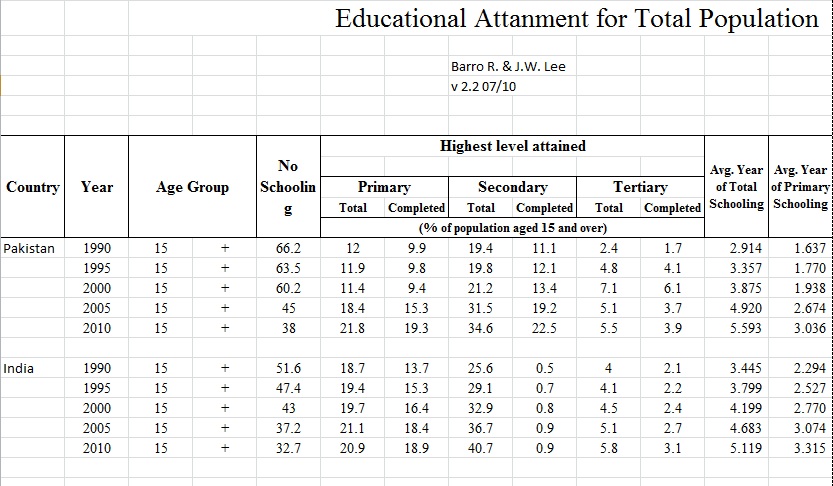
With half the population below 20 years and 60 per cent below 30 years, Pakistan is well-positioned to reap what is often described as "demographic dividend", with its workforce growing at a faster rate than total population. This trend is estimated to accelerate over several decades. Contrary to the oft-repeated talk of doom and gloom, average Pakistanis are now taking education more seriously than ever. Youth literacy is about 70% and growing, and young people are spending more time in schools and colleges to graduate at higher rates than their Indian counterparts in 15+ age group, according to a report on educational achievement by Harvard University researchers Robert Barro and Jong-Wha Lee. Vocational training is also getting increased focus since 2006 under National Vocational Training Commission (NAVTEC) with help from Germany, Japan, South Korea and the Netherlands.

Pakistan's work force is over 60 million strong, according to the Federal Bureau of Statistics. With increasing female participation, the country's labor pool is rising at a rate of 3.5% a year, according to International Labor Organization.
With rising urban middle class, there is substantial and growing demand in Pakistan from students, parents and employers for private quality higher education along with a willingness and capacity to pay relatively high tuition and fees, according to the findings of Austrade, an Australian govt agency promoting trade. Private institutions are seeking affiliations with universities abroad to ensure they offer information and training that is of international standards.
 Trans-national education (TNE) is a growing market in Pakistan and recent data shows evidence of over 40 such programs running successfully in affiliation with British universities at undergraduate and graduate level, according to The British Council. Overall, the UK takes about 65 per cent of the TNE market in Pakistan.
It is extremely important for Pakistan's public policy makers and the nation's private sector to fully appreciate the expected demographic dividend as a great opportunity. The best way for them to demonstrate it is to push a pro-youth agenda of education, skills development, health and fitness to take full advantage of this tremendous opportunity. Failure to do so would be a missed opportunity that could be extremely costly for Pakistan and the rest of the world.
Related Links:
Haq's Musings
Pakistanis Study Abroad
Pakistan's Youth Bulge
Pakistani Diaspora World's 7th Largest
Pakistani Graduation Rate Higher Than India's
India and Pakistan Contrasted in 2011
Educational Attainment Dataset By Robert Barro and Jong-Wha Lee
Quality of Higher Education in India and Pakistan
Developing Pakistan's Intellectual Capital
Intellectual Wealth of Nations
Pakistan's Story After 64 Years of Independence
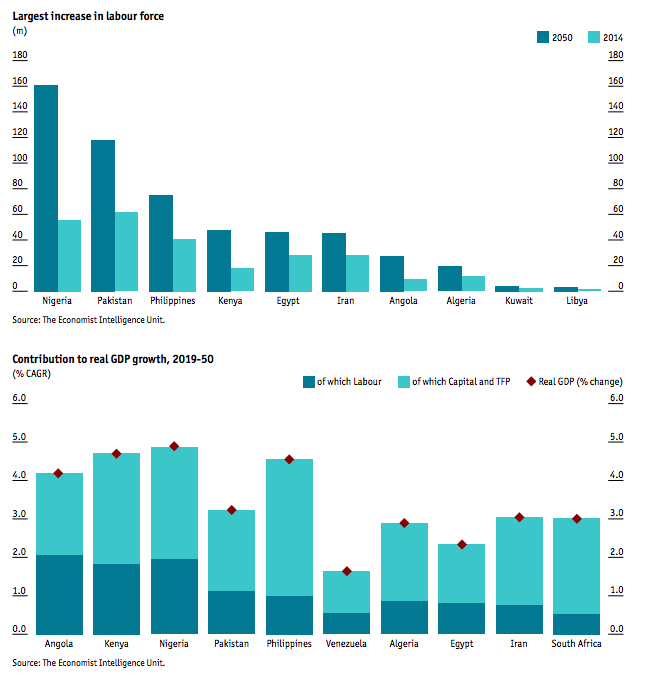 |
| Source: Economic Intelligence Unit of The Economist Magazine |

With half the population below 20 years and 60 per cent below 30 years, Pakistan is well-positioned to reap what is often described as "demographic dividend", with its workforce growing at a faster rate than total population. This trend is estimated to accelerate over several decades. Contrary to the oft-repeated talk of doom and gloom, average Pakistanis are now taking education more seriously than ever. Youth literacy is about 70% and growing, and young people are spending more time in schools and colleges to graduate at higher rates than their Indian counterparts in 15+ age group, according to a report on educational achievement by Harvard University researchers Robert Barro and Jong-Wha Lee. Vocational training is also getting increased focus since 2006 under National Vocational Training Commission (NAVTEC) with help from Germany, Japan, South Korea and the Netherlands.

Pakistan's work force is over 60 million strong, according to the Federal Bureau of Statistics. With increasing female participation, the country's labor pool is rising at a rate of 3.5% a year, according to International Labor Organization.
With rising urban middle class, there is substantial and growing demand in Pakistan from students, parents and employers for private quality higher education along with a willingness and capacity to pay relatively high tuition and fees, according to the findings of Austrade, an Australian govt agency promoting trade. Private institutions are seeking affiliations with universities abroad to ensure they offer information and training that is of international standards.
 Trans-national education (TNE) is a growing market in Pakistan and recent data shows evidence of over 40 such programs running successfully in affiliation with British universities at undergraduate and graduate level, according to The British Council. Overall, the UK takes about 65 per cent of the TNE market in Pakistan.
It is extremely important for Pakistan's public policy makers and the nation's private sector to fully appreciate the expected demographic dividend as a great opportunity. The best way for them to demonstrate it is to push a pro-youth agenda of education, skills development, health and fitness to take full advantage of this tremendous opportunity. Failure to do so would be a missed opportunity that could be extremely costly for Pakistan and the rest of the world.
 |
| Working Age Population Growth in Pakistan. Source: UNFPA |
Related Links:
Haq's Musings
Pakistanis Study Abroad
Pakistan's Youth Bulge
Pakistani Diaspora World's 7th Largest
Pakistani Graduation Rate Higher Than India's
India and Pakistan Contrasted in 2011
Educational Attainment Dataset By Robert Barro and Jong-Wha Lee
Quality of Higher Education in India and Pakistan
Developing Pakistan's Intellectual Capital
Intellectual Wealth of Nations
Pakistan's Story After 64 Years of Independence


Comments
Here's a Washington Post report on rising suicides in India:
NEW DELHI — Ram Babu’s last days were typical in India’s growing rash of suicides.
The poor farmer’s crop failed and he defaulted on the $6,000 loan he had taken to buy a tractor. The bank’s collectors hounded him, even hiring drummers to go round the village drawing attention to his shame.
“My father found it unbearable. He was an honorable man and he couldn’t take the humiliation. The next day he hanged himself from a tree on his farm,” his son Ram Gulam said Friday.
Babu’s suicide went unreported in local newspapers, just another statistic in a country where more than 15 people kill themselves every hour, according to a new government report.
The report released late Thursday said nearly 135,000 people killed themselves in the country of 1.2 billion last year, a 5.9 percent jump in the number of suicides over the past year.
The suicide rate increased to 11.4 per 100,000 people in 2010 from 10.9 the year before, according to the statistics from the National Crime Records Bureau.
Financial difficulties and debts led to most of the male suicides while women were driven to take their lives because of domestic pressures, including physical and mental abuse and demands for dowry.
A 2008 World Health Organization report ranked India 41st for its suicide rate, but because of its huge population it accounted for 20 percent of global suicides.
The largest numbers of suicides were reported from the southern Indian states of Kerala, Tamil Nadu, Andhra Pradesh and Karnataka, where tens of thousands of impoverished farmers have killed themselves after suffering under insurmountable debts.
The loans — from banks and loan sharks — were often used to buy seeds and farm equipment, or to pay large dowries to get their daughters married. But a bad harvest could plunge the farmer over the edge.
Sociologists say the rapid rise in incomes in India’s booming economy has resulted in a surge in aspirations as well among the lower and middle classes, and the failure to attain material success can trigger young people to suicide.
“The support that traditionally large Indian families and village communities offered no longer exists in urban situations. Young men and women move to the cities and find they have no one to turn to for succor in times of distress,” said Abhilasha Kumari, a sociology professor in New Delhi.
http://www.washingtonpost.com/world/asia-pacific/government-report-says-15-people-commit-suicide-every-hour-in-india/2011/10/28/gIQAVFGWOM_story.html
Under the Bilateral Investment Treaty, investors of both the countries will be given protection and there will be more German investment in Pakistan in next 3 to 5 years, Kamal added.
Pakistan’s exports to Germany during 2011 calendar years will be around $1.5 billion, with the balance of trade in favour of Pakistan, as against $700 million in the last year.
Quoting official German statistics, Kamal said the trade between the two countries from January to July 2011, was $800 million, 45 percent more than in 2010.
Germany - the largest economy in Europe - was the fifth largest investor in Pakistan in the years 2009 and 2010.
“We are trying to set up German Pakistan Chambers of Commerce, which will enhance connectivity between the private sectors of both the countries,” Kamal stated.
He spoke of immense prospects to export rice, fruits, and vegetables to Germany, where prices of these items were rising. He said Germany was supporting Pakistan for greater market access to EU member states.
He said under an agreement signed recently, German government will provide economic assistance of $58 million for training in electronics, mechanics to Pakistanis over five years.
Shahid Kamal said another $85 million worth of German economic cooperation was underway in renewable wind and solar energy, which will help overcome load shedding in the country. He also said that 340 PhD Pakistanis were working in German universities. German Consul General in Karachi Dr Tilo Klinner, who was also present during the discussion, said that under German economic cooperation program, people in Khyber Pakhtunkhwa and Sindh provinces will get Pakistanis will get vocational training under the Public Private Partnership. Dr Klinner said German government will co-host an International Conference on Afghanistan in Bonn on December 5, 2011.
http://www.thenews.com.pk/TodaysPrintDetail.aspx?ID=77558&Cat=3
ISLAMABAD: More than half of Pakistan’s population is estimated to be living in cities by the year 2030. Both natural increase and net migration are major contributory factors to urban growth.
These views were expressed by participants of a seminar on “Business and the Middle Class in Pakistan organized by the Planning Commission of Pakistan which was held here on Wednesday.
The seminar included speakers and discussants from some of the largest companies and businesses in Pakistan, coming together to discuss the importance of the evolving middle class in Pakistan.
The participants said that current urban growth rate was approximately 3.5 per cent as compare to 2 per cent nationally. More rural people are migrating to urban centers for higher-paying jobs. Upward social mobility creating and expanding the middle class.
Given the low median age, Pakistan’s middle class is unusually young as compared to developed economies, meaning that younger population will have the most disposable incomes.The expanding middle class consumers will aim for first world aspirations and greater focus will be on branded retail products. The middle class has been growing in number as well as in importance all over the world, which is why businesses strategize targeting this specific class.
The participants said that the middle class is conceptually defined as the class between the rich and the poor; however its boundaries are usually made arbitrarily. It is also important to note the multi-dimensionality of an adequate definition; a person belonging to the middle class needs to be evaluated not only on a monetary basis, other aspects of quality of life and available opportunities need to be encapsulated to arrive at a well rounded definition.
They said that studies show a positive relationship between the higher share of income for the middle class and economic growth as well as political aspects like democracy. Other studies indicate the emergence of entrepreneurs from the middle class. It is the middle class that was the driver of success in India and China.
They said that the biggest opportunity of the rising middle class, at present and future will be for companies selling mass-consumer goods and services. As incomes rise spending patterns will incorporate discretionary and small luxury items while proportionate expenditure on food, clothing and other necessities tend to shrink.
While the basics may decline as a share of consumption, in absolute terms they will continue to grow. Housing, healthcare and educational expenses are expected to register a greater share of the wallet – this spending will be driven by the strong link between education and higher salaries, as well as growing number of options for both higher and vocational education.
http://www.onlinenews.com.pk/details.php?id=186520
Agriculture represents the backbone of our economy. It can serve as a launching pad for transition to a knowledge economy, as it has a huge potential for revenue generation. But that can happen only if agricultural practices are carried out on scientific lines and use of technology maximised. The four major crops of Pakistan are wheat, rice, cotton and sugarcane. They contribute about 37 percent of the total agricultural income and about nine percent to the GDP of Pakistan.
-----------
Wheat is the most important crop of Pakistan, with the largest acreage. It contributes about three percent to the GDP. The national average yield is about 2.7 tons per hectare, whereas in Egypt the yields are 6.44 tons per hectare and in European countries such as France, Germany and the United Kingdom they are above seven tons per hectare. We presently produce about Rs220 billion worth of wheat. If we can boost our yields to match those of Egypt, it can generate another Rs350 billion, allowing us to systematically pay off the national debt and make available funding for health and education.
However, the government has been reluctant to invest in research, water reservoirs and dams and extension services so that the country continues to suffer. Some progressive farmers in irrigated areas have been able to obtain yields of 6-8 tons per hectare but they are very much a minority. In rain-fed areas the yields are normally between 0.5 tons to 1.3 tons per hectare, depending on the region and amount of rainfall. In irrigated areas the yields are normally higher, in the range of 2.5 tons to 3.0 tons per hectare. Improved semi-dwarf cultivars that are available in Pakistan can afford a yield of wheat between 6-8 tons per hectare. It is possible to increase the yields substantially with better extension services, judicious use of fertilisers and pesticides, and greater access of water from storage reservoirs and dams that need to be constructed.
Cotton represents an important fibre crop of Pakistan that generates about Rs250 billion to the national economy, and contributing about two percent to the national GDP. Pakistan is the fourth-largest producer of cotton in the world, but it is ranked at 10th in the world in terms of yields. The use of plant biotechnology can help to develop better cotton varieties. Bt cotton produces a pesticide internally and safeguards the plant against chewing insects. The yields of Pakistani seed cotton and cotton fibre are both about half those of China. A doubling of cotton yields is doable and it can add another Rs250 billion to the national economy.
---------
The failed system of democracy in Pakistan is strongly supported by Western governments. It serves Western interests as it leads to docile and submissive leaders who serve their foreign masters loyally. The stranglehold of the feudal system thrives with no priority given to education. More than parliamentarians have forged degrees and the degrees of another 250 are suspect. The Supreme Court decision of verification of their degrees is flouted and ignored by the Election Commission. The bigger the crook, the more respect he is given by the government and the biggest crooks are conferred the highest civil awards. The economy has nosedived and we are today ranked among the bottom six countries of the world in terms of our expenditure on education.
http://www.thenews.com.pk/TodaysPrintDetail.aspx?ID=83815&Cat=9
..for Pakistan, the education sector is also a priority. Apart from increase in trade during the year, the number of Pakistani students studying in Malaysia increased to over 3,000 students.
"This was due to more linkages established between the universities of both countries," Pakistani High Commissioner to Malaysia Masood Khalid told Bernama.
http://www.bernama.com.my/bernama/v6/newsindex.php?id=638491
Based on the recent PISA test results, Obama may be right about threat from China. But India? I don't agree.
Here's why:
The average Indian child taking part in PISA2009+ is 40 to 50 points behind the worst students in the economic superstars. Even the best performers in Tamil Nadu and Himachal Pradesh - the top 5 percent who India will need in science and technology to complete globally - were almost 100 points behind the average child in Singapore and 83 points behind the average Korean - and a staggering 250 points behind the best in the best.
The average child in HP & TN is right at the level of the worst OECD or American students (only 1.5 or 7.5 points ahead). Contrary to President Obama's oft-expressed concerns about American students ability to compete with their Indian counterparts, the average 15-year-old Indian placed in an American school would be among the weakest students in the classroom. Even the best TN/HP students are 24 points behind the average American 15 year old.
http://www.riazhaq.com/2011/12/pisa-timss-confirm-low-quality-of.html
Due to an ageing population and a decline in the fertility rate, China's labor force in 2011 registered the first decline in its numbers in 10 years, with its population aged between 15 and 64 accounting for 74.4% of the total, a slight drop of 0.1 percentage point, according to data released by the country's National Bureau of Statistics.
The figures send out a warning signal since the supply of labor in China can impact economic growth momentum, the Shanghai-based Oriental Morning Post reports.
According to the data released on the bureau's website, China's labor population experienced its first fall since 2002, while the proportion of urban population surpassed 50% for the first time last year, following rapid urbanization caused by a rise in living standards and the launch of a large number of public construction projects.
The data showed that urban population had reached 51.27% of the total in 2011, up 1.32 percentage points from the previous year. Urban population increased 21 million to 609.08 million, while the rural population was reduced by 14.56 million to 656.56 million.
Li Shi, a professor at Beijing Normal University, said many are concerned that China will lose its "demographic dividend" in the labor force, though it is uncertain how many years it may take for such a complete loss of advantage to occur.
The key for China to maintain its labor force advantage hinges on changes within its existing systems, such as retirement age, Li said. He added that if the country's retirement age could be extended, China could hold its labor force advantage for a longer time.
Li further said that many statistics do not accurately reflect the country's real situation. For instance, the number of migrant workers who registered their households in rural areas was not available.
Echoing Li's view, Ren Yuan, a professor at Fudan University's School of Social Development and Public Policy in Shanghai, also said the level of urbanization was overestimated because a large number of migrant workers in cities were included in the statistics of urban residents. He described the situation as being not fully urbanized.
Since urbanization was a necessary consequence of economic development, the biggest concern is whether the supply of labor can meet the needs of economic development.
http://www.wantchinatimes.com/news-subclass-cnt.aspx?id=20120121000005&cid=1202
Two Canadian teenagers have sent a Lego man into space using a home-stitched parachute and spare parts found on Craigslist.
Mathew Ho and Asad Muhammad, both 17, attached the two-inch astronaut clutching a Canadian flag to a helium weather balloon, which they sent 80,000 feet into the air - three times the height of a commercial jet's cruising altitude.
The pair managed to capture the entire 97 minute journey which began on a football pitch in Toronto using four cameras set to take photos every 20 seconds, reports the Toronto Star.
They were left with astonishing footage from an estimated 24 kilometres above sea level which showed the toy floating above the curvature of our planet before beginning a 32 minute descent back to earth.
The personal project cost the boys $400 and took four months of free Saturdays, reports the Star.
Having attached a GPS receiver to the styrofoam box carrying the cameras and Lego man, the teens were able to recover their Lego man which landed 122km from the launch site.
When the teens got home and uploaded the two videos and 1,500 photos onto a computer, they told the Star that they started screaming with joy.
Their footage shows the Lego man spinning at an altitude three times higher than the peak of Mount Everest, before the balloon bursts and he starts to plummet.
“We never knew it would be this good,” Ho told the Star.
According to the report, the two students met in middle school after Muhammad's family had just emigrated from Pakistan.
Muhammad, who spoke no English, was soon befriended by Ho and they began working on the project at Ho's house last September.
"People would walk into the house and see us building this fantastical thing with a parachute from scratch, and they would be like, 'What are you doing?', We'd be like, 'We're sending cameras to space.' They'd be like, 'Oh, okayyyyy …' Ho told the Star.
Astrophysics professor Dr Michael Reid, from the University of Toronto, praised the boys' work, telling the Star: "It shows a tremendous degree of resourcefulness. For two 17-year-olds to accomplish this on their own is pretty impressive."
Read more: http://www.dailymail.co.uk/news/article-2092501/Lego-astronaut-makes-debut-space-help-Mathew-Ho-Asad-Muhammad.html#ixzz1kpIl8PF4
Amid strained ties and mutual mistrust, the United States Educational Foundation in Pakistan has announced the world’s largest Fulbright programme in Pakistan for the 2013.
The US government’s flagship scholarship programme awards deserving Pakistani students full scholarships that cover tuition, textbooks, airfare, a stipend, and health insurance to complete their Master’s or PhD degrees in a field of their choice in universities across the US. Currently, approximately 369 students are studying in the US on Fulbright awards and another 200 will be departing in the fall of 2012.
According to Ambassador Richard Hoagland, deputy chief of mission, Pakistan’s Fulbright programme is also one of the oldest in the world. “Our agreement initiating the programme was signed on September 23, 1950 – and the first Pakistanis and Americans travelled each way in the same year. It was one of the very first agreements of its kind and has since been extended to 155 countries around the world.”
Since then, nearly 4,000 Pakistanis and over 800 Americans have participated in USEFP-administered exchange programmes.
The deadline to apply for the 2013 programme is May 16, 2012, and the application form can be downloaded from the USEFP’s website www.usefpakistan.org.
http://tribune.com.pk/story/334528/fulbright-scholarships-us-launches-worlds-largest-programme-in-pakistan/
Over the last year, the UK has worked closely with Pakistan to deliver strong results, including supporting nearly half a million children in school; providing practical job training to more than 1,100 poor people in Punjab; providing microfinance loans to more than one hundred thousand people across Pakistan so they can start small businesses and lift their families out of poverty; and helping millions of people affected by the floods in 2010 and 2011.
Education is the single most important factor that can transform Pakistan’s future. With a population that is expected to increase by 50 per cent in less than forty years, it is worrying that half the country’s adults can’t read or write, and that more than a third of primary school aged children are not in school. That’s why the UK is committed to working in partnership with Pakistan to tackle its education emergency.
If educated, healthy and working, this burgeoning youth population will provide a demographic boost to drive Pakistan’s economic growth and unlock Pakistan’s potential on the global stage.
That’s why education is the UK’s top priority and why over the next four years, the UK will work in partnership with Pakistan to:
* support four million children in school;
* recruit and train 90,000 new teachers;
* provide more than six million text book sets; and
* construct or rebuild more than 43,000 classrooms.
Every full year of extra schooling across the population increases economic growth by up to one percentage point, as more people with better reading, writing, and maths skills enter the workforce.
The UK government is also working with Pakistan to empower and protect women and girls, to end violence against them and to help harness their talent and productivity. I welcome the legislation recently passed by Pakistan’s parliament that bans domestic violence, and congratulate Pakistan on its first Oscar for an outstanding film which throws the international spotlight on the horrific crime of acid attacks on women.
Other priorities for the UK include working with Pakistan to prevent 3,600 mothers dying in childbirth; enabling 500,000 couples to choose when and how many children they have; providing practical job training (such as car mechanics, cooks, weavers, carpenters, etc) to tens of thousands of people living in poverty; and enable millions of people, half of them women, to access financial services such as microfinance loans so they can earn more money and lift their families out of poverty.
The UK’s aid to Pakistan could potentially more than double, to become the UK’s largest recipient of aid. However this increase in UK aid is dependent on securing value for money and results, and linked to the Government of Pakistan’s own progress on reform at both the federal and provincial levels. This includes taking steps to build a more dynamic economy, strengthen the country’s tax base, and tackle corruption.
http://www.thenews.com.pk/Todays-News-2-97151-UK-and-Pakistan-partners-for-the-long-term
Usually, high religious observance and low income go along with high birthrates. But, according to the United States Census Bureau, Iran now has a similar birth rate to New England — which is the least fertile region in the U.S.
The speed of the change is breathtaking. A woman in Oman today has 5.6 fewer babies than a woman in Oman 30 years ago. Morocco, Syria and Saudi Arabia have seen fertility-rate declines of nearly 60 percent, and in Iran it’s more than 70 percent. These are among the fastest declines in recorded history.
The Iranian regime is aware of how the rapidly aging population and the lack of young people entering the work force could lead to long-term decline. But there’s not much they have been able to do about it. Maybe Iranians are pessimistic about the future. Maybe Iranian parents just want smaller families.
----------
If you look around the world, you see many other nations facing demographic headwinds. If the 20th century was the century of the population explosion, the 21st century, as Eberstadt notes, is looking like the century of the fertility implosion.
Already, nearly half the world’s population lives in countries with birthrates below the replacement level. According to the Census Bureau, the total increase in global manpower between 2010 and 2030 will be just half the increase we experienced in the two decades that just ended. At the same time, according to work by the International Institute of Applied Systems Analysis, the growth in educational attainment around the world is slowing.
This leads to what the writer Philip Longman has called the gray tsunami — a situation in which huge shares of the population are over 60 and small shares are under 30.
-------------
Rapidly aging Japan has one of the worst demographic profiles, and most European profiles are famously grim. In China, long-term economic growth could face serious demographic restraints. The number of Chinese senior citizens is soaring by 3.7 percent year after year. By 2030, as Eberstadt notes, there will be many more older workers (ages 50-64) than younger workers (15-29). In 2010, there were almost twice as many younger ones. In a culture where there is low social trust outside the family, a generation of only children is giving birth to another generation of only children, which is bound to lead to deep social change.
Even the countries with healthier demographics are facing problems. India, for example, will continue to produce plenty of young workers. By 2030, according to the Vienna Institute of Demography, India will have 100 million relatively educated young men, compared with fewer than 75 million in China.
But India faces a regional challenge. Population growth is high in the northern parts of the country, where people tend to be poorer and less educated. Meanwhile, fertility rates in the southern parts of the country, where people are richer and better educated, are already below replacement levels.
The U.S. has long had higher birthrates than Japan and most European nations. The U.S. population is increasing at every age level, thanks in part to immigration. America is aging, but not as fast as other countries.
But even that is looking fragile. The 2010 census suggested that U.S. population growth is decelerating faster than many expected.....
http://www.nytimes.com/2012/03/13/opinion/brooks-the-fertility-implosion.html?_r=1&scp=2&sq=david%20brooks&st=cse
For the first time in Pakistan, the British Council on Monday held an International Conference on Employer Engagement and Entrepreneurship for Technical and Vocational Education and Training (TVET) sector for South Asia.
Held under the Skills for Employability programme, the conference focused on the benefits of employers’ engagement in the curriculum development and policy-making process in the TVET sector and how it can be encouraged, says a press release issued here.
The participants agreed that the engagement will result in enabling policy makers to develop demand-driven curriculum that will not only produce workforce with industry-need expertise and knowledge but will also pave ways to promote entrepreneurship amongst the young TVET graduates.
TVET experts from Pakistan, United Kingdom, Bangladesh and Nepal participated in the conference besides principals, teachers and students of TVET colleges from across Pakistan.
Riaz Hussain Pirzada, Federal Minister for Professional and Technical Training, was the chief guest at the conference. In his speech, he highlighted the role of TVET education for the development of a country’s economy particularly for a country like Pakistan.
There was an overall consensus in amongst the participants of the conference that there is always a consistent demand of skilled workforce from the developing world to the developed countries as well as within their own countries. But there was also a general agreement on the challenges that countries like Pakistan face to meet those demands. One of the major challenges that were highlighted in the conference was how to equip our manpower with the expertise and skills that are in demand in the global market.
--------------
Adam Thompson, the British High Commissioner in Pakistan was the guest of honour at the event and he talked about how TVET education in the UK is contributing to the economy by producing demand-driven workforce.
The conference also had an impressive exhibition setup by enterprising young students from the TVET colleges across Pakistan. There were separate panel discussions on Employer Engagement and Entrepreneurship, where experts from different countries discussed the importance of these two elements in TVET sector followed by a Q & A session by an enthusiastic audience.
The findings of the two sessions on Employer Engagement and Entrepreurship were shared with the participants in the concluding session of the Conference.
Salman Shehzad, Regional Manager for Skills for Employability programme concluded the Conference with his closing remarks. Salman said, “Having the treasure of approx. 65% youth population in Pakistan; TVET reforms can be instrumental in creating dynamic opportunities for young people which would certainly support the government’s agenda of engaging youth in skill development activities.”
http://www.nation.com.pk/pakistan-news-newspaper-daily-english-online/islamabad/27-Mar-2012/-skilled-manpower-in-high-demand-in-global-market
World Health Organization (WHO) on Thursday said that in line with the global trends of declining death rates and increasing life spans, Pakistan, is experiencing a steady rise in its elderly population.
According to WHO, at present, 4.2% of the total population is over 65 years of age with the strong likelihood of doubling this percentage by 2025.
Similarly, the current life expectancy of 65.99 years at birth will reach about 72 years by 2023.
Other emerging social and cultural transformations of declining traditional family values and extended family systems will not only further compromise the status of the older people but also pose significant health and socio-economic implications on the country as a whole, it said.
There are some medical and psychosocial aspects exclusive to the older population; however, the predominant health conditions increasingly suffered by the elderly relate to the higher disease burden including hypertension (36% in elderly), diabetes, musculoskeletal problems, disabilities and cancers; along with significant infectious diseases and their sequelae.
Likewise 60% deaths due to diabetes, 59% due to cardio-vascular diseases and 29% due to cancers occur among old people above 60 years.
WHO said, in Pakistan 54% of men and 20% of women use different forms of tobacco. With limited physical exercise and unhealthy behaviors can lead to serious diseases such as hypertension, cancers etc..
It said that there is an immediate need to recognize and take comprehensive timely action to address population ageing through systematic integrated health care and social services complemented with continued family support, love and respect.
Simple preventive measures and healthy life style changes such as walking, physical activities good balanced diet and refraining from risky habits including smoking and other tobacco substances can save hundreds of lives, prevent disability and improve quality of life of old people.
The theme of the World Health Day signifies that a productive dignified existence is possible in old age provided a healthy life style is adopted through out life; with steps taken to prevent and control chronic health conditions like diabetes, cardiovascular diseases and cancers....
http://www.brecorder.com/pakistan/general-news/52055-elderly-population-steadily-rising-in-pakistan-who-.html
Around 20 million children in Pakistan, including an estimated 7.3 million of primary school age, are not in school, said a statement issued by United Nations International Children’s Emergency Fund (UNICEF) on Friday.
“Investing in children and their education is vital due to the positive impacts it has on so many socio-economic dimensions. It is therefore imperative that all children in Pakistan, both boys and girls, have the opportunity to attend and complete their schooling,” the statement said.
About the efforts of the fund for promoting education for children across the country, the statement said, “UNICEF is supporting the nationwide ‘Every Child in School’ campaign, which encourages parents and communities to ensure that all primary school-age children are enrolled for the new school year. A special focus is being placed on enrolling girls, who represent 57 percent of primary school-age children who are not attending school. Girls from poor families in rural areas, for example, receive just over one year of education, on average.”
“The disparities in educational opportunities are influenced by multiple factors, like wealth, gender, ethnicity, geographic location, early learning opportunities, access and quality of learning – and it is therefore critical that all who can positively influence children’s learning opportunities should come forward to ensure that this school-year is more successful than ever,” said UNICEF Pakistan Representative Dan Rohrmann.
“We must ensure that all children are in school. Free and quality education for all children, especially the most vulnerable, is essential to Pakistan’s economic and social development. An investment in children is an investment in Pakistan’s future,” Rohrmann said, adding, “The realisation of Pakistan’s vision for social and economic development depends on success of its education system.”
The right of a child to receive education is enshrined in the UN Convention on the Rights of the Child. The 18th Amendment of the Constitution of Pakistan provides an added opportunity to realise this right, as Article 25A requires the state to provide free and compulsory education to all children between the ages of five and 16, as determined by the law.
http://www.dailytimes.com.pk/default.asp?page=2012\04\07\story_7-4-2012_pg7_3
http://www.unicef.org/pakistan/media_7589.htm
BEIJING - A group of young scientists from Pakistan is arriving here Monday to take part in the first-ever China-Pakistan Young Scientists Forum, focused on energy.
Prominent among them who will address the opening ceremony are leaders of the China People’s Association for Friendship with Foreign Countries (CPAFFC), the China Association for Science and Technology (CAST), and the diplomats from Pakistan Embassy.
The Forum will be kicked off on Tuesday morning with the opening address from Mr. Xu Yanhao, Secretary of the Party Committee of CAST. It will be followed by speech from Zahoor Ahmed, Minister/Deputy Chief of Mission of Pakistan Embassy.
At the first Academic Presentations Dr. Zawar Hussain Shah, assistant instructor, National University of Science and Technology of Pakistan address on “Wireless network of computer”, while Professor Zhang, Beijing University of Posts and Telecommunications on Internet of Things and Liu Chongru, North China Electric Power University on ‘New Energy’.
The second academic presentation session papers will be read by Dr. Zahid Anwar, assistant instructor, National University of Science and Technology of Pakistan on Security in Smart Grids, Abdul Hadi, senior researcher, National Electricity Institute on Computer Engineering.
Huang Xiaohong, Beijing University of Posts and Telecommunications Network Security;Ghulam Ali, academic researcher of University of Information Technology on Solar Cell and Smart Grids, Lu Qiang, North China Electric Power University on Biomass Power Generation.
In the evening there will be presentation by representatives of Pakistani students in China.
The visitors will also be taken to Power University and the Beijing University of Posts and Telecommunications. The young scientists delegating will leave for Pakistan on April 20.
http://www.nation.com.pk/pakistan-news-newspaper-daily-english-online/business/16-Apr-2012/beijing-to-host-first-ever-young-scientists-forum-on-energy
Hazrat Gul spent two years in detention for allegedly aiding the Pakistani Taliban when they publicly flogged and beheaded people during a reign of terror in the scenic Swat Valley.
Now he wiles away his time in pristine classrooms, a Pakistani flag pin on his crisp uniform, learning about word processing, carpentry and car repairs at the Mashal de-radicalisation centre run by the army.
Part of a carrot and stick approach to battling militancy in the strategic U.S. ally, the aim is to cleanse minds of extremist thoughts through vocational training, and turn men like Gul into productive citizens who support the state.
The success of the programme will ultimately hinge, however, on the the ability of the government, widely seen as incompetent and corrupt, to help the de-radicalisation graduates find jobs.
“If a sincere leadership comes to this country, that will solve the problems,” said Gul, 42, one of the Mashal students. “Today the leadership is not sincere. The same problems will be there.”
Pakistan’s military drove militants out of Swat in 2009. Mashal is in the building which used to be the headquarters of the militants from where they imposed there austere version of Islam.
Eventually, the army realised it couldn’t secure long-term peace with bullets alone.
So military officers, trainers, moderate clerics and psychologists were chosen to run three-month courses designed to erase “radical thoughts” of those accused of aiding the Taliban.
Students like Mohammad Inam, 28, a former assistant engineer, give the school a good report card.
“The environment is very good. Our teachers work very hard with us. They talk to us about peace, about terrorism and how that is not right,” said Inam, in the presence of a military officer. “God willing, we will go out and serve our country and our nation.”
School officials say about 1,000 people have graduated since the initiative began two years ago, and that only 10 percent were not cleared for release.
Officials concede that their “students” are not hardened militants who killed. Mostly, they provided the Taliban with water, food or shelter, or beat people.
-------
Outside Mashal’s classroom, there are signs that not everyone is embracing the new approach.
Soldiers led a hooded man into a truck while three others looked on through the barred windows of what appeared to be a cell at the compound.
Conditions still seem ripe for Fazlulah and his lieutenants, who have vowed to make a comeback, to recruit people.
Pakistani officials estimated after the army operation expelled the Taliban that over $1 billion would be needed to revive the local economy and rebuild infrastructure.
Residents like Ajab Noor, 61, who sent two of his sons abroad to work, doubt the population of about 1.3 million will ever benefit from those funds.
“People have no options. They either go outside the country to work, or they join militants who promise them many things,” he said at a street market in Swat’s capital, Mingora.
A member of a state-backed anti-Taliban militia believes two boys in his village had graduated from a de-radicalisation centre and ran away to rejoin the Taliban.
“I told the military, ‘you are nurturing the offspring of snakes’. But they did not listen,” he said.
http://www.vancouversun.com/Pakistan+army+uses+bullets+classrooms+fight+militancy/6524314/story.html
This is a story affecting millions of Pakistanis — and it does not involve suicide bombings, honor killings, extremism or President Zardari's mustache.
"What would you like to be when you grow up?" I asked Sakafat, a boisterous 12-year-old girl, while visiting a remote Pakistani village in the Sindh province.
"A scientist!" she immediately replied. "Why can't we be scientists? Why not us?"
The confident Sakafat lives in Abdul Qadir Lashari village, which is home to 500 people in Mirpur Sakro. It is in one of the most impoverished regions of Pakistan.
There was a characteristic resilience and optimism in this particular village. This should come as no surprise to anyone who knows anything about Pakistan's often dysfunctional, surreal yet endearing daily existence.
The 500 villagers live in 48 small huts, except for the one "wealthy" family who recently built a home made of concrete. The village chief, Abdul Qadir Lashari, proudly showed off his village's brand-new community toilets, paved roads, and water pump that brings fresh water to the village.
These simple, critical amenities, taken for granted by most of us in the West, resulted from the direct assistance of the Rural Support Programmes Network, Pakistan's largest nongovernmental organization. RSPN has worked with thousands of similar Pakistani villages to help them achieve economic self-sufficiency.
I visited the Sindh village with RSPN to witness the results of using community organizing to alleviate poverty. The staff told me its goal was to teach villagers to "fish for themselves."
Every household in the Abdul Qadir Lashari village was able to reach a profit by the end of 2011 as a result of professional skills training, financial management, community leadership workshops and microloans.
Specifically, a middle-aged, illiterate woman proudly told me how she learned sewing and financial management and was thus able to increase her household revenue, manage her bills, and use a small profit to purchase an extra cow for the family. She was excited to introduce me to her cow, but sadly due to lack of time I was unable to make the bovine acquaintance.
--------
Asked what single thing she felt was most important most for her village, she replied education. Upon asking another elderly lady what she wishes for Pakistan, she repeated one word three times: "sukoon," which means peace.
When it was time to depart, the people of the village presented me with a beautiful handmade Sindhi shawl, an example of the craftwork the villagers are now able to sell for profit.
As I left the village with the dark red, traditional Sindhi shawl adorned around my neck, my thoughts returned to the 12-year-old girl, Sakafat, who passionately asked why she couldn't become a scientist.
I looked in her eyes and could only respond with the following: "You're right. You can be anything you want to be. And I have every confidence you will, inshallah ("God willing"), reach your manzil ("desired destination").
By focusing on education and local empowerment to lift the next generation out of poverty, Sakafat's dream could indeed one day become a reality for all of Pakistan.
http://www.cnn.com/2012/05/13/world/asia/pakistan-empowerment/index.html
If you are looking for inspiration, look no further than Pakistan’s finalists at the Intel International Science and Engineering Fair (Isef) held in Pittsburgh from May 13 to May 18.
“I want to be the greatest scientist in the world,” proclaimed finalist Syed Shahzeb Zarrar.
“When you’re surrounded by so much talent, and thousands of innovations, it’s hard not to believe it could happen for any one of the students at Isef.”
Zarrar, along with two other finalists, arrived in Pittsburgh last week. Five finalists were named in Pakistan, but only three obtained a visa.
Finalists received an all expenses paid trip to the Intel Isef conference. It was Zarrar’s first trip to the US, and he said he enjoyed the city of Pittsburgh because it was peaceful and not very large or crowded.
“Every Pakistani should know about Isef. Everyone has a hidden talent. Because of Isef, I was able to discover mine,” said the finalist.
It took him approximately eight months to complete his project. It is titled ‘Production of Artificial Magnetic Domains in Non-Metals’. He explained that electricity could be produced cheaply if non metals were employed. He added that his project was cost efficient and could easily be used in Pakistan. Zarrar attends Iqra Army Public School and College in Quetta.
“I’ve made friends from India, Japan, and even New Mexico thanks to this conference. It is amazing.”
Asked about entertainment provided for students prior to the judging and ceremonies, he smiled and said, “At one of the events, they were giving us free fast food! When does that ever happen back home?”
Energy square idea
A team of three girls were also named finalists in the competition, but only two made it stateside. Mahnoor Hassan, Shiza Ghulab and Bushra Shahed from the Institute of Computer and Management Sciences in Peshawar had a project titled ‘Energy Square for Cattle’. Hassan and Ghulab were present to describe their experiences. Their goal, Hassan put it, was to provide something for animals when faced with unfavourable conditions or natural disasters.
“People think of themselves in times of disaster before animals,” said Ghulab. She provided the example of recent floods in Pakistan. “This square makes it easier to look out for the well-being of livestock also,” she added.
The girls said that just a few licks of their energy square controlled diseases, increased milk production and increased weight in the cattle they conducted tests on after just 28 days.
They provided signed documents, pictorial evidence, and test results to anyone who wanted more information.
The squares are a dry mix of a variety of ingredients, such as mulberry, urea and calcium, that provide vitamins and protein to your animal...
http://tribune.com.pk/story/381235/intel-isef-3-pakistani-students-make-it-to-finals/
The Khyber-Pakhtunkhwa (K-P) government on Sunday approved two new campuses of Islamia College University (ICU) at Parachinar and Sadda in Kurram Agency. In this connection, a delegation headed by Senator Ahmad Shukaib Khanzada, ICU Director Campuses Sikandar Khan and ICU Director Project Development Farid Khan visited Parachinar and Sadda in order to review the arrangements for establishment of the facilities, according to a press release. The tribal elders arranged a function at Shoblan and allotted 1,500 kanals for the project. On the directives of K-P Governor Barrister Masood Kausar, the Federally Administered Tribal Areas (FATA) Secretariat will provide the required funds for the two campuses. The initiative shall provide an opportunity of quality higher education to the inhabitants of FATA.
http://tribune.com.pk/story/385117/education-for-all-icu-to-establish-new-kurram-campuses/
The labour force is expected to grow by 3.5 percent during the ongoing fiscal year (2012-13) according to the projections of the government that have been made keeping in view the past average population growth and increase in the labour force participation rate.
The labour force growth indicates that approximately 2 million new jobs would be demanded during the fiscal year 2012-13.
As prevailing employment elasticity is 0.5, approximately 7 percent GDP growth would be required to absorb the growing labour force and to maintain the unemployment level of 2011-12, official document revealed.
The federal government has initiated a number of programmes to increase the employment through an effective human resource development, according to the document.
These programs include National Internship Program, President's Rozgar Program; Credit for Self Employment by National Bank of Pakistan (NBP), Enhancement of Residential Facilities by Construction of One Million Housing Units, Doubling of Lady Health Workers to cover Kachi Abadis, Raising of Minimum Wage from Rs. 6,000 to Rs 7,000 and Pension of workers, Establishment of National Vocational Technical Training Commission (NAVTTC), Benazir Income Support Program (BISP) and Restoration of Trade Unions.
The government together with Employers' and Workers' representatives with technical support of ILO is implementing a "Decent Work Country Program (DWCP)" in all provinces.
The main objectives of the programs include promoting decent employment in which international labour standards and workers' fundamental rights go hand in hand with job creation.
The program is also aimed to place employment at the center of economic and social policies at the global, regional and national level, improve the lives of millions of people who are either unemployed or whose remuneration from work is inadequate, and provide them opportunity and their families to escape poverty through the creation of productive employment.
Improve earnings, productivity and living standards of working women and men, especially of the working poor; and ensure that the benefits of economic growth reaches those sectors where poverty is most concentrated, urban informal economy and the rural areas, especially landless labour and small tenant farmers.
It is pertinent to mention here that an amount of Rs 2,880 million has been allocated to fund 10 proposed projects of Ministry of Professional and Technical Training for PSDP 2012-13 including Rs 300 million allocated to National Vocational &Technical Training Commission (NAVTTC) to fund 134 development projects including 90 ongoing programs at estimated cost of Rs 3,993 million costs.
http://www.brecorder.com/pakistan/business-a-economy/66522-labour-force-to-expand-by-35pc-during-current-year-.html
Four teams of talented Pakistani students represented Pakistan in the 23rd International Biology Olympiad (IBO) in Singapore, 44th International Chemistry Olympiad (IChO) in United States, 53rd International Mathematical Olympiad (IMO) in Argentina and 43rd International Physics Olympiad (IPhO) in Estonia.
This year all the four teams showed excellent performance altogether winning One Silver, Four Bronze Medals and Two Honorable Mentions in these events. The International Science Olympiads are unique competitions organized to discover and encourage young talented students from all over the world, says a press release issued here by the Higher Education Commission of Pakistan Sunday.
These young talented Pakistani students were facilitated under Science, Technology, Engineering and Mathematics (STEM) Careers Programme, a joint innovative venture of Higher Education Commission HEC and Pakistan Institute of Engineering and Applied Sciences PIEAS, for grooming talented students for careers in Science, Technology, Engineering and Mathematics (STEM).
The main objective of this program is to inspire the Pakistani youth to opt for careers in science, mathematics and engineering and preparing them for participation in the annual International Olympiad in Physics, Chemistry, Biology and Mathematics. The program also encourages Pakistani students to come up with innovative solutions to problems of national interest. Pakistan has been participating in these international competitions since 2001.
According to the details, The 23rd International Biology Olympiad (IBO) was hosted by Singapore from July 8 to July 15, 2012. About 236 students from 59 countries participated in the event. Of the three students who participated from Pakistan in the event, two won Bronze Medals and one got Honorable Mention The bronze medalists include Mr. Usama Tahir from Lahore Grammar School Lahore, Ms. Hafsa Shahab from Lahore Grammar School Islamabad, and Mr. Hassan Mirza (Honorable Mention) from Lahore Grammar School Lahore. The IBO team was led by Dr Zahid Mukhtar.
The 43rd International Physics Olympiad (IPhO) was hosted by Estonia from July 15 to July 24, 2012. Total 400 students from 88 countries participated in the Olympiad. Of the five students who participated from Pakistan in the event, one of them won Bronze Medal. The awards winner is Mr. Muhammad Taimoor Iftikhar (Bronze Medal) from Rangers Public School & College Mandi Bahauddin. The IPhO team was led by Dr Shahid Qamar and Dr Aftab Rafiq of PIEAS, Islamabad.
The 44th International Chemistry Olympiad (IChO) was hosted by United States, from July 21 to July 30, 2012. About 270 students from 70 countries participated in the event. Of the four students who participated from Pakistan in the event, one of them won Bronze Medal. The award winners is Mr. Armughan Ahmad Khan from Lahore Grammar School Lahore. The IChO team was led by Prof Dr. Khalid M Khan and Dr Muhammad Raza Shah of HEJ Research Institute, Karachi.
The 53rd International Mathematical Olympiad (IMO) was hosted by Argentina from July 8 to July 16, 2012. About 600 students from 100 countries participated in the event. Waqar Ali Syed of Beacon House School Karachi won Silver Medal while Ms. Huma Sibghat from Hamza Army Public School & College Rawalpindi won Honorable Mention. The IMO team was led by Prof Dr Barbu Berceanu and Dr Ahmed Mahmood Qureshi from Government College University Lahore...
-...
http://www.pakistantoday.com.pk/2012/08/05/news/national/pakistani-students-shine-at-international-science-olympiads-2012/
ISLAMABAD, Pakistan -- Khalida Brohi's new life began when another girl's life ended.
Born and raised in Pakistan's remote, conservative province of Balochistan, Brohi was 16 years old when the community's traditions collided with her own personal beliefs.
"I found out about a girl who was murdered in the name of honor," she recalls. "I knew her and why she was killed. She wanted to marry someone she liked and she was killed just for that. When I found out about this girl, I knew that was the turning point in my life."
While still a teenager, Brohi founded Sughar Women's Program, a nonprofit organization with the mission of educating women about their basic rights. In many conservative communities across Pakistan, a woman's world extends only so far as the walls of her home. Their social interactions are restricted to family members and opportunities are defined by husbands, fathers and elder brothers.
But training and micro-loans provided by Brohi's group have resulted in CDs, books and embroidered handbags the women produce being sold across the country as well as at a flagship Sughar store in Karachi.
Now 23, Brohi is somewhat of a veteran in her field, and she's not alone.
All over Pakistan, where the majority of the 180-million-strong population is under the age of 30, members of Brohi's generation are striking out on their own to work toward change in their country, at an age when most are still finding their footing in life.
These social innovators, "change-makers" and "new radicals," as they've been called, represent an increasingly influential segment of civil society, in a country where the decision-making power has always been confined to limited circles....
http://worldnews.nbcnews.com/_news/2012/09/10/13682714-new-radicals-pakistans-generation-y-battles-to-shape-countrys-future?lite
A Pakistani student from Balochistan has bagged gold medal in an international contest held in Turkmenistan leaving all the countries like Germany, Canada, Russia, England, India, Bangladesh, Sri Lanka behind.
M. Ubaidullah son of Haji Talib Din, a rice trader, is a class ninth student of Pak-Turk International Schools and Colleges, has brought home a gold medal from the International Computer Project Olympiad (ICPO) held in Ashgabat, Turkmenistan.
The competition was held on September 14 and 15 among students from 45 countries who presented 150 projects in the Olympiad.
Ubaidullah’s project that caught attention of participants, organisers and judges was regarding plant automation system; subsequently he was awarded 1st position in the hardware category.
His project P-Bot aims at saving plants in cold-flame or greenhouse setting, especially when someone wants to protect the plants at home in all the seasons. P-Bot automates the round-the-year tasks of plant care by means of its full-automatic cold flame and greenhouse routines.
http://dawn.com/2012/09/22/pakistani-student-wins-gold-medal/
KARACHI: Eight German multinational corporations and the German Consulate in Karachi have joined hands to tackle the need for skilled labour in the country. German Consul General Dr Tilo Klinner and representatives of the Aman Foundation’s AmanTech and Habib University Foundation’s Institute for Advancing Careers and Talents (iACT) launched the “Germany-Pakistan Training Initiative” during a ceremony on Monday.
The German federal ministry of economic cooperation and development is supporting the programme which will be spearheaded by Dr Stefan Oswald.
Dr Klinner said that a country where nearly 63 per cent of the population was under 25 years has a tremendous opportunity to progress. According to the German expert, an increasing number of youngsters were graduating from universities, “but they were mostly equipped with theoretical knowledge”.
German multinational giants such as Siemens, BASF, Linde, Mercedes-Benz, Merck, Lufthansa Cargo, DB Schenker and DHL have decided to act as partners in the programme that aims to generate a regular stream of dedicated workers. Metro, a retail chain in Pakistan, will also be part of the project. The Deutsche Gesellschaft für Internationale Zusammenarbeit (the German Agency for International Cooperation, or GIZ) will be assisting the German government in the programme. GIZ has had an office in Pakistan since 1990.
The programme will be based on the dual training system, which will combine theoretical lessons at schools with apprenticeships at a company. Theory classes will be taught at iACT’s offices in Saudabad, Malir, and AmanTech’s offices in Korangi Town. Matric graduates will be eligible to apply for an entrance test that is a perquisite for entrance into the programme. The first group of trainees are expected to enroll by April 2013. Vocational training for the commercial sector will span one year, while that for the industrial sector will extend over two years. Officials also hope to extend the programme to other multinational companies later on. The government’s technical education and vocational training authority is also expected to extend it to Pakistani companies.
“The dual training system combines theory and practice via vocational education at schools and apprenticeships at a company for a specific course,” GIZ’s principal education advisor Dr Julie Reviere told The Express Tribune. He added that meeting the need of skilled manpower was a challenge. “Well-trained [workers] who are tailored for particular skills are extremely difficult to recruit. Our multinational partners would love to hire skilled manpower from Pakistan,” she said.
Dr Oswald said that the principle objective of the project was to produce a productive workforce that would be equipped to handle the challenges presented by modern industries. It also aims to contribute to capacity building of vocational training institutes in Pakistan. He added that Germany was spending around €50 million on different programmes in Pakistan.
“We want to focus on the bottom of the pyramid, which is the largest, but poorest socio-economic group that has very little opportunity to move forward,” said Aman Foundation chief executive Ahsan Jamil. “he AmanTech vocational training institute targets male matriculates and equip them with a mix of vocational and soft skills training so that they could meet with the job market requirements.”
http://tribune.com.pk/story/455449/europes-industrial-giant-plans-to-start-vocational-training-in-karachi/
Technology Upgradation and Skill Development Company (TUSDEC) has joined hands with GIZ, Pakistan to foster the renewable energy sector in the country by developing skilled force in various disciplines of solar technologies. The programme is being implemented under the implications of FIT (Funds for Innovative Training), Green Skills initiative.
A company spokesman said on Wednesday that TUSDEC will enroll 125 candidates in 5 batches to be trained in various areas of Photovoltaic and Solar Water Heating Systems. The overall programme duration is stretched over one year where each course will be for a span of three months.
The spokesman further shared that state-of-the-art facilities of NIDA Lahore centre will be utilised to administer the theoretical as well as practical trainings sessions, while on-site demonstrations will be organised specifically in the disciplines of Water Pumping and Solar Dryer where proficient master trainers will deliver the lectures, employing the originally deployed infrastructure.
According to him, TUSDEC has conducted an acute baseline analysis comprised of rigorous focus groups with major enterprises (Suppliers, Manufacturers and Assemblers) of solar power equipment and solar heating systems that has divulged huge dearth of trained manpower in the industry.
TUSDEC experts' panel has contrived market-oriented and internationally accredited training curricula, which will enable the trainees to serve productively in the approaching industry. TUSDEC further aims to nurture the diverse areas of renewable energy sector in Pakistan with the provision of immensely adroit and skilled manpower. Pakistan is experiencing approx 12 percent increase in its energy consumption with each passing year. The prevalent situation suggests a dire need of infrastructure investment as well as manpower cultivation in various alternate energy sources to effectively impede the resultant economic revolt, he said.
http://www.brecorder.com/fuel-a-energy/193/1256337/
ISLAMABAD: United Nations Special Envoy for Global Education Gordon Brown on Saturday said Pakistan could achieve more progress during next three years than any other country as the whole nation has consensus for promoting education as basic right of every child.
“This is a breakthrough moment for Pakistan’s five million out-of-school children as result of Malala’s courage,” Brown said addressing a news conference after his two-day visit to Pakistan that also coincided with Malala Day observed worldwide. He believed that the silent majority is speaking and that there is now national consensus that the country can delay no longer in ensuring girls and boys have schools to go and teachers to teach them.”
“Country after country is adopting Malala as their symbol for a girls’ right to school,” Brown commented. Brown who also telephoned Malala’s two friends Kainat and Shazia, both injured in attack, said not only in Asia but Malala Day was being observed from Latin America and Europe to Africa and several cities in the United States. “Today, we can say with certainty that as long as there are girls out of school anywhere in the world, Malala will be their beacon of hope. Visiting Pakistan and everywhere I go, the message I have received is the same: we are all with Malala,” Brown said.
Brown also praised Pakistan’s creation of four new Malala schools, a Malala Centre for women’s studies and a Malala postgraduate institute. He also expressed pleasure over the plan to provide financial support to poor families for sending their children to schools.
Mentioning to his telephonic interaction with Malala’s friends, he said both were courageous young women and wanted to become doctors. During his meetings with ministers of education from every province, he said everyone expressed their commitment to delivering educational opportunities for girls and boys.
Particularly, he said all of them have emphasised that they would work ceaselessly to ensure that three million girls who are denied schooling are no longer discriminated against anywhere in the country,” he said.
Brown also quoted that education minister is committed to expand community schools including 900 in the Swat Valley and FATA that provide route into the schooling for children who have never gone to school.
He also referred to a plan launched by Benazir Income Support Programme to expand a conditional cash transfer to families choosing to send their children to school what he said aims to enrol three million children into school over the next four years.
“So action is already underway this week to move further and faster to meeting the Millennium Development Goal for education,” he commented, adding that one million people have now signed worldwide petitions.
http://www.dailytimes.com.pk/default.asp?page=2012\11\11\story_11-11-2012_pg7_12
Pakistan has one of the world’s youngest populations in the world with a median age of about 22 years. This means that one-half of the population, or 90.5 million, is below that age. A much larger share of this population should be in the workforce. If this were the case, the country would be benefiting from what the economists call the demographic window of opportunity, when the proportion of the working population is much greater than those who are dependent on it. This would be realised if both men and women of working age were able to work. This is not the case in Pakistan. The proportion of men in the workforce is relatively high; 68.6 per cent. That of women is very low; only 31.4 per cent. This means that while 63.5 million men are in the workforce, the number of working women is only 29 million.
This does not mean that millions of women are sitting idly in their homes. In fact, most of them are doing a great deal of housework looking after their children, preparing food for the family, and in the countryside, often tending farm animals. Would getting them out of the house and into the workforce add to the country’s gross output? The answer is, probably yes, if the marginal return to their work in the marketplace is higher than what would be paid to those who would be called in to provide help in the house. This will be the case certainly among the middle-income households in the urban areas. By stepping outside their homes, middle-income women will create opportunities for those women lower down on the income scale. This will produce a ripple effect in the economy or in the language of economics a ‘multiplier’ will get to work.
This brings me to one of the ‘what ifs… ?’ questions about the situation in Pakistan. What would be the impact on the economy — to its size and the rate of growth — if the proportion of women in the workforce reached, not quite the level attained by men, but close to it, say 50 per cent. This would mean an addition of 25 million women to the labour force. This addition to the workforce will have the capacity to add $85 billion to the gross domestic product of $200 billion — an increase of 42.5 per cent. With this increase in the country’s GDP, income per capita will increase from the current $1,100 to $1,575. In other words, women could make a larger contribution to the economy if they are allowed to be part of the workforce. But for that to happen, the society will have to lift the many burdens that weigh down women and prevent them from contributing to the economy.
http://tribune.com.pk/story/474164/the-economic-benefits-of-more-women-in-the-workforce/
KARACHI - The Government of Germany is launching a joint initiative with eight German firms to impart vocational training for mechanical professionals in Pakistan. To be formally started in spring this year, the Germany-Pakistan Training Initiative (GPATI) was supported by the German Ministry for Economic Development and Cooperation through Deutsche Gesellschaft fuer Internationale Zusammenarbeit (GIZ).
GPATI was a joint initiative of the German Consulate General in Karachi and eight German companies based in the metropolis.
On Monday, Robert Bosch GmbH of Germany donated some tool sets consisting of over 10 top of the line power tools for the vocational institutes in Pakistan through their local principals, Adamjee Trading Corporation, a part of the Adamjee Group.
The German Consul General Dr Tilo Klinner and Adpower Group Executive Director Hisham Adamjee presented the first set of the tool kits to AmanTech, one of the two vocational training institutes participating in the GPATI.
The donated sets included tools for woodworking, metalworking, stone working and concrete drilling and breaking.
The tools would enable trainees at the selected vocational training institutes to work with quality tools and according to international standards and to promote the German quality concept regarding products in Pakistan.
Moreover, it would also allow the trainees to learn new skills which would help them compete and work in the international market.
Bosch, one of the largest portable power tools manufacturers in the world, had recently launched their power tools in the Pakistani market which have proved its worth in the local market.
GPATI was founded on the renowned concept of Dual Training System that was implemented effectively throughout Germany and was also successfully applied internationally.
The objective of this unique training initiative was to produce a workforce that was immediately productive and ready to take on the existing and emerging challenges of the industry.
The participants of this programme would have a good balance of knowledge, skills and a positive work attitude. On the Job Training (OJT) was an essential element of this concept.
The two vocational training institutes participating in this programme were AmanTech and iACT.
http://www.pakistantoday.com.pk/2013/01/22/city/karachi/german-firms-to-impart-vocational-training-to-pakistanis/
It’s happened before.
Writing a century and a half before the birth of Christ, the Greek historian Polybius observed “nowadays all over Greece such a diminution in natality and in general manner such depopulation that the towns are deserted and the fields lie fallow. Although this country has not been ravaged by wars or epidemics, the cause of the harm is evident: by avarice or cowardice the people, if they marry, will not bring up the children they ought to have. At most they bring up one or two. It is in this way that the scourge before it is noticed is rapidly developed.”
He concluded by urging his fellow Greeks to return to their historic love of family and children. “The remedy is in ourselves,” he wrote. “We have but to change our morals.” His advice, unfortunately, went largely unheeded.
The demographic winter of the Greek city-states led to economic stagnation and military weakness, which in turn invited invasion and conquest. After a century of increasing dominance in the Eastern Mediterranean, Rome finally annexed the Greek city-states in 146 B.C.
Will a Europe in the grip of a similar demographic winter come to a similar unhappy end? Certainly Europeans of today, like the Greeks of old, are barely having children. The birthrate across the entire continent is far below the replacement level of 2.1 children per couple. Italy, Spain, Austria, and Germany have total fertility rates, or TFRs, of only 1.4 or so, while Poland and Russia languish at 1.32 and 1.2 respectively. The more or less generous child allowances these countries pay the prolific has scarcely caused these numbers to budge. The birth dearth continues to widen.
---
Most Muslim countries in North Africa and the Middle East have fertility rates two or three times as high as Europe. Afghanistan and Somalia, whose fertility rates are above 6 children (6.62 and 6.4 respectively), may be outliers. But other Middle Eastern countries with above-replacement TFRs include Iraq at 4.86, Pakistan at 3.65, and Saudi Arabia at 3.03. Even immigrants from the most Westernized Muslim countries such as Turkey and Tunisia average nearly twice as many children as the extant populations of most European countries.
While falling fertility may be humanity’s general fate, it is this differential fertility that will determine Europe’s destiny. Although the birthrates of Muslim immigrants to Europe are far lower than they were just a generation ago, they are still far more open to life than highly secularized Europeans. Moreover, these immigrants, once in place in Germany, Italy, Spain, etc., tend to maintain their relatively high fertility for a generation.
----
If, on the other hand, the second- and third-generation Muslims are largely secularized, then the Christian minority will be, presumably, treated somewhat better, though still subject to some level of discrimination. As everyone knows by now, the Secular Left preaches a tolerance that it generally does not practice.
Either way, believers in once-Christian Europe will probably find themselves living in what might be called a pre-Constantine moment. In others words, they will be living under regimes that punish, even persecute, them for their beliefs.
At the present moment, Europeans still control their own destiny. As Polybius, were he alive today, would surely remind them: “The remedy is in yourselves. You have but to change your morals.”
http://www.pop.org/content/europe-we-know-it-dying
Something startling is happening in the Muslim world — and no, I don’t mean the Arab Spring or the growth of Islamic fundamentalism. According to a leading demographer, a “sea change” is producing a sharp decline in Muslim fertility rates and a “flight from marriage” among Arab women.
Nicholas Eberstadt, a scholar with the American Enterprise Institute, documented these findings in two recent papers. They tell a story that contradicts the usual picture of a continuing population explosion in Muslim lands. Population is indeed rising, but if current trends continue, the bulge won’t last long.
Eberstadt’s first paper was expressively titled “Fertility Decline in the Muslim World: A Veritable Sea-Change, Still Curiously Unnoticed.” Using data for 49 Muslim-majority countries and territories, he found that fertility rates declined an average of 41 percent between 1975-80 and 2005-10, a deeper drop than the 33 percent decline for the world as a whole.
Twenty-two Muslim countries and territories had fertility declines of 50 percent or more. The sharpest drops were in Iran, Oman, the United Arab Emirates, Algeria, Bangladesh, Tunisia, Libya, Albania, Qatar and Kuwait, which all recorded declines of 60 percent or more over three decades.
Fertility in Iran declined an astonishing 70 percent over the 30-year period, which Eberstadt says was “one of the most rapid and pronounced fertility declines ever recorded in human history.” By 2000, Iran’s fertility rate had fallen to two births per woman, below the level necessary to replace current population, according to Eberstadt and his co-author, Apoorva Shah.
A July 2012 Financial Times story placed the Iranian fertility rate even lower and cited a U.N. report warning that Iran’s population will begin to shrink in two decades and will decline by more than 50 percent by the end of the century if current trends continue.
Big cities in the Muslim world have seen especially sharp drops. Eberstadt notes that only six states in the United States have lower rates than Istanbul. In Tehran and Isfahan, Iran, fertility rates are lower than those of any state in the United States.
Eberstadt argues that the fertility decline isn’t just a result of rising incomes and economic development, though these certainly played a role: “Fertility decline over the past generation has been more rapid in the Arab states than virtually anywhere else on earth.”
-----------
---
The decline of marriage in Europe is well-known but still striking: The female marriage rate fell in Germany from 0.98 to 0.59 from 1965 to 2000; it fell in France over that period from 0.99 to 0.61; in Sweden from 0.98 to 0.49; in Britain, from 1 to 0.54.
Marriage is also plummeting in Asia: In Japan, the percentage of women between 30 and 34 who have never married rose from 7.2 percent in 1970 to 26.6 percent in 2000; in Burma, it rose from 9.3 percent to 25.9 percent; in Thailand, from 8.1 percent to 16.1 percent; in South Korea, from 1.4 percent to 10.7 percent.
Marriage rates in the Arab world are higher, but they’re moving fast in the same direction. What’s “astonishing,” says Eberstadt in an e-mail explaining his findings, is that in the Arab world, this move away from marriage “is by many measures already as far along as was Europe’s in the 1980s — and it is taking place at a vastly lower level of development than the corresponding flights in Europe and developed East Asia....
http://www.washingtonpost.com/opinions/david-ignatius-a-demographic-shift-in-the-muslim-world/2013/02/08/54ce7bf0-7152-11e2-ac36-3d8d9dcaa2e2_story.html
Saturday, February 23, 2013 - Karachi—Indus Motor Company (IMC) has committed USD 50,000 per year for the next 3 years to INJAZ Pakistan to support youth entrepreneurship training in Pakistan.
The event that was held at the AMANTECH premises in Korangi today was attended by CEO IMC, Parvez Ghias, CEO Aman Foundation Ahsan Jamil, Executive Director INJAZ Pakistan Azra Maqsood, Manager Corporate Planning IMC Atif Ahmed, GM Marketing Aman Foundation Sukayna Sadik and Program Manager INJAZ Pakistan Sitvat Jamal.
Mr. Ahsan Jamil thanked Mr. Parvez Ghias for their generous contribution. Looking forward to more partnerships that involved community building, he asserted that sustainable development is a key to positive change which is exhilarated through such alliances.
Parvez Ghias, CEO, Indus Motor Company said that the idea behind this initiative was to promote self- employment by empowering youth so that they could build their careers towards a better future. INJAZ Pakistan, an initiative of the Aman Foundation, is a member of Junior Achievement Worldwide and has been established with the objective of fostering, promoting, encouraging and developing entrepreneurial and vocational skills (EVS) among students between the ages of 5 and 25 in Pakistan. It works closely and reports progress to INJAZ al Arab (www.injazalarab.org), which ranks amongst the top 50 NGOs of the world.
Indus Motor Company (IMC) is playing a vital role in the development of the society with its advanced technical education programs and supporting various training initiatives for young students, generating skilled based manpower for the automobile industry along with career opportunities for diligent citizens.
http://pakobserver.net/detailnews.asp?id=197179
It also shows US, Australia and the UK as the top hiring countries.
All of the above-mentioned websites work in a similar fashion: companies post job requirements on these sites. Next, freelancers or IT-companies offer their skills and price for the project listed on the website. Finally, the company chooses the best type of bid for its job requirements.
http://swproposal.com/Blog/Topic/How_to_work_with_Elance_oDesk_Freelancer_and_Guru
1580 students were awarded degrees, while 39 were decorated with medals in the 14th convocation of Pir Mehr Ali Shah Arid Agriculture University Rawalpindi (PMAS-AAUR) here on Thursday.
28 graduates got gold medals, seven silver medals, four bronze medals, while 14 students got PhD degrees. Dr. Mukhtar Ahmad, Executive Director, Higher Education Commission was the guest of the day while His Excellency Choongjoo Choi, Ambassador of South Korea was the Guest of Honor. Prof. Dr. Rai Niaz Ahmad, Vice Chancellor of PMAS-AAUR was the chief guest on the occasion.
Dr. Mukhtar Ahmad, Executive Director, Higher Education Commission, said in his address that the Universities’ faculties have great potential and HEC is trying its best to provide all opportunities to facilitate them. He said HEC would continuously support institutions of higher learning. Dr. Mukhtar congratulated the graduates and expressed the views that the students are the future of Pakistan and “can make Pakistan prosper through the art of education andtechnology. It is the dire need of the time to promote education at higher level in the country and universities are source of creation of new dimensions in the field of research &knowledge.” He emphasized that students must contribute for the development of country. He also lauded the efforts of the University administration for research based education.
Prof. Dr. Rai Niaz Ahmad, Vice Chancellor, PMAS-AAUR in his address said that University stood 7th in HEC ranking out of a 116 universities of Pakistan whereas among agriculture universities PMAS-AAUR achieved 2nd position. He further said that last year the university started two new degree programs BS Forestry and Ph.D. Computer Science, in addition to this various short-term training courses were also arranged for the farmers of the area to strengthen the ties between the university and the community at large. Dr. Ahmad also asked the gathering to create favourable environment for research, brace cooperation with national and international R & D organisations. While sharing the future plan, Vice Chancellor said the university administration is going to establish a new Faculty of Agriculture Engineering and Pak-Korea Capacity Building Centre for Agriculture & Livestock Technology with the help of Korea International Cooperation Agency (KOICA). The total cost of the project is US $ 3.5 million, he concluded.
His Excellency Choongjoo Choi, Ambassador of South Korea, offered assurances that the Korean Embassy would do its best to enhance the development of Pakistan. While discussing agriculture and livestock he said that these are the backbone of a country and students must play their role in the agricultural development of Pakistan.
http://www.dailytimes.com.pk/default.asp?page=2013\03\29\story_29-3-2013_pg11_3
LAHORE: Technology Upgradation and Skill Development Company (TUSDEC) aims at establishing Pakistan Institute of Industrial Automation (PIIA) in order to render a training platform to consummate the shortage of skilled manpower in the local automation industry.
A company spokesperson on Thursday said that a pervasive baseline assessment has revealed the dearth of formally trained workforce for equipment maintenance, troubleshooting, installation and programming of equipment.
The PIIA will not only act as an ordained institute for manpower training but will also steer the planning and implementation of programmable logical controller (PLC) and industrial automation projects in the country. The institute will extend consultation and advisory services acting as an adept solution provider for industrial automation problems faced by the industry. The spokesperson said that PIIA will also substantiate the concept of industrial incubation under which, infrastructural support and consultancy will be extended to the automation equipment manufacturers or suppliers for setting up or upgrade their own labs and production units.
Figures from Pakistan Bureau of Statistics (PBS) reveal that the import of modern machinery and equipment during 2010-11 was worth $6,547 million, which then rose to $7,167 million in 2011-12.
The accelerating figures indicate that the mounting demand of PLC-based systems in Pakistani industry. Besides a large number of factories and the small and medium enterprises (SMEs) in various sectors are shifting towards programmable logical controllers to manage their operations.
http://www.thenews.com.pk/Todays-News-3-168011-Tusdec-aims-to-establish-Pakistan-Institute-of-Industrial-Automation
RAWALPINDI: Pakistan Robotics team will leave for United States of America on April 23 to take part in First Lego League (FLL) international robotics competition to be held on April 24 in United States of America (USA).
According to details, the National Robotics Champions Team would be the first-ever Pakistani team to take part in World Festival. Pakistani team, out of 20 teams, won the regional championship title earlier in qualifying round held for the International competition.
It was also the winner team in the national robotics championship as it defeated 13 other teams.
It may be noted that out of 20,000 teams which took part in the competition worldwide, only 85 teams were declared successful as they cleared the national qualifying rounds. Now they would take part in the FLL World Festival to be held from April 24 to April 27 in Saint Louis, Missouri.
Three-member team comprising Vice Captain Muhammad Rafay Arshad, Abdullah Gulraiz and Umar Khalique along with coach Saeed Akhtar will leave on Tuesday.
The team members have expressed the hope that they will win the international title for Pakistan.
Earlier, the team comprised 7 members but now only three team members will participate in world festival along with their coach, said a statement. (PPI)
http://www.thenews.com.pk/article-97782-Pakistan-robotics-team-to-compete-in-international-event
ISLAMABAD: The United States Agency for International Development (USAID) has dedicated $33.9 million to continue the Training for Pakistan Project, which is being implemented by World Learning.
The project is designed to offer education opportunities to more than 6,000 Pakistani professionals over the next four years, says a statement issued by USAID here today.
The Project will support Pakistan’s development priorities in the key sectors of energy, economic growth, agriculture, health, and education by making these capacity building opportunities available locally, regionally, or internationally for Pakistani professionals and decision-makers.
This project stems out of US’s policy to focus on people-to-people engagement with Pakistan specially highlighted in the Enhanced Partnership with Pakistan Act.
The USAID Training for Pakistan Project will provide a full range of training services including needs assessments, training program design and implementation, participant recruitment and selection, technical assistance, and monitoring and evaluation.
“This partnership with USAID will allow World Learning to empower Pakistani individuals and organisations to become more engaged stakeholders in their country’s development,” World Learning President and CEO, Donald Steinberg said.
“The programme will help equip Pakistan’s future leaders with the skills they need to advance peace, democracy and development,” he added.
The project will also facilitate the formation of an USAID alumni association of training participants for a discourse on country’s development issues and experience sharing.
After completing training programmes, the alumni will also have an opportunity to apply for small grants to fund development projects inspired by their training courses. The project will extend follow-on post-training support.
http://tribune.com.pk/story/627205/honing-skills-usaid-to-spend-34m-on-training-for-pakistan-project/
"In Peshawar?" was a common reaction by confused members of the Pakistani and international technology community when told about the location of the country's first Digital Youth Summit (DYS). The city's reputation is often unfairly dominated by insecurity, yet over 300 young men and women from across Pakistan showed up to the two-day conference this week, making it the largest youth tech conference in the country and marking Peshawar's emergence as a hub of innovation and technology.
More than 60% of Pakistanis are under the age of 30 and while unemployment is rising, it is not possible for the government to provide jobs in the public sector to this huge mass of youth. On the other hand, a youth-led national and organic movement is growing, changing perceptions about "secure" public sector jobs and creating an ecosystem for entrepreneurship, freelance jobs, and technology. Peshawar is at the helm of this change.
Starting with a civic hackathon in January 2014, 150 young techies from across Khyber Pakhtunkhwa province (KP) demonstrated their energy and creativity for solving prevalent civic issues through technology. Twelve winners of the hackathon became fellows at the government of KP’s Information Technology Board (KPITB) and began developing their own civic startups. Their prototypes from the hackathon are now turning into full-fledged apps. "Traditionally we wait for governments to solve citizens' problems. This helps citizens solve government’s problems, which hurt all of society," said Muhammad Ibraheem, one of the fellows. His team’s app, No Kunda, allows citizens to take pictures of electricity theft they see in their community and report them to authorities. Another, DocSeek, aims to be a “Yelp for government health facilities in KP”, enabling residents to easily find nearby government health facilities, complete with user reviews.
The fellows presented their apps and experiences at the Digital Youth Summit as one of the summit’s 28 sessions over two days. Over 66 speakers from across Pakistan and the world converged to engage with local youth on topics of fostering innovation, startups and freelancing jobs through the digital economy. The participants included innovators, entrepreneurs, and an exciting group from emerging startup communities. Youth interested in building digital livelihoods heard from investors on how to attract funding, practical tips on writing proposals, and the opportunities available to become part of a global digital economy, such as through micro-work. Along with the sessions, there was an expo of digital innovators showcasing their products. The attendees cherished the opportunity to meet successful entrepreneurs, with sessions consistently running out of time for questions, and speakers swamped after the sessions by aspiring young innovators.
Many of the attendees (as well as some speakers) were university students, and common questions touched on the practical tools and networks required to set up their own ventures, particularly in an environment where many people do not consider freelancing and digital work to be ‘real jobs’. One session, on enterprise planning proved so popular that it was repeated for those who could not attend the first time. In addition to youth meeting inspirational role models, they also met each other to share ideas. Madiha Hassan founder of Pakistan’s first ridesharing app, Savaree, and described as a local digital ‘rock star’, said, “I attend tech conferences around Pakistan where I see amazing people, but it’s always the same, established people.” The DYS she said, allowed her “to see entrepreneurs my age and connect with them.”
http://www.worldbank.org/en/news/feature/2014/05/23/putting-peshawar-at-the-helm-of-digital-change
A vocational training programme supported by Barclays and UNICEF gives a young motorcycle mechanic in Pakistan just the start he needed.
OKARA, Punjab Province, Pakistan, January 2015 – “I have my own motorcycle repair shop and am earning enough for my family to have a decent life,” says Mohammad Tanvir, 19. “Circumstances forced me to give up education after middle school. I started working in a motorcycle repair shop just to learn some skills. I did not get paid for my work since I was a novice and the owner of the shop was teaching me.”
Poverty, along with limited access to both quality education and employment opportunities, is often a major factor hindering young men and women from fulfilling their potential. Through learning demand-driven skills and getting guidance on employment or entrepreneurship opportunities, young people can have the opportunity to brighten their futures. This is precisely the objective of Building Young Futures, a project implemented by UNICEF Pakistan, with funds from Barclays UK.
While working in the shop, Mohammad heard about a course on motorbike mechanics for young people, offered at the Vocational Training Institute (VTI) in Okara. “I thought, Why not do it the proper way and be a certified motorbike mechanic from a reputable organization? I joined the course and am enjoying the benefits now.”
After completing a 14-month training course at the VTI Okara in 2013, Mohammad had enough confidence as a mechanic to start his own business, rather than work for someone else. On the basis of his certificate from the Institute and pledging the land of his modest family home, he secured a bank loan of PKR 80,000 (about US$760).
Hard work and confidence
With capital in hand, Mohammad rented a shop in one of the bazars in Okara and bought all the tools he needed. His hard work and confidence paid dividends, and in a little over 18 months, he managed to establish his shop as a reliable and professional repair point for all types of motorbikes.
“I earn between 20,000 and 25,000 rupees [$190 to $240] per month from my shop,” Mohammad says. “Sometimes I buy a motorcycle that needs major repairs and sell it at a good price after overhauling it. This helps me make additional money, which I invest in purchasing another bike or covering an unexpected family expense.”
In 2012 in selected districts of Punjab province, UNICEF initiated the second phase of the Building Young Futures project. Its goal is to improve income-generating opportunities for socially excluded and vulnerable adolescents by enabling them to access training in life skills, financial literacy and enterprise management. To support the implementation of the project, UNICEF partnered with the Punjab Vocational Training Council (PVTC) and the Department of Youth Affairs, Sports, Archaeology and Tourism.
At the VTI Okara, Mohammad was trained by Zahid Iqbal. For many years, Zahid worked at the Atlas Honda Motorcycle factory in Lahore, but with a passion for teaching, he switched jobs and joined VTI Okara.
“I always wanted to teach and transfer my knowledge about motorbikes to the younger generation,” Zahid says. “It gives me a great deal of satisfaction to help young people progress in life. Some of them become entrepreneurs; some move abroad. But whenever they return, they come to see me and pay a lot of respect. It is a wonderful feeling to see my students do well in life.”
Prosperity and encouragement
Around 850 students are enrolled in the VTI Okara at one time, receiving vocational training in two shifts. Nearly 40 per cent are girls and young women, who often take up embroidery, cutting and stitching, dress-making or beautician courses.
unless India makes big improvements in how it educates and trains students, this demographic boom could instead saddle the country with another generation of unskilled workers destined to languish in low-paying jobs.
The need to train workers up -- and quickly -- is paramount. Currently only 2% of India's workers have received formal skills training, according to Ernst & Young. That compares with 68% in the U.K., 75% in Germany and 96% in South Korea.
It's a problem spread across industries. The Royal Institution of Chartered Surveyors estimates that in 2010, India needed nearly 4 million civil engineers, but only 509,000 professionals had the right skills for the jobs. By 2020, India will have only 778,000 civil engineers for 4.6 million slots.
There is a similar gap among architects. India will have only 17% of the 427,000 professionals it needs in 2020.
The problem? The RICS found that India's education and professional development system has not kept pace with economic growth and is in "dire need for reform."
In industry after industry, the same story is repeated. A recent survey by Aspiring Minds, which tracks workforce preparedness, found that more than 80% of India's engineering graduates in 2015 were "unemployable."
"The quality of training offered in most colleges is not at par with the high demands generated by tech industries," said Preet Rustagi, a labor economist at the Institute for Human Development. "There is no regulatory body that keep checks on the quality of education."
Critics say India's universities are too focused on rote memorization, leaving students without the critical thinking skills required to solve problems. Teachers are paid low salaries, leading to poor quality of instruction. When students are denied entry to prestigious state schools, they often turn to less rigorous private colleges.
"When IT industries boomed in India a few years ago, many below-the-mark private colleges emerged to cater to their needs," said Alakh N. Sharma, director at the Institute for Human Development.
Prime Minister Narendra Modi is racing to provide workers with training. His government is recruiting skills instructors, and turning old schools into learning centers. Programs strewn across various government agencies are being consolidated. Companies in the private sector are pitching in to help provide training.
The most pressing need, however, might be in primary education. Pupils in India are expected to perform two-digit subtraction by the age of seven, but only 50% are able to correctly count up to 100. Only 30% of the same students are able to read a text designed for five-year-olds, according to education foundation Pathram.
If the country's unique demographics are to pay dividends, improvement is a lesson to be learned quickly.
http://www.winbeta.org/news/microsoft-launches-rozgar-work-employability-entrepreneurship-platform-pakistan
Microsoft has launched the first of its kind Employability and Entrepreneurship Platform, Rozgar.Work, in Pakistan, in collaboration with World Vision-Pakistan (via ProPakistani). The platform offers job-seekers with end-to-end career guidance, up skilling, job-matching and mentorship to address the ever growing issue of unemployment and underemployment. The new platform is powered by Microsoft Windows Azure Cloud, SQL, and SharePoint 2013.
The event was attended by Federal Minister for Planning and Development Ahsan Iqbal as the chief guest, as well as Microsoft and World Vision executives.
Microsoft Pakistan’s General Manager Nadeem Malik said,
At Microsoft we believe in sharing our success with the communities, wherever we operate. Rozgar.Work is a robust platform which can enable revolutionary enrichments in the society, by empowering the youth, to find effective solutions for the various challenges faced by the society.
Entrepreneurship and skill-development are the solution to many of Pakistan’s economic issues. Microsoft is committed to create fresh opportunities for the youth, to play a key role in nation-building. We appreciate the valuable support from WVI-Pakistan to make this program successful.
Program Development Manager at WVI -Pakistan Rizwan ul Haq said,
We are really excited to be a part of this pioneering initiative with Microsoft. World Vision is an international humanitarian organization that works for poverty alleviation,
Social Development, Disaster-Relief, Education, Healthcare and Justice for the deprived segments. We would like to thank the leading enterprises like TIE, PASHA, that have joined today’s event to show their support for this initiative.
Career counselling is a big task, and if you don’t do your proper research, you may end up in a field which is not fit for you in the long run. With Rozgar.Work, job seekers can get in touch with people who are well informed about the careers and can help new graduates make the right choice. Additionally, the platform also boasts an Online & Mobile Job-Matching & Search-functionality allowing job seekers to search for the best possible job opportunities available.
The platform also has online courses to learn from, as well as online and offline training options for different skills, and to earn a diploma.
To Western eyes, building a business in Pakistan seems nearly impossible with the country’s history of political turmoil and bouts of deadly terrorism committed by Islamic extremists.
But there is a long-term growth story in the frontier market, where the economy is expanding at a roughly 4.5% annual pace. As part of a $6.6 billion loan package, the International Monetary Fund got the country to raise taxes and cut subsidies—notably for electric power. But the IMF program expires this year, a key risk. Still, the IMF noted in a recent review that Pakistan has shored up foreign reserves thanks to low oil prices, and it praised the creation of an independent monetary-policy committee. It also acknowledged that restructuring or privatizing ailing public enterprises has been disappointingly slow.
The key to long-term growth is Pakistan’s population. At roughly 190 million, it is the sixth largest in the world. Importantly, more than half of Pakistan’s citizens are under age 25, eager for education and interested in success, says Najeeb Ghauri, CEO and founder of NetSol Technologies (ticker: NTWK), a California software company with a Pakistani campus.
“Contrary to the negative headlines,” says T. Rowe Price frontier markets portfolio manager Oliver Bell, “Pakistan has been slowly progressing on a much more stable path; we saw successful elections and the peaceful handover of power in 2013, and the new government has shown a commitment to adhere to the IMF program.” Bell adds that Pakistan’s aggressive privatization of companies “is creating liquidity and buying opportunities” in its stock market.
ONE OF THE BEST WAYS for retail investors to access this growth—a decidedly long-term bet—is the Global X MSCI Pakistan exchange-traded fund (PAK). The year-old ETF’s total return is negative 11% since inception. But that’s better than the iShares MSCI Frontier Market ETF (FM) and the iShares MSCI Emerging Markets ETF (EEM), which each fell 18%.
Financials account for a third of the Pakistan ETF, and Bell likes banks. A favorite is Pakistan’s largest lender, Habib Bank (HBL.Pakistan), which the government took public last year. A high percentage of Pakistan’s population don’t use banks, and Bell expects expanded loan growth. China’s investment in Pakistan’s infrastructure, especially power plants, should boost long-term growth. Earnings on Friday beat analysts’ expectations. Bell thinks the bank’s return on equity can expand to 25% in 2018 from 17% in 2013. But he doesn’t think the stock is expensive, at 1.4 times book value, given its growth and 8% yield.
Of note: Habib Bank’s New York branch got an enforcement order from U.S. authorities in December, after they found repeated “significant breakdowns” in anti-money-laundering efforts.
Multinationals are taking notice of Pakistan’s strides. Coca-Cola (KO) is expanding its Pakistan operations, which boasted double-digit growth in the latest quarter, says Curt Ferguson, president of Coke’s Middle East and North Africa business. He told Barron’s last week, “Pakistan is growing again. We just made a huge investment near the India-Pakistan border, in Mutan, which has a gorgeous new airport. Pakistan would really surprise people.”
Perhaps, but not everyone wants the risk. Paul Christopher, global strategist at Wells Fargo, told us that Pakistan is among the frontier markets whose volatility makes it “not investible.”
Pakistani players were off to a rollicking start at the 11th World Youth Scrabble Championship which began at Lille, France, on Saturday.
According to information made available here, 10-year-old debutant Imaad Ali was surprisingly the early leader winning his first two matches by huge margins to climb to the No 1 spot.
Imaad lost his No 1 spot to the former world youth champion Jack Durand but another pre-teen Pakistani Hasham Hadi snatched the No 1 spot two matches later.
At the end of day one, 11-year-old Hasham was at second spot with seven wins out of eight with a spread of 644, his only defeat coming at the hands of compatriot Daniyal Sanaullah.
Daniyal was at third spot with seven wins and a spread of 602.
Sorawit Chucharoen of Thailand is the only unbeaten player so far.
Abbas Ali of Pakistan was at ninth position.
Pakistan was the only team with six players in the top 16 at the end of day one.
Nine-year-old Saim Usmani won four of his eight matches to top the under-10 age category.
Pakistan is currently No 1, followed by Sri Lanka and Thailand. Pakistan’s Abdullah Abbasi won six of his eight matches and was 13th. The championship ends on Monday (today).
The first rule is that “people matter,” meaning more precisely that demographics matter. Economic growth is basically demographics plus productivity, and given that both have been falling for a while now, as the gains of the last tech boom have been tapped out and the new one isn’t showing up in the data yet, we’re more dependent on demographics to drive growth than ever before. Unfortunately, in most parts of the world, the birth rate is falling. Countries that can come up with ways to welcome immigrants without causing too much political backlash will have a leg up, as will those that figure out ways to employ more older workers and women. That will be easier in nations that elect political reformers (as Argentina recently did) rather than populists (by this logic, Latin America may be at a turning point since its already passed through the dark life cycle stage of populism that many parts of Europe and even the US are in now).
Of course, the populists have risen because inequality has grown. Sharma counts billionaires as a mark of that, but he says there are “good billionaires” (the Steve Jobs and Larry Pages of the world) that can actually point to higher productivity and prosperity in a country, versus bad billionaires (from extractive- or land-based industries like minerals, real estate, oil etc). Too many of those point to corruption and slower growth (on the Bad Billionaire metric, Russia is, not surprisingly, flashing red).
Other things to watch: Countries’ own investments (public and private) into their economies (when investment rises growth is much more likely to accelerate). Inflation following debt binges can be a growth killer too, as is a run up in debt itself. Sharma has been one of the prescient seers of the Chinese debt crisis. He pointed out early on that it now takes $4 of debt to create a dollar of growth in China following the 2008 financial crisis, whereas it was a one to one ratio before. He was right, China’s debt crisis has since led to market volatility and much slower growth.
By Sharma’s own admission, “there are precious few nations that would qualify as rising stars by the standards of the before crisis era. In 2007…the number of economies growing faster than 7% reached a postwar peak at more than sixty.” Today, there are only nine economies growing that fast. Slower growth has hit every region of the world, and this new math will require a mindset shift for investors.
But there are some (relatively) bright spots. Sharma is more bullish on the U.S., particularly relative to the rest of the world, than many American voters are, noting that the shale oil revolution and dominance of Silicon Valley are positive signs for the future. South Asia, home to recent economic laggards, may also be set to rise, mostly because of Sharma’s life cycle theory of boom and bust and boom. Germany is a bright spot in Europe, as are a number of Eastern European nations. And yes, as the author wisely reminds us, a lot can change in 100 years.
http://time.com/4362772/ruchir-sharma-rise-of-nations/
Schools in Pakistan made over 270,000 entries for Cambridge qualifications this year, an increase of seven per cent over last year. The names of high achievers across the world will be announced in January after detailed analysis of the results.
Students heave a sigh of relief as CIE announces results
“More students than ever before collected their CIE results today, as entries for Cambridge qualifications continue to grow in Pakistan and around the world,” said CIE Country Director Uzma Yousuf Zaka.
Entries for O’ Level increased by five per cent from 154,137 in 2014-15 to 162,208 in 2015-16 and entries for A’ Level increased by eight percent from 84,365 to 91,094, the CIE Pakistan office told The Express Tribune.
The popularity of Cambridge IGCSE is also growing in Pakistan, with entries increasing by 16 per cent this year, going up from 10,364 in 2014-15 to 12,019 this year.
Globally there has been 10 percent growth in entries across all Cambridge qualifications this year, including 11 per cent growth in entries for Cambridge International A Levels and 8 per cent for Cambridge IGCSE.
Schools in Islamabad offering O’ and A’ levels programmes said they were satisfied with the result.
KGS tops list of outstanding Cambridge learners
We had the best results this year, said Fahim Khan, Principal of Headstart, Senior Branch, F-8/4. About 330 students had appeared in the exam, and of them, over 100 were high achievers with more than three As. The students mostly secured As and A* in science subjects, economics and math, he said.
We have regular, foreign qualified and committed teaching staff, he said, and we try to create a positive relationship between students and teachers besides striking a balance between cocurricular and academic activities.
Natalia Ahsan, the best academic student who secured five straight As in A Level in the school said the best part was that the teachers were always available to them and she did not have to do extra efforts in the exams or go to tuition centers.
Roots IVY International Schools CEO Khadija Mushtaq said her students earned over 1,200 As in IGCSE, O’ Levels, and A’ Levels.
KGS, Lyceum win big at Harvard Model United Nations 2016
The most notable among the O Level/IGCSE high achiever was Rida Shahid of DHA campus with 5 A* and 5 As, which is a phenomenal achievement, she said.
Saifur Rehman and Babar Mushtaq from Roots IVY Chaklala Scheme III excelled by attaining 9 A*s in IGCSE. other notable IGCSE high achievers with 9 As include Babar Mustafa, Haiqa Kamran, Tallina Talle, Saifur Rehman, Umer Sadiq, Humna Rehman, Muhammad Hassan Malik, and Ali Mustafa Khatai.
Tallina Talle attributed her success to her teachers and parents who made her work hard and opined that “if you work hard, you don’t need any tuition academies”.
The A’ level results included Muhammad Afaaq, Muhammad Haisam Azhar and Arham Hameed from different campuses achieves 6 straight As.
Islamabad College of Arts and Sciences (ICAS) Principal Nusrat Tahir also said praised her students, noting that they achieved 46 A*s, 100 As, and 121 Bs in O’ Levels, and 5 A*s, 60 As, and 55 Bs in A-Levels.
http://tribune.com.pk/story/1160600/cambridge-results-record-setting-year-pakistanis/
In Asia and the Pacific, many economies could expand
their role as the source or host economy for migrant
workers. Labor supply is still growing in developing
economies—such as Cambodia, Indonesia, the Lao
People’s Democratic Republic, Mongolia, Myanmar, India,
Pakistan, and the Philippines—and they could export
labor across the region. In contrast, developed but aging
economies such as Hong Kong, China; the Republic of
Korea; Japan; and Singapore are unable to meet labor
demand with their dwindling workforce. Hence, these
economies would benefit from immigrant labor. Kang
and Magoncia (2016) further discuss the potential for
migration to reallocate labor from surplus to deficit
economies and offer a glimpse of how the demographic
shift will frame Asia’s future population structure,
particularly the future working age population. Among the
issues explored is the magnitude of labor force surpluses
and deficits within different economies in Asia
------
World populations are aging—with the speed and extent of the
demographic shift varying across developed and developing
economies. Asia and the Pacific is at the heart of this demographic
shift with the world’s largest share of people aged 60 or over—
estimated to reach 62% by 2050. With the high and growing
share of economically inactive retirees and declining fertility
rates, labor supply will suffer, ultimately undermining the region’s
economic output.
How will the demographic shift frame Asia’s future population
structure, particularly working-age population? Using population
accounting methodology, Kang and Magoncia (2016) show how
effective certain policies could address the challenges associated
with the demographic change of population aging. One of the
policies explored is the increase in regional migration to augment
labor force deficits in aging economies in the region.
https://www.adb.org/sites/default/files/publication/214136/aeir-2016.pdf
http://library.aepam.edu.pk/Books/Pakistan%20Education%20Statistics%202015-16.pdf
In Pakistan, 1,418 degree colleges are
providing their services in education
system. Out of these 1,259 (89%) are in
public sector, whereas 159 (11%) are in
private sector.
The total enrolment at degree college
stage i.e. in grades 13 and 14, is 0.937
million. Out of these students at this
stage of education, 0.808 million (86%)
are completing their degrees from public
sector, whereas, rest of the 0.128 million
(14%) students are in private sector.
There are only 11% degree colleges are
running under private sector of
education, the reason is that these
colleges tend to be more expensive then
public colleges.
----------
There are total 163 universities
providing their services in both public
and private sector of education. Out of
these universities 91 (56%) are working
under umbrella of public sector,
whereas 72 (44%) are working under the
supervision of private sector as
reflected.
The total enrolment in the universities,
i.e., at post graduate stage, is 1.355
million. Out of this enrolment 1.141
million (84%) students are enrolled in
public universities, whereas, 0.214
million (16%) students are studying in
private universities. Despite the fact
that there are more universities in public
sector there are less students in these
universities as compare of private
sector.
The total male enrolment in the
universities is 0.753 million (56%),
whereas, the female enrolment is 0.602
million (44%).
http://library.aepam.edu.pk/Books/Pakistan%20Education%20Statistics%202015-16.pdf
In Pakistan, there are 3,746 technical and vocational institutions of which 1,123 (30%) are in public sector, whereas 2,623 (70%) are in private sector. The total enrolment in the technical and vocational institutions is 0.315 million, of which 0.137 million (44%) is in public sector, whereas, 0.177 million (56%) is in private sector. It has been seen that 30% of public technical & vocational institutions are serving 44% of total technical & vocational enrolment. While 70% of private institutes are serving for 56% of the private sector enrolment. The total male enrolment in the technical and vocational institutions is 0.203 million (64%), whereas, the female enrolment is 0.111 million (36%). The total teachers in the technical and vocational institutions are 18,157 out of those 9,139 (50%) are in public and 9,018 (50%) are in private sector. There are 13,773 (76%) male teachers and 4,384 (22%) female teachers.
Bridging business, education, and the future of work
https://gbc-education.org/wp-content/uploads/2019/09/GBC-Education-2030-Skills-Scorecard.pdf
South Asia has experienced some of the fastest economic growth rates globally. If strong investments in skills development are made, the region is poised to maintain growth in the coming decades. Today, South Asia is home to the largest number of young people of any global region, with almost half of its population of 1.9 billion below the age of 24. Youth unemployment remains high (at 9.8% in 2018) because of changing labor market demands and over — or under — qualification of job candidates. In most South Asian countries, the projected proportion of children and youth completing secondary education and learning basic secondary skills is expected to more than double by 2030. Still, on current trends, fewer than half of the region’s projected 400 million primary and secondary school-age children in 2030 are estimated to be on track to complete secondary education and attain basic workforce skills.
----------------------------------------------
More than half of South Asian youth are not on track to have the education and skills necessary for employment in 2030
South Asia has the largest youth labour force in the world with nearly 100,000 young people entering the labour market each day
With almost half of its population of 1.8 billion below the age of 24, led by India, Pakistan and Bangladesh, South Asia will have the largest youth labour force in the world until 2040.This offers the region the potential to drive vibrant and productive economies. If strong investments in skills development are made, the region is poised to maintain strong economic growth as well as an expansion of opportunities in the education and skills sectors in the coming decades.
* These estimates were generated based on a 2019 update of the Education Commission’s original 2016 projections model for the Learning Generation report. Most recent national learning assessment data used for each country as follows: BCSE 2015 for Bhutan, GCE O Levels 2016 for Sri Lanka, LASI 2015 for Bangladesh, NAT 2016 for Pakistan, NCERT 2017 for India, Nepali country assessment 2017 for Nepal, O Level Exam 2016 for Maldives. Afghanistan is not included due to lack of recent learning assessment data at the secondary level.
https://www.unicef.org/press-releases/more-half-south-asian-youth-are-not-track-have-education-and-skills-necessary
The National Vocational and Technical Training Commission (NAVTTC) is going to start joint degree programmes in collaboration with Australia, Germany and United Kingdom, said NAVTTC Executive Director Dr Nasir Khan.
"Almost 30 per cent quota has been reserved for women, while other women can join NAVTTC initiatives on merit," Dr Nasir told reporters here.
He said a total of one hundred and seventy thousand youth will get training by National Vocational and Technical Training Commission under Prime Minister's Hunarmand Pakistan programme.
The NAVTTC ED said a total of one hundred and seventy thousand youth will get training by National Vocational and Technical Training Commission under Prime Minister's Hunarmand Pakistan programme.
He said the main purpose of the programme was to enhance the skills and knowledge of internees in public and private sectors. Dr Nasir said leading private firms and development sector firms, federal, provincial and local government institutions including educational institutions would offer training under the scheme.
He said under the programme, youth would be trained in the latest technologies according to the demand of the industry.
The NAVTTC ED said the courses would comprise three and six month training and candidates of all educational levels can benefit from this initiative.
He said the courses will be started at 558 centres across the country and that the skill development training will be provided in the fields of Artificial Intelligence, Robotics, Computing, Information Technology and traditional programmes.
Dr Nasir said 600,000 trained youth were on the data bank of NAVTTC and the data was provided to the ministries and departments concerned for employment within the country and abroad.
https://www.bloomberg.com/opinion/articles/2020-07-26/falling-populations-may-keep-poor-countries-from-getting-rich
New population estimates suggest the window for many big developing nations may be closing faster than they realized.
The United Nations currently predicts that by 2027, India will overtake China as the world’s most populous country. Estimates suggest India and Nigeria will together add 470 million people in the next three decades — almost a quarter of the world’s population increase to 2050. According to a new study from the University of Washington, however, several developing nations may find their so-called demographic dividend much less of a boon than anticipated.
Published in the Lancet, the UW study has improved on the UN’s model by modelling fertility differently and making its decline more sensitive to the availability of contraception and the spread of education. In many parts of India, for instance, the total fertility rate — the expected average number of children born to each woman — is already well below the replacement rate of 2.1 and dropping faster than expected. The study, which also tries to account for the feedback loops between education, mortality and migration, concludes that populations around the world are going to start shrinking sooner and faster than projected.
South Asia, for example, would have 600 million fewer people in 2100 than previously predicted thanks to lower-than-expected levels of fertility. Instead of growing throughout, India’s population would peak in 2050 and then decline to 70% of that number by the end of the century. By that point, China’s population would be about half its current size. On the other hand, sub-Saharan Africa would continue to grow, with Nigeria entering the 22nd century as the world’s second-largest country, behind India and just ahead of China and Pakistan.
For policymakers in India and several other developing nations, this isn’t good news. As the authors of the UW study point out, a shrinking global population has “positive implications for the environment, climate change, and food production.” But it also means time is running out — indeed, may already have run out — on those nations’ development clocks.
China has been truly fortunate in its demographics; it peaked at the right time. Working-age Chinese people, both in total numbers and as a share of the population, crested just when world trade was most open. This made the possibilities for manufacturing-led growth easier to seize than they had been for centuries.
Those countries that come next — India and Pakistan in particular — will confront a more closed world. And, worse, they now know that it is people currently in the workforce, or children in school, who over their lifetimes will have to lift the country to prosperity. For countries whose populations will begin to decline in the 2040s, this generation of workers and the next is all there is: They must, like their Chinese counterparts in the last two decades, push their countries from farm to factory and beyond.
---------------
Even the most fortunate countries will need to be careful. By 2050, as expected, China will be the world’s largest economy. But the study authors predict that, as the Chinese population declines, immigration should in theory continue to bolster America’s workforce. The U.S. could again become the world’s largest economy in 2098 — if the country lives up to its ideals and continues to welcome the world’s migrants. There’s no better way to ensure America becomes great again.
https://www.weforum.org/agenda/2021/01/declining-working-age-populations-japan-korea-germany-italy-employment/
Within the OECD, countries such as Korea, Japan, Germany and Italy have a declining working age population.
The OECD calculated that Japan is the country most heavily affected, as its working population is set to be just 60% of its original size by 2050.
Within the OECD, Korea, Japan, Germany and Italy are among the countries most heavily affected by a decline of their working age populations. Taking each country’s population between the ages of 20 and 64 in the year 2000 as a base, the OECD calculated that by 2050, that population would only be around 80 percent of its original size in Korea and Italy. In Japan, the country most heavily affected, that number would be just over 60 percent.
For the OECD in total, the size of the working age population is actually expected to increase and be at 111 percent of the 2000 figure in 2050. The growth is driven by countries with strong birth rates and large populations, like Australia, Turkey and the United States.
While Japan’s working age population has been in decline since the 1990s, Korea’s working age population was expected to start its decline in 2019. The country's statistics bureau just confirmed that the entire population of South Korea in fact declined by 0.04 percent in 2020.
For countries experiencing a decline of working age population, problems like underfunded social systems, tight labor markets and an overstretched medical and care sector are common.
Last week the Bureau of Labor Statistics reported much higher inflation than almost anyone predicted, and inflationistas — people who always predict runaway price rises, and have always been wrong — seized on the news as proof that this time the wolf is real.
Financial markets, however, took it in stride. Stocks fell on the report, but they soon made up most of the losses.
Bond yields rose only slightly on the news, then ended the week right where they started — namely, extremely low.
Why so little reaction to the inflation news? Part of the answer, presumably, was that once investors had time to digest the details they realized that there was little sign of a rise in underlying inflation; this was a blip reflecting what were probably one-time rises in the prices of used cars and hotel rooms.
Beyond that, however, is what I think is the realization that while we’re achieving dramatic, almost miraculous success in defeating Covid-19, once the pandemic subsides we’re likely to be in an environment of sustained low interest rates as a result of weak investment demand. And the biggest reason for that low-rate environment is plunging fertility, which implies slow or even negative growth in the number of Americans in their prime working years.
This isn’t a new issue. Last month’s census report showing the lowest U.S. population growth since the 1930s only confirmed what everyone studying the subject already knew. And America is relatively late to this party. Japan’s working-age population has been declining since the mid-1990s. The euro area has been on the downslope since 2009. Even China is starting to look like Japan, a legacy of its one-child policy.
Is stagnant or declining population a big economic problem? It doesn’t have to be. In fact, in a world of limited resources and major environmental problems there’s something to be said for a reduction in population pressure. But we need to think about policy differently in a flat-population economy than we did in the days when maturing baby boomers were rapidly swelling the potential work force.
OK, let me admit that there is one real issue: An aging population means fewer active workers per retiree, which raises some fiscal issues. But this problem is often exaggerated. Remember all the panic about how Social Security couldn’t survive the burden of retiring boomers? Well, many boomers have already retired; by 2025 most of the growth in the number of beneficiaries per worker caused by retiring baby boomers will already have occurred. Yet there’s no crisis.
There is, however, a different issue with low population growth. To maintain full employment, a market economy must persuade businesses to invest all the money households want to save. Yet a lot of investment demand is driven by population growth, as new families need newly built houses, new workers require the construction of new office buildings and factories, and so on.
So low population growth can cause persistent spending weakness, a phenomenon diagnosed in 1938 by the economist Alvin Hansen, who awkwardly dubbed it “secular stagnation.” The term and concept have been revived recently by Larry Summers, and on this issue I think he’s right.
Secular stagnation can be a problem, because if interest rates are very low even in good times there’s not much room for the Fed to cut rates during recessions. But a low-interest-rate world can also offer major policy opportunities — if we’re willing to think clearly.
https://www.thenews.com.pk/print/854127-vocational-training
This was followed by the Apprenticeship Rules in 1966, which quite comprehensively provided modalities of the training scheme, obligations of both the employers and apprentices and the latter’s terms and conditions of apprenticeship.
The Ordinance of 1962, has been made applicable to undertakings employing fifty or more persons, as are notified by the provincial government in the official gazette. The notified undertaking is obliged to introduce and operate an apprenticeship programme and get it registered with the Competent Authority defined in the Ordinance.
Such undertaking is required to train apprentices in the proportion of a minimum of twenty percent of the total number of persons employed in the ‘apprenticeable trade’. For instance, if an undertaking employs five electricians, it should have at least one apprentice in this trade. There are more than three hundred vocational professions to choose from, encompassing different areas.
The induction of the Ordinance met with immense success and all the notified undertakings established their apprenticeship centers in accordance with the law. The most notable among them was the remarkable apprenticeship training center established by the American corporate giant Exxon Chemical Pakistan Limited at its fertilizer plant in Daharki (Sindh).
In the late 1960s, the Exxon corporation was attracted to install a plant in Pakistan looking at its rapid pace of industrial development. The company not only imparted training to apprentices in mechanical and chemical trades for two to three years duration but also devised a competitive scheme for their career development in the post apprenticeship employment of the company. Exxon’s successor company Engro Fertilizer Limited continues to follow the scheme.
The federal government has promulgated the Apprenticeship Act, 2018 by repealing the Ordinance of 1962, which has become outdated. However, due to the 18th Amendment, provisions of the act of 2018 extend only to the Islamabad Capital Territory. The provinces should make and enforce their own apprenticeship acts, to revive the effectiveness of a most beneficial training scheme.
In order to supplement the apprenticeship scheme and boost vocational training in the country, the government promulgated the National Training Ordinance, 1980, which was amended through the Amendment Ordinance, 2002. The purpose of the ordinance was to constitute training boards in the respective provinces to regulate and promote vocational training facilities in various fields. By virtue of this ordinance, the scope of vocational training has widened beyond the confines of notified undertakings. While the apprenticeship training extends only to the apprentices enrolled with some undertaking, any person whether or not he/she is employed, can join the vocational training institutes established all over Pakistan, to learn the desired skill.
The National Board has 17 different functions relating to promotion of technical, vocational and in-plant training and skill development etc. The provincial boards have nine functions, which include: (a) registration and licensing of establishments, organizations or institutions, which are offering vocational training; and (b) conducting trade tests and certifying the skilled persons and trainers, who may have received vocational training through any source or acquired the skill through experience or informal system of Ustad-Shagird.
Most of Pakistan’s blue-collar workers learn their work informally and have little to no formal academic education. However, raw potential is not a substitute for proper industrial skills-based training.
https://www.bbc.com/news/world-asia-india-57801764
Given the falling rates, "incentivising sterilisation is counterproductive", Ms Muttreja added, because "70% of India's increase in population is going to come from young people. So, what we need is non-permanent, spacing methods".
Fertility rates have dipped below replacement levels - 2.1 births per woman - in 19 out of India's 22 states and federally administered territories for which data has been released in the latest National Family Health Survey (NFHS). Data from the remaining nine states, including UP, is not ready yet.
----------
Increased awareness, government programmes, urbanisation, upward mobility and greater use of modern methods of contraception have all contributed to this.
Nearly half of the world's countries have seen an extraordinary decline in fertility rates. By 2070, the global fertility rate is expected to drop below replacement levels, according to the UN.
China's fertility rate had dropped to 1.3 in 2020, while India's was 2.2 at the last official count in 2016.
Will the world's 'first male birth control shot' work?
Why do Indian women go to sterilisation camps?
So, why implement this rule now?
One reason, according to demographers, is the differing rates across India.
Six states - Uttar Pradesh, Bihar, Chattisgarh, Jharkhand, Rajasthan, Madhya Pradesh - that are home to roughly 40% of India's population also have fertility rates higher than the replacement level, 2.1. This is in sharp contrast with Kerala (1.8), Karnataka (1.7), Andhra Pradesh (1.7) or Goa (1.3).
"Also, our cities are overcrowded and ill-planned. They convey an image of over-population," Dr KS James, director of International Institute of Population Sciences, said.
Political analysts also believe UP's chief minister, Yogi Adityanath, has an eye on state elections slated for next year. And, with such a drastic move, he hopes to signal a development agenda that is removed from his controversial image as a divisive right-wing Hindu nationalist.
This is not a new idea either. In 2018, more than 125 MPs wrote to the president asking for the implementation of a two-child norm. The same year the Supreme Court dismissed several petitions seeking population control measures as it could lead to a "civil war-like situation". In the last year, three MPs from Mr Adityanath's governing Bharatiya Janata Party (BJP) introduced bills in parliament to control population.
Since the early 1990s, 12 states have introduced some version of the two child-policy.
Did it work?
It's hard to say because different states implemented different versions of it - some left loopholes and others introduced financial incentives alongside the punitive measures.
There has been no independent evaluation either but a study in five of the states showed a rise in unsafe and sex-selective abortions, and men divorcing their wives or giving up their children for adoption so they could contest polls.
But the results are mixed - four states revoked the law; Bihar started in 2007 but still has the country's highest fertility rate (3.4); and Kerala, Karnataka and Tamil Nadu have all seen a remarkable drop in fertility rates with no such norms in place.
"India is at a perfect stage as far as population distribution is concerned," Niranjan Saggurti, director of the Population Council's office in India said.
Experts say India has entered a demographic dividend - the ability of a young and active workforce to catapult economies out of poverty. How India can harness this, especially in populous states like Uttar Pradesh, remains to be seen.
https://www.euronews.com/travel/2022/09/06/skilled-workers-are-in-demand-as-germany-tackles-labour-shortage-with-new-points-based-vis
The ‘chancenkarte’ will use a points system to enable workers with required skills to come to Germany more easily.
It is part of a strategy proposed by Labour Minister Hubertus Heil to address the country’s labour shortages, which is due to be presented to the government this autumn.
Every year, quotas will be set depending on which industries need workers. Three out of four of the following criteria must also be met to apply for the scheme:
A degree or vocational training recognised by Germany
Three years’ professional experience
Language skills or a previous stay in Germany
Under 35 years old
Currently, most non-EU citizens need to have a job offer before they can relocate to Germany. A visa for job seekers already exists, but the 'chancenkarte' is expected to make it easier and faster for people looking to find work in Germany.
Citizens of certain countries with visa agreements can already enter Germany for 90 days visa-free but are only permitted to take up short-term employment.
The opportunity card will allow people to come and look for a job or apprenticeship while in the country rather than applying from abroad. Applicants must be able to prove they can afford to pay their living expenses in the mean time.
The exact details of the scheme are yet to be formalised.
Why does Germany need to attract skilled workers?
This year, the shortage of skilled workers in Germany has risen to an all time high. Earlier this year, the Institute for Employment Research (IAB) found 1.74 million vacant positions throughout the country.
In July, staff shortages affected almost half of all companies surveyed by Munich-based research institute IFO, forcing them to slow down their operations.
https://beoe.gov.pk/?__cf_chl_jschl_tk__=b1b4890b1c9705af3b244646c1cd140ad59f0f8a-1577426531-0-Aa7RUMV3c8t-qhTE_wsuXG88GqpOS3SMabeKgwCnn8PO1ZJYBDvkMO4w6yBOsrXLO6HMNxdolaCf201abOoKQn8NU4gXnLVBmFUbaSSfa4KACGuXEphZ-Wpph8DHxEtVFtH_nr3GpKtP5CCKSEDnMfnNes7Xq-dXpcOlCoO6icVLUUltg12JbgVKSxVgUZ7CtIDNT7WC6AqKIYyGIhk-uLlsnW0VYaWhYjeRDqqTPExfqB_E1oGyko049nDUaiNxQL7JRYlKIkcGUVzYTraqiok
Since inception of the Bureau in the year 1971, more than 10 million emigrants have been provided overseas employment duly registered with the Bureau of Emigration & Overseas Employment. During the year 2015, highest number of Pakistanis(946,571) proceeded abroad for the purpose of employment. During the year 2022 (December), 832,339 Pakistanis proceeded abroad for the purpose of employment.
https://www.pakistantoday.com.pk/2023/03/16/digital-census-process-continues-smoothly-pbs/
ISLAMABAD: The process of the 7th Population and Housing Census, being conducting digitally for the first time in the country’s history, has been going on smoothly all across the country, the Pakistan Bureau of Statistics (PBS) reported here on Thursday.
“The overall progress and speed of the census process is very encouraging and satisfactory,” PBS said in a press statement issued here.
The process includes an option for self-enumeration, which was made available from February 20, 2023, till March 10, 2023, and field operations of house listing and enumeration commenced from March 01, 2023, that will continue till April 4, 2023.
Conducting a census digitally ensures transparency, data-driven procedures, real-time monitoring of progress through geo-tagging using GIS systems, and wider acceptability of census results, said PBS press statement.
It said structures were listed from March 1st to March 10, 2023, during which all the residential and economic units were geotagged along with the classification of economic activities as per international standards.
It said, the self-enumeration portal was very well received by people who have enumerated themselves using the portal launched and this method was optional.
Currently, the final phase of the census i.e. enumeration is ongoing starting from March 12, 2023, and would continue till April 4, 2023. In this phase, the data about household members and their demographic characteristics, various Socio-Economic Indicators, as well as Housing characteristics, are being collected.
PBS technical team is analyzing and assessing the data and trends on a day-to-day basis to ensure the quality of the data and progress in identified 291 blocks all over Pakistan. Physical verification and digital monitoring are being used for quality assurance.
PBS has established 495 Census Support Centers (CSC) at the Census District level and 495 Census Support Centers (CSC) at the tehsil level where over 1,095 IT experts of NADRA and PBS team are available 24/7 for technical assistance and facilitation of field staff.
The control room has been established at the CSC level which facilitates census field staff during field operation and for this purpose, NADRA technical teams are available to redress all IT-related issues.
A call center is operating 24/7 for facilitation, assistance and suggestions through the toll-free number 0800-57574.
It said, certain quarters were spreading false and misinformation, adding information shared on the PBS website and official social media should be believed and considered.
Fewer people might mean slower growth in China, which will be felt by the U.S. and beyond.
“They’ve now become, you know, the center of the global manufacturing superhighway and are typically the largest contributor to growth every year,” said Scott Kennedy with the Center for Strategic and International Studies in Washington D.C.
Chinese officials often credit the so-called one-child policy for preventing over 400 million births, but some analysts say China’s population would have declined regardless.
“It’s just simply a rule across all countries, that as you urbanize, and as you get a more educated female population that enters the workforce, fertility numbers fall,” Kennedy said.
-------
The number of Chinese workers is already declining; according to the World Bank, in 2001, China had 10 workers to support one retiree.
“In 2020, that was down to five working folks for each retiree and by 2050 it’ll be down to two,” Kennedy said.
He believes China still has time to offset the effects of population decline, including by boosting productivity, increasing the retirement age and lifting restrictions on people from rural areas to freely settle in cities with their families.
“I don’t think the problem has become so severe that demography is destiny, and China is destined to radically slow down and its chances of becoming an economic superpower breaking out of the middle income trap have been dashed,” Kennedy said.
“[But] these are pretty significant challenges.”
------
28-year-old Joy Yu’s parents each had three siblings. As they were growing up in the 1970s, the Chinese government started to limit the number of babies born.
Government statistics show on average a woman in China went from having about three babies in the late 1970s to just one.
Four decades on, China’s leaders are asking women to have three children again, which doesn’t sit well for Yu, an only child.
“For me to give birth to three children, my future husband must be rich enough to make sure I can live well without a job. This is a big challenge,” Yu said.
Last year, China’s population dropped for the first time in six decades by 850,000. That still leaves the country with 1.41 billion people but if the decline continues, there will be multiple impacts on the economy.
China began enforcing birth limits in the late 1970s when the country was poor and there were too many mouths to feed.
In a Chinese propaganda film called the Disturbance of Gan Quan Village, the birth restrictions were justified on economic grounds.
“We should put our energy into getting rich rather than keep having children,” says one woman in the film.
She’s sitting among a group of women picking corn kernels off the cob. “Aren’t we getting poorer with each child we have,” she says. The rest of the group nods in agreement.
Chinese leaders enforced, sometimes brutally, the so-called one-child policy in 1979, just as the country was coming out of the tumultuous Cultural Revolution.
“The post-[Chairman] Mao leadership thought that economic development would be the new basis for the party’s political legitimacy and based on pseudo-scientific and demographic projections, limiting birth to one child per married heterosexual couple,” said Yun Zhou, an assistant professor of sociology at the University of Michigan.
There were exceptions. Some ethnic minority groups could have up to three children. People from rural areas could try for a second child if their first-born was not a boy. Later, if both parents had no siblings they could have two children. Starting in 2016, China raised the birth limit for everyone to two children, but there was no sustained baby bump.
A recent NY Times article by Lauren Leatherby titled "How a Vast Demographic Shift Will Reshape the World" uses charts and graphics to show how the world economic landscape will change during the rest of the century.
It shows that Pakistan will join the top 10 countries with highest share of working age population and lowest dependency ratios.
https://www.nytimes.com/interactive/2023/07/16/world/world-demographics.html
Pakistan will join top 10 countries in working age population in 2050
Bangladesh is already in the top 10 working age population countries today.
https://www.nytimes.com/interactive/2023/07/16/world/world-demographics.html
Countries are categorized as having large working-age populations if people between the ages of 15 and 64, an age group commonly used by demographers, make up at least 65 percent of the total population.
Countries where at least a quarter of the population is under age 15 and where less than 65 percent of the population is working age are categorized as having a large young population. Countries are categorized as having a large old population if those age 65 and older make up more than a quarter of the population.
Unless noted otherwise, graphics include all countries with a population of at least 50,000 people.
The world’s demographics have already been transformed. Europe is shrinking. China is shrinking, with India, a much younger country, overtaking it this year as the world’s most populous nation.
But what we’ve seen so far is just the beginning.
The projections are reliable, and stark: By 2050, people age 65 and older will make up nearly 40 percent of the population in some parts of East Asia and Europe. That’s almost twice the share of older adults in Florida, America’s retirement capital. Extraordinary numbers of retirees will be dependent on a shrinking number of working-age people to support them.
In all of recorded history, no country has ever been as old as these nations are expected to get.
As a result, experts predict, things many wealthier countries take for granted — like pensions, retirement ages and strict immigration policies — will need overhauls to be sustainable. And today’s wealthier countries will almost inevitably make up a smaller share of global G.D.P., economists say.
This is a sea change for Europe, the United States, China and other top economies, which have had some of the most working-age people in the world, adjusted for their populations. Their large work forces have helped to drive their economic growth.
Those countries are already aging off the list. Soon, the best-balanced work forces will mostly be in South and Southeast Asia, Africa and the Middle East, according to U.N. projections. The shift could reshape economic growth and geopolitical power balances, experts say.