Pakistani Women's Growing Particpation in Workforce
While Fareed Zakaria, Nick Kristoff and other talking heads are still stuck on the old stereotypes of Muslim women, the status of women in Muslim societies is rapidly changing, and there is a silent social revolution taking place with rising number of women joining the workforce and moving up the corporate ladder in Pakistan.
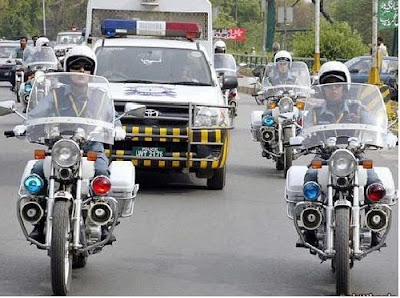
"More of them(women) than ever are finding employment, doing everything from pumping gasoline and serving burgers at McDonald’s to running major corporations", says a report in the latest edition of Businessweek magazine.
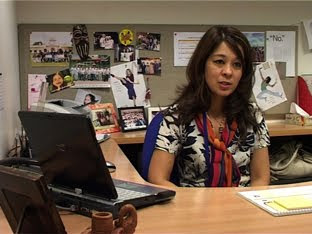
Beyond company or government employment, there are a number of NGOs focused on encouraging self-employment and entrepreneurship among Pakistani women by offering skills training and microfinancing. Kashf Foundation led by a woman CEO and BRAC are among such NGOs. They all report that the success and repayment rate among female borrowers is significantly higher than among male borrowers.
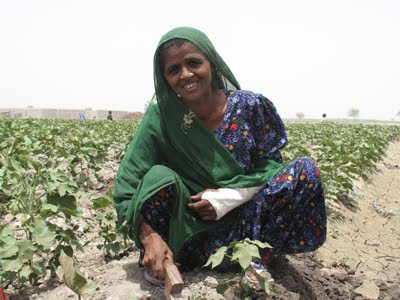
In rural Sindh, the PPP-led government is empowering women by granting over 212,864 acres of government-owned agriculture land to landless peasants in the province. Over half of the farm land being given is prime nehri (land irrigated by canals) farm land, and the rest being barani or rain-dependent. About 70 percent of the 5,800 beneficiaries of this gift are women. Other provincial governments, especially the Punjab government have also announced land allotment for women, for which initial surveys are underway, according to ActionAid Pakistan.
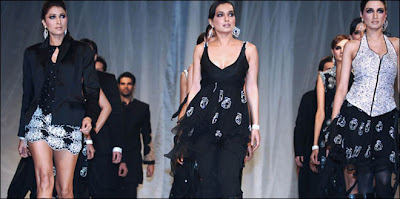
Both the public and private sectors are recruiting women in Pakistan's workplaces ranging from Pakistani military, civil service, schools, hospitals, media, advertising, retail, fashion industry, publicly traded companies, banks, technology companies, multinational corporations and NGOs, etc.
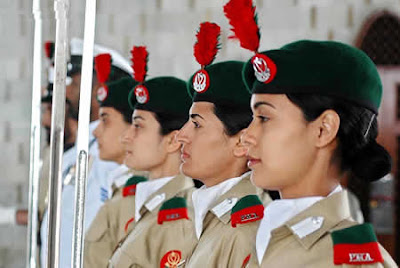
Here are some statistics and data that confirm the growth and promotion of women in Pakistan's labor pool:
1. A number of women have moved up into the executive positions, among them Unilever Foods CEO Fariyha Subhani, Engro Fertilizer CFO Naz Khan, Maheen Rahman CEO of IGI Funds and Roshaneh Zafar Founder and CEO of Kashf Foundation.
2. Women now make up 4.6% of board members of Pakistani companies, a tad lower than the 4.7% average in emerging Asia, but higher than 1% in South Korea, 4.1% in India and Indonesia, and 4.2% in Malaysia, according to a February 2011 report on women in the boardrooms.
3. Female employment at KFC in Pakistan has risen 125 percent in the past five years, according to a report in the NY Times.
4. The number of women working at McDonald’s restaurants and the supermarket behemoth Makro has quadrupled since 2006.
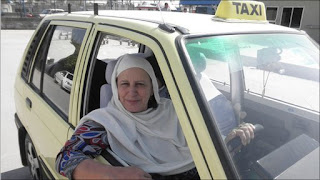
5. There are now women taxi drivers in Pakistan. Best known among them is Zahida Kazmi described by the BBC as "clearly a respected presence on the streets of Islamabad".

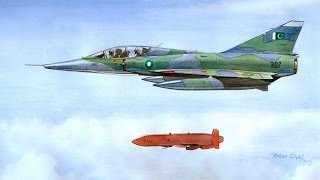
6. Several women fly helicopters and fighter jets in the military and commercial airliners in the state-owned and private airlines in Pakistan.
Here are a few excerpts from the recent Businessweek story written by Naween Mangi:
About 22 percent of Pakistani females over the age of 10 now work, up from 14 percent a decade ago, government statistics show. Women now hold 78 of the 342 seats in the National Assembly, and in July, Hina Rabbani Khar, 34, became Pakistan’s first female Foreign Minister. “The cultural norms regarding women in the workplace have changed,” says Maheen Rahman, 34, chief executive officer at IGI Funds, which manages some $400 million in assets. Rahman says she plans to keep recruiting more women for her company.
Much of the progress has come because women stay in school longer. More than 42 percent of Pakistan’s 2.6 million high school students last year were girls, up from 30 percent 18 years ago. Women made up about 22 percent of the 68,000 students in Pakistani universities in 1993; today, 47 percent of Pakistan’s 1.1 million university students are women, according to the Higher Education Commission. Half of all MBA graduates hired by Habib Bank, Pakistan’s largest lender, are now women. “Parents are realizing how much better a lifestyle a family can have if girls work,” says Sima Kamil, 54, who oversees 1,400 branches as head of retail banking at Habib. “Every branch I visit has one or two girls from conservative backgrounds,” she says.
Some companies believe hiring women gives them a competitive advantage. Habib Bank says adding female tellers has helped improve customer service at the formerly state-owned lender because the men on staff don’t want to appear rude in front of women. And makers of household products say female staffers help them better understand the needs of their customers. “The buyers for almost all our product ranges are women,” says Fariyha Subhani, 46, CEO of Unilever Pakistan Foods, where 106 of the 872 employees are women. “Having women selling those products makes sense because they themselves are the consumers,” she says.
To attract more women, Unilever last year offered some employees the option to work from home, and the company has run an on-site day-care center since 2003. Engro, which has 100 women in management positions, last year introduced flexible working hours, a day-care center, and a support group where female employees can discuss challenges they encounter. “Today there is more of a focus at companies on diversity,” says Engro Fertilizer CFO Khan, 42. The next step, she says, is ensuring that “more women can reach senior management levels.”
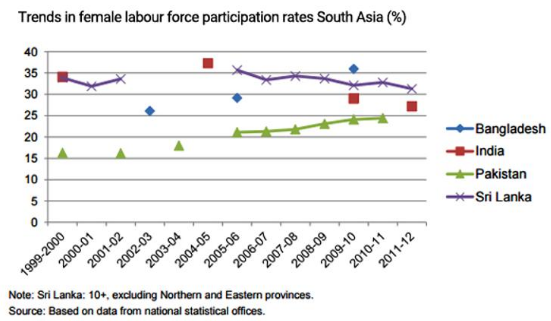
The gender gap in South Asia remains wide, and women in Pakistan still face significant obstacles. But there is now a critical mass of working women at all levels showing the way to other Pakistani women.
I strongly believe that working women have a very positive and transformational impact on society by having fewer children, and by investing more time, money and energies for better nutrition, education and health care of their children. They spend 97 percent of their income and savings on their families, more than twice as much as men who spend only 40 percent on their families, according to Zainab Salbi, Founder, Women for Women International, who recently appeared on CNN's GPS with Fareed Zakaria.
Here's an interesting video titled "Redefining Identity" about Pakistan's young technologists, including women, posted by Lahore-based 5 Rivers Technologies:
Related Links:
Haq's Musings
Status of Women in Pakistan
Microfinancing in Pakistan
Gender Gap Worst in South Asia
Status of Women in India
Female Literacy Lags in South Asia
Land For Landless Women
Are Women Better Off in Pakistan Today?
Growing Insurgency in Swat
Religious Leaders Respond to Domestic Violence
Fighting Agents of Intolerance
A Woman Speaker: Another Token or Real Change
A Tale of Tribal Terror
Mukhtaran Mai-The Movie
World Economic Forum Survey of Gender Gap
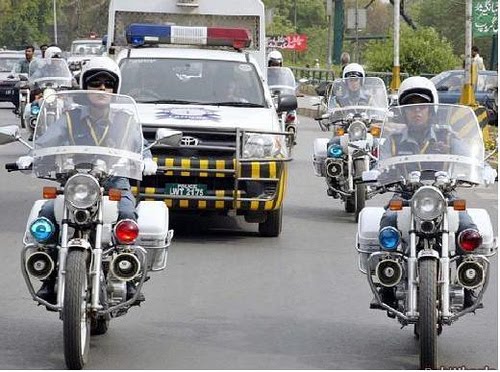
"More of them(women) than ever are finding employment, doing everything from pumping gasoline and serving burgers at McDonald’s to running major corporations", says a report in the latest edition of Businessweek magazine.
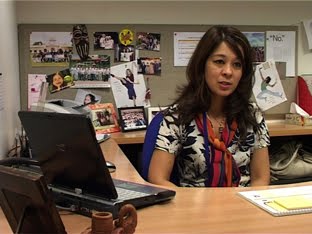
Beyond company or government employment, there are a number of NGOs focused on encouraging self-employment and entrepreneurship among Pakistani women by offering skills training and microfinancing. Kashf Foundation led by a woman CEO and BRAC are among such NGOs. They all report that the success and repayment rate among female borrowers is significantly higher than among male borrowers.

In rural Sindh, the PPP-led government is empowering women by granting over 212,864 acres of government-owned agriculture land to landless peasants in the province. Over half of the farm land being given is prime nehri (land irrigated by canals) farm land, and the rest being barani or rain-dependent. About 70 percent of the 5,800 beneficiaries of this gift are women. Other provincial governments, especially the Punjab government have also announced land allotment for women, for which initial surveys are underway, according to ActionAid Pakistan.
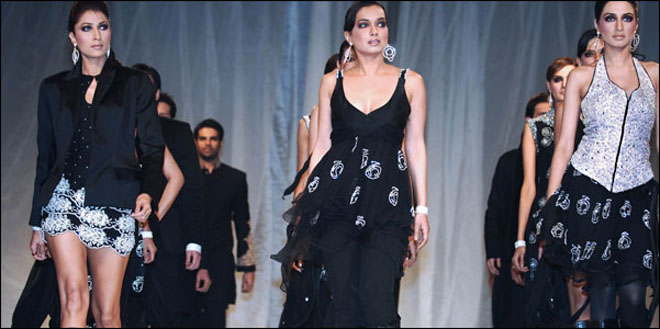
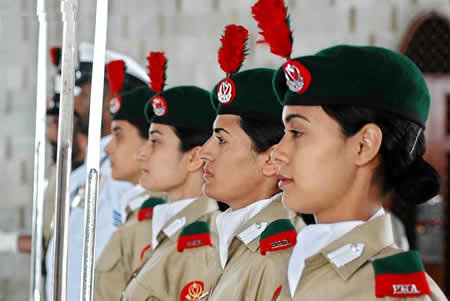
Both the public and private sectors are recruiting women in Pakistan's workplaces ranging from Pakistani military, civil service, schools, hospitals, media, advertising, retail, fashion industry, publicly traded companies, banks, technology companies, multinational corporations and NGOs, etc.
Here are some statistics and data that confirm the growth and promotion of women in Pakistan's labor pool:
1. A number of women have moved up into the executive positions, among them Unilever Foods CEO Fariyha Subhani, Engro Fertilizer CFO Naz Khan, Maheen Rahman CEO of IGI Funds and Roshaneh Zafar Founder and CEO of Kashf Foundation.
2. Women now make up 4.6% of board members of Pakistani companies, a tad lower than the 4.7% average in emerging Asia, but higher than 1% in South Korea, 4.1% in India and Indonesia, and 4.2% in Malaysia, according to a February 2011 report on women in the boardrooms.
3. Female employment at KFC in Pakistan has risen 125 percent in the past five years, according to a report in the NY Times.
4. The number of women working at McDonald’s restaurants and the supermarket behemoth Makro has quadrupled since 2006.
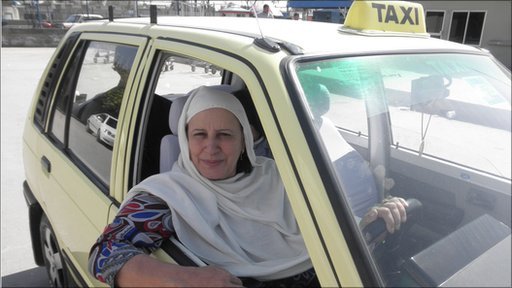
5. There are now women taxi drivers in Pakistan. Best known among them is Zahida Kazmi described by the BBC as "clearly a respected presence on the streets of Islamabad".
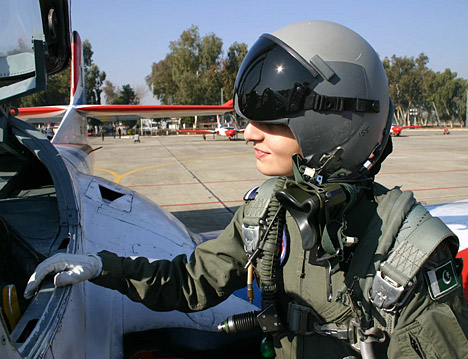
6. Several women fly helicopters and fighter jets in the military and commercial airliners in the state-owned and private airlines in Pakistan.
Here are a few excerpts from the recent Businessweek story written by Naween Mangi:
About 22 percent of Pakistani females over the age of 10 now work, up from 14 percent a decade ago, government statistics show. Women now hold 78 of the 342 seats in the National Assembly, and in July, Hina Rabbani Khar, 34, became Pakistan’s first female Foreign Minister. “The cultural norms regarding women in the workplace have changed,” says Maheen Rahman, 34, chief executive officer at IGI Funds, which manages some $400 million in assets. Rahman says she plans to keep recruiting more women for her company.
Much of the progress has come because women stay in school longer. More than 42 percent of Pakistan’s 2.6 million high school students last year were girls, up from 30 percent 18 years ago. Women made up about 22 percent of the 68,000 students in Pakistani universities in 1993; today, 47 percent of Pakistan’s 1.1 million university students are women, according to the Higher Education Commission. Half of all MBA graduates hired by Habib Bank, Pakistan’s largest lender, are now women. “Parents are realizing how much better a lifestyle a family can have if girls work,” says Sima Kamil, 54, who oversees 1,400 branches as head of retail banking at Habib. “Every branch I visit has one or two girls from conservative backgrounds,” she says.
Some companies believe hiring women gives them a competitive advantage. Habib Bank says adding female tellers has helped improve customer service at the formerly state-owned lender because the men on staff don’t want to appear rude in front of women. And makers of household products say female staffers help them better understand the needs of their customers. “The buyers for almost all our product ranges are women,” says Fariyha Subhani, 46, CEO of Unilever Pakistan Foods, where 106 of the 872 employees are women. “Having women selling those products makes sense because they themselves are the consumers,” she says.
To attract more women, Unilever last year offered some employees the option to work from home, and the company has run an on-site day-care center since 2003. Engro, which has 100 women in management positions, last year introduced flexible working hours, a day-care center, and a support group where female employees can discuss challenges they encounter. “Today there is more of a focus at companies on diversity,” says Engro Fertilizer CFO Khan, 42. The next step, she says, is ensuring that “more women can reach senior management levels.”

The gender gap in South Asia remains wide, and women in Pakistan still face significant obstacles. But there is now a critical mass of working women at all levels showing the way to other Pakistani women.
I strongly believe that working women have a very positive and transformational impact on society by having fewer children, and by investing more time, money and energies for better nutrition, education and health care of their children. They spend 97 percent of their income and savings on their families, more than twice as much as men who spend only 40 percent on their families, according to Zainab Salbi, Founder, Women for Women International, who recently appeared on CNN's GPS with Fareed Zakaria.
Here's an interesting video titled "Redefining Identity" about Pakistan's young technologists, including women, posted by Lahore-based 5 Rivers Technologies:
Related Links:
Haq's Musings
Status of Women in Pakistan
Microfinancing in Pakistan
Gender Gap Worst in South Asia
Status of Women in India
Female Literacy Lags in South Asia
Land For Landless Women
Are Women Better Off in Pakistan Today?
Growing Insurgency in Swat
Religious Leaders Respond to Domestic Violence
Fighting Agents of Intolerance
A Woman Speaker: Another Token or Real Change
A Tale of Tribal Terror
Mukhtaran Mai-The Movie
World Economic Forum Survey of Gender Gap
Comments
KARACHI - Six of the most dynamic women entrepreneurs talked about their experiences, triumphs and losses before a spell-bound audience at the second Ladiesfund Entrepreneurship Conference (LEC) hosted by the Dawood Global Foundation (DGF) at the Avari Towers.
The event was organised in partnership with the Higher Education Commission, the Avari Group, the Dawood Capital Management, and over 60 partners, sponsors and supporters. The audience was diverse and consisted of Very Important Persons, top entrepreneurs, budding entrepreneurs, journalists and enthusiastic university students.
The Ladiesfund was established in 2007 as an initiative to provide financial security to women and to promote and train women entrepreneurs. It aims to integrate the entrepreneurial needs based on the economic and social aspects of the local communities with respect to greater women participation in the workforce.
The conference started with recitation of the Holy Quran, followed by a welcome address by TU Dawood with an introduction to virtual businesses and how they are a fabulous option for women entrepreneurs. This was followed by a speech from British Deputy High Commissioner Francis Campbell, who was the chief guest. He spoke on the importance of entrepreneurship in Pakistan and how much it could help boost our economy.
To educate the budding entrepreneurs and students in the audience about what entrepreneurship really is, there was a short academic presentation by Avari Karachi General Manager Gordon Gorman. Then followed the first panel of the conference, which consisted of Mehrbano Sethi of Luscious Cosmetics, Ayaz Khan of Okra, and Wajeeha Malik of Olive Soap.
And as a pleasant surprise for the audience, Rohail Hyatt, the powerhouse behind the famous Coke Studio, joined the panel. This panel focused on the basics of entrepreneurship. They answered questions about the realities on entrepreneurship and what made them decide to become entrepreneurs.
The second panel comprised architect Naheed Mashooqullah, designer Hassan Sheheryar Yasin, and Naila Naqvi of Pie in the Sky and Chatterbox. They shared the inside scoop on how their brands tipped to being the best in their industries, despite facing the problems that all Pakistani entrepreneurs face, like electricity, human resources, etc.
They talked about expanding businesses, and whether expanding through other people, platforms or on your own is a better option. This was followed by a question-answer session. At the end was an art auction by Mehreen Ilahi of the Majmua Art Gallery to raise funds for the DGF, followed by a lucky draw conducted by the chief guest.
The conference was moderated and hosted by Sidra Iqbal. TU Dawood finally presented the plaques to the chief guest and panellists. The event concluded with thanking all the sponsors, supporters, students, event catalysts, volunteers and ambassadors. Funds raised from the LEC 2011 are audited by Ernst & Young Ford Rhodes Sidat Hyder, and go toward Ladiesfund Fellowships & Scholarships as well as women development initiatives.
http://www.pakistantoday.com.pk/2011/09/women-entrepreneurs-discuss-experiences-triumphs-and-losses/
of the region’s working‐age population and have the lowest rates of female participation (31 percent in Bangladesh, 30 percent in India, and 22 percent in Pakistan)."
http://siteresources.worldbank.org/SOUTHASIAEXT/Resources/223546-1296680097256/7707437-1316565221185/Jobsoverview.pdf
"Despite the overwhelming media attention to the rise of fundamentalism and Pakistan's geopolitical role in the 'war against terror,' Pakistan has an often-unrevealed side, characterized by an active women's movement that serves as a key democratic force committed to expanding women's rights," Filomena Critelli writes in her study, "Struggle and Hope: Challenging Gender Violence in Pakistan."
Forthcoming in the journal Critical Sociology, Critelli's analysis is based on interviews with activists who founded a legal aid practice to defend women's rights and a private shelter for women fleeing from abuse.
People seldom hear about the activism of these women's groups, Critelli says. But their work and resiliency, often in the face of resistance, harassment and safety threats, should be recognized as much as the elements of fundamentalism that have attracted international headlines.
"Within civil society (in Pakistan), women activists are advocating to implement strategies to limit gender violence as well as provide care for survivors," she writes in the study. "The women's movement continues to negotiate women's interests with the state and society, and has become increasingly effective over time, strengthened by regional and international recognition of its work."
The struggle against abuse against women in Pakistan -- which often reaches graphic proportions such as "honor killings," forced marriages, child marriages and other forms of gender violence -- is seen through a "secular human rights framework" by these activists, according to Critelli, assistant professor of social work at UB. Critelli has authored several studies on gender-based violence and women's rights activism in Pakistan. Her most recent research paper was prepared with her former student, Jennifer Willett.
It's a movement that often surprises people who do not realize the pluralistic Pakistani culture, she says, one that exists with sometimes contradictory elements that include these strong advocates of women's rights, changing political climates and traditional patriarchal social orders that inhibit independence of women.
For example, this vibrant women's rights movement has been active for over 30 years in Pakistan. Pakistan was the first Muslim country to elect a women leader, Prime Minister Benazir Bhutto, and has adopted policies that set a quota of 30 percent of reserved seats for women in Parliament. As a result, women's representation in Pakistan's parliament is the highest in South Asia.
Although the women's rights movement is alive and well in Pakistan, the country also is marked by a strongly patriarchal society where male power manifests itself in a high incidence of domestic violence.
"Gender violence is estimated to take place in as many as 80 to 90 percent of the households in Pakistan," notes Critelli. "Gender violence in Pakistan takes a variety of forms, some of which are common across cultures such as marital violence, including verbal abuse, hitting, kicking, slapping, rape and murder, and economic and emotional abuse.
"Other forms of violence are rooted in traditional practices that continue under the guise of social conformism, customs and misinterpretations of religion, that also include exchange marriage, death by burning (stove deaths, which are presented as accidents), acid attacks and nose cutting (a form of humiliation and degradation)," Critelli writes. "Women are also raped and abused while in police custody, which further deters many women from reporting crimes against them."
All these practices are contrary to Pakistani law, human rights treaties ratified by Pakistan, as well as the tenets of Islam...
http://www.buffalo.edu/news/13155
Samina Quraeshi is a Renaissance woman in every sense of the phrase. A native of Pakistan, she has worn the hats of author, artist, architect, speaker, academic, photographer, curator — and now filmmaker.
Quraeshi presented clips from her upcoming documentary, "The Other Half of Tomorrow: Women Changing Pakistan," to a rapt audience of roughly 30 students and Rhode Island natives Wednesday night in the Perry and Marty Granoff Center for the Creative Arts. The richly detailed and tenderly shot film tells the stories of women in Pakistan trying to make positive changes in their surroundings as entrepreneurs, public health workers and dance instructors, among other jobs.
In an address before the screening, Quraeshi said her motive behind producing the film was to present the human face of a region often vilified in the media.
"I want to use art to introduce complex cultural nuances," she said. "Sensationalist portrayals begin to warp the public's consciousness of the people who live in (Pakistan)."
Soft-spoken and often dryly humorous, Quraeshi also emphasized that understanding a place's history is essential to understanding its culture.
"During the past Bush era, there was a culture of fear on top of a lack of awareness," she told The Herald. "It made people want to get into their houses and watch their TVs, but all the media coverage was doing was propagating stereotypes."
The film preview was part of a national series called "Caravanserai: A Place Where Cultures Meet," which aims to introduce American audiences to contemporary Muslim artists. The Providence nonprofit FirstWorks competed fiercely with organizations across the country to host Caravanserai in the city, said Kathleen Pletcher, executive artistic director of FirstWorks. Only four other U.S. nonprofits earned a spot as a stop on the tour.
"There's this idea of a caravanserai as a place where weary travelers along the road stop and rest and share their stories," Pletcher said. "It's a very collective act. And that's what we're hoping to do here — connect art with audience."
The next Caravanserai event is a Feb. 7 screening of "Made in Pakistan," a documentary from Pakistani filmmaker Ayesha Khan. Quraeshi's film is slated to be released in October.
http://www.browndailyherald.com/granoff-hosts-pakistani-renaissance-woman-1.2694725#.TywcK-RWGSo
By Teju Cole:
What Africa needs more pressingly than Kony's indictment is more equitable civil society, more robust democracy, and a fairer system of justice.
--------------
1- From Sachs to Kristof to Invisible Children to TED, the fastest growth industry in the US is the White Savior Industrial Complex.
Teju Cole @tejucole
2- The white savior supports brutal policies in the morning, founds charities in the afternoon, and receives awards in the evening.
Teju Cole @tejucole
3- The banality of evil transmutes into the banality of sentimentality. The world is nothing but a problem to be solved by enthusiasm.
Teju Cole @tejucole
4- This world exists simply to satisfy the needs—including, importantly, the sentimental needs—of white people and Oprah.
5- The White Savior Industrial Complex is not about justice. It is about having a big emotional experience that validates privilege.
Teju Cole @tejucole
6- Feverish worry over that awful African warlord. But close to 1.5 million Iraqis died from an American war of choice. Worry about that.
Teju Cole @tejucole
7- I deeply respect American sentimentality, the way one respects a wounded hippo. You must keep an eye on it, for you know it is deadly.
These tweets were retweeted, forwarded, and widely shared by readers. They migrated beyond Twitter to blogs, Tumblr, Facebook, and other sites; I'm told they generated fierce arguments. As the days went by, the tweets were reproduced in their entirety on the websites of the Atlantic and the New York Times, and they showed up on German, Spanish, and Portuguese sites. A friend emailed to tell me that the fourth tweet, which cheekily name-checks Oprah, was mentioned on Fox television.
These sentences of mine, written without much premeditation, had touched a nerve. I heard back from many people who were grateful to have read them. I heard back from many others who were disappointed or furious. Many people, too many to count, called me a racist. One person likened me to the Mau Mau. The Atlantic writer who'd reproduced them, while agreeing with my broader points, described the language in which they were expressed as "resentment."
This weekend, I listened to a radio interview given by the Pulitzer Prize-winning journalist Nicholas Kristof. Kristof is best known for his regular column in the New York Times in which he often gives accounts of his activism or that of other Westerners. When I saw the Kony 2012 video, I found it tonally similar to Kristof's approach, and that was why I mentioned him in the first of my seven tweets.
Those tweets, though unpremeditated, were intentional in their irony and seriousness. I did not write them to score cheap points, much less to hurt anyone's feelings. I believed that a certain kind of language is too infrequently seen in our public discourse. I am a novelist. I traffic in subtleties, and my goal in writing a novel is to leave the reader not knowing what to think. A good novel shouldn't have a point. ....
http://www.theatlantic.com/international/archive/2012/03/the-white-savior-industrial-complex/254843/
A deprived but very bold girl has started rickshaw driving to feed her five-member family in Karachi, SAMAA reported on Monday.
Rubeena is young but not afraid of driving rickshaw on busy roads of Karachi as she is committed to feed her old mother, three sisters and one injured brother.
It is first case of its kind in the largest city of Pakistan, where no female has dared to earn living by driving a rickshaw or taxi up till now.
Rubeena is not familiar with the uncountable roads of the metropolis so, initially she is picking nearby passengers in her area including few regular passengers only.
Few female passengers and other trustworthy regular travelers used to call her on mobile phone number when they need to go somewhere.
Rubeena does not care that what people think about her as a rickshaw driving girl; she just cares about her cause and commitment with the family.
It seems that Rubeena’s bold step will open door for many other brave girls to earn living and change their families’ destiny.
http://samaa.tv/newsdetail.aspx?ID=44499&CID=1
Established in Rawalpindi in 1999 as the first public sector university exclusively for women, the FJWU makes education accessible to women from conservative Muslim homes who would otherwise not be allowed to attend a mainstream university. It also takes female students from impoverished families who cannot afford the exorbitant fees charged by private universities.
“Young women who come to FJWU include many from circumstances beyond your imagination. They come from poor families who are simply unable to afford even a regular bus fare let alone a car,” says Prof Qadir.
The FJWU’s MBA programme accepts about 60 students a year and in the past decade has seen more than 800 students graduate. It is located in the Old Presidency – the former official residence of Pakistan’s heads of state. Previous residents include the late military dictator Zia ul Haq who introduced some of the most rigorous laws targeting women, an irony for those who see FJWU’s role as the empowerment of young women.
Many of FJWU’s students enter the programme under the impression that they will not be taught alongside men. However, the reality of going through an MBA programme soon exposes women to an environment where men and women work side by side. The six-week obligatory internship takes place in a non-segregated environment and students can find themselves working in organisations ranging from the ministry of the environment, to the Pakistan Red Crescent society to the US embassy in Islamabad. The students also find themselves competing aggressively with male students from other universities in events such as job fairs.
“From day one, we push our business students to face the rigour of the practical world” says Prof Qadir.
“The students may step into a segregated campus which is for women only, but they must then face the realities of the practical world. That’s what an MBA programme is all about.”
http://www.ft.com/intl/cms/s/2/5a9b1e6e-687d-11e1-a6cc-00144feabdc0.html#axzz1qBxQGnq1
What inspired you to start your own businesses?
Roshaneh Zafar: I never thought I’d start my own business at 27, but I met [Grameen founder] Dr. Muhammad Yunus at a conference and he changed my life. He talked about women’s economic empowerment and how a simple loan could change lives. I spent time with him in Bangladesh and he encouraged me to help Pakistani women [with microfinance opportunities]. He said if I fail, I could blame it all on him.
Ambarine Bukharey: I started gemstone exports in 1989 and never thought this would become a serious business. I was the first woman in this line, and I think so far the only one who’s also mining. When I first went out in the markets in Peshawar to buy gemstones, all these men would just stop and stare and laugh at me. They were highly skeptical. But now we’re one big happy family. Now I can sit with five or six Pathans in the middle of the night examining stones. I feel safe now, because they look after you like family.
Sajida Zulfiqar Khan: I started this furniture business after my husband died. People here and abroad have been very responsive to our work.
Nasreen Kasuri: I’m afraid my story is not as glamorous as the rest. I started out in 1975 when my own children were starting school. I looked around for the right nursery school in town, and felt that none of them was suitable for children aged 2 and 3. So I started my own Montessori in Lahore. After that it was just a series of fortunate coincidences.
Zeenat Saeed Ahmed: I was bored with marriage. So I started making little gifts and set up a small boutique store, Sehr. Later, I set up a garment factory and had 600 people working for me at one time. In 1993 I went bankrupt, so I closed down and also got divorced the same year. It wasn’t a happy time. When I ran out of whatever little money I had left, I decided to start Taneez. I started from home, and when we did our first store in 2000 it was an instant success.
Did you face any resistance from your families in striking out on your own?
Khan: A little, but it gets better every day.
Kasuri: I didn’t really face any resistance, not in the beginning. They thought this was just a hobby which would keep me busy and out of mischief.
What do you consider your first achievement in the profession? When did you realize you had made it?
Zafar: It took me 10 months after setting up Kashf to organize women in groups and encourage the concept of women working at home or in the community. There were these five women who were the first risk takers, who took Rs. 4,000 to start their business some 18 years ago. It was just incredible when the first repayment installment came in and then the next; these women had begun to feel confident because they could invest in a business, earn and actually be able to repay their loans.
Bukharey: For me it was being able to break through the culture of the male-dominated mining market and become accepted as an equal.
Khan: My business is pretty simple. Every woman in Khyber-Pakhtunkhwa told me this would be a difficult business, dealing with labor and everything. But it has worked and I’m pretty happy about it.
Kasuri: What I started was very small. For the first few years it didn’t make any money, and that didn’t matter. I was doing my own accounts. Every time I was short of money I would put some money in and keep it going. When it did finally make money I was quite excited, except that real accountants told me I hadn’t made any money. They put in the amortization and depreciation and told me I had actually lost money. So it took me some time to figure out that when you think you have made money, you haven’t really.
Ahmed: When I got my first check something like 35 years ago, I was pretty excited...
http://www.newsweekpakistan.com/features/946
The Pakistan Youth Outreach Second Climbing Expedition in winter to Mingligh sar 6050m was indeed amazing, Samina Baig being the first woman from Pakistan to go on a winter attempt in the Karakorum was a great mile stone in Pakistani women’s adventure history.Samina Baig who had topped Chashkin Sar Peak,which was uncllimbed, in August-Septermber 2010. The team along with Samina set High Camp at nearly 5525m which was new for any girl from Pakistan in winter and pushed for the summit the next day. Due to extreme cold and insufficient clothing for Samina (due to financial constraints) mainly down jacket and pants, the team decided to return approximately 150m short of the summit. Samina reached the height of approximately 5900m. Later the weather turned to hell and we called off the Expedition however the PYO first basic mountaineering training camp for young school boys and girls was very successful.This expedition was dedicated to all those who have been affected by the floods in Pakistan this year.
Since Karakorum has different weather conditions, the winter arrives late November in the high mountains of Karakorum, according to the calendar year it has been said that December climbing expeditions are not a full calendar year expedition. However a few years back the Alpine club of Pakistan organized a climbing expedition to Peer Peak in the Karakorum which was named “Winter Expedition”. Similarly there was another expedition in November by locals which was also named Winter Expedition. Looking at the extreme weather situation in the high mountains, December and January is normally considered winter in the Karakorum, Pamir area hence the expedition is also Winter Expedition.
The expedition kicked off on the 8th of December 2010 after three days acclimatization in Shimshal Valley. We hired 12 porters, two cooks and Mr Yausaf Khan, former army climber as our expedition advisor. The first day was spent at Korband. During the winter days are short and most streams at different summer camp sites get frozen therefore the first night spent at Korband was pretty chilly and there was a lot of frost in the tents. After a steep climb of Ghar Sar the next day the team managed to reach Uch Forzeen in 9 hours, the chill was great though the day was sunny. Uch Forzeen provided us with good shelter for cooking in the hut but sleeping in the tent was pretty hard, at midnight I found my sleeping bag frosty and frozen half due to my breathing but a great adventure all the same! Uch Forzeen to Arbon Purian was a nice journey, the frozen slopes of Arbon Purian were nice for practice and play adventure in the cold climate.
http://www.summitpost.org/samina-baig-account-of-first-pakistani-women-s-winter-climbing-expedition/698778
Vital role of female entrepreneurs can help in improving the economic conditions of Pakistan. Therefore Khushhalibank joined hands with Dawood Global Foundation (DGF), Dawood Capital Management Limited (DCM) and Higher Education Commission (HEC) to promote women entrepreneurship by sponsoring the third LADIESFUND Entrepreneurship Conference, themed Cutting Edge Entrepreneurship (LEC 2012), recently held in Karachi.
Khushhalibank President Ghalib Nishtar said we are pleased to sponsor this dynamic event. The LADIESFUND Conference is a platform where women are supported and celebrated as the nucleus of change and betterment in the family unit, a vision that is a mainstay at Khushhalibank. This year, LEC 2012 hosted Pakistan’s first Student Entrepreneurship Exhibition which showcased the work of deaf student entrepreneurs as well as handicapable student entrepreneurs, an effort to celebrate the especially gifted disabled students of our community.”
Additionally the event served as a fundraising effort with partial proceeds directed towards ovarian cancer awareness as well as LADIESFUND(r) Fellowships and Scholarships, the awards for which are to be presented at the 5th LADIESFUND(r) Women’s Awards in March 2013.
http://www.nation.com.pk/pakistan-news-newspaper-daily-english-online/business/21-Sep-2012/businesswomen-to-help-improve-economy
LAHORE, Pakistan — A perfectly coiffed model, draped in diamonds, shoots a sultry gaze from the cover of a glossy in-room magazine at a luxury hotel chain in downtown Lahore. The cover line on the ad-packed issue screams: “Wow! World of Women.”
And with good reason. Economists say that, in recent years, Pakistani women have fueled a retail boom in name-brand shopping as they move from a traditional homebound life into the working world.
“You can go into any shopping mall or any cafe, and you will see young girls sitting, having lunch, chatting away,” said Rashid Amjad, vice chancellor at the Pakistan Institute of Development Economics in Islamabad. “Despite all this conservatism that has been growing at the same time, you have a change.”
In many urban centers, the days when girls were forced to abandon education and eschew employment in favor of remaining within the walls of their homes seem to be mostly a memory.
Traditionally, men here bear the burden of sustaining the household, so for many middle-class women, their paychecks are entirely their own to spend — a boon for the newly booming retail industry.
“I can afford to spend whatever I like,” said Rabiya Bajwa, 37, a lawyer. “My income is roughly 20 percent more than what it was five years ago.” Bajwa does contribute to the household budget, but her two-income family enjoys a comfortable “cushion,” and she splurges on expensive designer clothes.
But this good fortune is not evenly distributed, said Hafiz Pasha, a noted economist at Beaconhouse National University in Lahore. Pakistan, he said, is still far behind other countries in terms of women’s economic contribution.
“This growth is witnessed in urban centers where middle-class working women are found,” Pasha said. “In rural areas, although the participation of women in the economy is more than the urban centers, they are not well-paid, and their share in the economy is much less.”
Although women have long been underpaid and subject to discrimination in the Pakistani workforce, they are coming into their own at a surprising rate. Since about 2002, Amjad said, participation by women, traditionally low, has been rising.
Many men left agriculture jobs, so work was being generated and women readily moved in, Amjad noted. Now, somewhere between 28 percent and 36 percent of women work in Pakistan, he said, but many work in home-based businesses, so their numbers are not easily ascertained.
In schools and colleges, young women study side by side with their male counterparts. “They seem to be very easy together, they talk very easily, and they discuss issues quite comfortably,”Amjad said, “so in a way higher education has increased female confidence to work with men, and that has helped.”
Three retail store owners surveyed in Lahore said most of their customers are working women, and they credited them with increasing their business.
“We started from a small store, but now we have five outlets in various parts of the city,” said Hasan Ali, manager of Bareeze, a leading brand of women’s clothing. “We have been in the market for the last 10 years, and roughly the business has expanded 40 percent in that period. . . . There are those out there who don’t even ask the price, and pay.”
Rukhsana Anjum, 47, a senior instructor at the Government College of Technology in Lahore, said she earns about 100,000 rupees, or $1,054, a month. “Gradually in the last five years I have become brand-conscious,” she said. “Today, definitely I spend more on my clothes and jewelry.”
http://www.washingtonpost.com/world/asia_pacific/pakistani-women-drive-retail-boom/2012/09/30/b6e38eea-0a3f-11e2-afff-d6c7f20a83bf_story.html
according to the 2011 Pakistan Employment Trends Report, compiled by the Pakistan Bureau of Statistics, female labour force participation has jumped from 16.3% in 2000 to 24.4% in 2011. That jump represents an extra seven million women in the work force.
So who are these women? There is very little specific research on the profiles of women who have entered the workforce, but the 2012 Economic Survey of Pakistan, issued by the federal finance ministry, states that a major proportion of the rise appears to be taking place in urban areas. The government does not break down employment data by specific sectors or levels, but it appears – at least from anecdotal evidence – that women are entering the workforce, to varying degrees, at most levels and virtually all sectors.
Their reasons for joining the workforce have also not been documented in detail, but there are at least a few statistics that provide hints about their motivations. Education levels appear to be rising across the board, and fertility rates are hitting an all-time low virtually every year. Pakistani women are better educated and are less burdened with child-care than at any time in history (much more than men, but less than their predecessors a generation ago.)
Another factor appears to be need: according to The Express Tribune’s analysis of data provided by the Household Integrated Economic Survey, the bottom 20% of households in Pakistan have not seen their incomes keep pace with inflation. Many patriarchal households have had to abandon their traditionalist strictures against women working outside the home and let their female relatives work to bring in more income.
Seven million women is not a number to be trifled with: while women have yet to crack the glass ceiling in Pakistan (representation at senior levels of management remains shamefully low), they are beginning to gain increasing economic clout. And this increased clout is changing the way business is done in Pakistan, largely by making it more inclusive than it used to be.
Many companies, for instance, have caught on to the idea that female customers have money to spend, but may not necessarily be comfortable speaking to male salespersons, regardless of how friendly or courteous they may be. That, in turn, has led to the rise in hiring of female staff members, creating stable corporate-style employment opportunities for blue-collar women. The rising spending power of upper-middle class women is helping their lower-middle and working class sisters get jobs.
It is also perhaps not a coincidence that the first Pakistani law against sexual harassment in the workplace was passed in 2011. Perhaps politicians now feel that urban women are an increasingly important electoral constituency.
And the rise in female consumers has also given birth to a new breed of female entrepreneurs in Pakistan. This is a game being played not just by the daughters of rich businessmen, but also by more working class women, aided by government efforts like the incubation centres set up by the Punjab government in Lahore, and the state-owned First Women’s Bank providing lending facilities.
http://tribune.com.pk/story/464126/social-revolution-rising-economic-power-of-pakistani-women/
The Small and Medium Enterprises Development Authority (Smeda) organised the Women Business Incubation Centre (WBIC) in Pakistan to promote women’s participation in the consumer sector. The major goal of the project is to provide a protected and hassle-free business environment to women entrepreneurs and to help them develop business skills that will enable them to compete successfully in the modern marketplace.
“Pakistani women entrepreneurs need to start inventing their own business concepts,” said Asma Maryam, project director of WBIC while talking to The Express Tribune.
Majority of women entrepreneurs fall within the 20 to 40 years age group. Women entrepreneurial ventures can create jobs, in which women are either the owner or the sales staff, Maryam added.
All the facilities provided by Smeda in WBIC like, electricity, gas, telephone bills, security are at a nominal rent of Rs7,260 per month, she added.
There are two operational WBICs in Pakistan; one is in Lahore and the other in Peshawar. Centres in Quetta, Swat and Karachi are under construction. The Karachi project will be operational very soon. The Sindh government approved two more WBICs in Karachi, said Alamgeer Chaudhry, general manager of Smeda, Lahore while talking to The Express Tribune.
The funds are provided by the government but these projects may face financial constraints as Smeda’s funding will be suspended by the next fiscal year. Smeda is approaching international donors to fund the project. For this purpose, the University of Southern Queensland Australia and Lahore College for Women University have expressed their interest, he added.
Women are likely to buy products if they are sold by women, which has increased revenues of the women’s business centre by 60%, said Shahida Tahir, shopkeeper in WBIC in Lahore, while talking to The Express Tribune. She added that women were earning handsome profits because of this project and hoped that if granted increased funding, the project will open doors to more upcoming female entrepreneurs.
Huma Kiran, a designer in WBIC, said that previously, she was earning Rs15,000 per month by designing dresses at her home. But now her income has jumped three-fold to Rs50,000 after she managed to find a shop in the Smeda centre.
Mehwish Zahid, a customer at WBIC, said that she was feeling more comfortable while purchasing goods from women.
She said that lack of motivation coupled with limited capital and skilled workers are the main causes of economic backwardness of females.
There is a need to setup both general and specialist support organisations in the country at various levels to encourage this sector. This can be done by financial institutions, business organisations and concerned governmental departments.
Mena bazaar of Karachi is the best bazaar where women are doing business; the government of Punjab should also organise such bazaars in Punjab to promote the culture of women entrepreneurs.
http://tribune.com.pk/story/464107/bosses-at-home-but-denied-leadership-in-corporate-world/
MUZAFFARABAD: Sania was just a schoolgirl when she logged onto an Internet chat room and met a young college student called Mohammad. They fell in love and decided to get married.
Internet dating in the West is now so common that it is no longer considered an act of shameful desperation but an acceptable way for busy professionals to discover a like-minded partner.
But for Sania, the 22-year-old daughter of a conservative truck driver in Pakistan, online romance and her subsequent marriage has meant repeated beatings and death threats at the hands of her relatives.
“No one gets married outside our community. It is our tradition,” Sania told AFP. She is from the garrison city of Rawalpindi and Mohammad comes from Muzaffarabad, the capital of Pakistani-administered Kashmir.
At first she and Mohammad chatted online. Then they both bought mobiles to continue their relationship by telephone. For several years they asked their parents for permission to marry, but were refused.
So Sania decided to escape.
She packed a bag and sneaked out while her brother was at school, her mother sleeping and her father out at work. She took the bus straight to Muzaffarabad.
“I spent the four-hour journey in fear. I kept thinking that if my family caught me, they’d kill me,” she told AFP.
In Muzaffarabad, Mohammad met her off the bus and they got married immediately. But while his family quickly accepted Sania, nearly two years later the couple still live in fear of her relatives.
Twice they have dragged her back to Rawalpindi since her marriage and have demanded repeatedly that she break off relations with Mohammad.
“Last time they took me back three months ago and put lot of pressure on me to break off this relationship. I got in contact with my husband and asked him to fetch me. I escaped from the house at midnight and we managed to flee,” she said.
Now Sania and her 24-year-old husband have moved to a new one-room house in a slum, changed their phone number and dare not venture out of the city.
“They say they will kill us whenever they find us,” Sania says.
Women in Pakistan who marry against the wishes of their parents are ostracised or even killed by male relatives for supposedly bringing dishonour on the family.
But online relationships are a new phenomenon.
---
Mohammad Zaman, professor of sociology at Quaid-e-Azam University in Islamabad, who has written a book about marriage, says arranged unions that have dominated for centuries are on the wane.
“Internet marriage is a new trend emerging in Pakistan. Technological advancement has entered into our homes and traditional taboos are slowly vanishing in educated and affluent families,” Zaman told AFP.
Online, they can share personal information and swap photographs — things that would be restricted or prohibited in the traditional selection of partners.
The Internet is changing mindsets, giving young people freedom and privacy, and a forum to discuss matters frowned upon by Pakistan’s traditional, conservative society.
“There is a kind of emancipation in society and young people want their say in the selection of their future partner,” Zaman said, although he conceded that parents find it easier to accept a son’s choice than that of a daughter.
Tahir, a Pakistani peace activist, knows only too well how the freedom of the Internet can collide with the restrictions of everyday life — not only conservative sensibilities but politics and war.
The 26-year-old fell for university student Nazia on Facebook and Skype.
All fine and good, except that Nazia lives on the other side of one of the most heavily militarised borders in the world — that which divides the Himalayan region of Kashmir between India and Pakistan.
--
http://dawn.com/2012/12/16/love-online-challenges-pakistan-taboos/
ISLAMABAD (Reuters) - Pakistani women are slowly turning to divorce to escape abusive and loveless marriages, once taboo and still a dangerous option in this strict Muslim nation even as more women become empowered by rising employment and awareness of their rights.
But the number of women with the courage to seek divorce remains small in the face of Pakistan's powerful religious right and growing Islamic conservatism, and in a male-dominated nation where few champion women's rights.
Women are often killed while pursuing divorces, with some shot on the way home from court or in front of their lawyers.
In the capital Islamabad, home to 1.7 million people, 557 couples divorced in 2011, up from 208 in 2002, the Islamabad Arbitration Council said. The Pakistani government does not track a national divorce rate.
"If you are earning, the only thing you need from the guy is love and affection. If the guy is not even providing that, then you leave him," said 26-year-old divorcee Rabia, a reporter who left a loveless arranged marriage to a cheating husband.
Despite their small numbers, Rabia and other women like her are seen as a rising threat from Pakistan's conservative forces.
"The women have been given so-called freedom and liberty, which causes danger to themselves," Taliban spokesman Ihsanullah Ihsan told Reuters.
There were at least 1,636 "honor killings" last year, said Pakistani rights group The Aurat Foundation. The mere perception that a woman has behaved in a way that "dishonors" her family is sufficient to trigger an attack.
Pashtun singer Ghazala Javed became a statistic in June. A famous beauty, she married after fleeing Taliban threats. Then she discovered her new husband already had a wife. When she asked for a divorce, she and her father were shot dead.
FINANCIAL EMPOWERMENT
While women divorcing their husbands is widespread in the West, growing markedly in the 20th century in many developed nations, it is a relatively new phenomenon in Pakistan.
And while a divorce case in the Muslim family courts must be resolved within six months, civil divorce cases can drag on for years, making it even harder for tens of thousands of women from religious minorities to get a divorce.
In the commercial hub Karachi, lawyer Zeeshan Sharif said he receives several divorce enquiries a week but virtually none a decade ago.
Women seeking a divorce usually come from the upper and middle classes, he said. Lawyers' fees are at least $300, a year's wage for many of Pakistan's 180 million citizens. For poor housewives, hiring a lawyer is impossible.
Most Pakistanis think the higher divorce rate is linked to women's growing financial independence, a 2010 poll by The Gilani Foundation/Gallup Pakistan found.
The number of women with jobs grew from 5.69 million to 12.11 million over the past decade, the Pakistan Bureau of Statistics said.
"Women are also making money now and they think if they have empowerment, they do not need to sacrifice as much," said Musfira Jamal, a senior member of the religious party Jamaat-e-Islami. "God does not like divorce ... (but) God has not given any right to any man to beat his wife or torture his family."
In 2012, clerics and a religious party demanded a review of a bill to outlaw domestic violence, saying it risked undermining "family values".
Western culture, not abuse, is why women seek divorces, said Taliban spokesman Ihsanullah Ihsan.
Yet domestic violence was one of the most common reasons for divorce, said lawyer Aliya Malik. Around 90 percent of Pakistani women experienced domestic violence at least once, a 2011 Thomson Reuters Foundation poll found....
http://mobile.reuters.com/article/idUSBRE90806J20130109
More than four-fifths of these developing countries increased their trade to output ratio between 1990 and 2012. Among the exceptions in the subgroup that also made substantial improvement in HDI value are Indonesia, Pakistan and Venezuela, three large countries that are considered global players in world markets, exporting or importing from at least 80 economies. Two smaller countries whose trade
to output ratio declined (Mauritius and Panama) continue to trade at levels much higher than would be expected for countries at comparable income levels.
Here's a Business Standard report on HDI 2013 in South Asia:
Of 187 countries, India's Human Development Index (HDI), essentially a composite measure of health, education and income, rank stands at 136, on a par with Africa's Equatorial Guinea and just above Cambodia and Laos in Southeast Asia. Even over a longer period (between 2000 and 2012), it registered average annual HDI growth of 1.50 per cent, lower than Pakistan's (1.74 per cent).
Viewed in the context of the BRICs grouping (Brazil, Russia, India and China), India's standing is much below its peers - China is ranked 101st, Russia 55th and Brazil 85th. In fact, India remains squarely stuck at the bottom end of the second-lowest category in the report -Medium Human Development - even as neighbour Sri Lanka (99) moves a step higher towards becoming a "high human development" nation.
A closer look at India's performance reveals more inadequacies, especially in education. Though the country's life expectancy at birth, mean years of schooling and per capita GNI are comparable to peers, India's "expected years of schooling" is significantly below others, including Vietnam, Bhutan and even Swaziland.
Gender inequality
India is no easy country for women. The Human Development Report's Gender Inequality Index, which assesses gender-based inequalities based on reproductive health, empowerment and economic activity, ranks India 132nd out of 148 countries, below Bangladesh (111) and Pakistan (123).
"26.6 per cent of adult women have a secondary or higher level of education, compared to 50.4 per cent of their male counterparts (in India)," said an explanatory note. "Female participation in the labour market is 29 per cent, compared with 80.7 per cent for men."
Difficult future?
Though the report recognises key initiatives undertaken in India in recent years - particularly reforms in the education system, the direct cash transfer programme, a rise in social sector spending, public-private-partnerships across sectors and growing connectivity -vital concerns remain.
"India has the most projected child deaths over 2010-2015, about 7.9 million, accounting for nearly half the deaths among children under five in Asia," the report said. "China has more people than India, but is projected to have less than a quarter (1.7 million) the number of child deaths over 2010-2015."
India also has to contend with a substantial, uneducated population, possibly partly counteracting the country's feted demographic dividend. "Despite the recent expansion in basic schooling and impressive growth in better educated Indians, the proportion of the adult population with no education will decline only slowly," the report predicted.
"Even under an optimistic fast-track scenario, which assumes education expansion similar to Korea's, India's education distribution in 2050 will still be highly unequal, with a sizeable group of uneducated (mostly elderly) adults."
http://www.business-standard.com/article/economy-policy/un-report-belies-india-s-claims-of-inclusive-growth-113031500034_1.html
Humaira Bachal was just a teenager when she looked around her impoverished Karachi neighborhood at the children roaming the barren streets, and realized that she and her sister were the only ones who were going to school. Bachal’s mother was making sure her daughters got an education, against her father’s wishes. When her father discovered she was going to take a high school entrance exam, he beat her mother. He also beat her. She took the exam anyway. And then, determined to improve the shameful number of girls completing a primary education in Pakistan—only 59 percent—Bachal she started teaching a handful of local children in her home.
A decade later, Bachal was sitting on stage in an ornate theater at Lincoln Center in New York, talking about the 1,200-student school she runs in a gang-ridden part of Karachi through the Dream Foundation Trust, which she created and runs. Bachal “doesn’t take any nonsense. And the [local] men respect that,” says documentarian Sharmeen Obaid Chinoy (CEO, SOC Films), who made a movie featuring the Pakistani activist and who was also on stage for the fourth annual Women in the World Summit, hosted by Newsweek and The Daily Beast. Along with her fellow Pakistani panelist Khalida Brohi (founder and director, Sughar Women’s Program) and of course Malala Yousafzai, all of whom began their education activism as teenagers, Bachal represented a major thread woven through the 2013 summit: the promise of the rising generation of young women activists, entrepreneurs, and leaders.
Call it the girls-who-change-the-world summit. Of course there were many veteran activists among the featured delegates, but there was also a sense that the current crop of tech-savvy young women may be able to change women’s education and labor-force participation even more quickly and decisively than their immediate predecessors. As Hillary Clinton put it in her summit address, “Much of our advocacy is a top-down frame. It’s past time to embrace a 21st-century approach to advancing the opportunities of women and girls” by empowering youthful, grassroots leaders.
----
In India and Pakistan, the poorest 20 percent of boys get five more years of education than girls do.”
Technology
Though women are rocking education in the United States—they now get the majority of both college and graduate degrees—they are sorely underrepresented in science, technology, engineering, and mathematics fields, known in the jargon as STEM. In fact, they’ve lost ground in the past decade. As the summit’s “Grooming Titans of Tech” panel moderator Chelsea Clinton pointed out, the number of female computer science majors has dropped from 20 to 12 percent in the past decade. Reshma Saujani, the founder of the organization Girls Who Code, a nonprofit that teaches underprivileged teens how to code in computer science languages, is looking to change those dreadful numbers. Saujani bragged to the WITW audience about how evangelical her first group of graduates is: they teach their friends what they learn in their coding classes.....
http://www.thedailybeast.com/witw/articles/2013/04/10/from-pakistan-to-syria-young-women-and-girls-demand-change.html
With an olive green head scarf poking out from her helmet, Ayesha Farooq flashes a cheeky grin when asked if it is lonely being the only war-ready female fighter pilot in the Islamic republic of Pakistan.
Farooq, from Punjab province's historic city of Bahawalpur, is one of 19 women who have become pilots in the Pakistan Air Force over the last decade - there are five other female fighter pilots, but they have yet to take the final tests to qualify for combat.
"I don't feel any different. We do the same activities, the same precision bombing," the soft-spoken 26-year-old said of her male colleagues at Mushaf base in north Pakistan, where neatly piled warheads sit in sweltering 50 degree Celsius heat (122 F).
A growing number of women have joined Pakistan's defence forces in recent years as attitudes towards women change.
"Because of terrorism and our geographical location it's very important that we stay on our toes," said Farooq, referring to Taliban militancy and a sharp rise in sectarian violence.
Deteriorating security in neighbouring Afghanistan, where U.S.-led troops are preparing to leave by the end of next year, and an uneasy relationship with arch rival India to the east add to the mix.
Farooq, whose slim frame offers a study in contrast with her burly male colleagues, was at loggerheads with her widowed and uneducated mother seven years ago when she said she wanted to join the air force.
"In our society most girls don't even think about doing such things as flying an aircraft," she said.
Family pressure against the traditionally male domain of the armed forces dissuaded other women from taking the next step to become combat ready, air force officials said. They fly slower aircraft instead, ferrying troops and equipment around the nuclear-armed country of 180 million.
"LESS OF A TABOO"
Centuries-old rule in the tribal belt area along the border with Afghanistan, where rape, mutilation and the killing of women are ordered to mete out justice, underlines conservative Pakistan's failures in protecting women's rights.
But women are becoming more aware of those rights and signing up with the air force is about as empowering as it gets.
"More and more ladies are joining now," said Nasim Abbas, Wing Commander of Squadron 20, made up of 25 pilots, including Farooq, who fly Chinese-made F-7PG fighter jets....
http://in.reuters.com/article/2013/06/12/pakistan-airforce-women-idINDEE95B0GZ20130612
Pakistan’s first group of female paratroopers completed their training on Sunday, the military announced, hailing it as a “landmark achievement” for the deeply conservative Muslim country.
Captain Kiran Ashraf was declared the best paratrooper of the batch of 24, the military said in a statement, while Captain Sadia, referred to by one name, became the first woman officer to jump from a MI-17 helicopter.
Women have limited opportunities in Pakistan’s highly traditional, patriarchal society. The United Nations says only 40 percent of adult women are literate, and are frequently the victims of violence and abuse.
But in 2006, seven women broke into one of Pakistan’s most exclusive male clubs to graduate as fighter pilots - perhaps the most prestigious job in the powerful military and for six decades closed to the fairer sex.
After three weeks’ basic airborne training, which included exit, flight and landing techniques, the new paratroopers completed their first jump on Sunday and were given their “wings” by the commander of Special Services Group, Major General Abid Rafique, the military said.
http://english.alarabiya.net/en/life-style/art-and-culture/2013/07/14/First-Pakistan-women-paratroopers-make-history.html
Dear Adnan Rasheed,
I am writing to you in my personal capacity. This may not be the opinion of the people of Pakistan or the policy of the government, but I write to thank you in response to the generous letter you have written to Malala Yousafzai. Thanks for owning up that your comrades tried to kill her by shooting her in the head. Many of your well-wishers in Pakistan had been claiming the Taliban wouldn't attack a minor girl. They were of the opinion that Malala had shot herself in order to become a celebrity and get a UK visa. Women, as we know, will go to any lengths to get what they want. So thanks for saying that a 14-year-old girl was the Taliban's foe. And if she rolls out the old cliche that the pen is mightier than sword, she must face the sword and find it for herself.
Like you, there are others who are still not sure whether it was "Islamically correct or wrong", or whether she deserved to be "killed or not", but then you go on to suggest that we leave it to Allah.
There are a lot of people in Pakistan, some of them not even Muslims, who, when faced with difficult choices or everyday hardships, say let's leave it to Allah. Sometimes it's the only solace for the helpless. But most people don't say leave it to Allah after shooting a kid in the face. The whole point of leaving it to Allah is that He is a better judge than any human being, and there are matters that are beyond our comprehension – maybe even beyond your favourite writer Bertrand Russell's comprehension.
Allow me to make another small theological point – again about girls. Before the advent of Islam, before the prophet gave us the holy book that you want Malala to learn again, in the times we call jahilia, people used to bury their newborn daughters. They probably found them annoying and thought it better to get rid of them before they learned to speak. We are told Islam came to put an end to such horrendous practices. If 1,400 years later, we have to shoot girls in the head in an attempt to shut them up, someone like Russell might say we haven't made much progress.
Like you, I did a bit of research in Malala's hometown in Swat valley, and I remember a wise journalist warning your commanders that the Taliban might get away with slitting people's throats in public squares but not to try shutting down the girls' school. The government practically handed over the valley to your comrades, but their rule didn't even last for a few weeks because they ordered all women to stay home.
There was only one lesson to be learned: you can fight the Pakistani army; you can try and almost kill Pakistan's commander-in-chief, as you so heroically did; you might wage a glorious jihad against brutal imperial forces. But you can't pick a fight with the working women in your neighbourhood and hope to win. Those women may never get an audience at the UN but everyone – from cotton picker to bank teller – cannot be asked to shut up and stay home, for the simple reason that they won't.
It has also been suggested that your letter represents the mainstream opinion in Pakistan. But don't fall for this praise. You might think that a lot of people support your just fight, but there is a part of them that worries whether their girl will get the grades to get into a good university. And if you tell them there is a contradiction there, they might tell you to leave it to Allah...
http://www.guardian.co.uk/commentisfree/2013/jul/18/letter-taliban-leader-malala-yousafzai-girls
http://www.riazhaq.com/2013/07/burka-avenger-pakistans-buka-clad.html
Examples include:
1. First women paratroopers inducted in Pakistan Army.
http://www.channelnewsasia.com/news/asiapacific/pakistan-s-female/757556.html
2. First female combat pilot commissioned in Pakistan Air Force.
http://www.bbc.co.uk/news/world-asia-22895373
3. First female jirga held in Pakistan.
http://www.bbc.co.uk/news/world-asia-23442129
4. Malala Yousufzai emerges as an international icon for girls' education in Pakistan and elsewhere.
http://www.riazhaq.com/2013/07/pakistani-government-and-top.html
5. Increasing number of court marriages by young couples in defiance of tradition of marriages arranged by parents.
http://www.riazhaq.com/2012/12/violent-conflict-is-part-of-pakistans.html
6. Rising female participation in Pakistan's work force.
http://www.riazhaq.com/2011/09/working-women-seeding-silent-social.html
"When I get orders I will go and fight. I want to prove myself, to show that I'm doing something for my country."
http://www.telegraph.co.uk/news/worldnews/asia/pakistan/10279119/Pakistans-only-female-fighter-pilot-becomes-role-model-for-millions-of-girls.html
MINGORA, Pakistan — The Pakistani Taliban's attempts to deter girls from seeking an education, epitomized by the shooting of 16-year-old Malala Yousafzai in the face last year, are backfiring as school enrollments surge in her home region.
While Yousafzai missed out last week on the Nobel Peace Prize, her plight is helping change attitudes in the Khyber-Pakhtunkhwa province, which lies at the center of a Taliban insurgency. The four-month-old provincial government boosted education spending by about 30 percent and began an enrollment drive that has added 200,000 children, including 75,000 girls.
Yousafzai's story "is certainly helping us to promote education in the tribal belt," Muhammad Atif Khan, the province's education minister, said by phone. "Education is a matter of death and life. We can't solve terrorism issues without educating people."
Taliban militants targeted Yousafzai in retaliation over her campaign for girls to be given equal rights to schooling in a country where only 40 percent of adult women can read and write. Though the Nobel award went to the Organization for the Prohibition of Chemical Weapons, Yousafzai was showered with accolades in a week in which she published her memoir: she won the European Union's top human rights prize and met President Barack Obama at the Oval Office.
The shooting occurred a year ago as Yousafzai traveled home on a school bus in Mingora, a trading hub of 1.8 million people where a majority of women still cover their faces and girls aren't comfortable answering questions from reporters. The bullet struck above her left eye, grazing her brain. She was flown for emergency surgery to Britain, where she lives today.
The increased media attention on Swat since the shooting is pressuring government officials to improve educational standards and encouraging locals to send their kids to school.
Three days ago in Mingora, as local channels flashed the news that Yousafzai didn't win the peace prize, high school student Shehzad Qamar credited her for prompting the government to build more institutions of higher learning.
"She has done what we couldn't have achieved in 100 years," Qamar said. "She gave this town an identity."..
------------
"Taliban wanted to silence me," Yousafzai said in an interview with the BBC last week. "Malala was heard only in Pakistan, but now she is heard at the every corner of the world."
Sadiqa Ameen, a 15-year-old school girl in Swat, said she wanted to read Yousafzai's book, titled "I am Malala." The Pakistani Taliban, or Tehreek-i-Taliban Pakistan, has threatened to kill Yousafzai and target shops selling her book, the Dawn newspaper reported, citing spokesman Shahidullah Shahid.
"This is probably the first ever book written by a Swati girl," said Ameen, who lives near Yousafzai's school. "I am sure her story will be something we all know and have gone through during the Taliban rule."
Musfira Khan Karim, 11, prayed for Yousafzai's success in the Nobel competition with her 400 schoolmates in Mingora.
"I want her back here among us," Karim said in her school's playground. "I want to know more about her. I want to meet her."
http://www.registercitizen.com/general-news/20131013/taliban-intimidation-backfires-as-shot-teenager-inspires-school-enrollment-surge
NEW YORK — Few women make it into the top ranks of chefs in New York City. It’s even harder for women who are not U.S. citizens, but one young Pakistani woman has broken this barrier.
Fatima Ali is the sous - or assistant - chef at the famous Café Centro in Midtown Manhattan. She is also one of the very few Pakistani women to graduate from America’s top culinary institute, the Culinary Institute of Arts.
But what makes Ali even rarer, according to a VOA survey, is that she may be the only non-American female chef in any of 70 top New York restaurants.
Ali grew up in Pakistan, and she says there’s so much for her to take back to her home country.
“There’s so many things that I've been exposed to in the U.S., that I may not have been exposed to in Pakistan. Like the plethora of ingredients that are available here," she said. "But it’s been really interesting, taking what I have learned in America and then whenever I go back home to visit, cooking for my family and friends with the ingredients that I love from there.”
In July, Ali competed with other chefs on the Food Network TV show, "Chopped." Her blend of Pakistani spices and Western cuisines won her the top award of $10,000.
“The fact that I won, I suppose was such wonderful validation, all like the sacrifices that my family has made to put myself through school, and to be away from home for so long and the biggest thing for me was to inspire other young Pakistani girls to follow their dreams,” explained Ali.
“She has great potential, and I give her another two to three years, and she definitely will be a master chef,” said Jan Hoffmann, executive chef at Cafe Centro.
Ali wants to make a difference through her cooking. She was first inspired by poor children at her mother’s charity organization.
“I think I was 12 or 15 when I set up my first food stall at one of my mother’s festivals to raise money for these kids the fact that I had made even a small amount of difference cooking for somebody, I think that’s what just sealed the deal for me,” Ali added.
Ali hopes to return to Pakistan and establish subsidized kitchens where poor families can enjoy low-cost, organic meals - and where teens can learn cooking and other job skills.
http://www.voanews.com/content/pakistani-woman-makes-it-big-as-new-york-chef/1508082.html
The 24-year-old judoka took gold at the South Asian Judo Championship in Kathmandu as she defeated a Nepalese athelete to clinch the 48kg event.
The Lahore-based athlete is happy to realise her dream after training hard at the national camp since November. "I'm just relieved now," said Humera.
"I was so tired of failing to win the ultimate title. But after so many years and hard work I've finally managed to win a gold medal. Before leaving for Nepal I told my parents that I'll succeed. I performed sensibly and outplayed very tough opponents."
Meanwhile, Pakistan took second position in the overall championship with three gold medals, three silver and six bronze, next to India on the top, while Nepal finished third.
http://www.business-standard.com/article/pti-stories/humera-first-pakistan-woman-to-clinch-judo-gold-114041400480_1.html
Policewomen will take charge in police raids within anti-terror operations
More women recruited as NATO forces pull out of bordering Afghanistan
Comes amid greater co-operation between Pakistan, Afghanistan and US
Running through the arid desert in the searing heat armed with AK-47s, these pictures show the gruelling work out undertaken by Pakistan's female volunteers.
They have been put through their paces in an intense commando training to help combat the Taliban.
After the training - which took place in the Hakimabad district of Nowshera in northern Pakistan - the policewomen will take charge in police raids within anti-terror operations.
More women are being recruited to fight the Taliban as NATO forces withdraw from neighbouring Afghanistan this month.
They also have the advantage of being able to perform jobs that men cannot - in the segregated and strictly religious world of Pakistan - women can only be searched by women.
Their training also comes in the wake of signs of greater co-operation between Pakistan, Afghanistan and the US in the last week.
Read more: http://www.dailymail.co.uk/news/article-2870426/The-fearless-policewomen-taking-Taliban-Pakistan-s-female-volunteers-paces-intense-desert-commando-training.html
Fiza Farhan, 28
Cofounder, Buksh Foundation
Farhan runs a microfinance institution, the Buksh Foundation that bring clean energy projects to poor, rural, areas of Pakistan. The foundation has trained 135 women as energy entrepreneurs; they’ve brought solar-powered lights to 6,750 households. Its business and clean energy loans have been extended to 12,000 entrepreneurs. Work of the Foundation is supported by investors and a network of local and international donors.
http://www.forbes.com/pictures/emeg45edife/fiza-farhan-28/
The 39-year-old turned a loss—making asset management company into a profitable acquisition target, led her flagship equity fund to the country’s top performance and positioned her new firm for what she estimates will be a 40 percent jump in client assets this year. For all that, Rahman still struggles to prove she belongs in an industry where all 21 of her rival chief executive officers are men.
“My biggest challenge has been building a reputation and trust in a market that values grey hair and being male,” said Rahman, who oversees the equivalent of $180 million in stocks and bonds as the CEO of Alfalah GHP Investment Management Ltd. in Karachi. “After all these years, I still routinely get asked why I don’t just design clothes.”
While Rahman’s rise to the top of a financial firm would have been almost unheard of in Pakistan two decades ago, her struggle to gain the acceptance of male peers illustrates the challenge professional women still face in a country with the smallest proportion of female workers among Asia’s 15 largest economies. Investors who bet on Rahman have been rewarded with a 443 percent return from her IGI Stock Fund since its inception seven years ago, 117 percentage points more than the benchmark index and the biggest gain among 34 peers tracked by Bloomberg.
Female Workforce
Rahman, who’s also the youngest head of a Pakistani asset manager, has distinguished herself with timely bets on energy and interest-rate sensitive companies amid a rally in the nation’s $71 billion stock market that outpaced every other country worldwide except the Philippines and Sri Lanka.
Pakistan’s KSE 100 Index has returned 326 percent -- or 195 percent in dollar terms -- since Rahman’s IGI Stock fund started in July 2008 as the country completed its first-ever democratic transition of power, secured a $6.6 billion loan from the International Monetary Fund and pledged to sell stakes in state-run companies. Surging consumer spending and Asia’s highest dividend yields have also convinced investors to look past power blackouts and a war with Taliban insurgents on the Afghan border.
The gains for women in Pakistan’s $233 billion economy haven’t been nearly as strong. Just 25 percent of the nation’s female population is part of the workforce, up from 22 percent in 2008, according to data compiled by the World Bank. That compares with an average rate of 52 percent for Asia’s largest economies.
Even at Rahman’s firm, she’s one of just six women among a total staff of 48.
---
Rahman, the daughter of a Unilever Plc executive, graduated from Lahore University of Management Sciences in 1997 and earned a master’s degree in economics and finance from Warwick Business School in the U.K. She began her career as an analyst at Merrill Lynch & Co. in Singapore before returning to Pakistan. She joined BMA Capital Management, a Karachi-based brokerage, as the head of research in 2007, then took on the CEO role at IGI Funds Ltd. in 2009.
IGI Turnaround
Rahman doubled assets under management in her first year at the helm of IGI and led the firm to a 15 percent return on equity -- a gauge of profitability. The gains came even as industry assets shrank 7 percent in the year ended June 2010, according to the Mutual Funds Association of Pakistan....
-------
Last year, she began favoring companies that benefit from lower borrowing costs, a move that paid off as the central bank cut interest rates to an 11-year low. Some of her biggest holdings in the IGI Stock Fund as of January included Pak-Suzuki Motor Co., Pakistan’s biggest carmaker, and Lucky Cement Ltd., the nation’s second-largest maker of the building material.
http://www.bloomberg.com/news/articles/2015-03-19/woman-earning-400-in-pakistan-stocks-finds-respect-hard-to-gain
Humaira Bachal started teaching when she was twelve years old. Backed by her determined mother, who bore verbal and physical abuse for the sake of her daughters’ education, Humaira managed to go to school despite all the obstacles. Her mother would cut wood and sell it in the market just so she could keep sending her daughters to school as the men of the house were opposed to their education. In her home, in one of the poorest neighborhoods at the outskirts of the metropolitan Karachi, twelve-year-old Bachal then taught other children what she had learned at school. When she was fifteen, Karachi’s Rotary Club spotted her initiative. They provided funds so she could move this project of hers to another building. This became the Dream Model Street School. Another remarkable Pakistani woman, Oscar-winning Sharmeen Obaid Chinoy, filmed Bachal’s journey for the philanthropy Chime for Change—a campaign founded by the fashion house Gucci to further female empowerment—in a documentary titled ‘Humaira Dreamcatcher’. This documentary debuted at a concert in London where Bachal shared the stage with the pop star Madonna. The singer appealed for funds, and promised to contribute, to build a new structure that would house an expanded Dream School. Today Bachal’s school is educating 12,000 young Pakistanis. Bachal came up with an innovative way to encourage female enrollment. It was something like a ‘buy one, get two free’ offer—with every girl that parents admitted to the school, they would get to educate two sons free of cost. She has also pioneered home-based teaching for older girls and women, keeping in mind the social conservatism in the area. Humaira is a strong, independent Pakistani woman who is emancipating other women and furthering the cause of education in her community.
Another young Pakistani leader is Jibran Nasir. In the 2013 elections, he ran as an independent candidate and although he was unsuccessful, he gained the admiration of many by addressing taboo issues and through his unique campaigning—he refused to advertise himself on billboards and instead opted to spend the money on societal improvements such as fixing sewers to prove his competence. Come December 2014, the lawyer and human rights activist again rose to prominence when he took a stand against the Lal Masjid cleric, Abdul Aziz, who had refused to condemn the attack on the Army Public School in Peshawar. He was eventually joined by a few hundred more and when the cleric started threatening them, they refused to budge until the police registered an FIR against Aziz for inciting violence. Pioneering an unapologetic approach to taking on Taliban sympathizers, this attitude was fairly new to Pakistan’s civil society movement. Despite a disappointing turnout at his recent protests against the Sindh government for allowing a banned, sectarian organization to hold public rallies, and a social media campaign to defame him, the activist appears to be standing firm.
http://dukepoliticalreview.org/the-lesser-known-pakistan/
http://nyti.ms/1Mi4Izf
Flight Lt. Ayesha Farooq, Pakistan’s only combat-ready female air force pilot, has become both an international celebrity and a symbol of a new Pakistan, where women are breaking barriers and taking on roles traditionally closed to them. Yet Pakistan is also known as a country where women’s place in society yo-yos up and down. For example, in the 1990s it entrusted the leadership of the entire nation to Benazir Bhutto while still resisting girls’ education and advances in women’s rights.
Given this contradictory attitude, how far can Pakistan’s female air force officers expect to go?
That’s hard to answer. The air force has been more progressive than other branches of the military. At its inception, it modeled its service environment after the British Royal Air Force. In the late 1950s, while receiving an increasing amount of American equipment and mentorship, its chiefs turned more toward the ethos of the United States Air Force, and women began serving as air force doctors and nurses.
Then, in 1977, Group Capt. Shahida Perveen joined the force as a psychologist in a prominent role; she did psychological testing for the recruitment center, then helped establish an Institute of Air Safety to research how human error led to air accidents. She describes receiving “red carpet treatment” on joining the air force, and credits Zulfikar Ali Bhutto — the prime minister at the time, and Benazir Bhutto’s father — with opening doors for women who had ambitions beyond the medical units.
Still, women remained barred from other branches of the air force until 1995, when Ms. Bhutto, as prime minister, persuaded Air Chief Marshal Abbas Khattak to think about women joining branches of the air force beyond the medical branch, “now that women were being considered for everything — thanks to her influence,” says Riazuddin Shaikh, a retired air marshal who served under Air Chief Marshal Khattak.
Female cadets were then recruited into administrative and accounting departments. They became air traffic controllers, worked in law, logistics and education. They were trained for aeronautical engineering, avionics and information technology; they played huge roles in designing specialized avionics software and managing hardware at air force bases. Despite some reservations among male officers, Air Marshal Shaikh recalls no serious adverse reactions.
---------
Eight years ago, Lieutenant Farooq’s extended family saw her choice to join the air force as an aberration from a woman’s normal path, and they tried to dissuade her, she related in a recent lecture. But, she said, she took their criticism as a challenge that drove her harder to succeed. Today, she said, she is happily married to a fellow air force officer, and her once-skeptical relatives now ask how their own daughters can join the air force.
In the force, Lieutenant Farooq was trained like the men. When fuel fumes made her nauseated her first time up in a Mishaal propeller plane, her instructor simply passed her the controls and ordered her to fly. Only later, on her first solo flight, she related, did she really feel in control in the air, with the “entire world beneath my feet.”
These days, the Pakistani Air Force eagerly trumpets her rise as a symbol of its modernity. But Air Marshal Shaikh is realistic. “It will take time before a woman can ever become the head of a branch, or even the head of the air force,” he says — the implication being that we may never live to see it. Still, growing numbers of Pakistani women view an air force career as an option, not just to serve their country but to gain the ultimate feeling of control over their lives.
http://techin.asia/1Gnp6yM via @Techinasia
In 2012, the World Bank estimated that female participation in Pakistan’s labor force measured a measly 28 percent. This figure was one of the lowest participation rates in the region, with Bangladesh (68 percent), Sri Lanka (46 percent), and India (36 percent) all ranking comfortably higher than Pakistan. However, what is heartening to note is that the female participation rate in 2000 stood at a paltry 16.3 percent, meaning that there was almost 12 percent growth and an additional 8 million women joined Pakistan’s employment pool during this time.
The reality of the situation is that more needs to be done to promote female inclusion and participation in the Pakistani labor force. To a certain degree participation is inhibited by cultural factors; the World Bank claims over 80 percent of Pakistani women cite domestic duties as a major reason for non-participation. Others such as lack of education and patriarchal attitudes towards working females also contribute to the abysmally low figure. However, as Pakistan’s economy continues to stagnate, there are greater expectations for women to be financially stable and contribute to household expenditure. The rising trend of female participation and presence of a thriving freelance community confirm this view.
Catering to market need
“Pakistani universities produce 800,000 women graduates every year,” says Abdul Muizz, founder of female-only jobs marketplace Hercareer.pk. “Most are eager to join the workforce and be productive members of society.”
Muiz says the inspiration for launching the portal came after several years of experience in the web services industry and a desire to target a niche market. Furthermore, he wanted to create a virtual community where women would feel comfortable interacting with each other, be able to reach out to mentors for assistance and advice, and promote gender diversity at the workplace.
The founder claims the startup experienced significant early traction soon after it launched in 2013. Despite a minimal marketing budget, word of the portal spread through referrals and recommendations, with many women eager to learn more. Today, HerCareer.pk has approximately 37,000 registered users and is a profitable venture. The startup has also partnered with multinational companies like Telenor and AP Moller Maersk to promote and encourage gender diversity. It counts several high profile female corporate executives as part of its pool of mentors.
Part of the reason for the startup’s success has been clear and demonstrated efforts by employers to maintain gender balance among employees. Companies in Pakistan are slowly understanding the positive benefits this balance brings to culture, talent retention, and organizational behavior and are willing to invest more resources to ensure the right mix. However, Muizz is quick to explain that this view should not be misconstrued as bias towards a particular gender. Firms aren’t compromising on their key hiring principles or skills they wish to see in a particular candidate. They’re simply willing to cast the net far and wide, carefully screen candidates before filling a particular position, and do all they can to ensure an environment where women feel safe and protected. “There’s no special treatment,” he adds.
Jobs are just one component
Community feedback has also been vital in helping to tweak the startup’s model. Muizz reveals that the overwhelming majority of users wanted assistance in marketing themselves better and therefore appealing to employers. Some were also geographically restricted. They wanted to work, but their circumstances did not allow them to maintain a steady 9-to-5 job, and wanted to freelance instead. Acting on this feedback, Hercareer started to diversify its services, and incorporated a strong element of content marketing. Users were now using the portal to seek advice, post questions, and apply for opportunities.
Last week, a Pakistani female commando was spotted at Wagah railway station, standing guard as Indian Sikhs boarded the train to visit Nankana Sahib on the auspicious occasion of Gurupurab. With a Heckler & Koch MP5 no less.
Several hundred Sikh pilgrims took a special train to arrive in Pakistan to attend the three-day long festivity commemorating 547th birthday of Guru Nanak.
At a time when India is grappling with the menace of intolerance, this photograph shows how humanity knows no communal discord. As Daily Pakistan reported, the message behind this powerful image is twofold. First, it breaks through the threshold that divides India and Pakistan on religion.
And second, it buries the 'stereotypes' that Pakistan's been associated with, towards its women.
While it comes as a surprise for most of us, a woman Pakistani guard deserves as much respect as any male commando should. And hats off to Pakistan for taking a giant step towards upholding communal tolerance.
Robina Gul has swapped her needle for a trowel. Until recently, the villager from northern Pakistan got by making clothes for family weddings and religious festivals, but now she is encouraging other women to set up tree nurseries like hers that can earn them a handsome monthly income.
Gul is growing some 25,000 saplings of 13 different species crammed into the small courtyard of her two-room house in Najaf Pur, a village of around 8,000 people in the Haripur district of Khyber Pakhtunkhwa province.
"It gives me immense pleasure to look after the saplings as this has changed my whole life," said Gul, 35. "It has become a hobby for me and a source of income too."...
She set up the nursery at her home in March last year under an agreement with the provincial forest department. The government provides around a quarter of the start-up cost for poor households to set up a tree nursery, with a subsidy amounting to 150,000 rupees ($1,429.93) each over a year.
They first get black polythene bags from the forest department to fill with mud and manure, followed by seeds and training on how to sow them and tend to the trees.
"I am now getting over 12,000 rupees per month [from the subsidy], just by looking after the saplings in my home," Gul said. "I have also acquired the skills I need to grow different seedlings, and this will help me earn enough even after the project is wound up."
The provincial government is planning to spend 21 billion rupees from its budget through to May 2018, when its term ends, on a project called the "Billion Tree Tsunami." The goal is to plant 1 billion trees in degraded forest areas and on private land.
The project is part of the Green Growth Initiative launched in February 2014 in Peshawar by former international cricket star Imran Khan, who is chairman of the Pakistan Tehreek-e-Insaf party, which governs the province.
The initiative aims to boost local economic development in a way that uses natural resources sustainably, with a focus on increasing clean energy uptake and forest cover.
The government has turned forest restoration into a business model by outsourcing nurseries to the private sector, including widows, poor women, and young people. This provides the government with saplings to plant, as well as green jobs for the community.
At the same time, illegal logging has been almost eliminated in the province following strict disciplinary action against some officials who were involved. Other measures include hiring local people to guard forests and banning wood transportation.
According to government data, Pakistan has forest cover on 4.4 million hectares (10.87 million acres) or 5 percent of its land area, while the current rate of deforestation is 27,000 hectares per year, one of the highest in the world.
The forestry sector contributed $1.3 billion to Pakistan's economy in 2011, or around 0.6 percent of GDP, while employing some 53,000 people directly, according to Global Forest Watch.
In Khyber Pakhtunkhwa, individuals interested in setting up a small-scale nursery of 25,000 plants are selected by Village Development Committees.
The provincial government guarantees to buy the saplings they grow, according to Malik Amin Aslam, adviser to Khan and global vice president of the International Union for Conservation of Nature.
"The government provides seeds and all relevant technical assistance to the beneficiaries, and then buys back one-year-old saplings at a fixed price of six rupees per seedling," he said.
So far, there are 1,747 private and 280 government-run nurseries in the province, with a planting stock of 45 million and 165 million saplings respectively, he said.
Aslam said the government had planted 115 million saplings so far and sown seeds for 300 million more at a cost of 1.5 billion rupees, with a survival rate of over 80 percent ...
Zenith Irfan's father used to dream of leaving his home in Pakistan to travel around the world on a motorbike.
His early death meant he never fulfilled his wish.
As his eldest child, Irfan decided to take up the challenge -- and along the way smash stereotypes inPakistan as a female biker.
The 21-year-old student from Lahore, northeast Pakistan has become a fearless rider in the past two years, traveling through regions of the conservative country where it's taboo for women to venture out unaccompanied, let alone on two wheels.
But the transformation didn't come easy to her.
In 2013, when her younger brother bought a simple bike with a small 70cc engine, her mother urged him to teach Irfan how to ride and encouraged her to finish her late father's ambition.
"At the beginning it was a big struggle for me," says Irhan. "I was so confused about how to manage the gear, the clutch, the brakes.
"It was very confusing and frustrating but then I got the hang of it."
She began using the bike to run errands around Lahore.
In June last summer, she decided to venture further afield with a six-day solo trip through the Azad Kashmir region, a disputed region in northeastern Pakistan that borders India and China.
"I want to go to Kashmir because I've heard so much about it," she adds.
"They say 'Kashmir, Jannat E Nazir,' meaning it's a paradise on earth.
"I don't want to be that person who just sees it in pictures -- I want to go and experience it for myself on my motorcycle," says Irfan.
She traveled first to Pakistan's capital, Islamabad, then rode against stunning backdrops of mountains, rivers and lush landscapes to Murree -- a suburb located on the southern slopes of the western Himalayan foothills.
From there she rode on to Pakistan-administered Kashmir's capital Muzaffarabad.
Then she continued through the region's forested Neelam Valley with picturesque towns and villages like Sharda and Kel.
"When I was on the road, it was like a coming together of my mind, body and soul," she says of being out of the congested cities. "I felt free.
"I could meditate properly. I really felt different, very emotional and liberated."
Buoyed by the success of her first long distance trip, in August 2015 she decided to go even further, biking 3,200 kilometers from Lahore through North Pakistan up to the Khunjerab Pass on the border with China.
On arrival, she was pleased to be told that while foreign female riders had previously traveled there, she was the first Pakistani motorcyclist the locals had met.
Over the course of 20 days, she had traveled to places including Deosai Plains -- one of the highest plateaus in the world -- and Chilas, a very conservative small village where residents hostile to outsiders threatened her with rocks.
Her main concerns were about road accidents as she motored alongside trucks on treacherous roads.
The ever-present danger wasn't enough to stop her.
"I'm not so fearful because I know that if death has to come, it'll come anyway even if I'm at home," says Irfan.
"I can't avoid it. I can't obstruct my dreams because of a fear of death and accidents."
Three Pakistani women boxers - Khoushleem Bano, Rukhsana Parveen and Sofia Javed - are on the verge of scripting history on Indian soil, when they step into the ring for the very first time.
The three pugilists credited the biographical sports film on five-time world champion and Indian boxing icon Mary Kom as the biggest influence which has inspired them to take up a career in boxing.
"We have been watching Mary Kom and it (movie) has really influenced us," the trio, donning their tracksuits with the Pakistani flag embroidered on it, told IANS.
However, the young Pakistani boxers admitted that it was not an easy journey for them initially, when they informed their family and friends about their decision to take up boxing.
"There are a lot of anti-groups who don't accept us. Initially, even our family and friends were not happy with us. But now everyone is supporting, be it our government or the boxing federation," Khoushleem said.
In fact, the trio picked up boxing only in the early part of 2015 and were trained by their coach Nauman Karim - a bronze medallist at the 2003 World Boxing Championship - at Lahore, Islamabad and Peshawar for the multi-national sports event.
"We stepped into the boxing ring just eight months ago. I know it will be tough to fight with an experienced boxer like Mary Kom and others, but our coaches have trained us well to fight in the ring," Khoushleem said.
But the 23-year-old, who hails from the scenic valleys of Gilgit-Baltistan, is eagerly looking forward to meeting Mary Kom in the boxing ring.
"I know it will be tough to fight with an experienced boxer like Mary Kom. But I am sure I will learn a lot from her in the boxing ring," Khoushleem who will be competing in the fly-weight (51kg) category, said.
Rukhsana, who was member of the Pakistan World Cup Kabaddi team which won a bronze medal in Punjab in 2014, said, "After having learnt that Pakistan has no woman boxer, I took up the challenge to fight in the boxing ring."
"The movie Mary Kom has motivated me to take up this challenge. Insha Allah (If God's willing) you never know we might go back home with a medal from here," the 60kg category pugilist from Multan said.
Sofia Javed, who also made a reference to Mary Kom, said, "I am very happy to be in India and to make our international debut here. We have been practicing hard for more than a year for this event."
Crediting her coach and family members for all their support, the 20-year-old from the Peshawar said, "We are all happy to make our debut here in India. I am mentally prepared for the competition and optimistic to get a medal for our people of Pakistan."
The trio also foresee that women's boxing will progress in Pakistan with people supporting them for taking up the challenge to wear the gloves which were once only worn by male boxers in their country.
"Women's boxing will surely progress by leaps and bound in Pakistan. A lot of people have helped us. Our government, boxing federation and our coaches have assisted us with an open heart to fulfill our dreams," Rukhsana said.
Appreciating the Pakistani women boxers for being influenced by her biography, Mary Kom asked Khoushleem, Rukhsana, and Sofia to "keep fighting and never give up halfway". She also hoped that the three Pakistani ladies will do well on their international debut.
"They need more motivation. If they need my help they can always come to my (boxing) academy (at Manipur)," the 2012 London Olympics bronze medallist said.
http://tns.thenews.com.pk/state-way-course-correction-arif-hasan/
Pakistan is no longer what it was 25 years ago. There have been huge social, political changes. And these are not considered when dealing with policy.
There has been an eclipse of feudalism. Led by the collapse of the local system of commerce, governance, the panchayats, the jirgas, the patels, the numberdaars. They are no longer present. Moreover, the state has not tried to fill this gap. As a result of this change, many things have happened.
In the rural areas, the link between caste and profession has broken. The village artisans who provided services through barter system today work in cash. They have migrated to urban areas. The rural areas are entirely dependent on the urban produced goods. That is a very big change.
Another change is mobility. People move all over for trade and commerce. Where once roads used to be empty, today they are full of trucks. The Anjuman-e-Tajiran in various cities/towns has become an important political player. They are in constant negotiation with the state.
Women have emerged out of nowhere in public life. This trend is rapidly increasing. They dominate the public sector universities. Gender roles have changed. Extended family is disappearing.
All these changes require new society values and new governance structures, so that they can be consolidated.
All the reasons described above. Our population has increased 600 per cent since independence. There is technology/invention, cash has replaced barter, there are new varieties of seeds, farm sizes have become smaller, and the landless village labourer cannot afford the village’s dependency on urban produce.
Since 2000, over twenty universities have been established in small towns of Pakistan. Those who are studying in these universities are men and women from surrounding areas and villages. We have more people who are educated now. TV has also contributed in changing the values. Court marriages have increased. Migration abroad has also contributed to change in values. According to our study, migration and remittances have caused the breakdown of the family system.
All these factors have contributed to this change. Furthermore, you cannot close a country off from changes that are taking place all over the world. All these factors may lead to turmoil unless we can support them.
Our so-called Islamic values are being violated all the time. We see roadblocks (protests) against injustices and women are active in these roadblocks; be they against karo-kari, excesses by the wadera, water shortage or anything.
These things were unheard of before. It shows that the society is fighting back. They are fighting back conservatism with contemporary values.
Media projects a lot of injustices against women, but they do not project the changes taking place, nor are they projecting the role models who are challenging these traditional barriers. Role models, too, are just individual cases, like Malala.
The problem is that not only the state, even the opinion makers and academia are not grasping these changes. They are constantly dealing with conditions, not with trends. Societal changes need to be understood, articulated and brought into consciousness. Right now, these are not being articulated at all.
Who says there is no space for dialogue? Nobody is stopping people from reaching out. We are in a trap. We keep talking about jihad, cruelty of the state and society, and no doubt all this is there. We are talking about all this in the framework of nostalgia.
The past was a period of elitist politics. This is a period of populist politics. Karachi was the way it was because it was colonial port city being governed by colonial elites. Today, it is run by populist political parties.
The past was a very oppressive system, and it went on because people used to accept the oppression. Now there is freedom, most importantly, freedom to choose. The only thing is that people do not know what to do with this freedom.
http://tns.thenews.com.pk/state-way-course-correction-arif-hasan/
The institutional imbalance has harmed Pakistan. This imbalance is located in the very foundation of this country, which has been a consistent actual and perceived threat from India. And India, too, has done everything possible to help with the development of this perception.
No, it is not on its way to course correction. Our political establishment is far too weak, corrupt and very much involved in seeing its class interests served.
The list would be: (i) A general depoliticisation of police, to whichever extent it is possible; (ii) Provision of housing for low-income groups. It is doable; (iii) The development of union councils as effective service providers. A Karaciite should not need to go to his religious or political organisation to get a birth or a death certificate done, or admit his mother to a hospital, or get a friend released from police custody. All this has to come under the purview of the union councils, and a Karachiite should have access to its secretariat. These measures would go a long way in making Karachi peaceful.
Right now 72 per cent of Karachi’s population is engaged in the informal sector. Karachi cannot survive that way. We need institutions to manage this. We need to have proper services for them, the industrial sector needs to be developed, you need to have a better organised services sector. We have minerals in the land around Karachi. Instead of giving this land to the Bahrias and the DHAs, this land should be turned into an agriculture zone which should provide for the city.
The most important requirement is good governance; a system that ensures that the needs of the people in such a large city are met.
BloomsburyPakistan organised an event, ‘Social change in Pakistan: a conversation with Mr
Arif Hasan’ on May 11, 2015.
The migration from rural areas, along with global influences from informal capitalism, forced
huge changes in the character of urban areas as well, particularly in katchi abaadis. Once
these abaadis were purely working class settlements, women did not work, the informal
sector worked only within these abaadis, and language reflected social hierarchy. Now, these
are no longer working class settlements: global communication technologies have flooded
them, women have educated themselves and are working in service sectors, and people have
developed a strong sense of identity and aspirations that they did not have before. If we take
the age group from 15 to 24 as an illustration, the effect of these changes can be observed. In
1981, 39% women and 17% of men in this age group in Karachi were married; extrapolating
the 1998 census shows that less than 18% of women and less than 6% of men are now
married. As the demand for education increases, a huge network of private schools has
emerged. As children of this generation grew up, many new universities were established,
both in public and private sector.
A very powerful trend that captures various aspects of these changes is the significant rise of
court marriages. In 1992, there were 10-15 marriage applications per day. By 2006 this had
risen to more than 200 per day and by some estimates the number now stands at around 800
per day. This rise indicates changes in family structures, weakening of biradari system,
heightened consciousness of individuality and personal aspirations.
Just as in rural areas, these progressive changes are being resisted in urban areas as well by
conservative forces which have joined hands with religious elements and use informal
economic power – land mafias for example – to retain power. The religious element received
a huge support from the state as well during the Zia era which saw state suppression of
student politics, artistic activities and political dissent. As a result, the overall tenor of society
has remained conservative with a rising anti-western/modern discourse. Yet, beneath the
surface a process of individualism and freedom continues, as reflected in the figures for
education and marriage choices. One way in which many young people, women in particular,
have negotiated these dynamics is by adopting conservative religious symbolism – the veil,
for example – while continuing to participate in modern life.
Despite the generally pessimistic picture painted above, Mr Hasan remained optimistic about
the future. He saw the current struggles as a necessary phase in social transformation, and
expressed the belief that human spirit for freedom has awakened in the younger generation,
particularly women, and in the medium to long term this spirit will overcome conservative
resistance. His approach was a good example of Gramscian words that “I'm a pessimist
because of intelligence, but an optimist because of will.”
http://nebula.wsimg.com/e1220c34bb211727621e460d11b3f9a5?AccessKeyId=D38F223A1FE944D1A306&disposition=0&alloworigin=1
http://www.aljazeera.com/indepth/features/2016/09/pakistan-women-trained-motorcycling-mobility-160908035855157.html
Women in Pakistan are getting on their bikes in a bid overcome the barriers that limit their mobility and ultimately widen economic and gender inequalities.
Under Women on Wheels, a government-supported project, 35 women who had been trained to ride motorcycles participated in a rally on Tuesday in the city of Sargodha, in Punjab province.
Launched in January this year, the initiative encourages women to become independent, and reduce their reliance on male relatives for day-to-day activities, as well as getting to school, college or work.
Tuesday's event was attended by Ingrid Johansson, the Swedish ambassador, representatives from UN Women Pakistan, local police and provincial officials.
The rally resulted in a rare sight. It is something of a taboo for women to ride motorcycles in Pakistan, a common form of transport for men, in cities and the countryside.
As dozens of women raced through the district in the Punjab on their motorcycles, their message was clear: We will be independent.
Shamim Akhtar, 53, from the city of Rawalpindi, is breaking down barriers by becoming the first woman in her field - but the practical widow and single mother-of-five was just trying to make ends meet when she took up her unique career.
'If you have the will, nothing is too difficult,' she said in an interview with Radio Free Europe Radio Liberty. 'If you believe you can't do anything, then you will accomplish nothing.'
Ms. Akhtar needed a way to support her two underage sons and pay for the weddings of her three adult daughters when she took up driving professionally.
She already knew how to drive a car - unlike in nearby Saudi Arabia, it is perfectly legal for women to drive in Pakistan - but it is still quite unusual for women to work outside the home in the Middle Eastern nation. As of the end of 2013, only 24.4 per cent of Pakistani women work at all, according to Pakistan's Federal Bureau of Statistics.
After taking eight months of driving lessons for heavy vehicles, she was eventually issued a public service vehicle license, which allows her to pull trailers as well as drive trucks and tractors. It was the first license of its kind to ever be issued to a Pakistani woman.
'I am able to do this now because of the Islamabad Traffic Police training course,' she said.
While it can be difficult for women to break into male-dominated fields, and many men in the area still firmly believe that a woman's place is in the home, Ms. Akhtar's skill and humility have helped her earn the respect of her colleagues.
'At first we had doubts, but when she started driving the truck, our minds changed,' one said.
Another added: 'She behaves well, and treats us like her sons. We treat her as a mother. So that is our relationship.'
However, she still faces some discrimination in the workforce. Recently, she passed a driving test to apply for work on a new bus line in Islamabad - but she was told that, despite her qualifications, they had no plans to hire women.
There are also dangers on the road for a woman, which one of her sons worries about: 'My son tells me not to drive too far, it’s dangerous. But I told him that we have to earn a living. We only eat when we earn.'
Ms. Akhtar continues to plug away, though, and is encouraging other women to strive for equality as well.
'My message to my fellow women is to try to do something all the time,' she said. 'Don't believe you are weak and can't do anything. We are capable'
Read more: http://www.dailymail.co.uk/femail/article-3247869/Mother-five-Pakistan-s-female-truck-driver-hopes-new-career-encourage-women-peruse-equality.html#ixzz4MXdn3a9Y
Follow us: @MailOnline on Twitter | DailyMail on Facebook
Pakistan's first female truck driver has a message to the women of her country: "Nothing is too difficult." Shamim Akhtar hopes to be a role model after becoming the first Pakistani woman to get a driving license for heavy vehicles. But in a country where men dominate the roads, the journey to gender equality can be a bumpy one. (Produced by Siraj Zaheer and Stuart Greer)
https://www.youtube.com/watch?v=2rLPyyp4hCA
Women’s universities in Pakistan are providing a positive and “progressive” space for female scholars and students, one of the authors of a major UK study of female academic careers has said.
The existence of women-only universities has divided Pakistan’s academy since the first such institution was established in 1998, with critics claiming they pander to religious extremists and help to entrench gender segregation in the Muslim-dominated state.
However, the single-sex institutions have grown significantly in number in recent years. Twenty-two of Pakistan’s 161 universities are open to female students only, although they have both female and male faculty.
Victoria Showunmi, lecturer in education at the UCL Institute of Education, said she was impressed by the positive environment she found at the institutions she visited during a three-year British Academy-funded project on the academic careers of female staff.
The study, carried out with University of Leicester education academics Saeeda Shah and David Pedder, interviewed 40 female academics at both mixed-sex and women-only universities in Pakistan. In addition, almost 500 women responded to a questionnaire on challenges to career advancement.
In light of Dr Showunmi’s visits and the responses to the project, the UCL academic concluded that Pakistan’s single-sex institutions were overwhelmingly positive for both academics and students.
Describing her visit to Fatima Jinnah Women University in Rawalpindi, she said the institution “never came across as anything but a progressive space”.
“There were stories of some leaders holding some people back [for promotion], but it was the same type of story that we hear in the UK,” said Dr Showunmi, who presented the results of the project at the British Educational Research Association’s annual conference in Leeds last month.
“I am, of course, looking at it through my own lens as a black female UK academic, but it came across as a very good place for women academics to progress,” she added.
Dr Showunmi said the study, which involved annual visits to universities in Lahore, Rawalpindi and Islamabad between 2012 and 2015, as well as reciprocal visits to the UK by Pakistani academics, had shattered many of her preconceptions about female academics in Pakistan, who, she said, were very keen to travel abroad as well as gain advancement in their own country.
“Many of them aspired to do or had done two or three years in a different country, often sponsored by their government,” said Dr Showunmi, adding: “How many female academics in the UK go abroad for their PhD?”
Many of the barriers to academic promotion raised by women were also flagged by men, such as the lack of an embedded research culture and excessive teaching loads, the study found.
Women did face specific challenges, such as male-dominated leadership groups and family responsibilities, although these could also be cited by UK academics, Dr Showunmi said.
“It was refreshing to hear the conversations, as we could have been listening to academics in the UCL staff room,” she explained.
“There was a different religious context, but many were the same issues of work-life balance or difficulties in trying to access resources faced by [female] academics in the UK," she added.
by Caroline Beeler
I’m an American — and the only thing I knew about cricket until about a week ago was that they take a break for tea in the middle of the match.
So when the most famous woman in Pakistani sports agreed to show me how to throw (or bowl, actually) a cricket ball — it was a little embarrassing.
Evidently, I bend my elbow a bit too much, Sana Mir tells me.
Mir is the captain of the Pakistani women’s cricket team and at age 30, she's already a veteran. She hands me back the ball — it’s like a small baseball.
“Just keep this elbow straight, and bring this hand as straight as possible," Mir says. "Better! Yeah?”
We’re at the Lahore Country Club. Behind us, pitchers are running toward batters and hurling the ball overhand at them.
The batters knock them away with big, flat wooden bats.
“When I started off, there were hardly any girls playing cricket, so it was on the streets with my bigger brother ... where I learned,” she adds.
Mir’s father was in the army, so they moved a lot. And every time they did, she had to prove herself again to the neighborhood boys.
“All those tests that I had to give, in every city and every team, show that I have got cricket in me," she says. "[It] made my belief stronger that I am better at cricket than many other things."
And in Pakistan, that means something. The sport is huge here. Imagine the popularity of football, baseball and basketball all rolled into one, and you’ve got cricket.
In 2003, Mir gave up a spot at an engineering university to pursue cricket full time. She got a push from her father.
“He said that we have got a lot of female engineers, we don’t have a lot of female cricketers,” Mir recalls.
Since choosing sports over academics, Mir has helped build up Pakistan’s first professional women’s cricket team. As captain, she’s led the team to wins in big international tournaments and against neighbor and longtime rival, India.
Up-and-coming bowler Maham Tariq attributes a lot of the team's success to Mir’s leadership.
“I have no words to express — she’s so amazing," Tariq says. "In fact, on the field and off the field, her attitude, she’s so always motivated. Playing under her captaincy, I think I can’t ask for more.”
But Mir says she’s most proud of how her team’s performance has affected the country off the field.
"There are two kinds of perceptions we have been able to change. One is that Pakistani women can’t play cricket, or any sports. This was the perception we changed inside Pakistan," she says. "Outside Pakistan, a lot of people thought that women are not allowed to do stuff in Pakistan. So that is another perception that we have been very proudly able to change.
Even though it’s getting more acceptable for women to play cricket, it’s still not exactly easy.
There are no dedicated fields for women. They don’t have the same cricket clubs as men. Women’s participation in all sports is low here — no Pakistani woman has ever won a medal at the Olympics.
Mir says supportive families who encourage pushing boundaries are key to moving toward gender equality.
“These girls are here not because these girls wanted to change something, but their families, their fathers, their brothers, their parents, their mothers wanted to change. So this is something that’s really encouraging for me to see,” she adds.
She moved from her home in Saudi Arabia to Pakistan six years ago to study computer engineering. For Yaqub, it meant freedom from Saudi Arabia’s stricter Islamic laws.
And it’s in Lahore where she started singing — in public — at her university.
At just age 19, Yaqub was discovered by music producer and mentor Xulfi — imagine Simon Cowell, except nicer. She started as a backing vocalist for Xulfi’s television music series, "Nescafé Basement."
Then she started recording her own music.
“I knew that I could sing, but I never thought I’d be taking it forward as a career because I’ve come from a very conservative place. It’s been frowned upon, being in showbiz,” Yaqub explains.
Working on one of the country’s most popular TV shows got her exposure.
And doing a cover from her favorite band helped her move from backup singer to headliner.
Her stunning version of Coldplay’s hit, “The Scientist,” has been streamed tens of thousands of times.
“I really, really admire Coldplay. It’s one of my most favorite bands," says Yaqub. "They really inspire me because, if you listen to their very first album, it’s original. It’s all them. You can feel that there is nothing in there that’s composed to please people so much, and that’s the reason I like it so much.”
But Yaqub says she is done with covers. She’s writing her own music. Her new EP is called "Échapper" — the French word for "escape."
She says the inspiration came from her desire to escape when her family put pressure on her to move back to Saudi Arabia after she finished her degree in computer engineering.
She was desperate to stay in Pakistan.
“I knew that I wouldn’t be able to pursue my music in Saudi Arabia, and I wouldn’t be able to live as freely as and independently as I do in Pakistan. So that was the inspiration behind the EP — because I just wanted to escape that prison-like feeling.”
She was able to convince her parents to let her stay in Pakistan and pursue music.
She spends her days working for a Pakistani music streaming site. The rest of her time is spent writing and recording music in her cozy apartment above a pizza place.
But split between Saudi Arabia and Pakistan, Yaqub says that she feels like she has two lives.
“I know that in Pakistan I’m just myself. I’m just who I want to be. But I know that in Saudi Arabia, I’m what my parents expect me to be, what my parent’s friends expect me to be or my relatives want me to be. So in that sense, Pakistan is a place where I can be myself,” she explains.
She is quick to add that her parents are supportive. And that her dad approves and encourages her.
"I’ve asked [my dad] a million times, 'Do you want me to stop? If you tell me to stop I’m going to stop.' And he says, 'No I don’t want you to stop, I just want you to be happy and do what you want to do,'" Yaqub says.
And, at least for now, Pakistan is where she’s happy.
MIRANSHAH, NORTH WAZIRISTAN // Major General Hassan Azhar Hayat makes an unlikely trailblazer for women’s liberation.
A battled-hardened commander in the Pakistani army, he has spent the last eight years in the rugged tribal zone of North Waziristan, a notorious stronghold of the Taliban and Al Qaeda.
From his base in the main town of Miranshah, he speaks about how more than 800 of his men have died in the two-year operation to bring peace to the region.
But as he hops into his car for a guided tour around town, his war-weary tone lightens up as he talks about his new counter-insurgency tactic. It doesn’t involve guns or tanks, but needles, thread and mixing bowls. And the opening salvo will take place at a newly-built school, which will soon be running embroidery and cooking classes.
"We’re hoping to get women to enrol so that they can go on to set up their own boutiques and maybe even cafes," beams Gen Hassan. "Women didn’t used to run businesses in this part of the world – we’re trying to change that."
Whether any local menfolk will try to enrol in the classes remains to be seen. Gun-loving and religiously conservative, North Waziristan’s tribesmen are not known for their interest in sewing, much less for sharing classrooms with women.
All that, though, may now be about to change.
For by introducing these remote corners of Pakistan to the values of the 21st century, the army hopes to challenge the very culture that gave the militants a foothold in the first place.
North Waziristan, a region of jagged, lunar mountains on the Afghan border, is a case in point. It lies in Pakistan’s Federally Administered Tribal Areas – or Fata, the government’s acronym for the vast chunk of north-west Pakistan that has never submitted to their rule, or anyone else’s.
The origins of the Fata stretch back to the 19th century, when even the British Empire found the local Pashtun tribes too fierce to control. Ever since, they have been largely self-governing, with tribal jirgas, or courts, replacing the law of the land.
But when Taliban and Al Qaeda militants flooded over the Afghan border after the US-led invasion in 2001, that hands-off approach helped North Waziristan become a terrorist safe haven. Not only did locals respect the militants’ piety and fighting prowess, their ancient tribal hospitality code forbade them to hand them over to anyone else.
----
"In the old days, this town was 50 per cent dependent on smuggling and 20 per cent dependent on terror," says Gen Hassan. "People would rent their houses to the jihadists, who’d pay well in dollars from their foreign backers. We want to get people back to humanity again, by making them useful members of society."
Thousands of families suspected of harbouring extremists are also being put through deradicalisation programmes, where religious scholars teach "the true meaning of Islam".
Finding Chicken McNuggets in New Delhi just got a whole lot tougher.
Most McDonald's (MCD) restaurants in India's capital city were shut on Thursday because their operating licenses have expired.
Connaught Place Restaurants Private Limited (CPRL), the fast-food chain's licensee in northern and eastern India, took the decision to close 41 of its 53 resturants.
The Indian partner is "working to obtain the required licenses," McDonald's Asia spokesperson Barry Shum said in an emailed statement. "India continues to be an important market for McDonald's and we are committed to working with CPRL to resolve the issue as soon as possible," he added.
News of the restaurant closure was first reported by the Economic Times newspaper, which said around 1,700 employees would lose their jobs in the process.
Shum dismissed those claims as "erroneous," saying McDonald's was told employees will be kept on and paid their regular salary even while the stores are closed. CPRL did not respond to requests for comment.
McDonald's currently has more than 400 franchises across 65 Indian cities, and the country's burgeoning middle class presents an opportunity to grow further in Asia, particularly after the firm sold most of its business in China earlier this year.
But for now, most of the Delhi stores listed on the fast food giant's online store locator in India have a big red label that reads "temporarily closed."
https://www.voanews.com/a/pakistans-first-female-police-chief-breaking-taboos/3978519.html
Rizwana Hameed made history a month ago when she became the first female head of a male police station in Pakistan’s Khyber Pakhtunkhwa province, or KPK, where conservative cultural and religious traditions often discourage women from leaving home.
Hameed has been a member of the provincial police force for the past 15 years and has participated in numerous crime investigations as well as daring raids against suspected criminal terrorist hideouts.
But after becoming the first officer to supervise a male police station in a predominantly conservative male society, she is feeling the pressure.
Tough job
"It’s a very difficult job for me," she said.
But Hameed is enjoying the job and is determined to undo the impression women are a lesser creed.
“If men are asked to take on household responsibilities and babysitting, for the whole day I don't think they can handle them. Whereas women can easily handle professional responsibilities outside the home also,” she said.
The police officer says women in the surrounding localities have been until now reluctant to enter the police station with their complaints and discuss them openly with male police officers.
“Peshawar is a closed society where women mostly confined to their homes. And even if they are subjected to domestic violence they endure it and avoid publicly talking about it," she said. "But my presence here is now encouraging them to bring problems to the police station and their number is growing by the day. And when their problems are solved they take back a message of satisfaction to their communities, which is emboldening other women to visit the police station."
Tradition
Pashtun families in Pakistan's Khyber Pakhtunkhwa province have been traditionally reluctant to allow their women to join the police. That is why there are hardly 10 percent women police personnel in the entire province. But officials say the trend is changing because of projections in media of women police officers..
“Even some of our female complainants also ask me after their issues are addressed whether they can join the police and I sit down with them to explain the process,” Hameed said.
Police station chiefs in Pakistan, she says, have to spend most of the time in the office, so the doors are open for complainants all the time, making family life a bit difficult even for men officers.
"But my husband and my in-laws are very cooperative with me, even though they know I am not spending enough time with them after assuming my responsibilities as the SHO," Hameed said. "I try to manage both and stay in contact with the family via cell phone because they still need my supervision in some areas."
The provincial police department is also conducting awareness campaigns in woman educational institutions to encourage them to join the force. Hameed said she believes the induction of more women will help bring down incidents of domestic violence and so-called family-honor related crimes against women in the province.
Pakistan's Khyber Pakhtunkhwa province has been at the forefront of the country’s war against terrorism and extremism and has borne the brunt of violent attacks. However, security conditions have improved, encouraging women to look for jobs in areas traditionally considered only for men.
http://www.elanthemag.com/shattering-glass-ceiling-11-pakistani-female-ceos-defying-odds/
Sima Kamil, President of United Bank Limited (UBL):
In March 2017, United Bank Limited (UBL) announced the appointment of its first female CEO Ms. Sima Kamil. She promptly took charge of overseeing operations in over 1200 chains including the largest Islamic banking wing in Pakistan.
Her previous appointment as the head of another major banking network in Pakistan, HBL, had ensured her experience in managing operations in the bank’s Retail, SME and Rural Banking wing in over 1700 chains all over Pakistan.
Roshaneh Zafar, Managing Director, Kashf Foundation:
Ms. Zafar hails from a family of philanthropists, so it comes as no surprise when she ventured into launching her own microfinance organization along with a team of four other women. She received her first start up loan in 1996 and has since supported over 500,000 women and their families through her organization.
Ms. Zafar has also been awarded the ‘Tamgha-e-Imtiaz’ one of Pakistan’s highest civilian awards and the Skoll Award for Social Entrepreneurship.
Maheen Rahman, Chief Executive of Alfalah GHP Investment Management:
Recognized by Bloomberg as ‘Pakistan’s Most Amazing Money Manager’, Maheen Rahman stands as the youngest and the only female CEO of an asset management company. Her appointment in 2015 guaranteed the overseeing of $180 million worth of assets in stocks and bonds, according to Bloomberg.
Following her appointment, Rahman has been able to double the assets since taking charge and has singlehandedly increased Alfalah Investments’ growth by 45% earning her a place in Forbes’ ‘Top 40 under 40’ list of Female Executives.
Sheba Najmi, founder ‘Tech for Change’:
Ms. Najmi launched her own non-profit organization ‘Tech for Change’ to help entrepreneurs, developers and designers combat Pakistan’s civic problems.
She has previously worked as a lead designer for Yahoo Mail and has since then launched a number of initiatives including Pakistan’s first civic ‘Hackathon’ in major cities and the Civic Innovation Labs that provide technology initiatives for women.
She was also a Code for America fellow and has since replicated the design in Pakistan providing fellowship opportunities to rural provinces of the country.
Kalsoom Lakhani, CEO Invest2Innovate (I2I):
Ms. Lakhani launched the startup in 2011 as a platform for training aspiring entrepreneurs in Pakistan. I2I trains entrepreneurs and facilitates them with potential investors in stabilizing their businesses.
Maria Umer, founder, Women’s Digital League:
After being laid off from work for demanding a maternity leave, Maria Umer set out to create her own career in a content creating business.
She used an online forum to generate clients and started connecting writers with potential clients.
She eventually founded ‘The Women’s Digital League’ that uses social media to provide digital solutions to corporate clients.
Saba Gul, CEO Popinjay:
With a Masters degree from MIT in Computer Sciences and Economics, Ms. Gul founded a non-profit organization, Popinjay to help girls from rural backgrounds acquire quality education.
Her organization provides them with linguistic development like English and Urdu along with skill development in Mathematics and entrepreneurial strategies. She has ventured into facilitating them with technical assistance in designing handbags and projects to be marketed to the masses.
Sultana Siddiqui, President, HUM Television Network:
Ms. Siddiqui is the first woman to own her own television network in Pakistan. She started her career in the 70s as a Television Producer for Pakistan Television Network and has since brought on prominent talent for the entertainment industry.
In 1996 she launched her own production house ‘Moomal Productions’ and in 2005 created a Eye Television Network which was later renamed to Hum Television Network in 2011.
https://reliefweb.int/report/pakistan/pakistan-empowering-midwives-empower-women
In 2014, UNFPA – together with the Department of Health and Sindh Province’s Maternal, Newborn and Child Health programme – launched a pilot effort to supplement the midwifery courses with hands-on training. Midwifery coaches visited the midwives’ clinics, offering guidance and mentorship.
Today, Ms. Tresa proudly says she “provides quality of services like a medical doctor.”
Overcoming doubt and criticism
But the midwives also faced challenges beyond education and training.
In rural Pakistan, many people consider it shameful or unorthodox for women to work outside the home. According to a 2012 survey in Pakistan, 70 per cent of respondents said that when women work, their children suffer.
Many of the midwives faced these attitudes, as well.
“My in-laws and other relatives were against me,” said Shabana Jabir Ansari, 27, from Mushtrika Colony. “Sometime due to my duties – morning and evening shifts – people said negative comments. That hurt me.”
Fozia Foto, 32, had the same experience in Hussain Khan Laghari Village. “I was the first girl who studied in my family and the first to become a midwife, so initially our relatives were against me,” she said.
She stayed in hostels while enrolled in the midwifery school, which critics also used against her.
“People said that I was living alone at the school and said so many bad things about my character,” she remembered.
Empowered women saving lives
Community members were also sceptical of the midwives’ abilities.
The midwifery school and coaching programme gave them the skills to save lives, but they were not always afforded the opportunity.
“People didn’t trust me initially. Even for delivering babies, they didn’t refer cases to my birthing station,” said 30-year-old Reshma Korejo, from Meer Mohammad Korejo Village.
She had to deliver two or three babies safely before she gained villagers’ trust.
“It was a big challenge for me to face those types of negative behaviours,” she said, but “slowly and gradually things changed.”
And as the midwives became established, they started changing minds, even raising awareness about issues that were not widely accepted – such as family planning.
“There are myths in the minds of women,” said Ms. Ansari about contraceptives like the intrauterine contraceptive device (IUCD).
Slowly, the midwives say, use of modern family planning methods is increasing.
And they are also accomplishing the goal that motivated them in the first place: They are saving lives.
Kousar Dahri, 32, remembered reviving a newborn baby in her village of Khamiso Khan Dahri.
“There was a woman in the community. She already had six babies, and she came for the delivery of the seventh,” Ms. Dahri said. “She delivered a son who required resuscitation, which I had been trained on. I started CPR, following the steps, and the baby was successfully resuscitated.”
Expanding training and support
So far, over 300 midwives have benefitted from the coaching and mentorship programme.
Plans are now underway to scale up midwifery training efforts.
The 18-month midwifery training programme is being expanded to 24 months, with help from UNFPA. And the midwifery coaching programme will be rolled out to all the districts in Sindh through 2018.
These programmes will empower more women to save lives.
As for Ms. Dahri, she says the experience of saving that newborn stays with her.
“Saving any child feels like saving all of humanity,” she said.
http://www.arabnews.com/node/1216856/world
At a revolutionary school in Pakistan, Durkhanay Banuri dreams of becoming military chief, once a mission impossible for girls in a patriarchal country where the powerful army has a severe problem with gender equity.
Thirteen-year-old Durkhanay, a student at Pakistan’s first ever Girls’ Cadet College, established earlier this year in the deeply conservative northwest, brims with enthusiasm and confidence as she sketches out her life plan.
“I want to be the army chief,” she tells AFP. “Why not? When a woman can be prime minister, foreign minister and governor of the State Bank, she can also be chief of the army staff ... I will make it possible and you will see.”
The dreams of many women in the region were once limited to merely leaving the house.
Durkhanay and her 70 classmates in Mardan, a town in militancy-hit Khyber Pakthunkhwa (KP) province roughly 110 kilometers (70 miles) from Islamabad, are aiming much higher.
Cadet colleges in Pakistan, which are run by the government with officers from the military’s education branch, strive to prepare bright male students for the armed forces and civil services.
Their graduates are usually given preference for selection to the army, which in Pakistan can mean their future is secured: they are likely to be granted land and will benefit from the best resources and training in the country.
As a result such colleges play an outsized role in Pakistan’s education system, which has been woefully underfunded for decades.
According to a 2016 government study, a staggering 24 million Pakistani children are out of school, with a larger share of girls staying home than boys — 12.8 million compared to 11.2 million.
Hundreds of boys study at the cadet colleges across the country.
But girls are still not allowed in these elite schools, with the special college at Mardan the one exception.
“Such colleges can help girls qualify to be part of the armed forces, foreign service, civil services or become engineers and doctors,” said retired Brig. Naureen Satti, underscoring their importance in the long fight for equality by Pakistan’s women.
In starched khaki uniforms and red berets Durkhanay and her classmates march the parade ground, stepping to the beat of a barking drill instructor, before racing to change into physical training and martial arts kits.
The military is widely seen as Pakistan’s most powerful institution, and has ruled the country for roughly half of its 70-year history. Under the current civilian government it is believed to control defense and foreign policy.
Women, however, have largely been shut out — par for the course in a country routinely ranked among the world’s most misogynistic, and where they have fought for their rights for decades.
Previously they were only allowed to serve in administrative posts. But military dictator Pervez Musharraf opened up the combat branches of the army, navy and air force to women beginning in 2003.
The military would not disclose how many of its members, which a 2015 Credit Suisse report said number more than 700,000 active personnel, are currently women.
But a senior security official told AFP on condition of anonymity that at least 4,000 are now believed to be serving in the armed forces.
He gave no further details, and it is unclear how far the women have managed to foray from their administrative past, though some have managed to become high profile role models — including, notably, Ayesha Farooq, who in 2013 became Pakistan’s first ever female fighter pilot.
The Girls’ Cadet College principal, retired brigadier Javid Sarwar, vowed his students would be prepared for whatever they wanted to do, “including the armed forces.”
The actor and entrepreneur spoke about the #MeToo movement while accepting the Cecil B. DeMille Award at the 2018 Golden Globes.
https://www.theatlantic.com/entertainment/archive/2018/01/full-transcript-oprah-winfreys-speech-at-the-golden-globes/549905/
it’s not just a story affecting the entertainment industry. It’s one that transcends any culture, geography, race, religion, politics, or workplace. So I want tonight to express gratitude to all the women who have endured years of abuse and assault because they, like my mother, had children to feed and bills to pay and dreams to pursue. They’re the women whose names we’ll never know. They are domestic workers and farm workers. They are working in factories and they work in restaurants and they’re in academia and engineering and medicine and science. They’re part of the world of tech and politics and business. They’re our athletes in the Olympics and they’re our soldiers in the military.
Chief Justice of Pakistan (CJP) Mian Saqib Nisar on Monday nominated Justice Syeda Tahira Safdar as the Chief Justice of Balochistan High Court (BHC), paving way for her to become the first female chief justice of any court in the country.
“Madam Tahira Safdar will be the next chief justice of BHC,” he announced at Justice Safdar’s book launch in Lahore, where he was invited as the chief guest.
Speaking on the occasion, Justice Nisar said that he will never even let a scratch come to the institution, referring to the matter of Justice Siddiqui’s fiery speech against state institutions.
“Unfortunately, a few forces are trying to undermine and weaken the judiciary, I will never let that happen,” he remarked. “As long as the Supreme Court exists, no threats against democracy will succeed.”
BHC’s incumbent Chief Justice Muhammad Noor Meskanzai is scheduled to retire on September 1 this year. He was sworn in on December 26, 2014 after Justice Qazi Faez Isa was elevated as a Supreme Court judge.
Justice Tahira Safdar will work as the chief justice of the BHC till October 5 next year. Justice Tahira Safdar is part of the special court, hearing the high treason case against former military ruler Pervez Musharraf.
Interestingly, Justice Safdar was the first woman to be appointed as a civil judge in Balochistan, besides having the distinction of being the first lady to be appointed in all posts she served. She was also the first female high court judge.
According to her profile on BHC’s website, Justice Safdar is the daughter of Syed Imtiaz Hussain Baqri Hanafi, a renowned lawyer.
She was born on October 5, 1957, at Quetta. She received her basic education from the Cantonment Public School, Quetta, and finished her bachelors’ degree from the Government Girls College, Quetta. Justice Syeda Tahira Safdar did her Masters in Urdu Literature from the University of Balochistan, and completed her degree in law from the University Law College, Quetta, in 1980.
https://nation.com.pk/07-Aug-2018/pakistan-s-first-woman-envoy-to-iran-takes-charge
Ambassador Riffat Masood on Tuesday presented her credentials to Iran’s Foreign Minister Jawad Zareef, becoming the country’s first woman envoy to Iran.
Riffat Masood is a career diplomat with wide experience of diplomacy and having fluency in Persian language.
She also had various diplomatic assignments in the country’s missions in Norway, United Kingdom, the United States, Turkey and France.
"It made me believe in miracles," said 24-year-old Lata Mai who drives a 60-ton dump truck in a coal-based power plant in Thar desert of Pakistan's south Sindh province, a project under the China-Pakistan Economic Corridor (CPEC).
READ MORE: Ethiopia appoints Africa's only female president
Belonging to an area where women are usually underprivileged and less educated, Mai dared to dream big.
The childhood dream of Mai, now the mother of two, was to drive a vehicle on the barren road of Thar. But she knew it was a fancy thinking that would probably never be realized, until one day her husband brought a pamphlet home which said that the Thar coal project was hiring women to drive trucks.
Mai, who had never shared her dream with anyone, hesitantly expressed her wish to apply for the post.
Her husband merely laughed at the idea, but after seeing her determination, he agreed to support her.
READ MORE: Everything feels in rhythm, says Curry after 51-point night
Naseem Memon of Sindh Engro Mining company, a member of the committee that hired Mai and dozens of other young women in Thar, told Xinhua that the women drivers are undergoing a 10-month training and will get behind the wheel in December.
"Unlike other sectors, in a coal project, most of the mining jobs are related to truck driving. When we observed that women in Thar walk two to three miles a day in temperatures as high as 50 degrees Celsius, we believed that if we bring them to job sector, they can do wonders. We were right, they did not disappoint us, they are more hardworking than their male counterparts," said Memon.
"You can imagine how CPEC has changed the lives of these women in a far flung desert of Pakistan. Women, who were utterly dependent on men, are now freely driving heavy dump trucks."
Kiran Sidhwani, a young woman living in the Thar desert, also witnessed a surprising turn in her life after she got a job opportunity in the Thar coal power project.
READ MORE: US mail bombs: who has been targeted?
"She is a young university graduate who is working as an electrical engineer with us. Apart from Sidhwani, we have also hired a female civil engineer who will join work after completing her training," Memon told Xinhua.
Pakistan's Minister for Human Rights Shireen Mazari said earlier this week that when CPEC moves beyond road construction to enter into the building process of economic zones, the standard of workforce will be raised in the country.
"As special economic zones are coming to play, multinational enterprises will bring corporate social responsibility with them. With the bringing in of great corporate social responsibility, we will see the rise and improvement in the standard of workforce, including the women workforce," said the minister.
According to the latest study of CPEC Center of Excellence, CPEC has the potential to create around 1.2 million jobs through the currently agreed projects, and the number may go up with the inclusion of new projects under its long term plan.
READ MORE: Spain Supreme Court orders trial of former Catalan leaders
The CPEC projects, including energy projects, infrastructure projects, Gwadar Port and industrial cooperation proposed under special economic zones in different provinces of the country, will immensely help reduce the unemployment rate in the country.
Analysts believe that female employment rate in CPEC is low at this stage as the project mainly offers blue collar jobs, but with the development of economic zones, more white collar job opportunities will be offered and more women workforce will take part in it.
A primary school has been established in Gwadar where 498 students including 348 girls are provided quality education to enable them to reap the benefits of CPEC-related projects in the Gwadar port.
In 2016, Sharmeen Obaid-Chinoy won an Academy Award for her documentary film A Girl in the River: The Price of Freedom. The film told the story of a woman in Obaid-Chinoy’s home country of Pakistan whose father and uncle attempted to kill her after she married someone she chose instead of having an arranged marriage. This is not uncommon in Pakistan; the Human Rights Commission counted 460 such murders–called “honor killings”–in 2017. What’s uncommon is that this woman survived, and was able to tell her story.
When the film was released, it became headline news in Pakistan, and the prime minister invited Obaid-Chinoy to host a screening at his office, which was live-streamed across the country. On the stage at TED2019 in Vancouver, Obaid-Chinoy told the audience that after the film ended, the prime minister said to her, “There is no honor in honor killing.” He told Obaid-Chinoy that he would work to bring an end to the practice, starting with the fact that a loophole in Pakistani law allowed men who attempted murder to avoid jail if they secured forgiveness from the victims. After the woman featured in A Girl in the River left the hospital and began a court proceeding against her father and uncle, she received mounting pressure to forgive them. In the end, she did. For Obaid-Chinoy, that lent a fresh urgency to the film. “When such a strong woman is silenced, what chance did other women have?” she says.
After A Girl in the River won the Academy Award, the prime minister of Pakistan did close the “forgiveness loophole”: Now, men who kill women in the name of honor receive life imprisonment in Pakistan if convicted.
But the day after the legislation passed, Obaid-Chinoy said, a woman was killed in the name of honor, then another, then another. “We had impacted legislation, but it wasn’t enough,” she told the audience. The film had proved effective politically, but, she wondered, could it change culture and put an end to honor killings before they were carried out?
“We needed to take the film to the heartland, to small towns and villages across the country,” Obaid-Chinoy says. She and her team built a mobile cinema on a truck and began driving it to communities in Pakistan where honor killings were most prevalent, where they would host screenings of the film and discuss the changes in the law and how women can advocate for themselves. Sometimes, they faced opposition. One village shut the screening down “because they didn’t want to women to know their rights,” Obaid-Chinoy says. In another village where some men clamored to have the screening stopped, a plainclothes policeman ordered it back on, saying it was his duty to protect the rights of women to know their rights.
Since Obaid-Chinoy’s mobile cinema began rolling in 2017, it has screened A Girl in the River, but “we also began to open up our scope beyond honor killings,” she says. Her team selected films that tackle income inequality, the environment, ethnic relations, and religious tolerance. Often, they would set up separate showings for women of films that feature women as heroes–heads of state or advocates–and encourage them to step into those roles. For groups of men, they show films that feature men as advocates for women and show punishment for those that disparage or harm women.
Obaid-Chinoy recently heard from organizers in Bangladesh and Syria who want to bring the mobile cinema there, and they’ve begun to plan how best to do that. “For me, cinema can play a very positive role in changing and molding society in a positive direction,” Obaid-Chinoy says.
https://twitter.com/FarooqTirmizi/status/1318051646623109123?s=20
The data on Pakistani women’s rising economic power is staggering. The female labour force participation rate rose from under 16% in 1998 to a peak of 25% in 2015 before declining slightly once again to 22.8% by 2018. That means there are millions of women who are currently working who might not have been, had labour force participation rates for women stayed the same.
https://profit.pakistantoday.com.pk/2020/10/17/so-you-want-to-buy-a-bra-in-pakistan-what-are-your-options/
The total number of women in Pakistan’s labour force – earning a wage outside the home – rose from just 8.2 million women in 1998 to an estimated 23.7 million by 2020, according to Profit’s analysis of data from the Pakistan Bureau of Statistics. That represents an average increase of 4.9% per year compared to an average of just a 2.4% per year increase in the total population. In short, the growth in the number of women entering the labour force is more than twice as high as the total rate of population increase.
All of those women now in the workforce have more purchasing power than ever before. Women have always had some measure of purchasing discretion for their households. But now, with their own incomes, they have more ability than ever before to make discretionary purchases for themselves, rather than just making decisions for their households. That includes buying more comfortable undergarments.
UZMA QURESH|MAY 07, 2019
https://blogs.worldbank.org/endpovertyinsouthasia/enabling-more-pakistani-women-work
There is a broad consensus that no country can progress without the full participation of women in public life .
Most of the positive attributes associated with development – rising productivity, growing personal freedom and mobility, and innovation – require increasing the participation of excluded groups.
Pakistan stands near the bottom of women’s participation in the workforce. This lack of participation is at the root of many of the demographic and economic constraints that Pakistan faces.
It is in that context that the World Bank, in its Pakistan@100 initiative, has identified inclusive growth as one of the key factors to the country’s successful transition to an upper-middle income country by 2047.
Pakistan’s inclusive growth targets require women’s participation in the workforce to rise from a current 26 percent to 45 percent .
Women’s participation rate has almost doubled in 22 years (1992-2014) but the increase isn’t happening fast enough and with much of our population in the youth category, we need to rapidly take measures to address gaps in women’s work status to achieve our goal.
Focus should be on the following priority areas:
Increase access to education, reproductive health services: Half of Pakistani women have not attended school. Presently only 10 percent of women have post-secondary education whereas their chances of working for pay increase three-fold with post-secondary education compared to women with primary education. More educated women are also more likely to get better quality jobs.
Pakistan also couldn’t meet the Millennium Development Goals (MDGs) target of reducing maternal mortality ratio to 150. The government must implement anti early age marriage laws and invest in transforming behaviors of parents and society on such practices. This will allow girls to have more years of education and have better reproductive health outcomes. Fertility decline related behavioral change efforts are also critical in addition to improved service delivery to enable women to have healthier lives and find better economic opportunities .
Unpaid Care Work and informal economy: Women are 10 times more involved in household chores, child and elderly care than men in Pakistan. This leads to women being more time poor and having less time to spend in gaining skills and getting jobs.
Social norms also do not support women’s involvement in economic activity outside their homes and this forces them to either fall back in the informal sector (women are heavily concentrated in it) and rely upon unskilled or low skilled jobs (mostly home-based) or to simply not participate in the wider economy. Adoption and effective implementation of home-based and domestic workers laws can address informal economy issues of extremely low wages and lack of access to social security.
The burden of unpaid care work with high fertility rate is in many ways at the root of all of these problems because more children result in more unpaid care work and it also means that women will be in poorer health conditions especially in lower and middle-income levels rendering them unable to acquire the skills needed for gainful employment opportunities.
While recognizing women’s overwhelming engagement in unpaid care work, private and public sector must contribute to reducing the burden by for example investing in daycare centers and adequate maternity and paternity leaves. As part of a wider behavioral transformation process, men in the family need to start sharing unpaid care work with women.
Safer public spaces: Less than half of women surveyed in a 2013 study reported that they feel safe while walking around in their neighborhoods and such women are also more likely to work than women who do not feel safe. Effective implementation of laws on sexual harassment and violence against women will encourage more women to engage in economic activity outside their homes.
India’s female labor force participation is the lowest in South Asia.
https://thediplomat.com/2020/07/women-left-behind-indias-falling-female-labor-participation/
While labor force participation is declining globally on average, women’s participation has increased in high-income countries that have instituted gender-focused policies like parental leave, subsidized childcare, and increased job flexibility. On the Global Gender Gap Index by the World Economic Forum (WEF), India has fallen four places from 2018, now ranking 112 of 153 countries, largely due to its economic gender gap. In less than 15 years, India has fallen 39 places on the WEF’s economic gender gap, from 110th in 2006 to 149th in 2020. Among its South Asian neighbors, India now has the lowest female labor force participation, falling behind Pakistan and Afghanistan, which had half of India’s FLFP in 1990.
https://www.bbc.com/news/world-asia-india-56107941
A five-second video has done the impossible - brought social media users in India and Pakistan together.
When Pakistani video creator Dananeer Mobin uploaded the video on her Instagram page on 6 February, little did she know that she would become an overnight internet star in both nations.
So you may ask, what's so special about the video? But before we tell you, you must watch the original video:
On the face of it, there is nothing special about it. She says: "This is our car, this is us, and this is our party". The video shows a bunch of young people enjoying themselves.
And that is where the answer lies. When the news has been mostly about death and despair recently, the happy faces in the video cheered people up in the two countries - who are usually at odds on most things because of the decades of sometimes deadly animosity between the two nations.
"What could be better than sharing love across the border at a time when there is so much trouble and so much division around the world," she told BBC Urdu.
"I'm glad my neighbours and I are partying together now because of my video," she says, referring to Indians.
Dananeer Mobin, 19, whose Instagram bio says "call me Geena", is a social media influencer from Pakistan's northern city of Peshawar.
Her posts usually centre around fashion and make-up.
In the viral video, she says the line in her native Urdu "Yeh humari car hai, Yeh hum hain, aur yeh humari pawri ho rahi hai" (you already know the translation!), swinging the camera around as she speaks to the viewer.
She uses the English word for "party" but pronounces it "pawrty".
She explains in text below the video that she's poking fun at "burgers", who come to visit the northern mountainous parts of Pakistan on holiday.
Pakistanis use the term "burger" to describe the rich elites who may have studied or worked outside Pakistan and speak with an American or British-tinged accent. The burger was very expensive when it first came to Pakistan, as opposed to the local version - the humble bun kebab.
"It's not my style to talk like this in burger style…. I did it just to make you all (my Instagram followers) laugh," Dananeer says.
She even says in the post that this is meme-worthy content. And she was clearly right.
Far from being offended, Pakistanis starting recreating the short clip and doing what Pakistani Twitter does best: making memes.
It wasn't long before some high-profile actors and cricketers got involved.
The Pakistan Cricket Board shared a video of the Pakistani national team doing their version of the video after winning a series against South Africa.
It also saw an explosion in popularity across the border after an Indian DJ took her phrase "ye humari pawri hori hai" (we are partying) and turned it into a catchy song.
Yashraj Mukhate, who has taken meme-able videos and turned them into songs before, gave a shout out to the "pawri girl @dananeerr".
28 women for every 100 men participate in the labor force in India and Pakistan — this compares to 64 women for every 100 men globally, and is the lowest in the world outside the middle east. This dismal statistic highlights a key development challenge: what policies can contribute to achieving gender equity in wages and labor force participation?
-------
The good news is that a recent surge of work in South Asia formally documents the mechanisms underpinning low women’s labor force participation in the region, and proposes policy and interventions that can meaningfully reduce these gaps. There are many excellent reviews of the literature (to cite a few: Fletcher et al. (2017) focus on India, Jayachandran (2019) on social norms and women’s LFP globally, Duflo (2012) on women’s empowerment and economic development more broadly) — this blog simply highlights some of this recent work. The evidence stretches across demand and supply side side explanations, and their interactions in equilibrium.
Mobility constraints A wave of protests in India in 2012, motivated by a brutal sexual assault on a woman commuting to work, highlighted the risks women take when they choose to commute to opportunity. Recent work by Borker (2017) shows that women college students in Delhi are willing to forego admission in higher-ranked schools to as to avoid having to commute along relatively unsafe routes.
Education While interventions to increase safety reduce gender based violence, the potential to correct the attitudes that are the root cause offers enormous hope. Dhar et al (2018) evaluate an intervention at scale targeting attitudes towards restrictive gender norms among lower secondary students. They find large shifts, for both boys and girls, in not only attitudes but also behaviors, suggesting early interventions targeting these attitudes can be effective in shifting norms.
Norms and family While women themselves may want to work, they may face pressures from their family to stay at home. Subramanian (2020) uses a job search platform in urban Pakistan to study how characteristics of jobs affect women’s decisions to apply. She finds that women are much more likely to apply to jobs with female supervisors.
Psychological traps While women are constrained by these norms and attitudes, interventions can effectively support women to overcome these barriers. McKelway (2019) demonstrates that women can find themselves in a “belief trap”: they do not learn they can overcome these barriers because they do not believe that they can.
Husband’s wages and wage gaps Perhaps most surprising about the decrease in women’s labor force participation in India since 1990 is that it occurred during a period of rapid wage growth. Bhargava (2018) shows that married women’s labor supply is more negatively elastic to husbands' wages than it is positively elastic to their own wages
“Gendered” jobs When women’s employment is more accepted in some sectors of the economy, growth in those sectors can generate increases in women’s employment. Heath and Mobarak (2015) study the rapid growth of the garment sector in Bangladesh, which employs 15% of young women nationally.
Role models If social norms shape attitudes, increases in women’s labor force participation or women in positions of authority can shift attitudes, generating positive feedback.
Col Sanders, a white man, took credit by popularizing #KFC. #Scotsmen brought the chicken to southern #US states and the #African slaves who worked in the kitchens perfected the art of frying. #fastfood https://www.economist.com/1843/2021/07/02/american-fried-chicken-has-its-origins-in-slavery
People serve chimaek in Korea: fried chicken with beer. In Japan you get karaage, nuggets of chicken marinated in soy sauce and garlic before being fried in a coating of wheat flour. Start with a citrus-based marinade and you’re on your way to Guatemalan fried chicken. America’s southern fried chicken is delicious but it is not, objectively, better than any other iteration. Yet it is American fried chicken, that of the American South to be precise, which has taken over the world.
The global reach of southern fried chicken is largely thanks to the efforts of a bearded colonel in a white suit and his secret blend of herbs and spices. But the dish’s history is far older than the self-styled colonel, and more fraught than his bland grin might suggest.
The origins of American fried chicken probably lie somewhere between Scotland and west Africa. The 145,000-odd Scots who made their way to the American South in the 18th century brought with them a tradition of battering and frying chicken. The almost half a million west Africans enslaved in North America brought a knack for frying and braising chicken from their own cuisines. It was these African-Americans, many of whom were forced to work in the kitchens of slave plantations, who perfected the art of frying chicken.
Most preferred beef and pork, and did not regard chicken as a proper meat
In this era chicken was a seasonal dish. Young, tender birds, ready in the spring, were best for frying. The cooking process was laborious. Once a bird was selected, it had to be caught, killed, scalded, plucked, gutted, singed to remove any final feathers and butchered. Only then could it be floured, seasoned and fried.
Two methods of frying chicken developed in America, in Virginia and Maryland. Mary Randolph was a white woman from a slaveholding family in Richmond, Virginia, and author of the first regional American cookbook, “The Virginia House-Wife”. She favoured frying the meat in a deep pot of bubbling lard. Published in 1824, her recipe appears to be the first one printed for southern fried chicken. On the other side of the Potomac river in Maryland, cooks preferred to shallow-fry the bird in a cast-iron skillet covered with a lid, serving it with a white gravy.
Chickens were not highly prized at the time. Colonial landowners rarely bothered to include them in their farm inventories. Most preferred beef and pork, and did not regard chicken as a proper meat. Instead it was considered suitable sustenance for sick men and those with weak constitutions, writes Emelyn Rude in “Tastes like Chicken: A History of America’s Favourite Bird”.
Thus it was that when, in 1741, the Carolinas revised their slave code to make it illegal for slaves to own pigs, cows or horses, chickens were omitted. The rest of the South soon introduced similar laws. Chickens, left to scratch around dung heaps and yards, became increasingly important to slaves, some of whom traded their eggs, feathers and meat.
During the civil war in the 1860s, it became increasingly hard to find enough food for soldiers, especially those on the Confederate side. Chickens became more valuable and their theft more common. Doctors, ministers, German factory workers, Italian chefs and even Mark Twain were accused of such crimes. The only ones prosecuted, however, were black Americans. In 1876 a black woman in Virginia was accused of stealing a chicken. As part of the evidence the mother hen was brought to court to identify her offspring. She convinced the court that she recognised her brood: as a result of the chicken’s testimony, the woman received 39 lashes.
https://www.riazhaq.com/2021/09/pakistans-visually-impaired-young-woman.html
Ms. Saima Saleem, Pakistan's young visually-impaired woman diplomat, is currently serving at the country’s Permanent Mission to the United Nations in Geneva, Switzerland. Saima graduated from Lahore's Kinnaird College for Women. She won the Quaid-e-Azam Gold Medal for her outstanding academic performance and stood first in the Punjab Public Service Commission examination.
She spoke earlier today at the United Nations General Assembly (UNGA) 2021 to exercise her country's right of reply to false accusations leveled by Indian diplomat Sneha Dubey.
Saima Saleem rejected Dubey's claim that Jammu and Kashmir is "an integral part of India", and proceeded to describe India's brutal military occupation of the disputed territory. She reminded delegates of multiple United Nations Security Council resolutions to this effect.
Saleem spoke of Indian government's massive human rights violations exposed by the UN Human Rights Commission and other rights organizations. Saleem said Indian leadership is obsessed with Pakistan.
She also shared EU Disinfo Lab's recent disclosure of the scope, scale and duration of India's massive disinformation campaign against Pakistan.
Rejecting India's allegations of terrorism against Pakistan, Saleem said India's arguments are those of an occupier seeking to delegitimize popular resistance as "terrorism".
Here's a video of Saima Saleem's UNGA Speech today:
https://youtu.be/EtPpvbiDGT4
https://profit.pakistantoday.com.pk/2021/12/08/dr-zeelaf-munir-elected-as-first-woman-chairperson-of-pas/
Gillette’s CEO and Chief Operating Officer of Procter & Gamble, Khalid Fareed, was elected as vice-chairman while the Chief Executive Officer of the tea company of Unilever, Farheen Salman, was elected as the General-Secretary of the society.
Commenting on her election, Dr Zeelaf Munir said that it was an honour and matter of pride for her that that she had become the first woman chairperson of the society. “I express gratitude to all the members of the council that they have shown trust in my leadership abilities. I assure them that I would make best use of my abilities to come up to their expectations,” she said. The PAS executive committee meeting was attended by all the noted advertisers of Pakistan.
Justice Ayesha A. Malik’s nomination, intensely opposed by some lawyers that have threatened to strike, was hailed by others as an important victory in improving representation for women.
https://www.nytimes.com/2022/01/06/world/asia/pakistan-woman-supreme-court.html
Pakistan cleared the way for the first woman in the country’s history to become a Supreme Court justice, when a judicial commission on Thursday approved the elevation of Justice Ayesha A. Malik to the top court.
The nomination of Justice Malik, a justice on Lahore’s High Court, was hailed by lawyers and activists who saw it as a rare victory after decades of struggle to secure greater representation and rights for women in Pakistan’s largely conservative and male-dominated society.
“This is historic,” said Aliya Hamza Malik, a member of parliament from the governing Tehreek-e-Insaf bloc. “It is a defining moment for women’s empowerment in the country.”
Her nomination, which was backed by Chief Justice Gulzar Ahmed, will now go to a parliamentary committee, which is expected to confirm her appointment to a 10-year term.
The path to Justice Malik’s nomination was not smooth. She has faced bitter opposition from a large section of the legal community, and some lawyers have threatened to go on strike if she becomes part of the Supreme Court bench.
Last September, the judicial commission rejected Justice Malik’s elevation after four out of its eight members opposed her, citing her lack of seniority. Justice Malik is fourth in seniority on the Lahore High Court, which she joined in 2012.
Despite the opposition, the country’s chief justice continued to support her elevation to the top court, and legal advocacy groups have discounted the argument that lack of seniority is a disqualifying factor for nomination.
“This elevation has come 74 years too late, and we should all celebrate that some change to an all-male bench has finally come,” said Benazir Jatoi, an Islamabad-based lawyer, referring to the creation of an independent Pakistan in 1947.
“Our judicial system is alien to female representation,” Alia Zareen Abbasi, another Islamabad-based lawyer, noted. “Despite years and years of struggle and having very able female judges, none was able to make it to the Supreme Court. Even in high courts, the low, almost negligible percentage of female representation is very alarming.”
Some observers cautioned that one victory for women was far from enough in a country where sexual assault and discrimination remain largely unpunished crimes.
“If women continue to be shackled by patriarchy and regressive interpretations of Islam, we will continue to not progress in terms of developing the human capital required to succeed nationally and globally,” said Zarmeeneh Rahim, an Islamabad-based lawyer.
Still, she said, “to finally see a woman sit on the highest court in the land is a small step forward in that struggle.”
It is hoped that the market, organised by Tando Allahyar district government and local NGO the Research and Development Foundation (RDF), will encourage more women into the livestock sector. It is part of a six-year Growth for Rural Advancement and Sustainable Progress project to strengthen small-scale agribusinesses and reduce poverty in Sindh and Balochistan provinces, run in partnership with the International Trade Centre and the World Trade Organization.
-----------
In rural provinces, women have always reared animals but are excluded from selling them. A new market is changing attitudes
Global development is supported by
Bill and Melinda Gates Foundation
About this content
Zofeen Ebrahim in Tando Allahyar
Thu 20 Jan 2022 02.00 EST
On Saturday, Rozina Ghulam Mustafa arrived at the market in Tando Allahyar city, Pakistan’s Sindh province, to sell the goats she had raised, milked and fed.
Usually her brother sells the animals, but he sold them too cheaply because he didn’t know their true value. “He has always sold our goats at a much lower price,” she says, standing inside an enclosure with 15 of them.
For Mustafa, joining hundreds of women to trade animals at Marui livestock market – believed to be Pakistan’s first women-led livestock market – was a big moment.
By the afternoon, she had yet to sell any animals, but was unperturbed. “That’s OK; it’s my first time and I will learn how to trade,” she says. “For the first time I felt free, I could make the decision of buying and selling myself.”
Women in rural Pakistan have always reared animals, taking care of nutrition, milking and vaccinations and keeping their barns and sheds clean. But when the time comes for them to be sold, women are excluded. Taking the animals to market is considered a man’s job.
Mustafa’s 65-year-old mother, Rehmat, who accompanied her to the market with Mustafa’s brother, says that when she was younger “it was unthinkable for a woman to come to the market and sell; it was a man’s job”.
“I think this change is in the right direction. If women can rear, women can buy and sell, like men. What is so complicated about it?”
The market is busy. Children run between the animal enclosures and stalls selling homemade ghee (clarified butter), eggs, chickens, animal fodder and ornaments. Other stalls sell food, tea and hand-embroidered women’s clothing. The local government has a stall showcasing veterinary medicines.
Perween Panhwar has just bought her first goat for 19,000 PKR (£80) to start her livestock farm. “When I heard there was a women-led livestock market, I wanted the first animal I buy for the farm to be from this market,” she says.
ANDREW DABALENSHOMIK MEHNDIRATTA|JANUARY 24, 2022
https://blogs.worldbank.org/transport/knowledge-action-new-way-maximize-impact-rural-roads
Accessibility describes how easy (or difficult) it is for people to reach services and opportunities. When you look at the data, significant accessibility gaps persist around the world. Globally 51% of individuals living in low-income countries reside within an hour of a city compared to 91% of individuals in high-income countries. This limited access to urban centers hinders rural populations from accessing services and opportunities, including healthcare, education, jobs, and markets. Gender plays an important role as well: as these findings from Pakistan illustrate, women typically must cover greater distances to reach basic services. Even for people living in cities, accessibility may vary depending on the availability of public transport, the impact of traffic congestion.
Lack of access is systematically linked to inferior development outcomes, even more so if motorized transport is not available. The inability to travel to healthcare facilities, for instance, has been associated with increased mortality and morbidity from treatable conditions. Conversely, improved access is often synonymous with improved development outcomes. For example, women with access to roads in Pakistan are twice more likely (14% vs 28%) to go to pre-natal consultations. In rural Morocco, girls’ enrollment in primary schools increased from 17% to 54% when their access to roads improved.
Looking particularly at rural roads investments, the construction of a new road can lead to a chain of positive impacts. When a rural community gets connected to the road network, people who could not reach healthcare, schools, or other essential services before are suddenly able to do so. Workers can access more and better jobs. Farmers can sell their products in more distant markets. But these outcomes can only materialize if rural road projects are carefully planned and prioritized. Also, while investments in road networks are often a critical first step toward enhancing accessibility, they should be integrated into a broader investment package targeting social and technological development overall.
However, transforming this knowledge into action had been hard to operationalize. Lack of data regarding the transport network, opportunities, limited computing power to calculate travel times in large areas and lack of consistent framework had made it hard for us to take this academic research into an operational reality. We needed to understand exactly which transport projects will have the highest impact on accessibility? How would this accessibility transform into household welfare? And how do we create tools to inform planning and investment decisions?
To address these questions, the World Bank’s Transport and Poverty and Equity teams jointly developed a new framework that relies on high-resolution mapping and other sophisticated analytical tools to provide a more granular view of how rural road infrastructure can benefit communities.
We are now able to deploy all that knowledge into operational action, by developing an analytical framework that highlights spatial disparities in access to services and opportunities, calculates the expected gains in accessibility from investments into road infrastructure and thereby informs the placement of transport investments throughout the region.
https://www.cfr.org/blog/women-week-victory-womens-rights-activists-pakistan
Pakistan’s Parliament Approves New Workplace Harassment Bill
A new bill that increases protections for women at work has passed Pakistan’s parliament. The bill expands on existing legislation from 2010, which had been criticized for being too narrow in scope. The new law, which was enacted earlier this month, specifically confers protection to students, domestic workers, and employees in informal workplaces. Women’s rights activists have welcomed the amended legislation for addressing multiple forms of harassment and for including language about protecting employees from retaliation. Some actvists have called on Pakistan to ratify the International Labor Organization’s Violence and Harassment Convention (No. 190) as a next step in eliminating gender-based harassment in the workplace.
Many women in the country remain uninformed about periods, but a social media-based project is targeting the problem
https://www.ft.com/content/e1bc10d8-d25b-45e7-93a3-43a024c80cd4
Saba Khalid has set herself the goal of breaking some of Islamic Pakistan’s long-held taboos with the help of the internet, smartphones and WhatsApp.
“Technology offers a sense of comfort,” she says of the work of Aurat Raaj, her Pakistani social enterprise. It educates women and adolescent girls about menstruation by means of audio messages sent via the WhatsApp social media platform.
Three years after Khalid, a journalist turned social entrepreneur, launched Aurat Raaj, she believes “there is a change of views coming” among communities in Pakistan’s southern Sindh province, where her service operates.
Though still short of meeting its objective of seeing information on menstruation included in Pakistan’s school textbooks, Aurat Raaj has come a long way, Khalid says.
Rather than treating periods as a matter of shame, she and 30 field workers — so-called menstrual champions — spread their message about periods as a healthcare matter.
Aurat Raaj says it has reached at least 50,000 women through urban and rural campaigns, as well as podcasts and gatherings known as period parties.
Internet coverage in the region is patchy, so recorded messages in the native Sindhi language, rather than live content, are sent to the menstrual champions. These cover topics such as instructions on making sanitary pads with locally available cloth and the sanitisation of pads for reuse.
For Shaiwana Nasir, a menstrual champion based in Sukkur, 350km north-east of the port city of Karachi, making inroads into communities is a gradual process. “It’s a sensitive subject. People became offended when they were first approached,” she says.
The other challenge was the low level of smartphone ownership among women in the roughly 50 villages in Nasir’s area of responsibility. “We had to first convince village elders that this was an essential service. Once we gained acceptability, we were able to enrol local women in our sessions,” she says.
Each menstrual champion sets aside a room, typically in their home, where women gather to hear audio messages and participate in group discussions.
Breaking taboos around menstruation in rural Sindh has been difficult, because of the deeply conservative values many residents hold. Similarly, on matters of sex and birth control, the challenge was evident at a clinic in Karachi, where a doctor saw a woman in her mid-twenties who was in her seventh pregnancy in as many years of marriage to a truck driver.
The couple and their six children live in a two-room slum in Lyari, one of Karachi’s poorest neighbourhoods, where waterborne infections and other ailments are rife. “I told [the patient] that her life will be in danger [if she has more children], but it’s the same reply as I have heard from other patients — the husband doesn’t agree,” the doctor says.
The challenge of discussing sex-related issues is greatest among Pakistan’s uneducated poor — almost one-third of the population lives below the poverty line — but women from middle- and upper-income households also face obstacles in accessing such information. “In many homes, irrespective of their income level, women are under pressure to have more children,” the doctor adds. “The ideal of a two-child home is disregarded because families and husbands insist on large families.”
Khalid, however, remains optimistic. Although the Covid-19 pandemic forced Aurat Raaj to scale back meetings last year, the platform has since returned to its regular schedule, and the number of menstrual champions is set to rise to 100 in Sindh. Khalid is also hoping to expand Aurat Raaj’s services into Punjab province, which is home to some 60 per cent of the country’s population, and to send out its messages in local languages such as Punjabi and Pushto.
#Women in a remote #village in Pakistan are introduced to climbing for the first time with a public climbing wall built with more than 500 holds. #rockclimbing #GilgitBaltistan #climbing https://gripped.com/profiles/a-film-about-bringing-climbing-to-girls-in-pakistan/
Climbing for a Reason is a nonprofit co-founded by Luis Birkner and Mateo Barrenengoa which strives to bring rock climbing to underprivileged communities around the world.
In August 2021, Birkner and Barrenengoa visited in Daskoor with famed Italian alpinist Tamara Lunger and Italo-Egyptian climber Wafaa Amer. Over three weeks, they developed the region’s first rock climbing area with 19 new sport routes up to 5.11c and built a public climbing wall with more than 500 holds. They also taught climbing safety practices and donated enough climbing gear to last the community for years. They also helped the locals start a climbing club, the first in the Shigar Valley.
In an early press release about the project stated, “Watching these girls climb for the first time in their lives, watching them play with each other… on their new climbing wall and on their own rocks, and seeing them feel like they were fighting a history of repressed women was priceless.” After her trip, Lunger said, “I leave Daskoor with mixed feelings. I have really grown fond of these girls and they have become almost a little part of me, on the other hand I know, that now they will have to find in themselves the will and the strength to continue and grow what we started.”
In Amer’s Instagram post below, she talks about not having access to climbing. Some of her words below are translated to: “As a child I had a hard time practicing this sport, climbing. I have done it secretly for years because due to my culture I was not allowed to go where I want, when I want, because I’m a woman. I was able to do it only thanks to many people who helped me… Now I too have managed to give to the children of Shigar.”
Climbing for a Reason is an international non-profit project that seeks to teach low-income communities to climb on their local rocks while also jumpstarting climbing-specific tourism and empowering local kids. Bircher said they want “to try to turn local communities into climbers of their own rocks and give them the tools so that in some way they can later develop tourism.”
- Newspaper - DAWN.COM
https://www.dawn.com/news/1678880
KARACHI: The State Bank of Pakistan (SBP) has directed banks to employ at least 20 per cent of women in the workforce by 2023.
Gender diversity is a must for economic development and inclusion of women in the financial system, State Bank of Pakistan (SBP) Governor Dr Reza Baqir said on Monday at the launch ceremony of Asaan Digital Account (ADA).
The SBP in collaboration with Bank Alfalah, Standard Chartered Bank and UBL, hosted an event titled ‘Asaan Digital Account: Breaking Barriers’ on the eve of International Women’s Day.
Dr Baqir said that through Roshan Digital Account, the country has received about $3.5 billion during one and half years which is more than the foreign direct investment and the loans given by the International Monetary Fund.
Dr Baqir expressed confidence that ADA will break the barriers in financial inclusion of women by offering faster, cheaper, efficient and convenient solutions for meeting their requirements.
ADA is a digitised solution for opening a full-service bank account from anywhere, at any time, through smartphones or computers with only a CNIC and no other documentation requirements.
The governor lauded the contributions of women in various fields and stressed that women’s empowerment is the key to socio-economic developments in the country. He said that gender gaps do not allow women the same freedom to avail themselves opportunities, rights and obligations in all walks of life as compared to men. However, International Women’s Day encourages us to pause and reflect on the systemic barriers that limit women in their pursuits. He stressed the need to reflect and renew the sense of ambition, and transformative possibility around gender equality in the financial services space.
by Zofeen T. Ebrahim |
https://news.trust.org/item/20220427154524-2hs38
Growing number of Pakistani women jump into health tech
Women founders face multiple barriers in conservative Pakistan
Mental health care not considered legitimate
Pakistan, April 28 (Thomson Reuters Foundation) - After surviving a car crash that left her hospital-bound and unable to walk for months, Saira Siddique embarked on a mission: making health care accessible to Pakistanis.
The 45-year-old left her high-profile job in government health to pitch her app linking doctors and patients by video to investors.
Months later, with COVID-19 hurting businesses across Pakistan, Siddique's firm, MedIQ, burst on to the scene as the country's first "virtual hospital".
"(The pandemic) really gave a boost to my company," said Siddique.
With face-to-face doctors' appointments restricted due to contagion risks, Siddique's company, connecting patients across Pakistan with doctors and pharmacies, was suddenly in demand.
MedIQ served 16,000 patients in its first six months. Almost two years on, the number has increased by nearly 20 times.
Siddique is one of a growing number of women in Pakistan who are defying conservative gender norms by jumping into the health tech industry.
"Running a startup business is like riding a bull," she told the Thomson Reuters Foundation by phone from the capital Islamabad.
"You never know which way or how hard it's going to buck."
Siddique's company raised $1.8 million in an early stage of financing last week after receiving mentoring in the World Bank-backed WeRaise programme, which helps women-led ventures in Pakistan raise capital.
'DOCTOR BRIDES'
Others are blazing a similar path.
Two entrepreneurs in Karachi wanted to use the untapped potential of tens of thousands of so-called "doctor brides" - women doctors who quit their medical practise after marriage in a country where millions have no access to medical care.
Iffat Zafar Aga and Sara Saeed Khurram's platform allows female medics to provide e-consultations from their homes to patients in mostly rural communities.
In the country of some 210 million the doctor-patient ratio stands at just a little over one for every 1,000 patients, according to the World Bank.
Countries such as the United States, Japan and Brazil have more than two doctors for every 1,000 patients, while Britain has nearly four.
The pair has set up dozens of 'e-health clinics' in low-income communities where, for as little as 80 rupees ($0.43), a patient visits a nurse who uses the online platform to reach a doctor.
Khurram said they provided free consultations during COVID-19 after the government sought their help - a task made possible by their team of 7,000 doctors, many of whom are former doctor brides.
The phenomenon of doctor brides remains pervasive with many families encouraging their daughters to study medicine not for a career, but to bolster marriage prospects.
More than 70% of the country's doctors are women, but only half will ever practise, according to the Pakistan Medical Commission.
'LATE-NIGHT DEALS'
From domestic violence to anxiety over job losses and grief of losing family members to Covid-19, requests for virtual appointments on ReliveNow, an online mental health care platform, surged during lockdowns.
Amna Asif, its founder and CEO, said most of the clients were women, including single mothers, struggling to juggle children while working from home.
"This put us on the radar, and helped increase our sales," said Asif by phone.
Founded in 2018, ReliveNow has clients - 80% of whom are women - in dozens of countries including Pakistan, Britain, Canada and Australia.
But the road to success for firms like MediIQ and Sehat Kahani has been paved with misogyny, stereotypes and discouragement.
https://www.shootonline.com/news/exec-creative-director-hira-mohibullah-joins-vmlyr-bbdo-pakistan
Mohibullah spent six years moving up the ladder to ECD at BBDO Pakistan where she worked on such accounts as Unilever, 7UP, Frito-Lay and UNWomen Pakistan. In her time at BBDO, Mohibullah’s leadership was instrumental in elevating the agency’s reputation into worldwide circles. Mohibullah has won over 215 international awards, including Cannes Lions, D&AD and Clio honors, receiving international acclaim for campaigns that have driven social progress such as changing legislation around child marriages, reducing child-burn incidents by 50% and supporting the reunion of missing children with their families.
“With her award-winning creative talent, wide-ranging experience, as well as strong design thinking, I am confident Hira will deliver exceptional approaches and solutions for our clients and continue to push creative momentum for the agency,” said Godsey.
Mohibullah is celebrated for her advocacy of gender balance in the workplace. She has leveraged the power of advertising to impact positive social change in Pakistan, with a special focus on women’s empowerment. A mother of two, she has helped set up a daycare at two of her previous workplaces, enabling more mothers to join and remain in the workforce.
“VMLY&R boasts of a phenomenal body of work that’s powered by human connection and I’m absolutely thrilled to have the opportunity to drive that vision forward,” Mohibullah said.
Over her 12-year career, Mohibullah has also worked at agencies including Ogilvy and Leo Burnett and brings 10-year beverage experience on brands including Coca-Cola and PepsiCo.
Additional accolades include Cannes Lions See It Be It alumnus, Creative LIAisons mentor and TEDx speaker. She has also served on juries for such competitions as Cannes Lions, D&AD, Clio, New York Festivals, Young Guns and ADSTARS.
By Dr Ayesha RazzaqueMay 22, 2022
https://www.thenews.com.pk/print/959718-pakistan-s-generational-shift
Last year saw the publication of ‘Womansplaining – Navigating Activism, Politics and Modernity in Pakistan,’ a book edited by Federal Minister Sherry Rehman to which I was able to contribute a chapter. It connected education with women’s rights and argued that indigenous movements like the Aurat March should focus on education as a core part of their agenda.
Detractors of Pakistan’s women’s rights movement have been taking potshots at it by claiming that the issues it raises are not the issues of ‘real’ (read: rural) women. Put aside for a minute the fact that Pakistan’s rural population now accounts for 62 per cent, down from 72 per cent in 1980, and is on a steady decline. While the numbers may differ, and women’s power to negotiate may differ, rural and urban women share basic challenges and better education can yield similar opportunities and improvements in life circumstances.
Indigenous progressive and women’s rights movements have adopted the cause of education as an agenda item but should make it front and center, specifically K-12 education for girls in rural areas. New data further substantiates that connection with numbers. Education up to the higher secondary level, just the education that rural schools offer today, is the enabler that brings increased women’s labour force participation, delayed first marriage, lower rates of consanguinity, increased income, increased spousal income, and is a contributing factor to greater freedom of movement and communication – all positives.
Studies exploring the relationships between levels of education and life circumstances around the world are plentiful and capture the situation at a point and place in time. The Learning and Educational Achievements in Pakistan Schools (LEAPS) programme is qualitatively different because it already spans a period of almost two decades. The LEAPS programme has been tracking lower- and middle-income households in 120 randomly selected villages across three districts in rural Punjab since 2003. It has been revisiting them since then, most recently for the sixth time in 2018, roughly once every three years. That makes it one of the largest and longest panels of households in lower- and middle-income countries. This study is also unique as it looks at return on investment in education beyond an individual’s income and looks into the possible spillover into life circumstances and quality-of-life which is especially interesting for those interested in women empowerment and feminist movements.
In this latest round it surveyed 2006 women now aged 20-30. All these women were from the same 120 birth villages and have been tracked to their marital homes within or outside the village if they have married, migrated or moved for any other reason. Preliminary descriptive results of the long-running LEAPS study tell interesting stories. The headline finding of LEAPS investigators is that Pakistan is in the midst of a ‘generational shift’ where, for the first time in its education history, we have a ‘critical mass of moderately educated women’.
In this generation only 18.7 per cent of rural women are without an education, down from 75.5 per cent from their mothers’ generation. Nearly 50 per cent have an education ranging from a primary to secondary education, up from just 20 per cent in the previous generation. A stunning 22.9 per cent have a higher secondary or above education, up from an almost nothing 0.3 per cent in their previous generation.
-----------
Existing plans, at least in the domain of education, remain unguided by some of the very excellent evidence that is available. Meanwhile, the Planning Commission is organizing a ‘Turnaround Pakistan’ conference perhaps as early as May 28 to conduct national consultations. Whether a hurriedly thrown together conference can change the way business is done remains to be seen.
https://trialsjournal.biomedcentral.com/articles/10.1186/s13063-021-05518-9#:~:text=LEAPS%20is%20a%20youth%2Dled,%2C%20in%20rural%20Sindh%2C%20Pakistan.
The Sustainable Development Goals (SDGs) highlight the importance of investments in early childhood care and education (ECCE) and youth development. Given Pakistan’s large young population, and gender and urban-rural inequalities in access to education, training, and employment, such investments offer opportunities. LEAPS is a youth-led ECCE program that trains female youth, 18–24 years, as Community Youth Leaders (CYLs) to deliver high-quality ECCE for children, 3.5–5.5 years, in rural Sindh, Pakistan.
-----------
The results showed significant improvements in children’s school readiness as assessed by the International Development and Early Learning Assessment (IDELA; [31]) (Cohen’s d = 0.3) [26]. A qualitative analysis of CYL exit interviews also indicated improved professional and personal development benefits for female youth leaders including aspirations for education and career, mental health benefits, and higher self-confidence [32, 33].
Refined Activity (Participation) Rate (%)
Pakistan Total 44.9 Male 67.9 Female 21.4
Rural 48.6 Male 69.1 Female 28.0
Urban Male 65.9 Female 10.0
https://www.pbs.gov.pk/sites/default/files/labour_force/publications/lfs2020_21/LFS_2020-21_Report.pdf
A small fraction of women in India had formal employment before the pandemic. Covid made it so much worse.
By Ronojoy Mazumdar and Archana Chaudhary
June 1, 2022, 5:01 PM PDT
https://www.tbsnews.net/bloomberg-special/90-women-india-are-shut-out-workforce-431950
For years, Sanchuri Bhuniya fought her parents' pleas to settle down. She wanted to travel and earn money — not become a housewife.
So in 2019, Bhuniya snuck out of her isolated village in eastern India. She took a train hundreds of miles south to the city of Bengaluru and found work in a garment factory earning $120 a month. The job liberated her. "I ran away," she said. "That's the only way I was able to go."
That life of financial freedom ended abruptly with the arrival of Covid-19. In 2020, Prime Minister Narendra Modi declared a nationwide lockdown to curb infections, shutting almost all businesses. Within a few weeks, more than 100 million Indians lost their jobs, including Bhuniya, who was forced to return to her village and never found another stable employer.
As the world climbs out of the pandemic, economists warn of a troubling data point: Failing to restore jobs for women — who have been less likely than men to return to the workforce — could shave trillions of dollars off global economic growth. The forecast is particularly bleak in developing countries like India, where female labor force participation fell so steeply that it's now in the same league as war-torn Yemen.
This week's episode of The Pay Check podcast explores how the coronavirus accelerated an already worrying trend in the world's second-most populous country. Between 2010 and 2020, the number of working women in India dropped from 26% to 19%, according to data compiled by the World Bank. As infections surged, a bad situation turned dire: Economists in Mumbai estimate that female employment plummeted to 9% by 2022.
This is disastrous news for India's economy, which had started slowing before the pandemic. Modi has prioritized job creation, pressing the country to strive for amrit kaal, a golden era of growth. But his administration has made little progress in improving prospects for working women. That's especially true in rural areas, where more than two-thirds of India's 1.3 billion people live, conservative mores reign and jobs have been evaporating for years. Despite the nation's rapid economic expansion, women have struggled to make the transition to working in urban centers.
Closing the employment gap between men and women — a whopping 58 percentage points — could expand India's GDP by close to a third by 2050. That equates to nearly $6 trillion in constant US dollar terms, according to a recent analysis from Bloomberg Economics. Doing nothing threatens to derail the country on its quest to become a competitive producer for global markets. Though women in India represent 48% of the population, they contribute only around 17% of GDP compared to 40% in China.
India is an extreme illustration of a global phenomenon. Across the world, women were more likely than men to lose jobs during the pandemic, and their recovery has been slower. Policy changes that address gender disparities and boost the number of working women — improved access to education, child care, or flexible work arrangements, for example — would help add about $20 trillion to global GDP by 2050, according to Bloomberg Economics.
For workers like Bhuniya, 23, the pandemic had heavy consequences. After losing her job, she struggled to afford food in Bengaluru and eventually returned to her remote village, Patrapali, in the state of Odisha. Bhuniya doesn't think she'll have another opportunity to leave. She no longer earns a steady income, but her family worries about her safety as a single woman living in a distant city.
https://www.tbsnews.net/bloomberg-special/90-women-india-are-shut-out-workforce-431950
"If I run away again, my mother will curse me," said Bhuniya. "Now, there's nothing left. My account is empty and there's little work in the village."
The story echoes across India. During the pandemic, Rosa Abraham, an economics professor at Azim Premji University in Bengaluru, tracked more than 20,000 people as they navigated the labor market. She found that after the first lockdown, women were several times more likely to lose their jobs than men and far less likely to recover work after restrictions lifted.
Pandemic Impact on Employment
How India's Covid lockdowns affected employment for men and women
Increased domestic duties, lack of childcare options after school shutdowns, and a surge in marriages — which often confine women's autonomy in India — help explain the difference in outcome.
"When men are faced with this kind of a huge economic shock, then they have a fallback option," Abraham said. "They can navigate to different kinds of work. But for women, there is no such fallback option. They can't negotiate the labor market as effectively as men do."
Dreams of freedom or a well-paid office job were replaced with what she called "distress-led employment," essentially unpaid work on a family farm or taking care of the home. Prior to the pandemic, Indian women already performed about 10 times more care work than men, around three times the global average.
"It is the unfortunate situation that the decision to work is often not in the hands of the woman herself," Abraham said.
The decline in workforce participation is partly about culture. As Indians became wealthier, families that could afford to keep women at home did so, thinking it conferred social status. On the other extreme, those at the lowest rungs of society are still seen as potential earners. But they tend to work menial or unpaid jobs far from the formal economy. In the official statistics, their labor is not counted.
In many villages, patriarchal values remain ironclad, and a stigma against girls persists. Though illegal, sex-selective abortions are still common. Akhina Hansraj, senior program manager at Akshara Centre, a Mumbai-based organization that advocates for gender equity, said Indian men often think "it's not very manly if their wife contributes to the family income."
"They want to create this dependency," Hansraj said. "People believe if women get educated, they might work and become financially independent and then they may not obey and respect the family."
Marriage is a sticking point in India, where most weddings are still arranged. After the first lockdown, in 2020, the country's leading matrimony websites reported a spike in new registrations. In some states, marriages among children and young adults — many of them illegal under Indian law — jumped by 80%, according to government data.
Madhu Sharma, a Hindi teacher at the Pardada Pardadi Educational Society, a girls' school in the northern town of Anupshahr, said she might intervene in three child marriages a year. During the pandemic, when the campus closed, the number increased three to four times.
"Before Covid, children were always in touch with their teachers and also with me," she said. "After Covid, when the children had to stay at home, keeping in contact with them became a big challenge."
Financial considerations often tipped the scales in favor of marriage. Social distancing and warnings against large gatherings meant parents could hold small, less-expensive ceremonies at home, rather than the multi-day celebrations that are common even in the poorest pockets of society. During the direst stretches of the pandemic, some families married off daughters because they couldn't afford to feed another mouth.
For Sharma's students, getting married before finishing school can change the trajectory of their lives. In India, when a woman marries, she typically moves in with her husband and in-laws. That can make it difficult to leave secluded villages where policing of choices is common and employment opportunities are scarce.
"We try to educate our students," Sharma said. "We explain to them that if they study, they will be in a good spot. If they don't, we describe what their position will be like. 'The rest is up to you,' we tell them. You live life the way you want to create it."
In 2015, Modi started a campaign called "Beti Bachao, Beti Padhao," which roughly means "Save Our Daughters, Teach Our Daughters." It's an initiative aimed at keeping girls in school and reducing sex-selective abortion. The government has also tried to eradicate child marriage. Last year, Modi's administration passed a proposal to raise the legal marriage age for women from 18 to 21, which is what it is for men.
But in many villages, national laws are distant abstractions. Local customs are still set and enforced by local panchayats, essentially a group of elders, almost all men. And while Modi's campaign to educate India's daughters received lots of publicity, recent government audits found that much of the initiative's funds remained unspent.
Even in urban metropolises, where literacy rates are far higher and jobs are more abundant, the pressure on women is overwhelming.
Anjali Gupta, who lives in Mumbai, said she was barely hanging on. First, the coronavirus lockdowns devastated her family's small grocery store, forcing them to exhaust their savings to survive. Then her parents started pushing Gupta and her three sisters to get married, fearing that they would be left destitute without husbands.
Gupta tried to reason with them. She had already spent about $1,300 studying for a master's degree in pharmaceuticals and nutrition. She was training with a homeopathic doctor. She wanted a career. "I explained that my situation is different, my generation is different," Gupta said.
But after an uncle died from the coronavirus, Gupta's father pleaded with her to drop out of school, a prospect that induced migraines and endless arguments. Her parents started bringing prospective grooms home. Gupta worries the inertia will eventually overpower her.
"It shouldn't be this way," she said. "I want to do and learn more. I'm only 22."
----------------
Pakistan Labor Force Survey 2020-21
Refined Activity (Participation) Rate (%)
Pakistan Total 44.9 Male 67.9 Female 21.4
Rural 48.6 Male 69.1 Female 28.0
Urban Male 65.9 Female 10.0
-----------
India's female labour participation rate falls to 16.1% as pandemic hits jobs
According to World Bank estimates, India has one of the lowest female labour force participation rates in the world. Less than a third of women – defined in the report as 15 or older – are working or actively looking for a job.
The female labour participation rate in India had fallen to 20.3% in 2019 from more than 26% in 2005, according to World Bank estimates, compared with 30.5% in neighbouring Bangladesh and 33.7% in Sri Lanka.
https://www.reuters.com/world/india/indias-female-labour-participation-rate-falls-161-pandemic-hits-jobs-2021-08-03/#:~:text=The%20female%20labour%20participation%20rate,and%2033.7%25%20in%20Sri%20Lanka.
https://theprint.in/economy/does-development-mean-more-women-in-work-yes-in-pakistan-but-not-india-says-world-bank-study/1027868/
Does development mean more women in work? Yes in Pakistan but not India, says World Bank study
In India, women's participation in workforce fell after per capita income passed $3,500, says study published in World Bank's South Asia Economic Focus. Experts cite 'patrilineal trap'.
New Delhi: It’s generally assumed that economic development and women’s participation in the labour force go hand in hand. However, a World Bank study has found that the relationship is more complex in South Asia — particularly in India — than previously thought.
Published in April this year in the World Bank’s South Asia Economic Focus, Spring 2022, the study, titled ‘Reshaping Norms: a New Way Forward’, found that economic development corresponded with a rise in women’s participation in the workforce in some South Asian countries like Pakistan and Bangladesh, but only up to a point in India.
The study took into consideration Gross Domestic Product (GDP) based on purchasing power parity (PPP) from 1985 to 2019. PPP is the rate at which one country’s currency would have to be converted into another’s to buy the same amount of goods and services.
It found that female labour force participation (FLFP) — the percentage of women currently employed or unemployed actively looking for work — varies from country to country in South Asia. The study also found that in India, FLFP fell after per capita income surpassed $3,500.
The South Asian countries included in this particular analysis of the study were India, Sri Lanka, Bangladesh, Bhutan, Nepal, Pakistan, and the Maldives.
https://openknowledge.worldbank.org/bitstream/handle/10986/37121/9781464818578.pdf
-------
The study claims that when a country is largely agrarian, women’s participation in agriculture and allied activities is higher. However, as a country industrialises and as the need to have more working hands go down, this participation declines, largely due to societal biases against women working in manufacturing units.
The curve rises again at higher-income levels as a result of growth in the service sector coupled with higher education levels among women and a lower fertility rate (that is, the number of children born alive to women of that age during the year as a proportion of the average annual population of women of the same age).
The study, however, shows that the growth trajectory isn’t uniform across South Asian countries. For instance, in Sri Lanka and Nepal, the FLFP has barely changed despite economic development. In Bangladesh, Bhutan, Pakistan, and the Maldives, a rise in per capita income corresponds with a rise in FLFP. India, too, saw a similar corresponding rise but only until it reached a per capita income of $3,500, the study shows.
According to the World Bank’s estimates, Bangladesh had an FLFP of 35 per cent, Pakistan 21 per cent and India 19 per cent in 2021.
Evans told ThePrint that although both Bangladesh and Pakistan have low female employment, “an additional constraint in India may be labour regulation, which suppresses job-creation in the formal economy”.
“It traps families in precarity, reinforces reliance on kinship, and encourages jati-endogamy (the custom of marrying within one’s caste),” she told ThePrint via email. “Moreover, employers frequently subcontract to home-based workers in order to artificially reduce the size of their firm and circumvent labour regulations. This kind of informal ‘gig’ work keeps many women trapped by family surveillance and control.”
Empowering Women in Pakistan’s Economy: Lessons from Bangladesh
Written by Noorulain Naseem, Hadiqa Sohail
October 3, 2022
https://southasianvoices.org/empowering-women-in-pakistans-economy-lessons-from-bangladesh/
Empowering and including women in the economy could be the untapped potential necessary to drive growth and development that is essential for reviving a staggering economy. Pakistan’s GDP could increase by 60 percent by 2025 if the female labor force becomes equal to the male labor force. However, to improve the access of women to the workforce in Pakistan, a deep knowledge of cultural and institutional constraints is important. Pakistan has the lowest level of gender parity when compared with other South Asian states. Offering an important comparative context, Bangladesh’s recent progress is a compelling case in particular as it is a relatively younger country, also has a Muslim majority, and faced alarming levels of poverty in the past but has been able to revive its economy, literacy rate, life expectancy and increase women participation in the workforce to 35 percent in recent years. Bangladesh’s can offer a powerful lesson in successful policies that bring women into economic development.
Living standards for many Pakistani women, and lack of access to health and education especially in rural areas are a substantial obstacle to economic empowerment. This is especially true in the former Federally Administered Tribal Areas (FATA) regions, where only 1 in 10 girls can read, and 50 percent of young girls have never stepped into a school. In Balochistan—which has the lowest female literacy rate of 24 percent in all of Pakistan’s provinces—67 percent of girls are out of school and female labor participation stands at just 4.9 percent. In addition, the health sector of rural sectors, especially the ex-FATA region, reflects dire conditions: women who give birth under medical care falls at around 26 percent in the ex-FATA regions. Lack of education, poor health, and absence from the formal economy eventually result in low levels of essential skillsets and financial independency.
The dire economic stagnation and lack of gender parity in Pakistan can be addressed by the introduction of women-centric developmental strategies by state institutions, international aid organizations, and endorsement of women’s economic empowerment at local level leadership. Community level programs can invest in building the sense of urgency to invest in women education, health, encourage entrepreneurship, with the intention of building a women workforce; that is skilled and facilitated at state and community level to corresponding industry and production requirements. This investment will be effective in twofold manner: first, internally, it will help drive the young female population’s appetite to achieve milestones in education, health, and contribute to innovation and in turn to the growth of economy. Externally, Pakistan’s untapped female skilled labor can help position Pakistan better in the competition with the regional and global economies. Calling for the female youth towards action and share responsibility, while also preparing and training this potential workforce can enable Pakistani women to help the state and its communities in overcoming the economic and development challenges.
-------------------
Kainat and Saleema Imtiaz, a mother-daughter duo, are presenting Pakistan at the Women's Asia Cup 2022. Kainat is playing for the national team while Saleema is an umpire.
https://www.latestly.com/socially/sports/cricket/mother-daughter-duo-in-womens-asia-cup-2022-pakistan-cricketer-kainat-imtiaz-and-umpire-saleema-imtiaz-achieve-this-unique-feat-4283713.html
Female pioneers make their mark as combat pilots, cricketers and chip technologists
https://asia.nikkei.com/Spotlight/Women-s-Wealth/From-Pakistan-to-the-Philippines-women-break-open-closed-industries
At the other end of the subcontinent, Urooj Mumtaz grew up playing cricket behind a carpet factory in Karachi, Pakistan. As a teen, she was captaining a boys’ team at the local club. “There still isn’t a girls’ team at the club,” Mumtaz told Nikkei Asia in an interview.
In 2006, she went on to captain Pakistan’s national cricket team, and later became the nation’s first woman to commentate an international men’s cricket match.
Both Alam and Mumtaz have managed to score a few wins on equality in their countries. Basics such as airfare, accommodation and gear have been secured, but several innings remain to pay parity.
“If the (men) are getting 100% then we are getting maybe 30 to 40%,” Alam said in an interview, noting the gap was narrower now than when they were making 5% to 10% a decade ago. Mumtaz said there was a fivefold gender pay differential in the highest category of cricket in Pakistan.
“When you get better facilities, when you pay them better … when you give them better travel, better hotels to stay at, everything translates into better results,” she said.
Several players and branding agencies have called on cricket boards to sharpen the spotlight on female cricketers via marketing campaigns. More fans would mean bigger television audiences and the promise of lucrative endorsement deals, which can run into hundreds of thousands of dollars for individual cricketers.
https://www.fifa.com/womens-football/news/pakistans-women-continue-international-return
Hopeful return of Pakistan
The women's game has a relatively short history in the South Asian country with their national team formed in 2010. After years of rapid development, an eight-year hiatus saw progress stall.
Since June 2022, however, the women’s game has been re-ignited across the country. The PFF wasted no time in re-organising their national team, sending them to last September's SAFF Women's Championship before they traveled to Saudi Arabia at the start of this year. For Head Coach Adeel Rizki, their impressive showings upon a return to international football came as a timely boost.
The company announced that the service will commence in Karachi and make its way to other cities in Pakistan, urging women — who are interested in working as female captains and getting access to flexible income opportunities — to get themselves registered.
https://www.thenews.com.pk/latest/1047582-good-news-for-pakistani-females-on-women-s-day
--------------
Pakistan ready to write new chapter in women's cricket history
https://www.pcb.com.pk/press-release-detail/pakistan-ready-to-write-new-chapter-in-women-s-cricket-history.html
tar-studded Amazons and Super Women will go toe to toe in a three-match series on Wednesday, Friday and Saturday; Women’s League exhibition matches will start at 2pm and will be followed by HBL PSL 8 games, which will commence at 7pm; tickets for men’s matches will be valid for women’s fixtures also
PCB to utilise matches to celebrate International Women’s Day, create awareness about breast cancer and promote women’s empowerment
Some of the world’s leading sport networks to televise the three-match series live; SNTV to distribute Video News Releases (VNRs)
PCB to also live-stream matches and post-match pressers on its PCB and HBL PSL YouTube Channels; will also provide ball-by-ball scoring on its corporate website, action images and match reports
Video interviews of local and foreign internationals, as well as Marina Iqbal, Sana Mir and Urooj Mumtaz, and other Behind-The-Scenes content is available on the PCB YouTube Channel
Series hashtag is #LevelPlayingField
http://www.riazhaq.com/2023/03/international-womens-day-growing.html
It is International Women's Day on March 8, and its theme is "DigitALL: Innovation and technology for gender equality". It's a day to highlight Pakistani women's participation in science and technology. Nearly half a million Pakistani women are currently enrolled in science, technology, engineering and mathematics courses at universities, accounting for nearly 46% of all STEM students in higher education institutions in the country. Several Pakistani women are leading the country's tech Startup ecosystem. Others occupy significant positions at world's top research labs, tech firms, universities and other science institutions. They are great role models who are inspiring young Pakistani women to pursue careers in science and technology.
https://www.dawn.com/news/1766451
By Umair Javed
The cultural indicators are about how people understand the world around them and the degree to which they are engaged with it. The first of these relates to consumption of information, especially among young people, who constitute a majority in the country. For this, we can turn to Table 40 of the last census, which reports that 60 per cent of households rely on TV and 97pc rely on mobile phones for basic information. The corresponding figures in 1998 were 7pc and 0pc respectively.
What this overwhelmingly young population is watching on TV or through their mobiles is something that we can never completely know. But what is clear is that a lot of information is being accessed, and a lot of ideas — about politics, about religious beliefs, and about the rest of the world — are circulating. Controlling or regulating this flow is an impossibility. Will it lead to an angrier population or a more passive one? A more conservative one or one with some transgressive tendencies? So far, the outcome leans more towards anger and conservatism.
Another slow but steady sociocultural transformation is the vanishing gender gap in higher education. Men and women between the ages of 20 and 35 have university degrees at roughly the same rate (about 11pc). Between 20 and 30, a slightly higher percentage of women have a college degree compared to men. And just two decades ago, women’s higher education attainment in the same 20 to 35 age bracket was 3pc lower than men. This gap has been covered and there are strong signs that it will reverse in the other direction as male educational attainment stagnates.
What does a more educated female population mean for societal functioning? Will these capabilities threaten male honour (and patriarchy) in different ways? Will there be new types of gender politics and conflicts? And will the levee finally break in terms of the barriers that continue to prevent women from gaining dignified remunerated work? As in other unequal countries, Pakistani men hold a monopoly over economic benefits and public space. And they are unlikely to give these privileges up passively.
In the socioeconomic domain, there are also two things worth highlighting. The first is urban migration, not just in large metropolitan centres, but in smaller second- and third-tier cities as well. Fragmenting land holdings and climate change are compelling young men in particular to move to cities in large numbers. A 10-acre farm inherited by five brothers will lead to at least three seeking work outside of agriculture.
The official urbanisation rate may be at around 38pc but this is a significant underestimate. Many villages are now small towns, and small towns are now nothing less than large urban agglomerations. The perimeters of these urban areas are dotted with dense informal settlements that provide shelter — often the only type available — for working-class migrants.
Finally, the last trend is employment status in the labour force. In the last 20 years, the percentage of people earning a living through a daily/weekly/monthly wage (as opposed to being a self-cultivator, self-employed, or running a small business) has increased by 10pc. Much of this increase is taking place in the informal economy and that too in the services sector.
Starting your own business, however small, requires money, which most do not have. Getting higher-paying, formal-sector jobs first requires getting credentials and training, which again is beyond the budget of most. Large swathes of the working population will grind out a living by taking care of the needs of the better off — fixing their cars, cleaning their houses, serving them food. Given the condition of the economy, this trend is unlikely to change.
https://www.dawn.com/news/1448782
How are we navigating our daily lives, connecting with our surroundings, equipped with the mobile phone?
Faiza Shah Published December 2, 2018
Mehreen Kashif from Larkana, for example, manages a business of hand-embroidered apparel and bed linen without leaving her home. It has been four years since she launched her work-from-home enterprise through a Facebook page and then contacting clients through WhatsApp.
“Women are not allowed to leave home here,” she explains. Owning a mobile phone has been a game-changer, though, as she has been able to expand her business over only four years and that, too, countrywide. Most of her clients are from Punjab, where she also orders fabric from. She has it shipped from Al Karam textile mills in Faisalabad. She simply puts up new designs and items on her WhatsApp status and the orders from her phone contacts pour in. She estimates about 4,000 repeat customers but also claims that they are “unlimited” and “it is almost getting hard to keep up with the orders.”
Mehreen caters to customised orders as well. She has 30 women working for her, and has provided two of them with mobile phones as, “it is easier to share pictures of the designs they work with.” Her effort is to seek out embroiderers with skill but also those who are truly in need of money. And this is a driving force behind managing her business; the ability to employ women who have talent but are house-bound under the dictates of rural traditions.
“They just come to my house for work,” she says of her employees. “The phone has facilitated us living in such an area where women are not allowed to leave their houses. It has helped me because I also do not have permission to go out.”
A similar story is echoed by Salma Ilyas, who runs a kitchen business in Karachi to provide home-cooked meals to “a young professional class”. Mother to four young ones, her husband owned a small business of selling paper. One fine day, the business got wrapped up as the owner of the building housing the paper shop decided to remove all businessmen from the building. With no backup plan, with no storage space for the bundles of paper already bought in wholesale, the Ilyases were in trouble.
“One day, I just cooked achaar gosht and put up pictures on my Facebook wall,” narrates Salma. “People started liking the photos and asked how much for a plate. That sparked an idea to sell what I cook. That week I made almost as much as my husband would make every week in his paper business.”
Things suddenly changed financially for the Ilyases as Salma dragged the family out of its quagmire. With some savings, she upgraded her cooking range, bought better utensils, and went full-time. Her husband now receives orders on WhatsApp and handles the food delivery component of the business. The paper from the old business was sold onwards to someone else. And as Salma puts it, her marriage and domestic harmony seems to be at an all-time high because of WhatsApp.
What is interesting is how travel and restaurant deliveries — 31 percent and 24 percent consumers respectively purchasing within the category — are driving the growth for the evolving mobile industry in Pakistan.”
As with the Ilyases, the mobile phone has brought together the service provider and client, almost eliminating the middleman entirely. Business cards used to be a thing of yesteryear, now it’s the WhatsApp number. The service provider, such as an electrician, a cook, or a car mechanic, gives their mobile number to clients along with a fair bit of reliability. As clients have a mobile number of the electrician or AC repairman, they can catch a hold of him pretty much anytime during working hours. In other words, phones have broadened opportunities for recreation and business alike.