Pakistan' One-dimensional Coverage With Selective Headlines in 2010
Have you ever wondered if Pakistan is really as one-dimensional a country as stereotyped by the negative torrent of international media coverage that dominated the news headlines in 2010?
Have you ever thought that Pakistanis engage in any pursuits other than as perpetrators or victims of terror that the journalists find the most newsworthy about the world's sixth most populous South Asian nation?
Well, an Indian-American producer Madhlika Sikka on NPR's Talk of the Nation radio did wonder about it when she visited Pakistan this year. In the talk show aired on June 3, 2010, she described the main concerns of young Pakistanis follows:
"I think, that young people are concerned with the same things you'd think young people are concerned with. In fact, when I came home, the immigration officer asked me about Pakistan, and she said, well, what are they thinking about?
And I said, well, I met a lot of young people, and they're thinking about jobs, and they're thinking about the fact that the power goes out regularly, gas costs a fortune. They're really thinking about what their prospects are and the conflict with India, the war on terrorism, isn't at the top of their list."
She summed up her assessment of the current situation in Pakistan in the following words:
"Well, I think that I think that there's no doubt that if you live in a city like Islamabad or Peshawar, certainly where Julie McCarthy was, you know, they live and breathe this tension every day.
But let's take a city like Lahore, where we were just a couple of weeks ago. And last week, there was a huge attack on a mosque in Lahore, 70, 80 people were killed. You can't help but feel that tension, even though you are trying your best to go live your daily life as best you can. And I think that that push and pull is really a struggle.
But one thing I do want to talk about in the, you know, what is our vision of Pakistan, which often is one dimensional because of the way the news coverage drives it.
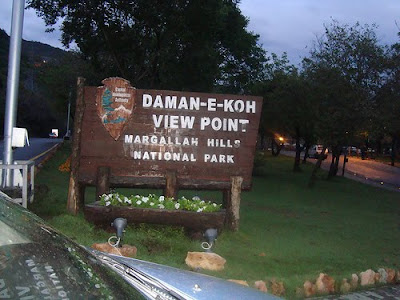
But, you know, we went to visit a park in the capital, Islamabad, which is just on the outskirts, up in the hills, and we blogged about it, and there are photos on our website. You could have been in suburban Virginia.
There were families, picnics, picnic tables, you know, kids playing, stores selling stuff, music playing. It was actually very revealing, I think for us and for people who saw that posting, because there's a lot that's similar that wouldn't surprise you, let's put it that way."
Along the same lines as NPR's Sikka, let me share with you some of the best kept secrets of Pakistan's other story which would take a lot of effort to discover on your own.
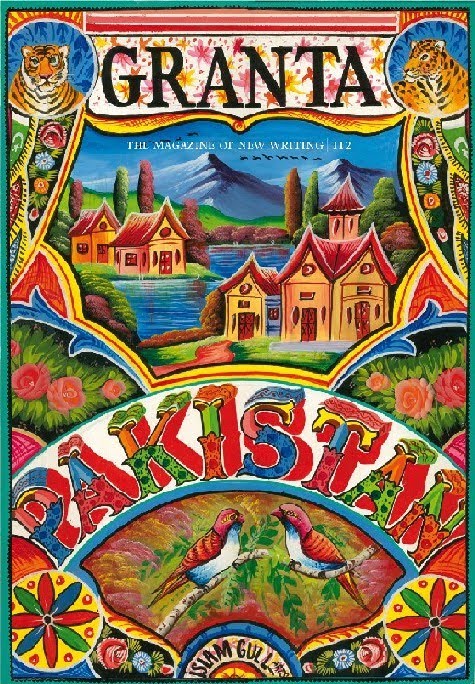
The world media have correctly reported on the deadly blasts caused by the frequent US drone strikes and many suicide bombings in 2010. But Pakistanis have also seen an explosion in arts and literature in the last few years as the nation's middle class has grown rapidly amidst a communications and mass media revolution. A British magazine Granta dedicated an entire issue in 2010 to highlight the softer side of Pakistan.
Granta has highlighted the extraordinary work of many Pakistani artists, poets, writers, painters, photographers and musicians inspired by life in their native land.
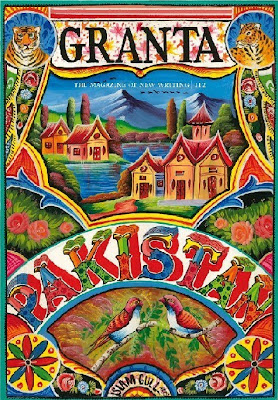
For example, the magazine cover carries a picture of a piece of truck art by a prolific truck painter Islam Gull of Bhutta village in Karachi. Gull was born in Peshawar and moved to Karachi 22 years ago. He has been practicing his craft on buses and trucks since the age of 13, and now teaches his unique craft to young apprentices. Commissioned with the assistance of British Council in Karachi, Gull produced two chipboard panels photographed for the magazine cover.
Granta issue has articles, poems, paintings, photographs and frescoes about various aspects of life in Pakistan. It carries work by writers like Mohsin Hamid (The Reluctant Fundamentalist), Daniyal Mueenuddin (In Other Rooms, Other Wonders), Kamila Shamsie (Burnt Shadows), Mohammad Hanif (A Case of Exploding Mangoes) and Nadeem Aslam (The Wasted Vigil) who have been making waves in literary circles and winning prizes in London and New York.
In a piece titled "Mangho Pir", Fatima Bhutto highlights the plight of the Sheedi community, a disadvantaged ethnic minority of African origin who live around the shrine of their sufi saint Mangho Pir on the outskirts of Karachi.
In another piece "Pop Idols", Kamila Shamsie traces the history of Pakistani pop music as she experienced it living in Karachi, and explains how the music scene has changed with Pakistan's changing politics.
A piece "Jinnah's Portrait" by New York Times' Jane Perlez describes the wide variety of Quaid-e-Azam's portraits showing him dressed in outfits that give him either "the aura of a religious man" or show him as a "young man with full head of dark hair, an Edwardian white shirt, black jacket and tie, alert dark eyes". Perlez believes the choice of the founding father's potrait hung in the offices of various Pakistani officials and politicians reveals how they see Jinnah's vision for Pakistan.
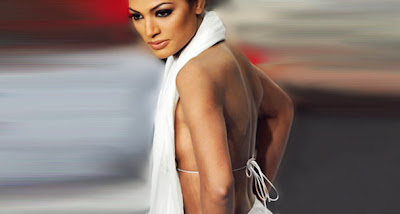
While Granta's focus on art and literature has produced a fairly good publication depicting multi-dimensional life in Pakistan, there are apects that it has not covered. For example, Pakistan has a growing fashion industry which puts on fashion shows in major cities on a regular basis. The biggest of these is Pakistan Fashion Week held in Karachi in February. Over 30 Pakistani designers - including Sonya Battla, Rizwan Beyg, and Maheen Khan - showed a variety of casual and formal outfits as well as western wear, jackets, and accessories.

There were scores of expos and trade shows put on by various industries, including a book fair in Karachi, attended by about 250,000 people. Publishers from the UK, Singapore, Iran, Malaysia and India also participated in the event.
Karachi's Mohatta Palace Museum hosted an Art exhibition, “The Rising Tide: New Direction in Art From Pakistan,” that included more than 40 canvases, videos, installations, mobiles and sculptures made in the past 20 years. Its curator, the feminist sculptor and painter Naiza Khan, told the New York Times that her aim was to show the coming of age of Pakistani art.

A Pakistani theater group defied the government ban and put on "Burqavanza", a satirical play in which all the actors wear burqa as a metaphor for hypocrisy in the nation. Adam Ellick of the NY Times reported that the play "doesn’t sidestep any of the country’s problems: a creeping radicalization, terrorism, government corruption, and interference by Western nations, especially the United States."
A conference celebrating 31 years of a theater group named Tehrik-i-Niswan (Feminist movement) included presentations, research papers, theatrical performances and a poetry recital just this month.
While it is true that Pakistan faces many serious crises, particularly religious extremism and terrorism, there is much more to see and report about this nation of 180 million people with a large and well-educated urban middle class.
Here's a video titled "I Am Pakistan":
Here's a CNBC Pakistan video on January 2011 events:
Related Links:
Haq's Musings
Pakistan's Media Revolution
Along Grand Trunk Road in India and Pakistan
Pakistan's Urban Middle Class
Music Drives Coke Sales in Pakistan
Life Goes On in Pakistan
Karachi Fashion Week
Is Pakistan Too Big to Fail?
Karachi Fashion Week Goes Bolder
More Pictures From Karachi Fashion Week 2009
Pakistan's Foreign Visitors Pleasantly Surprised
Start-ups Drive a Boom in Pakistan
Pakistan Conducting Research in Antarctica
Pakistan's Multi-billion Dollar IT Industry
Pakistan's Telecom Boom
ITU Internet Data
Eleven Days in Karachi
Pakistani Entrepreneurs in Silicon Valley
Musharraf's Economic Legacy
Infrastructure and Real Estate Development in Pakistan
Pakistan's International Rankings
Assessing Pakistan Army Capabilities
Pakistan is not Falling
Jinnah's Pakistan Booms Amidst Doom and Gloom
Have you ever thought that Pakistanis engage in any pursuits other than as perpetrators or victims of terror that the journalists find the most newsworthy about the world's sixth most populous South Asian nation?
Well, an Indian-American producer Madhlika Sikka on NPR's Talk of the Nation radio did wonder about it when she visited Pakistan this year. In the talk show aired on June 3, 2010, she described the main concerns of young Pakistanis follows:
"I think, that young people are concerned with the same things you'd think young people are concerned with. In fact, when I came home, the immigration officer asked me about Pakistan, and she said, well, what are they thinking about?
And I said, well, I met a lot of young people, and they're thinking about jobs, and they're thinking about the fact that the power goes out regularly, gas costs a fortune. They're really thinking about what their prospects are and the conflict with India, the war on terrorism, isn't at the top of their list."
She summed up her assessment of the current situation in Pakistan in the following words:
"Well, I think that I think that there's no doubt that if you live in a city like Islamabad or Peshawar, certainly where Julie McCarthy was, you know, they live and breathe this tension every day.
But let's take a city like Lahore, where we were just a couple of weeks ago. And last week, there was a huge attack on a mosque in Lahore, 70, 80 people were killed. You can't help but feel that tension, even though you are trying your best to go live your daily life as best you can. And I think that that push and pull is really a struggle.
But one thing I do want to talk about in the, you know, what is our vision of Pakistan, which often is one dimensional because of the way the news coverage drives it.
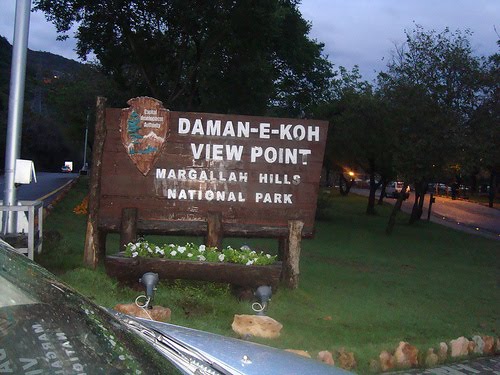
But, you know, we went to visit a park in the capital, Islamabad, which is just on the outskirts, up in the hills, and we blogged about it, and there are photos on our website. You could have been in suburban Virginia.
There were families, picnics, picnic tables, you know, kids playing, stores selling stuff, music playing. It was actually very revealing, I think for us and for people who saw that posting, because there's a lot that's similar that wouldn't surprise you, let's put it that way."
Along the same lines as NPR's Sikka, let me share with you some of the best kept secrets of Pakistan's other story which would take a lot of effort to discover on your own.
The world media have correctly reported on the deadly blasts caused by the frequent US drone strikes and many suicide bombings in 2010. But Pakistanis have also seen an explosion in arts and literature in the last few years as the nation's middle class has grown rapidly amidst a communications and mass media revolution. A British magazine Granta dedicated an entire issue in 2010 to highlight the softer side of Pakistan.
Granta has highlighted the extraordinary work of many Pakistani artists, poets, writers, painters, photographers and musicians inspired by life in their native land.
For example, the magazine cover carries a picture of a piece of truck art by a prolific truck painter Islam Gull of Bhutta village in Karachi. Gull was born in Peshawar and moved to Karachi 22 years ago. He has been practicing his craft on buses and trucks since the age of 13, and now teaches his unique craft to young apprentices. Commissioned with the assistance of British Council in Karachi, Gull produced two chipboard panels photographed for the magazine cover.
Granta issue has articles, poems, paintings, photographs and frescoes about various aspects of life in Pakistan. It carries work by writers like Mohsin Hamid (The Reluctant Fundamentalist), Daniyal Mueenuddin (In Other Rooms, Other Wonders), Kamila Shamsie (Burnt Shadows), Mohammad Hanif (A Case of Exploding Mangoes) and Nadeem Aslam (The Wasted Vigil) who have been making waves in literary circles and winning prizes in London and New York.
In a piece titled "Mangho Pir", Fatima Bhutto highlights the plight of the Sheedi community, a disadvantaged ethnic minority of African origin who live around the shrine of their sufi saint Mangho Pir on the outskirts of Karachi.
In another piece "Pop Idols", Kamila Shamsie traces the history of Pakistani pop music as she experienced it living in Karachi, and explains how the music scene has changed with Pakistan's changing politics.
A piece "Jinnah's Portrait" by New York Times' Jane Perlez describes the wide variety of Quaid-e-Azam's portraits showing him dressed in outfits that give him either "the aura of a religious man" or show him as a "young man with full head of dark hair, an Edwardian white shirt, black jacket and tie, alert dark eyes". Perlez believes the choice of the founding father's potrait hung in the offices of various Pakistani officials and politicians reveals how they see Jinnah's vision for Pakistan.
While Granta's focus on art and literature has produced a fairly good publication depicting multi-dimensional life in Pakistan, there are apects that it has not covered. For example, Pakistan has a growing fashion industry which puts on fashion shows in major cities on a regular basis. The biggest of these is Pakistan Fashion Week held in Karachi in February. Over 30 Pakistani designers - including Sonya Battla, Rizwan Beyg, and Maheen Khan - showed a variety of casual and formal outfits as well as western wear, jackets, and accessories.


There were scores of expos and trade shows put on by various industries, including a book fair in Karachi, attended by about 250,000 people. Publishers from the UK, Singapore, Iran, Malaysia and India also participated in the event.
Karachi's Mohatta Palace Museum hosted an Art exhibition, “The Rising Tide: New Direction in Art From Pakistan,” that included more than 40 canvases, videos, installations, mobiles and sculptures made in the past 20 years. Its curator, the feminist sculptor and painter Naiza Khan, told the New York Times that her aim was to show the coming of age of Pakistani art.

A Pakistani theater group defied the government ban and put on "Burqavanza", a satirical play in which all the actors wear burqa as a metaphor for hypocrisy in the nation. Adam Ellick of the NY Times reported that the play "doesn’t sidestep any of the country’s problems: a creeping radicalization, terrorism, government corruption, and interference by Western nations, especially the United States."
A conference celebrating 31 years of a theater group named Tehrik-i-Niswan (Feminist movement) included presentations, research papers, theatrical performances and a poetry recital just this month.
While it is true that Pakistan faces many serious crises, particularly religious extremism and terrorism, there is much more to see and report about this nation of 180 million people with a large and well-educated urban middle class.
Here's a video titled "I Am Pakistan":
Here's a CNBC Pakistan video on January 2011 events:
Related Links:
Haq's Musings
Pakistan's Media Revolution
Along Grand Trunk Road in India and Pakistan
Pakistan's Urban Middle Class
Music Drives Coke Sales in Pakistan
Life Goes On in Pakistan
Karachi Fashion Week
Is Pakistan Too Big to Fail?
Karachi Fashion Week Goes Bolder
More Pictures From Karachi Fashion Week 2009
Pakistan's Foreign Visitors Pleasantly Surprised
Start-ups Drive a Boom in Pakistan
Pakistan Conducting Research in Antarctica
Pakistan's Multi-billion Dollar IT Industry
Pakistan's Telecom Boom
ITU Internet Data
Eleven Days in Karachi
Pakistani Entrepreneurs in Silicon Valley
Musharraf's Economic Legacy
Infrastructure and Real Estate Development in Pakistan
Pakistan's International Rankings
Assessing Pakistan Army Capabilities
Pakistan is not Falling
Jinnah's Pakistan Booms Amidst Doom and Gloom
Comments
The Ministry of Finance has agreed with the proposal of the Tax Reform Co-ordination Group (TRCG) to create a Fiscal Policy Board to be headed by the Finance Minister under the reform plan to exclusively deal with the fiscal policy and taxation issues under the umbrella of the proposed fiscal board. (BR)
The country's trade deficit soared to $8.149 billion in July-December 2010, 18.20 percent up over $6.89 billion for the same period of last year, according to the Federal Bureau of Statistics (FBS). Official trade figures released by the FBS here on Tuesday showed an increase in exports of 20.63 percent for the same period which analysts say could be largely because of per unit price increase instead of increase in the quantity. (BR)
Remittances sent home by overseas Pakistanis continued to show rising trend as $5,291.41 million was received in the first half of the current fiscal year 2010-11(July-December), showing an increase of $761.23 million, or 16.80 percent, when compared with $4,530.18 million received during the same period of last fiscal year. (BR)
The CPI inflation soared by 15.68 percent in December 2010 over the same period of last year with phenomenal increase in perishable food items, showing a strong trend of increase in prices of food items which may push more people below the poverty line. (BR)
Japan has queued up to help Pakistan to plug in widening budgetary gap by granting it $60 million soft loan in response to Islamabad's call to the friendly countries for financial support to keep current budget deficit at some reasonable level. (BR)
Another round of speculations came to an end on Tuesday when President Asif Ali Zardari issued a notification appointing a PPP stalwart and former Attorney General Sardar Latif Khan Khosa as Governor of Punjab. (BR)
The monthly Consumer Price Index (CPI) during the month of December registered a decrease of 0.31 per cent as compared to previous month of current financial year. (DAWN)
The government has decided to put a freeze on electricity tariff for the remaining period of the current fiscal year owing to its inflationary impact on economy and unending loadshedding, according to a senior official. (DAWN)
The Secretary Cabinet Division, Abdur Rauf Chaudhry on Tuesday said 3G services would hopefully be available to the Pakistani mobile users by the end of 2011 — while it was expected that the policy for auction of 3G services licenses would soon be presented to the government and Economic Coordination Committee (ECC) for discussion and approval. (DT)
The FBR has started to evaluate alternative proposals to replace the controversial RGST in case the government failed to get it approved from the parliament. (TN)
Despite receiving orders from the Ministry of Petroleum, OGDCL has not replaced one of its directors on board, who also works for a partner company. (TN)
NCCPL shows a net inflow of USD2.18 million.
Crude oil is trading at USD91.1 per barrel.
The State Bank of Pakistan has reported that overseas Pakistanis sent home $5.291 billion during July-Dec, 2010, an increase of $761 million or 17 per cent year over year, according to Pakistan's Dawn newspaper.
Remittances of $863 million were sent by overseas Pakistanis last month, up 23.72 per cent or $165 million compared to December, 2009.
Exports in the July-December 2010 touched almost $11 billion – $1.8 billion, or 20.6per cent, higher than last year’s exports in the corresponding period. Meanwhile, imports stood at $19.2 billion, marking a growth of 19.6 per cent, or $3.2 billion, in the first half, according to the Express Tribune.
Pakistani government has been relying heavily on remittances by overseas Pakistanis to fund the massive trade imbalance, which exceeded $8 billion during the first six months of this fiscal.
The increased remittances and rising exports have helped bring down the nation's current account deficit to $504 million for six months, or 0.6 percent of GDP, about 30% lower than the same period in the previous year.
Foreign direct investment (FDI) declined 15.5 per centin the first six months of the current fiscal year to $828.5 million from $968.9 million in the same period last year, according to the Nation quoting figures from the State Bank of Pakistan.
Those among the 135 countries that improved most in Human Development Index (HDI) terms over the past 30 years were led by Oman, which invested energy earnings over the decades in education and public health.
The other nine “Top Movers” are China, Nepal, Indonesia, Saudi Arabia, Laos, Tunisia, South Korea, Algeria and Morocco. Remarkably, China was the only country that made the “Top 10” list due solely to income performance; the main drivers of HDI achievement were in health and education.
The UNDP report said that in Pakistan, between 1980 and 2010, the HDI value increased by 58 per cent (average annual increase of about 1.5 per cent).
“With such an increase Pakistan is ranked 10 in terms of HDI improvement, which measures progress in comparison to the average progress of countries with a similar initial HDI level”, it added.
Pakistan’s life expectancy at birth increased by more than nine years, mean years of schooling increased by about nine years and expected years of schooling increased by almost 4 years.
Pakistan’s Gross National Income (GNI) per capita increased by 92 per cent during the same period. The relative to other countries in the region, in 1980, Pakistan, India and Bangladesh had close HDI values for countries in South Asia.
However, during the period between 1980 and 2010 the three countries experienced different degrees of progress toward increasing their HDIs states the Report.
The Report introduces the Multidimensional Poverty Index (MPI), which identifies multiple deprivations in the same households in education, health and standard of living.
The average percentage of deprivation experienced by people in multidimensional poverty is 54 per cent.
The MPI, which is the share of the population that is multi-dimensionally poor, adjusted by the intensity of the deprivations, is 0.275. Pakistan’s “HDI neighbors”, India and Bangladesh, have MPIs of 0.296 and 0.291, respectively.
If it's Thursday, it's fashion week somewhere.
This month alone includes fashion weeks in Moscow, Karachi, Houston, Tokyo and Portland, Oregon. Dubai fashion week begins today.
There have long been just four fashion weeks that matter in the industry: New York, Milan, Paris and London. At these events, designers parade their collections for retailers and try to make a splash in the fashion press.
But in the past five to 10 years, the numbers of cities and nations holding fashion weeks has burgeoned. There are more than 100 fashion weeks around the globe, from Islamabad to Rochester, N.Y. Event producer IMG is known for running New York fashion week, but it also produces fashion weeks in Aruba, Berlin, Zurich, Moscow, Toronto, Sydney and Miami, among others. Other locations have launched their own shows, hoping to boost their garment and retail trades.
------------
Overseas, fashion weeks often highlight regional talent and build the local economy. In Karachi this month, organizers tried to focus on business-building rather than thrilling local socialites. "Fashion in Pakistan for a long time has been an entertainment sport; at [Karachi Fashion Week], we are trying to really make it about the business of fashion," says spokesman Zurain Imam. Invitees were largely press and stores, with some Pakistani celebrities in the front rows. ...
http://online.wsj.com/article/SB10001424052970204479504576639481685568742.html
A downturn in major terror attacks in the second half of the year and an overall decrease in civilian casualties at the hands of terrorists point to better policing and a gradual decline in the potency of militant groups, say officials and experts.
"Earlier, the Taliban would come with heavy weapons and attack and kill and slaughter at will. Those days are gone," says Fiaz Toru, former inspector general for the Khyber Pakhtunkhwa Province, credited with implementing a set of sweeping reforms to combat the threat posed by terrorists surrounding the province's main city of Peshawar.
In Pakistan's major cities, there have been no spectacular attacks since a daring siege carried out over two days by Taliban militants on a Karachi naval base in May in revenge for the bin Laden raid. Some 1,022 civilians have fallen victim to bomb attacks in 2011. Barring a late-year surge, this represents the lowest figure in four years, according to monitoring conducted by the New Delhi-based South Asia Terrorism Portal (last year the figure was 1,547, and it stood at 1,688 the year before).
A major part of that has to do with the removal of soft targets, says Rifaat Hussain, a security analyst at the Quaid-i-Azam University in Islamabad: "They [now] have genuine difficulty carrying out spectacular attacks."
In Peshawar, that has meant equipping police with heavy weaponry including mortars, grenade launchers, and heavy guns, as well as deploying some 2,000 police at more than 42 checkpoints on the outskirts of the city, says Mr. Toru, the former inspector general, and arming citizens to create a community police force that can act as authorities' eyes and ears.
"We've adopted a policy of proactive policing," explains Toru. Police are now routinely sent on operations in Peshawar's suburbs to root out suspected militants and materials used to construct bombs. The police's increasing responsibility has been accompanied by a doubling of salary and an increase in "martyrdom payout" (a kind of life-insurance payout that now stands at some $35,000). Perhaps, too, the Pakistani Taliban are aware of the cost of suicide attacks, adds Dr. Hussain: Where once the public sympathized with militants, groups that carry out suicide attacks are now ostracized.
---------------------
Still, the overall picture is far from rosy: While organized terror strikes may be down, sectarian attacks carried out largely by LeJ against Shiite targets have in fact surged, particularly in the western province of Balochistan.
"The cities seem to be ominously quiet right now, but sectarian violence [in other areas] continues. A key test will be Muharram – how peaceful or how violent that will be," says Hussain, referring to the first month of the Islamic calendar, in which fighting is prohibited.
And while Pakistan's security forces may have gotten better at dealing with terrorism, Toru says internal reforms can only go so far. "I am optimistic, but the key lies in Afghanistan.… You need a stable Afghanistan to have a stable Pakistan. But we've come through the most critical phase of our struggle."
http://www.csmonitor.com/World/Asia-South-Central/2011/1123/In-Pakistan-downturn-in-major-Taliban-attacks-brings-cautious-optimism
Pakistan is better known for bombs than bombshells, militant compounds than opulent estates. A few enterprising Pakistanis hope to alter that perception with the launch of a local version of the well-known celebrity magazine Hello!.
They plan to profile Pakistan’s rich and famous: the dashing cricket players, voluptuous Bollywood stars and powerful politicians who dominate conversation in the country’s ritziest private clubs and lowliest tea stalls. They also hope to discover musicians, fashion designers and other new talents who have yet to become household names.
“The side of Pakistan that is projected time and time again is negative,” said Zahraa Saifullah, the CEO of Hello! Pakistan. “There is a glamorous side of Pakistan, and we want to tap into that.”
--------------
Pakistan already has a series of local publications that chronicle the lives of the wellheeled in major cities like Islamabad, Lahore and Karachi, especially as they hop between lavish parties. But the producers of Hello! Pakistan hope the magazine’s international brand and greater depth will attract followers.
Hello! was launched in 1988 by the publisher of Spain’s Hola! magazine and is now published in 150 countries. It’s well-known for its extensive coverage of Britain’s royal family and once paid $14 million in a joint deal with People magazine for exclusive pictures of Brad Pitt and Angelina Jolie’s newborn twins.
The market for English-language publications in Pakistan is fairly small. Most monthly and weekly magazines sell no more than 3,000 copies, said Khan, the consulting editor. But they hope to tap into the large Pakistani expatriate markets in the United Kingdom and the Middle East as well.
Hello! Pakistan will be published once a month and will cost about $5.50, twice as much as what many poor Pakistanis earn in a day. The first issue will be published in mid-April and will focus on the Pakistani fashion scene.
Saifullah, who grew up watching her mother and grandmother read Hello! as she hopped between London and Karachi, said it took her two years to convince the magazine to publish a local version in Pakistan....
http://www.washingtonpost.com/world/asia_pacific/say-hello-to-pakistans-glamorous-side-as-famous-celebrity-magazine-launches-in-the-country/2012/03/24/gIQAtkbIYS_story.html
Warren Buffett has gobbled up a bunch of newspapers in recent years. Among them are many community papers, not the big titles that vanity publishers pursue. And an explanation for that acquisition pattern comes from the 2012 report of Buffett’s Berkshire Hathaway Inc.:
Newspapers continue to reign supreme, however, in the delivery of local news. If you want to know what’s
going on in your town – whether the news is about the mayor or taxes or high school football – there is no substitute for a local newspaper that is doing its job. A reader’s eyes may glaze over after they take in a couple of paragraphs about Canadian tariffs or political developments in Pakistan; a story about the reader himself or his neighbors will be read to the end. Wherever there is a pervasive sense of community, a paper that serves the special informational needs of that community will remain indispensable to a significant portion of its residents.
http://www.washingtonpost.com/blogs/erik-wemple/wp/2013/03/01/buffett-disses-coverage-of-pakistan/
Osama bin Laden stares out at an army of shadowy figures. Each carries a machine gun and has the head of a parrot.
The roof of the Metropolitan Museum of Modern Art in New York is covered with what looks like dried blood. Close up, the work shows shrubbery and bird feathers.
A patriotic picture of the U.S. flag isn’t all it seems. Each of the stars and stripes is made up of tiny Urdu verses asking for forgiveness and mercy from God.
These are all works by Pakistanis -- Amir Raza, Imran Qureshi and Muhammad Zeeshan, respectively. Pakistan’s most violent decade in history has come as a boon to the nation’s artists, with prices of paintings, number of art galleries in major cities and frequency of exhibitions all multiplying.
“I don’t think terrorism is the sole factor,” says Shakira Masood, curator at Art Chowk in Karachi, who has been asked to hold exhibitions in Hong Kong and Istanbul. “Artists may have gotten into the limelight from that, but they are very talented.”
The new generation of contemporary artists -- which also includes Rashid Rana and Shazia Sikander -- has started to sell more in international auction houses and seen greater interest from collectors and investors in Pakistan, the world’s sixth most populous nation. Qureshi is Deutsche Bank’s Artist of the Year for 2013.
Art Investment
“If you invest in a top artist painting, you will get a higher return” than many other investment avenues, says Tauqeer Muhajir, publisher and editor of art magazine Nigaah. Demand for Pakistani paintings is rising because they are relatively cheap and high in quality, he says.
Zeeshan grew up in the small town of Mirpurkhas. He used to be a poster painter for the local film industry that on rare occasion still resorts to painting two-story-high billboards instead of printing. Never did he imagine his work would be bought by London’s British Museum and New York’s Met museum.
He had a change of fortune after joining the National College of Arts in Lahore. After specializing in miniatures, Zeeshan started to sell works -- for less than $100 in 2003 and as much as $20,000 now. He brushes paintings on wasli paper and has even used Pepsi and Coca-Cola cans in his works.
“Pakistan artists caught the eye of international galleries and curators after the 9/11 twin tower attack,” Zeeshan says. “Terrorism, Taliban and Bin Laden are the biggest subjects of the century.”...
http://www.bloomberg.com/news/2013-08-25/bin-laden-s-parrots-blood-fuel-boom-in-pakistan-artists.html
Popular American musical, Grease, is being staged in Karachi - the first time one of Broadway's longest running shows has been to Pakistan. The BBC's Shahzeb Jillani goes behind the scenes to meet its young Pakistani actors and organisers.
Nida Butt is clearly agitated and it looks like she has had enough.
"What a bunch of fools am I working with? How long have you guys been rehearsing these steps? How can you suddenly forget it?" she yells at the young cast on stage from the auditorium stairs where she's been sitting and observing their rock and roll dance act.
The live band stops playing and there's total silence.
A few actors mumble something to themselves and nervously look around to avoid any eye contact with their fearsome director.
"She loses her temper deliberately," quips a young performer. "It's all part of the act to seek absolute perfection."
Dream project
Despite her occasional outbursts, Ms Butt - a lawyer turned theatre director - is actually quite proud of her team.
"We have a super talented cast which has been working long hours for nearly four months. It's challenging but exhilarating," she says.
Grease, set in 1950s American working-class subculture, depicts high-school teenage shenanigans exploring love, sex and friendship through their passion for cars, music and dance.
For Ms Butt, who has previously produced Chicago, and Mamma Mia in Karachi, Grease has been a dream project.
"It's different this time because we are doing things properly, after sorting out permissions and copyright issues," she says.
Thriving theatre scene
One of the first challenges for her company, Made For Stage Productions, was to get the casting, the American working-class accents and attitude right.
"The first month was only about studying and getting to know the characters," says Mustafa Changezi who plays the tough and rude Kenickie.
Actors say they were required to take part in workshops to really adopt the persona of the character they were playing.
"We had to have several walking drills. At times, it was like being in a boot camp," says Changezi.
Then, there was the issue with finding a suitable venue to put up a musical with a large cast and crew, plus a live band.
Continue reading the main story
“
Start Quote
Ahmed Ali, who plays the lead role as Danny
This play - with its timeless music and story of teenage love - is relevant to young people everywhere”
Ahmed Ali
Actor, Danny
"Karachi has a thriving theatre scene, but none of the venues are big enough or technically advanced enough to stage a big musical like Grease," says Ms Butt.
In the end, the organisers had little choice but to settle for the traditional Karachi Arts Council auditorium.
The stage with a depth of 24ft (7.3m) was so small, it had to be extended at least 3 to 4ft to accommodate the cast and dance crews of about 35 performers.
Innovative solutions had to be found to quickly change the sets manually in between the scenes.
-----
Still, she says she's thrilled to bring some live entertainment to the city of Karachi - otherwise known for crime, lawlessness and militancy.
"For two and a half hours, I would like the audience to forget about Pakistan's multi-faceted problems and enjoy the show.
"It's also about showing the world that there's much more to this city, and this country than death and destruction."
http://www.bbc.co.uk/news/world-asia-25763330
Rarely has an event framed around books and ideas felt so urgent. A few weekends ago, a group of writers, artists, and editors gathered in Lahore, the capital of Pakistan’s Punjab heartland, to defend the written word. People turned up from every part of the country to hear them—Karachi and Islamabad, but also Balochistan and the remote tribal regions along the Afghan frontier. Sometimes filling the aisles and stairways of the three venues where the gathering was held, they listened to debates on everything from the future of the novel to the future of Pakistan.
In an age in which international literary festivals have become commonplace, there is very little ordinary about the Lahore LitFest, starting with the location. “PK! What are you doing there?” a US immigration official wondered, when I set out from New York. My barber asked me if I had a bullet-proof vest. Even in the Middle East, in places that have plenty of tension of their own, a Pakistani destination seems to raise red flags. “It would be a shame if you got yourself kidnapped,” an Arab journalist who covers political unrest told me, during a visit to the Arabian Peninsula two days before my journey on to Lahore.
To anyone who has actually been there, such reactions may seem grossly unfair. With a sizable liberal elite, a strong tradition in publishing and the arts, and an old city filled with extraordinary Mughal architecture, Lahore arguably has more in common with the leading cities of India and Europe than with the dark image of Pakistan shown almost daily in the news. The city’s best-known institutions of learning are not jihadist-grooming madrasas but humanistic and secular; consider the National College of Arts, the country’s premier art and design school, which began under British rule in the nineteenth century, with Rudyard Kipling’s father as its first principal.
-------------
And then there was Ardeshir Cowesjee (1926–2012), the legendary Karachi columnist who might more accurately have been described as a one-man shadow government. A wealthy businessman from the Zoroastrian religious minority, Cowesjee fearlessly exposed the corruption and mismanagement of Pakistan’s political class in a weekly column that not infrequently brought him death threats. As Karachi descended into violence and gang warfare in recent years, he continuously attacked the dirty real estate dealings, incompetent governance, decaying municipal services, and rising intolerance that were driving it. During a lively debate about his legacy, the power went out, and the panelists kept talking until someone lit the stage with an iPhone.
-----------
Even so, the theme of the discussion was “War on Culture,” a worldwide drama in which many Pakistanis view the US as arch malefactor. (I took part in the panel, along with Ahmed Rashid, the novelist Vikram Seth, and the Indian heritage expert Naman Ahuja.) When a gentleman who identified himself as hailing from South Waziristan protested that the US could never rectify the cultural destruction it had caused in the Middle East, the house erupted in applause. Taking the microphone, the ambassador, now sitting in the front row, stood up to respond. The crowd went quiet. He conceded the mistakes made by the previous US administration; he said that he and the current administration were committed to doing more to defend Pakistan’s heritage. It brought some applause of its own. Thus ended the festival, with Waziristan and Washington coming to some kind of temporary truce.
http://www.nybooks.com/blogs/nyrblog/2014/mar/12/different-pakistan/?insrc=wbll
DURING BRITISH COLONIAL RULE, a superb feat of political engineering kept together several nationalities clearly differentiated by religion, ethnicity, language, and cultural tradition. As a result, the withdrawal of the colonial power in 1947 brought to the surface national tensions similar to those which had already led to the creation of scores of nation-states in Europe, each based on the principle of national self-determination. The inevitable creation of Pakistan as an independent sovereign state in 1947 illustrates the historic existence of multiple nationalities in South Asia. It is further substantiated by the fact that when the eastern wing of Pakistan broke away in 1971, it did not return to India, which had militarily intervened to bring about the secession, but asserted its independence from India as strongly as Pakistan has always done.
In contemporary South Asia, states like India, Pakistan, and Sri Lanka continue to be multiethnic and multi-national states. For each of these states, internal consolidation and cohesion has depended on the successful resolution of great sub-regional rivalry and competition. Occasionally, internal conflict has loomed so large as to create a genuine crisis of governability.
The case of Pakistan seems unique in many respects. It is the only country in which the internal contradictions that existed between the two wings of the country, separated by more than a thousand miles of hostile India, exploded into a major bloody conflict leading to the emergence of a third state in the subcontinent, Bangladesh. Paradoxically, the trauma of this separation led to deep soul-searching in Pakistan which, in the due course of time, profoundly affected its political culture. The loss of East Pakistan in 1971 did not exacerbate the tensions within West Pakistan, even though these tensions had been largely neglected during the pre-war attempts at mediation of the East-West conflict. Rather, the new Pakistan rediscovered a set of principles and allegiances which have played an important role in the country's consolidation.
--------------
Pakistan now stands at a crucial juncture in its history, where most of the instability it faces comes not from domestic separatism but from external interference and threats. It earnestly hopes that economic policies in South Asia in the direction of free enterprise and participation in the global economy will counteract and neutralize aggressive tendencies. Pakistan would like to open an entirely new chapter of cooperative relations with India, and invites the leaders of India to negotiate a peaceful solution to the Kashmir problem as well as a reciprocally-binding non-proliferation regime for nuclear weapons and delivery systems. We invite India's leaders to take parallel measures to limit and reduce military spending in the interest of the billion people living in South Asia. In addition, as the two largest states of the subcontinent, India and Pakistan owe it to South Asia to transform its only regional organization, the South Asian Association for Regional Cooperation, into a more meaningful and effective vehicle of regional economic and social development. History will not forgive us if we forego the great opportunities present today for shared prosperity and peace.
http://www.freepatentsonline.com/article/Harvard-International-Review/30022122.html
Brandon Stanton’s popular Humans of New York website is a photographic tribute to the faces and thoughts of the citizens of Manhattan. But this August, in a sharp departure from his usual stomping ground, the street photographer visited Pakistan.
And, by putting the South Asian nation into the frame, Mr. Stanton said on his website that he’s helped raise more than $2 million for a Pakistani charity.
The former bond trader has attracted an international following for his humansofnewyork.com website, which has more 14 million likes on Facebook, by posting photos of people he meets, along with a quote or short blurb about them.
Following his adventures in Pakistan, Mr. Stanton posted pictures of people with datelines from Karachi to Lahore and the Hunza Valley to Passu.
One photo with a Lahore dateline shows a man and woman standing awkwardly next to each other with the quote: “Our friends are trying to set us up.” In another, with a Passu dateline, a man smiles as he sits next to a wall. The quote says, “I am the happiest man in Pakistan.”
Mr. Stanton also met, photographed and wrote about bonded laborers working in the country’s brick kilns, a woman who needed treatment for Hepatitis C and a man who lost a tractor in an accident and required medical care.
The street photographer’s fans responded to these people’s stories by heaping money onto a fundraising page—set up on a website that allows people to make online payments to support a cause—for the Bonded Labour Liberation Front, posting offers of help for the sick woman and donating more than $6,000 on a fundraising page for the man with the broken tractor.
Mr. Stanton’s post about Syeda Ghulam Fatima, who is general secretary of the Bonded Labour Liberation Front, asked readers to donate to her charity–and the fundraising page that states its organizer is ‘Humans of New York’–shows they pledged more than $2 million after he did so.
The Bonded Labour Liberation Front’s website says its mission is the “total eradication of the bonded labor, injustice, illiteracy inequality and poverty in south Asia.”
A person is described as a bonded laborer when their work is demanded as a means of repayment for a loan. The person is trapped into working for very little or no pay, according to human rights organization antislavery.org.
A post on the Humans of New York Facebook page said Ms. Ghulam Fatima was set to meet with the charity’s board to plan an expansion of the efforts following the influx of money. Mehar Safdar Ali, an executive member of the organization, said its management committee is working on future plans and will announce them when ready.
“We have a lot of work ahead of us, but we want to build a real freedom center in Lahore, here we can work on not just releasing families but rehabilitation. We want workers to be treated with the rights they deserve as citizens,” Ms. Ghulam Fatima said in a statement posted on the Facebook page to thank people for their donations.
“Before this fundraiser, Fatima had exhausted her financial resources in the struggle against bonded labor to the point where she feared that she’d be unable to pay her own medical bills. Thanks to everyone who donated over the past 72 hours, she now has nearly $2 million to continue her organization’s fight against bonded labor,” a post on the Humans of New York Facebook page said.
Mr. Stanton didn’t respond to a request for comment.
Separately, Mr. Stanton’s fans have donated money to help the man who was hurt in the tractor accident. Mr. Stanton quoted the man, whom he didn’t name but was later identified by the Islamabad-based nonprofit Comprehensive Disaster Response Services as Abdul Shakoor, as saying that despite injuries, he was continuing to work. Abdullah Sabir, a 22 year old from Lahore, Pakistan, who works in Internet marketing, said he set up a fundraising page for Mr. Shakoor after reading about him online.
"Pakistan is a very free country in a strange way. It’s not a fully developed democratic society, but there is a strange kind of freedom that exists here. “Even with censorship or self-censorship,” he added, “artists here find interesting ways to create and express themselves.”
Rashid Rana
Pakistan will join the roster of countries hosting contemporary art fairs with the announcement of the inaugural Lahore Biennale, which is scheduled for November 2017.
Rashid Rana, a native of Lahore and one of Pakistan’s best-known artists, will be the artistic director of the show, which will be announced Tuesday. Mr. Rana, 47, has been the subject of several solo exhibitions, including a retrospective in 2010 at the Musée Guimet in Paris.
“Lahore is the cultural capital of Pakistan,” Mr. Rana said Monday by telephone from Lahore. “Why not create the opportunities and platform so the audience can see the work in the context in which it is being produced and, in doing so, bring international art into Pakistan.”
Mr. Rana said that the biennale would feature public art projects as well as new commissioned works, with an emphasis on engaging with the public. The exact sources of financing have yet to be determined, but Mr. Rana said that his team would be seeking both private and government support to pay for the exhibition.
The artist said he expected that logistics would be the biggest challenge in planning the show, which he described as a “different kind of bienniale, taking place not in a white cube museum space.” He said that his team would begin selecting artists and venues for the show in the coming months.
Mr. Rana acknowledged that censorship could be an issue, but, he said, “Pakistan is a very free country in a strange way. It’s not a fully developed democratic society, but there is a strange kind of freedom that exists here.”
“Even with censorship or self-censorship,” he added, “artists here find interesting ways to create and express themselves.”
The show is being presented by the Lahore Biennale Foundation, a collective of prominent Pakistanis from the art and business communities. Mohsin Hamid, the author of “The Reluctant Fundamentalist,” is one of the foundation’s directors, and Jessica Morgan, the director of the Dia Art Foundation, is an adviser.
Last year, the foundation helped present “My East Is Your West,” an event at the 56th Venice Biennale. The exhibition featured work by Mr. Rana alongside the Indian artist Shilpa Gupta in a rare, if unofficial, collaboration between India and Pakistan on an international platform.
“I think one very simple reason for the biennale is to bring attention to the fact that Pakistan has a very vibrant artistic scene,” Ms. Morgan said in a telephone interview. “It has produced a number of artists that have become very well known internationally but hasn’t yet had an internal event that can celebrate what has been happening there in the last few years.”
https://scroll.in/article/827854/pakistan-has-got-a-new-publisher-of-english-books-and-shes-looking-to-stir-things-up
Pakistan has produced several internationally acclaimed writers in English, including two Booker Prize nominees (Mohsin Hamid, 2007 shortlist; Mohammed Hanif, longlisted in 2008). But the English language publishing scene in the country is conspicuous by the absence of presses of any repute, barring Oxford University Press Pakistan. Enter, in this space, Mongrel Books, started by Shandana Minhas, author of three novels – Tunnel Vision, Survival Tips For Lunatics, and Daddy’s Boy. Excerpts from an interview on publishing in Pakistan, Mongrel’s vision and mandate, and the way ahead:
Why did you decide to set up Mongrel Books? How has the journey been so far?
For some years now my husband Imran and I have been quietly building the life we always imagined for ourselves, in the company of books, in the service of books. Recently we have been struggling to find books we want to read on shelves in Karachi, so we just decided to take the next logical step and publish them. The journey has just started. I hope you’ll ask me again in a year and I’ll be around to answer.
Why do you think that the English language publishing scene hasn’t evolved in Pakistan? Is it because of a lack of a dedicated readership, infrastructure or even security threats?
Lack of a dedicated readership and infrastructure would be news to the retired bureaucrats, landowners, politicians, socialites and inbred memoirists whose English language offerings have been, and continue to be, published in Pakistan. Just two minutes ago the host of the country’s most watched political talk show told us that all three of the night’s guests were published writers. Between them they had written books on law, dentistry and honour killing.
They might all be good books; the point is that traditional publishing in Pakistan is as riddled with greed, nepotism, cronyism and corruption as the body politick of the wider nation. Its totemic figures, the gatekeepers to visibility, haven’t looked to sustain anything other than their own relevance. If something happens and they aren’t involved in it, they won’t tell you about it. And given the opportunity they will tear it down.
This applies to everything from state-funded cultural bodies to privately owned enterprises to media coverage, and cuts across class. They might tell you they’re not publishing English language fiction because of security threats or censorship, but the truth might be closer to self-censorship: the margins aren’t big enough and “native Pakistani” writers (like me) don’t add to their social cache.
But there might be something stirring in English language fiction publishing too, finally. A distributor in Lahore set up a dedicated imprint a couple of years ago. A big distributor in Karachi is quietly testing whether the footfall at book fairs and festivals might translate into actual sales for its own new fiction imprint. Talented young writers have organised themselves into collectives and started publishing online and in print. And one of the older, smaller presses just published a book of English short stories. By the chairman of the senate.
Almost all Pakistani authors publish or aspire to publish with major Indian publishers. How does Mongrel plan to reverse this trend? And have you managed to poach any writers from bigger publishers?
We have no aspirations to trend setting, bucking, reversal and/or spotting. Pakistani writers need to continue to find as many publishers as they can. All writers should. We’d love to do co-editions with other indie presses in the region to bring our writers to as wide a readership as possible. Maybe one day we’ll all make enough to pay our electricity bills, haina?
https://reut.rs/3b1USrg
Pakistan’s famous truck art will move from its highways to the skies, as a flying academy is painting a two-seater Cessna aircraft with the colourful technique.
With elaborate and flamboyant motifs, Pakistani truck art has inspired gallery exhibitions abroad and prompted stores in Western cities to sell miniatures.
“We want to show the world that Pakistan is not all about Financial Action Task Force (FATF) and terrorism issues; it a very diverse country and a land of opportunities,” Imran Aslam Khan, chief operating officer of Sky Wings, a flight training organisation, told Reuters.
He also plans to paint other aircraft, with the aim of promoting tourism in Pakistan.
Such art has become one of Pakistan’s best-known cultural exports in recent years. UNESCO, for example, has been using truck art, blended with indigenous themes, to promote girls’ education in a northwestern Khyber Pakhtunkhwa province.
“The world is familiar with our truck art representation; now, with this aircraft, our colours will fly in the air. We are really excited,” Haider Ali, the artist painting the aircraft, told Reuters at the academy’s hangar.
Trained by his father, Ali, 40, has been decorating trucks since his childhood and is now one of the most prominent such painters in Pakistan.
Ali hopes to paint an Airbus or Boeing aircraft in the future, saying an opportunity to work on such gargantuan planes would truly be a learning experience.
https://gulfnews.com/world/asia/pakistan/pakistan-five-day-international-book-fair-in-karachi-proves-to-be-crowd-puller-1.92623229
The Pakistan Publishers and Booksellers Association (PPBA) has organised the annual exhibition at the Karachi Expo Centre that is open from 9am to 10pm daily.
Some 40 foreign publishing houses from 17 countries and over 130 noted publishers from Pakistan are participating in the event by setting up 330 book stalls.
According to the event organisers, the annual exhibition serves as a platform to let book publishers and retailers around the world share with each other the latest trends, technological improvements, and innovations introduced to upgrade the publishing industry.
Sindh Education and Culture Minister, Syed Sardar Ali Shah, said such events provided the opportunity to teach the new generation to stay away from violent and gory video games played on smartphones and reconnect with their native culture that stands for peace and security for everyone.
He conceded that the number of book readers had sharply gone down over the last several years due to excessive reliance on digital means of communication but still books play an important role in the lives of coming generations.
He advised the PPBA to organise fairs in other cities including in Hyderabad, Sukkur, Mirpurkhas, and Larkana as the authorities would provide all help in this regard.
The provincial government aims to expand the network of public libraries to small towns and in the first phase the number of libraries was being increased in Karachi.
The retired bureaucrat and former lawmaker, Mehtab Akbar Rashdi, said that the recent pandemic had provided an opportunity for many people in the world to reconnect with the hobby of book reading.
PPBA Chairman, Aziz Khalid, appealed to the government to lessen the duty on paper and also introduce incentives for local paper producers for promoting the Pakistani publishing industry which had been facing a challenging situation due to economic woes.
Haroon Aziz, a first-year college student, said it was an amazing sight for him that the Karachi Expo Centre, which just a month back had hosted an international arms expo was now exhibiting thousands of books under one roof.
He said the books displayed at the expo would be highly helpful in his studies in addition to encouraging him to adopt the reading habit in his leisure time.
Two teenage girls reported missing in Pakistan last week have been found more than 750 miles from home after attempting to travel to South Korea to meet K-pop super band BTS, police in the South Asian country said.
The two girls, aged 13 and 14, went missing on Saturday from Korangi in Karachi city, said Abraiz Ali Abbasi, a senior police superintendent of the area.
During a search of their homes, police found a diary that revealed their plans to travel to South Korea to meet the supergroup BTS, Abbasi said in a video statement.
“From the diary we saw mentions of train timetables and that they had been planning to run away with another friend of theirs … who we then interviewed,” Abassi said.
“We started tracking them aggressively and found out they were in custody of the police in the city of Lahore where they had traveled by train.”
Abbasi said arrangements for the girls to be taken back home to Karachi have been made in coordination with police in Lahore.
And he made an appeal for parents to “please monitor their children’s screen time,” so they’re more aware of what their children are viewing online.
“It isn’t a surprise that two teenagers took this risk because ‘stans’ are capable of doing this for their idols,” said culture journalist Rabia Mehmood, using a colloquial term for loyal fans. “But if we had more safe organized fan-girling spaces, younger fans could engage openly and freely with each other about their favorites instead of taking such risks.”
K-pop has a huge following all over the world, including Pakistan, with fans spanning age groups and genders. BTS posters and albums are sold all over the South Asian country, while Korean dramas are gaining popularity as well.
The seven-member Korean sensation BTS took a hiatus late last year, as its oldest member began mandatory military service last month. Jin, 30, started his military service on December 13, a commitment expected to last 18 months.
BTS is set to be kept apart until at least 2025 as other members of the group come of age to enter military bootcamps. The band has said they will use this time to pursue solo projects.
https://www.aljazeera.com/news/2023/4/18/pakistani-singer-ali-sethi-wows-coachella-crowd-with-pasoori
The Punjabi track was 2022’s most-searched song on Google and has surpassed half a billion views on YouTube.
A tale of forbidden love with an infectious hook, Ali Sethi’s song Pasoori has become an international phenomenon, fusing poetic tradition with global beats to fuel the rise of the Pakistani singer’s star.
The Punjabi track whose title roughly translates to “difficult mess” was 2022’s most-searched song on Google and has surpassed half a billion views on YouTube, offering a melodic metaphor for conflict between India and Pakistan in the form of an impassioned love song with an eminently danceable flow.
The song’s origins stem from when Sethi was asked to pen a song for the popular Pakistani television programme Coke Studio, which occurred just after an experience where an Indian broadcaster had pulled out of a creative partnership because the 38-year-old is Pakistani.
“You’re a Pakistani, and India and Pakistan are at war, and now we can’t really put up a billboard saying we are working with you because extremists will set fire to our building,” the singer recalls being told.
“As a Pakistani, I have grown up with that… ‘Oh you can’t do this because it’s prohibited, yada yada.'”
‘All true love is prohibited’
The experience got his creative wheels turning. “Of course, the theme of prohibition is such an eternal theme in South Asian love songs – all true love is prohibited,” he told the AFP news agency following an electrifying party of a performance on Sunday at the Coachella music festival in the United States, a cherry on top of his remarkable year.
“So I wanted to write a song that was sort of a flower bomb hurled at nationalism and heteropatriarchy,” Sethi continued, wearing a wide-brimmed hat and black button-up with colourful embroidery alluding to styles of the American southwest. “With all the fun innuendos and all this camp energy.”
Sethi says he drew on Punjabi folk songs of his youth, imbuing the lyrics with puns and double entendres, “a nice way to slip in and subvert orthodox views without really appearing to be out beyond the veil”.
He performs the track with Shae Gill, a singer born to a Christian family in Lahore.
Sethi was “astounded” by the global response to the song, which has the improvisational framework of a traditional South Asian “raga” mixed with the region’s contemporary sounds, along with Turkish strings, flamenco-style claps and the four-four Latino reggaeton beats keeping rhythm for much of today’s reigning pop.