Mobile Internet Revolution in Pakistan
“The times they are a-changin’,” said Steve Jobs in a recent e-mail exchange on Apple's iPhone, “and some traditional PC folks feel like their world is slipping away. It is.”
Google CEO Eric Schmidt has started talking up his company's new motto "Mobile First", urging its developers to start creating versions of new services for smartphones before converting to run on PCs.
"There is a huge thirst for smartphones in emerging markets," Microsoft said in a statement. "For many people, the phone rather than the PC is the main entry point to the Internet, resulting in a high demand for rich communication devices. In order to meet this demand, we have teamed up with MediaTek to facilitate the provision of affordable smartphones," the company added.
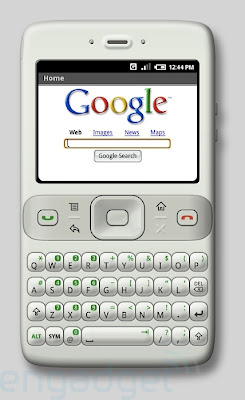
As the smart phones prepare to take center stage among computing and Internet access devices, there seems to be a rare consensus emerging among the American technology titans at Apple, Google and Microsoft that the smart phone will be the primary device used to access the Internet...particularly as it relates to demand in the developing world where mobile phones have much higher levels of affordability and market penetration than the personal computers. A logical outcome of such a consensus is the increasingly fierce competition which will significantly drive down the cost and dramatically increase availability of smart phones globally, particularly the developing nations like India and Pakistan where the telecom companies are already building mobile broadband networks. PTCL currently offers 3G service in Pakistan, and a 3G license auction is planned for this year to add more service providers. In addition, the growth of Wi-Fi in South Asia will be an added low-cost data option for smartphones.
BlackBerry service is offered by a number of telecom service providers and widely available in Pakistan's cities, towns and villages. Last year, Time magazine reported from Faridkot, a Pakistani village, that "straddles a paved road about 2 1⁄2 hours' drive from Lahore, and two new gas stations mark the village boundaries. Beyond those are factories and fertile farmland. There is even BlackBerry service". However, the high cost of Blackberry device and mobile Internet service limits it to only about 60,000 elite subscribers in a nation of over 100 million subscribers, about 64% of the population. India, with about 50% cell phone penetration, has nearly 400,000 Blackberry user. The number of Internet users can be expected to rise exponentially as affordability significantly increases to satisfy what Microsoft calls "a huge thirst for smartphones in emerging markets".
The key cost reduction drivers are likely to be similar to the ones seen in the earlier PC battle in 1990s between Wintel (Windows on Intel) and Apple Mac platforms which I personally observed and enabled as a CPU pioneer at Intel. While Macintosh represented a major advance in ease of use with Apple controlling it, the Wintel platform opened up hardware competition with multiple vendors leading to lower prices and tremendous growth in terms of applications and hardware availability. In this new era, the two biggest entries are expected to be Apple iPhone and Google Android, with each trying to outdo the other in terms of ease of use, number of applications and prices.
While Apple currently enjoys dramatic iPhone growth, it's future market share is likely to suffer from the cost barriers it is building into its pricing model which designed to maximize its profits with ongoing revenue stream from third-party content. According to Newsweek, there’s only one place where anyone can buy iPhone apps: Apple’s online App Store. And Jobs keeps a 30 percent cut of the revenue. As for ads, Jobs will sell those, too, and he’ll keep 40 percent. Of course, Jobs also sells music, movies, and books via his iTunes Store, keeping 30 percent. So instead of a one-time sale of a Mac, each iPhone and iPad becomes an ongoing revenue stream.

Currently, Q1/2010 market data shows that Apple iPhone and Google Android are running neck and neck, each selling at an yearly rate of 36 million phones each, while RIM's Blackberry is slightly ahead with about 40 million phones a year. Nokia (Symbian OS) still leads the pack with sales of 86 million smartphones a year. The overall smartphone shipments of about 230 million units still lag the 275 million PCs sold annually. However, a number of forecasters expect smartphones annual sales to equal or exceed PC unit sales by 2011.

Currently, only 7% of Indians and 11% of Pakistanis have the Internet access, according to ITU. Growth in the Internet access anticipated via smartphones can open up a vast new world to a larger number of South Asians. Smartphones have the potential to spur mass literacy, significantly improve health, enable wider access to financial services, help enhance human productivity and afford new opportunities for e-learning for human development to reduce poverty. Growth of Mobile Internet with availability of a new wave of smartphone applications in India and Pakistan has the potential to revolutionize South Asia.
Related Links:
Haq's Musings
Wireless Broadband in Pakistan
Phone Fight
Mobile Internet in Pakistan
Media and Telecom Growth in Pakistan
Poverty Reduction Through Telecom Access
Pakistan's Telecom Boom
Pakistan Tops Text Message Growth
WiMax Rollout in Pakistan
Mobile Internet in Pakistan
Low Literacy Threatens Pakistan's Future
Gender Gap in South Asia
Mobile Financial Services in Pakistan
Financial Services in Pakistan
Distance Learning in Pakistan
Top 5 ICT4D Trends in 2010
ICT4D in Pakistani Hospital
ITCN Asia 2010 Conference in Karachi
State of Telecom Industry in Pakistan
Google CEO Eric Schmidt has started talking up his company's new motto "Mobile First", urging its developers to start creating versions of new services for smartphones before converting to run on PCs.
"There is a huge thirst for smartphones in emerging markets," Microsoft said in a statement. "For many people, the phone rather than the PC is the main entry point to the Internet, resulting in a high demand for rich communication devices. In order to meet this demand, we have teamed up with MediaTek to facilitate the provision of affordable smartphones," the company added.

As the smart phones prepare to take center stage among computing and Internet access devices, there seems to be a rare consensus emerging among the American technology titans at Apple, Google and Microsoft that the smart phone will be the primary device used to access the Internet...particularly as it relates to demand in the developing world where mobile phones have much higher levels of affordability and market penetration than the personal computers. A logical outcome of such a consensus is the increasingly fierce competition which will significantly drive down the cost and dramatically increase availability of smart phones globally, particularly the developing nations like India and Pakistan where the telecom companies are already building mobile broadband networks. PTCL currently offers 3G service in Pakistan, and a 3G license auction is planned for this year to add more service providers. In addition, the growth of Wi-Fi in South Asia will be an added low-cost data option for smartphones.
BlackBerry service is offered by a number of telecom service providers and widely available in Pakistan's cities, towns and villages. Last year, Time magazine reported from Faridkot, a Pakistani village, that "straddles a paved road about 2 1⁄2 hours' drive from Lahore, and two new gas stations mark the village boundaries. Beyond those are factories and fertile farmland. There is even BlackBerry service". However, the high cost of Blackberry device and mobile Internet service limits it to only about 60,000 elite subscribers in a nation of over 100 million subscribers, about 64% of the population. India, with about 50% cell phone penetration, has nearly 400,000 Blackberry user. The number of Internet users can be expected to rise exponentially as affordability significantly increases to satisfy what Microsoft calls "a huge thirst for smartphones in emerging markets".
The key cost reduction drivers are likely to be similar to the ones seen in the earlier PC battle in 1990s between Wintel (Windows on Intel) and Apple Mac platforms which I personally observed and enabled as a CPU pioneer at Intel. While Macintosh represented a major advance in ease of use with Apple controlling it, the Wintel platform opened up hardware competition with multiple vendors leading to lower prices and tremendous growth in terms of applications and hardware availability. In this new era, the two biggest entries are expected to be Apple iPhone and Google Android, with each trying to outdo the other in terms of ease of use, number of applications and prices.
While Apple currently enjoys dramatic iPhone growth, it's future market share is likely to suffer from the cost barriers it is building into its pricing model which designed to maximize its profits with ongoing revenue stream from third-party content. According to Newsweek, there’s only one place where anyone can buy iPhone apps: Apple’s online App Store. And Jobs keeps a 30 percent cut of the revenue. As for ads, Jobs will sell those, too, and he’ll keep 40 percent. Of course, Jobs also sells music, movies, and books via his iTunes Store, keeping 30 percent. So instead of a one-time sale of a Mac, each iPhone and iPad becomes an ongoing revenue stream.

Currently, Q1/2010 market data shows that Apple iPhone and Google Android are running neck and neck, each selling at an yearly rate of 36 million phones each, while RIM's Blackberry is slightly ahead with about 40 million phones a year. Nokia (Symbian OS) still leads the pack with sales of 86 million smartphones a year. The overall smartphone shipments of about 230 million units still lag the 275 million PCs sold annually. However, a number of forecasters expect smartphones annual sales to equal or exceed PC unit sales by 2011.

Currently, only 7% of Indians and 11% of Pakistanis have the Internet access, according to ITU. Growth in the Internet access anticipated via smartphones can open up a vast new world to a larger number of South Asians. Smartphones have the potential to spur mass literacy, significantly improve health, enable wider access to financial services, help enhance human productivity and afford new opportunities for e-learning for human development to reduce poverty. Growth of Mobile Internet with availability of a new wave of smartphone applications in India and Pakistan has the potential to revolutionize South Asia.
Related Links:
Haq's Musings
Wireless Broadband in Pakistan
Phone Fight
Mobile Internet in Pakistan
Media and Telecom Growth in Pakistan
Poverty Reduction Through Telecom Access
Pakistan's Telecom Boom
Pakistan Tops Text Message Growth
WiMax Rollout in Pakistan
Mobile Internet in Pakistan
Low Literacy Threatens Pakistan's Future
Gender Gap in South Asia
Mobile Financial Services in Pakistan
Financial Services in Pakistan
Distance Learning in Pakistan
Top 5 ICT4D Trends in 2010
ICT4D in Pakistani Hospital
ITCN Asia 2010 Conference in Karachi
State of Telecom Industry in Pakistan


Comments
Karachi—Pakistan Telecommunication Company LTD (PTCL) has won Best Consumer Choice Award 2010 for its product “EVO”, that is the fastest wireless broadband service with the widest coverage, in over 100 cities of the Pakistan. Pakistani consumers have chosen EVO a world class and exclusive device as a recipient of, Consumers Choice Award in the category of Best Wireless Broadband. Federal Minister Makhdoom Amin Faheem presented the shield to SEVP South Abdullah Youseff. The Consumers Choice Award is celebrating its 6th successful year in the country and has become the most recognized and prestigious event of the country’s business calendar.
PTCL has always laid special focus on delivering the best to its customers by providing the most affordable means of communication and a truly reliable and technology wise superior network. With the substantial market share, loyal subscriber base and the recognition as the only integrated telecommunications service provider, PTCL continues to set excellence benchmarks in the Telecom Industry of Pakistan. The commercial launch of EVO Nitro 3G offering speed upto 9.3 mbps,which is unexampled and one and the only fastest and most widely available wireless service in Pakistan that meets needs of the next generation for ultimate speed along with superior, matchless and extraordinary performance.
PTCL President and CEO - Walid Irshaid while acknowledging this achievement, highlighted pragmatic approach of PTCL and stated that PTCL understands the changing dynamics of the telecommunication sector and is working towards foreseeing our customer’s needs and fulfilling them. The selection of EVO in the category of Best Wireless Broadband in Consumer Choice Award for ‘2010’ is an acknowledgement of that. EVO 3G Wireless Broadband is Pakistan’s fastest on the double wireless internet offering its customers superior, venerable, advanced and a cutting edge 3G internet experience with its unprecedented speed. It has revolutionized the three simple steps just plug in-click-connect of wireless connectivity for our valued customers. Pakistan is the first country in the world of telecommunication to commercially launch EVO 3G Nitro, the fastest wireless broadband with seamless roaming having speed up to 9.3mbps.
The TRE Survey asks senior level stakeholders to evaluate the effectiveness of the telecom regulatory environment in the fixed, mobile and broadband subsectors along a Lickert scale of 1 to 5 (1 being highly ineffective and 5 being highly effective, with the mid-point of 3 being considered average performance). Seven different dimensions of regulation (market entry, tariff regulation, interconnection, universal service, anti-competitive-practices, quality of service) are evaluated by the stakeholders. This year, 349 responded participated in the 7 countries.
Within a country, scores for each of the dimensions reflect specific issues: for example, in India, the lowest score (of 2.3 out of 5) was received by the Access to Scarce Resources dimension in the mobile-sub-sector. This is perhaps not surprising given the 2G scandals in India. However, India did finally get around to allocating 3G spectrum in 2010, and did so by having its first ever spectrum auctions. Perhaps because of this, or because stakeholders believe that that the 2G scandal has finally paved way for transparency in allocation, the score of 2.3 this year is still an improvement, though marginal, over the 2008 score of 2.2. India’s USD 4 billion+ undisbursed Universal Service Fund and related policies are responsible for its biggest TRE score decline: the TRE for USO drops from 3.1 in 2008 to 2.4 this year. In contrast, tariff regulation in the mobile sub-sector continues to be the top performer with a score of 3.9 out of 5.0, indicating stakeholder satisfaction at TRAI’s policy of forbearance which has enabled Indian consumers to enjoy extremely low prices thanks to competitive forces.
Pakistan saw an increased in almost all dimensions, with the exception of 3 (fixed market entry, mobile access to scarce resources and mobile interconnection) which showed minor declines. In contrast, Bangladesh saw scores in all seven fixed-subsector dimensions decline, in some cases by as much as 1 point. The scores are perhaps reflective of the issues related to the cancellation of several fixed licenses. Overall only seven dimensions showed improvements in Bangladesh, and even these were marginal. Thailand, whose overall performance is unchanged, has however seen significant declines in its Market Entry scores due the uncertainties caused by the concession contracts granted to the mobile operators and what their status would be when they expire starting next year.
http://lirneasia.net/2011/07/india-pakistan-and-indonesia-have-improved-telecom-regulatory-environments-since-2008-according-to-stakeholders/
PTCL has recently launched an Android based thin Apple iPAD2 like tablet computer with EVO 3G and WiFi connectivity built-in. 3G EVO Tab is a 7 inch touch screen tablet with built-in EVO service to offer wireless broadband internet on the go in more than 100 cities and towns across Pakistan. Powered by Google Android Froyo 2.2 Operating system, 3G EVO Tab offers support for both 3G and Wi-Fi for an un-interrupted on-the-go connectivity. With a 5 MegaPixel Camera, a variety of built-in applications, 3G EVO Tab lets users browse, snap, share, communicate, navigate, play games and do a lot more on-the go, thereby making it an ideal connectivity solution for users looking for high speed on-the-go 3G connectivity on an Android platform. PTCL 3G EVO Tab offers convenience and speed with three diverse economy packages to suit individual needs and pockets. Its 12-month bundle offer has been very successful with majority sales in this bracket.Customers can get EVO Tab for as low as Rs 7,999 plus 12-month unlimited EVO service, all at Rs 31,999. In addition to the 12-month contract, EVO Tab offers bundled packages based on 3 and 6 month contracts at Rs 27,999 and Rs 29,999, respectively with 3 and 6 month of unlimited EVO service.
http://www.riazhaq.com/2011/10/pakistan-launches-100-mbps-ftth.html
A start of a new year and a launch of a new product by PTCL. This time it’s a Android smartphone with EVO 3G built in. This is the third device in a series of products based on the PTCL EVO internet service, first it was the Futura mobile phone luanched by the subsidiary of PTCL i.e Ufone (which was a featurephone btw) and then a EVO tablet on 14th August last year.
The name of the device is IVIO Icon Pro and it seems like it is made by the same company that made the EVO tablet.
- EVO 3G speeds
- Ability to talk and surf at the same time.
- Android 2.2 Froyo Smartphone
- 5 MP Autofocus camera
- WiFi Hotspot facilty
- 3.5 inch 480*320 resolution screen
- 256 MB RAM & 512 MB Flash ROM
- Free 4 GB microSD card (Supports upto 32GB)
- WiFi, Bluetooth, GPS, Accelerometer
- Upto 5 hrs talktime and 100 hours standby
- And best of all, you can use this device with any SIM of your choice!
Price and Packages
Launch Packages
Evo Wind
Rs. 18,000 Phone + 15 GB data – 6 months validity
Evo Wings
Rs. 17,000 Phone + 5 GB data – 3 months validity
Post launch offers
Smart 5 GB
3 months validity Only Rs. 999!
Smart 15 GB
6 months validity Only Rs. 1,999!
http://www.techomaniac.com/2012/01/ptcl-launches-android-smartphone-with.html
While the expert stressed on developing content for 3G, PTA argued launching the spectrum will automatically lead to content development.
“Demand for data is increasing and the availability of infrastructure (3G) will enhance usage of data services and improve the content development, which will make business case for a new player,” PTA’s chairman Mohammed Yaseen said.
The PTA chief also said it was a misconception that the average revenue per user (ARPU) is low in Pakistan. “The ARPU of voice services for 2G should be relevant to economies of scale,” he said, adding, “3G enhances ARPU in any case. There are case studies of developing countries where introduction of 3G increases the ARPUs of operators like in Egypt.”
Pakistanis, Yaseen said, are already using 17 million smart phones. The import and adoption of smart phones is very high and is increasing every year while more people are using tablets, he said. The use of these devices is not expected to decrease by any chance, which means appetite for “wireless high speed internet on move” will also increase; he said.
Additionally, Yaseen said, there are consumers who want to use data services on their handsets. However, they have either not subscribed to it or subscribed to it but don’t use it because of low speed and freezing of the operating system – Last year’s BBM outages frustrated the users for example.
Personal Computer (PC) internet usage is stagnant for the last three years due to cost of PC, he said. However, the internet usage by mobile phones is increasing exponentially, he said, presently 13 million people are using mobile internet. “It shows the growth potential of mobile phone internet usage,” he added.
Presently the data contributions to the ARPU range from 12% to 17% as calculated by PTA, he said.
The experts have also argued the base price – $210 million – is high. The base price, PTA chief said, was calculated keeping in view various factors and international best practices and was smaller than some markets of smaller economies where 3G was auctioned.
Whether or not a new player should enter the market is debatable. The existing players, however, seem to be gearing up for the much delayed auction. Mobilink, Ufone and Zong have confirmed their participation and even upgraded their telecom hardware to 3G.
Despite the global economic recession, there is an enabling environment for cellular business in Pakistan; Mobilink president Rashid Khan said. Referring to the base price for 3G auction, he added, it was reasonable and determined on the basis of telecom policy.
Ufone will be the first to compete for a 3G license in Pakistan; said Walid Irshaid who is the CEO and President of PTCL – parent company of Ufone. “We have no option but to succeed,” he said. It is going to be really difficult for the 2G “leftover” operators in the post-3G environment, Irshad said, because high revenue-generating subscribers would switch over to 3G networks.
http://tribune.com.pk/story/352827/feasibility-pta-makes-a-business-case-for-3g-spectrum-in-pakistan/
KARACHI: Teledensity in Pakistan crossed the 70 percent mark by end of February 2012 mainly on the growing subscriptions of cellular mobile phone companies in urban and rural areas of the country, Pakistan Telecommunication Authority (PTA) data said on Saturday.
The teledensity of cellular phone stood at 67.2 percent; wireless sector teledensity reached at 1.8 percent and landline teledensity settled at 1.6 percent, making overall teledensity at 70.6 percent.
Pakistan’s teledensity is the second highest in South Asia after India that reached 78.10 percent. It remained on top among the region till January 2011 with modest annual growth, however corrective measures and saturated markets slowed down its growth.
The teledensity is defined as the number of customers per 100 people. Hence it is roughly said that 70 percent of the population own and avail telephony services through different technologies.
The mobile phone connection has risen to 116 million on different networks, constituting the lion’s share in the field of telecom sector in terms of subscribers and their technology selection.
Similarly, the wireless phone companies have increased their number of connections to 2.7 million by February whereas the landline connections decreased to stand at 2.9 million in the country.
In the cellular sector, Mobilink grabbed the largest subscribers’ base with 35.2 million. It was followed by Telenor and Ufone with 28.8 million and 22.4 million connections, respectively. The subscribers’ number of Zong and Warid stood at 14.9 million and 14.6 million users, respectively.
Analysts in the telecom sector said that the growth in cellular subscribers’ base showed the penetration of the mobile phone operators in the rural and small areas besides the metropolis.
They said that mobile phone users of multiple SIMs have been on the rise for availing on-net calls and SMS packages of different networks for affordability and increasing services utility.
Besides, there are millions of connections inactive for months but the cellular operators try to reactivate them by offering free balance to subscribers. In this regard, the cellular operators have introduced several prize schemes to attract new and retaining customers to maintain their growing base.
In the wireless sector, Pakistan Telecommunication Company Ltd (PTCL) and TeleCard are market leaders with 1.43 million and 0.743 million, respectively. In the landline sector, PTCL and NTC are market leaders with 2.7 million and 104 million connections, respectively.
The wireless operators’ competitive packages in the limited cities witnessed gradual growth particularly on daily consumption against fixed charges. On the contrary, the landline sector witnessed constant decline in connections on the services issues, high tariff and line rent.
http://www.dailytimes.com.pk/default.asp?page=2012\04\15\story_15-4-2012_pg5_8
http://www.pta.gov.pk/index.php?option=com_content&task=view&id=269&Itemid=658
A high profile Pakistani prisoner, who escaped on Sunday along with 383 other inmates, was reportedly contributing to several social networking sites including Facebook and blog sites while he was in prison, a report revealed late Monday.
Adnan Rashid was on death row at Bannu Central Prison in northwestern Pakistan for his alleged attempt to assassinate former military ruler Pervez Musharraf in 2003.
But despite the high profile charges against him, Rashid enjoyed the use of cell phones inside the death cell he was held in, allowing him to keep in touch with several journalists through text messaging, the Pakistan-based Dawn news website reported.
Rashid, a former junior technician of the Pakistan Air Force, was among some 384 prisoners who escaped early Sunday from the jail after an attack by insurgents armed with guns, grenades and rockets, officials said.
The attack, claimed by Pakistan’s Taliban movement, started at around 1:00 a.m. (2000 GMT) and continued for two hours, with militants in cars and pick-up trucks shooting and lobbing grenades to force their way into the prison, a senior security official told AFP news agency.
“We have freed hundreds of our comrades in Bannu in this attack. Several of our people have reached their destinations, others are on their way,” a Taliban spokesman said on Sunday.
Rashid was arrested in early 2004 on charges of the alleged assassination attempt, but had continued to plead his innocence while in prison, claiming “that his only crime was that he had voted ‘No’ in the referendum held by the then military president Gen. Musharraf,” the Dawn reported.
As a prisoner, he was questioned by the media in interviews uploaded on to social networking site Facebook, in which he argued against flaws in laws concerning the Pakistani army, air force and navy, while urging the Supreme Court to intervene in his case and those of others who had been detained with him.
In one letter to the Chief Justice, Rashid claimed that at the time of the assassination attempt, he was on duty in Quetta and was picked up by intelligence personnel.
He had recently sent a text message to a group of recipients, who were not identified by the newspaper, which states: “There are millions of cases pending before high courts and Supreme Court, 99.9 percent of these are actually appeals against verdicts of lower courts. Billions of rupees are being spent on higher civil courts so why not this judicial system is replaced by military courts; these are swift, require no judge, no special courtrooms or bars, and most interesting court martial are unchallengeable so no more need of high and supreme courts. It saves time and money of nation. What do you think? From a court martial convict.”
http://english.alarabiya.net/articles/2012/04/17/208348.html
LAHORE: Telenor Pakistan has launched a nationwide project that would help empower a new digital generation in Pakistan.
Telenor Talkshawk I-Champ is a knowledge-based initiative that aims to provide learning and training to young people to enable them to become future proponents in the digital age. Telenor will partner with Government of the Punjab and hold Internet workshops for class 8-10 students in 150 schools in the semi-urban and rural areas of Punjab. To mark the initiative, a launch event was held at Children’s Library Complex, which was attended by a large number of school children, their parents and teachers.
Deputy Speaker Punjab Assembly, Rana Mashhood Ahmad Khan said government of the Punjab was committed to providing its citizens with quality education. The students were briefed on how the Internet works and how information can be searched for on internet-enabled mobile phones.
Acting Chief Marketing Officer Telenor Pakistan, Usman Javed said, “We are delighted to be partnering with the Government of Punjab to start promoting digital awareness among the youth of the province”. The winner of the Telenor Talkshawk I-Champ final competition will get to visit Opera Labs in Norway to learn more about how the Internet is being used by people around the world to share knowledge.
http://www.dailytimes.com.pk/default.asp?page=2012\05\13\story_13-5-2012_pg5_11
KARACHI: With Islamabad still in the process of launching third generation (3G) cellular spectrum, Mobilink awarded a nationwide network expansion and modernisation project to Huawei and Alcatel-Lucent.
Orascom Telecom – the Egypt-based parent company of Mobilink – signed a five-year agreement with China’s Huawei and France’s Alcatel-Lucent to provide for the design, purchase, deployment, and maintenance of next-generation mobile network equipment and supporting services from two of the world’s leading telecom hardware providers; company’s website said on Sunday.
Huawei was awarded 50% of the radio network and 100% of the core and value-added services network, while Alcatel-Lucent was awarded the other 50% of the radio access network.
It is relevant to mention that Mobilink – Pakistan’s largest mobile phone operator – had raised Rs2 billion in secured loan through institutional investors, according to a notice sent to Karachi Stock Exchange in June, 2012. It, however, did not specify if this was meant for network expansion, 3G roll out or mobile banking.
The cellular giant was yet to make an official announcement about this agreement locally. The monetary value of the project was also not made public either by Orascom or Mobilink.
Mobilink refused to give any details, saying the development was not made public in Pakistan.
“Any cellular company that is seeking a long-term future in Pakistan has to invest in 3G,” Hussain Ali Talib, company’s manager of corporate communications said in a comment that he related to a press conference by CEO Rashid Khan in January, 2012. Khan had announced Mobilink’s participation in 3G bidding and their network expansion plans for 2012.
http://tribune.com.pk/story/464790/mobilink-to-get-network-upgrades-for-3g-rollout/
Currently, around 119 million people in Pakistan own a cell phone which is about 68.6% of the entire population. Furthermore, out of all the cellphones sold 6% are specifically smartphones. Similarly, from all the smartphone brands available in Pakistan, Samsung has the highest market share (39%) followed by HTC (22%) and Sony (8%).
HTC is a Taiwanese manufacturer of smartphones and tablets which have managed to capture the attention of the entire world. Recently, to further improve their position in the smartphone market, HTC has signed Robert Downey Jr. for its marketing campaign “Here’s to change” which is expected to help increase HTC’s sales, after their recent loss in stock value. This Taiwanese phone-maker is going all out with the introduction of this $1 billion marketing campaign. Other than implementing these stringent marketing strategies, the smartphones which have recently been introduced by HTC have also upped the game. Some of the best smartphones which have been introduced by HTC are:
HTC ONE
HTC has recently launched HTC One, which has taken the mobile phone market by storm. It boosts an amazing camera which has a remarkable low-light performance, a new interface which helps combine all your social media and news feeds into a single place, great sound and a brilliant 4.7 inch screen which helps provide the best immersive experience. Also, its user-friendly features and its impressive aluminum body construction may help HTC in capturing the mobile phone market.
HTC One mobile price in Pakistan:- Rs.65000/-
---
HTC Desire C
Not everyone can afford the latest android technology but that doesn’t mean that everyone should have to live without it. HTC desire specifically caters to the needs of these people; it’s one of the best budget phones which is equipped with the latest android technology. The main selling point of HTC Desire C is that it has a 3.5 inch screen with a 600MHZ processor and that too at such a low price. Also from its high end look it is almost impossible to guess that it’s a budget phone. One major advantage that Desire C has over its competition is the addition of HTC sense which supercharges this device.
---
HTC Desire C price in Pakistan: – Rs.11,000/- to 15,000/-
HTC Wildfire
A smartphone for those on a tight budget, the HTC Wildfire doesn’t hold back on the specs; the touchscreen handset runs on Android 2.1 which is equipped with user-friendly HTC Sense UI but one issue is that it has the same processing power as 2009′s HTC cellphone, the HTC Hero.
HTC Wildfire Price in Pakistan: – Rs. 12,000/-
HTC 8X
The HTC 8X is the epitome of elegance, not only is it beautifully designed, it is equipped with all the necessary features required in a smartphone. It is definitely one of the best smartphones which gives other windows 8 (operating system) based smartphones a run for their money. It’ll certainly raise eyebrows when you hold this cellphone in your hand – not just because it’s colorful, but also because it’s so beautifully made with unibody, polycarbonate design.
Another attractive feature of HTC 8 X is its high resolution screen – which measures about 4.3 inches coming in at 1280 x 720 pixels. It’s considered to be as good as Apple’s Retina (which is the current best) or maybe even better.
HTC 8X price in Pakistan: – Rs. 46000/- to Rs. 50,000/-
...
http://www.pakistantribune.com.pk/4170/a-review-of-best-htc-mobiles-in-pakistan.html
The Punjab provincial government’s efforts so far include getting direct feedback from 3 million users of public services through SMS and providing field workers cost-effective smartphones to track their visits and collect data, including to monitor pests on crops, fighting dengue, and managing waste.
A recently-approved project will scale up these activities using innovative financing that emphasizes results, takes a multi-sectoral approach, and increases transparency and citizen access to information, improving citizen-state relations.
This model of innovative and sophisticated mobile governance is almost unprecedented in the public sector in developing countries, and represents one of the largest-scale attempts to hear from citizens to crack down on corrupt and poor performing officials.
http://www.worldbank.org/en/news/feature/2013/12/11/leveraging-mobile-phones-for-innovative-governance-solutions-in-Pakistan
Mobilink has announced that it will complete the roll out Pakistan’s most modernized and largest 3G ready network with more than 9000 cell sites across the country by July 2014. The network modernization is in line with Mobilink’s strategy to provide its customers with best voice quality and fastest data speeds. The initiative was enabled by VimpelCom with investments made on various fronts including network modernization taking its total investment in Pakistan to USD 4.3 billion – the highest in Pakistan’s telecom industry. In order to celebrate this achievement, Mobilink launched a major communication drive across mainstream TV, radio, print and social media to emphasize the company’s bigger, better and faster network supremacy so that their customers never miss a moment. Speaking about Mobilink’s roll-out of Pakistan’s most modern network, Bilal Munir Sheikh, Chief Commercial Officer, Mobilink said, “Mobilink’s 3G ready network established over Pakistan’s largest cellular footprint sets us apart from our competitors as more than 37 million Pakistanis trust us with their communication needs. I am confident that our improved network will go a long way in providing the best customer experience with seamless connectivity over the most robust and technologically most advanced network of Pakistan.”
http://www.pakistantoday.com.pk/2014/03/20/business/mobilink-rolls-out-pakistans-largest-3g-ready-network/
The market share of smartphones is expected to double next year as stiff competition rages among cellphone makers with moderate prices and cheap Chinese brands penetrating the market.
Nokia Android phones have also hit the markets where Q Mobile, Samsung, Huawei, Sony, LG, Voice, G-Five, VGO Tel, etc continue introducing new smartphones with more advanced features and competitive prices. However, feature phones (not smart or android) still hold 80 per cent market share and cost between Rs2,500 to Rs4,000.
According to Director United Mobile, Azad Lalani, smartphones share will jump to about 40pc next year from the current 15-20pc.
Pakistan’s monthly sales of overall cellphones is estimated at 1.5 to 1.7 million units. The start of 3G services will further boost sales of smartphones.
Market sources said that one of the Chinese cellphones now holds a major market share with sales of 600,000-700,000 units per month, a sector that was previously dominated by Nokia. The price of smartphones (Chinese brands) starts from Rs7,000 and touches up to Rs60,000 plus for many major brands.
Country General Manager Nokia Pakistan and Afghanistan, Arif Shafique said, “We have recently launched the first of our Nokia X range of smartphones in Pakistan. The device runs on the Nokia X Software Platform, which is built on the standard Android Open Source Project (AOSP).”
Shortly, the company will expand the range of Nokia X devices in Pakistan across all price points. The recently launched Nokia X is available at an estimated price of Rs13,500.
“Pakistan’s mobile market is burgeoning and the users are becoming more and more tech savvy,” he said.
On grabbing market share in Nokia Android phones, he said as per Nokia policy he cannot comment on the company’s market share by country or region. “I believe there is consumer demand especially in the affordable smartphone space,” he added.
Regarding investment in the launch of Android phones in Pakistan, he said: “The investment is largely in the marketing and promotion of this new range, as well as in supporting Pakistani developers to come up with more locally relevant apps for Nokia X family.”
Currently Nokia phones are arriving from China for the Pakistani market. “As and when trade between India and Pakistan opens, we will weigh both options — of importing from China and India.”
“We will opt for the one that will offer the best value to our consumers in Pakistan,” he said.
On Microsoft’s acquisition of Nokia devices and services business, the general manager said, “Our transition with Microsoft is shaping up to close in April and our journey towards bringing smarter mobile devices and smarter technology is going ahead with this transition.”
http://www.dawn.com/news/1096258/smartphone-market-to-double-next-year
Smartphone sales have accelerated in recent months after the roll-out of 3G and 4G services in Pakistan. The number of 3G subscribers has reached 4 million mark, apparently surpassing all other broadband technologies in the country, within the first three months of the issuance of 3G and 4G licenses in the country. There are around 3.7 million broadband subscriptions in Pakistan for all technologies combined including WiMAX, DSL, EvDO, FTTH, Satellite, HFC and others till May this year.
Total number of mobile subscribers in Pakistan is over 150 million. A growing number of these subscribers are smartphone owners who are using web services like e-commerce and social media. Gertjan van Laar, an app developer who recently published a report on smartphone usage in Pakistan, told Tech in Asia that smartphone penetration has reached between 7 and 10 percent of the population – in contrast to the general mobile penetration rate of 80 percent.
Here are some of the highlights of the report on smartphones in Pakistan:
1. Android is Pakistan’s top smartphone OS with 68 percent share just among smartphone users
2. Apple iOS is second with 24 percent share; Windows Phone is third at eight percent
3. Samsung is the top brand; iPhone is second; homegrown phone-maker QMobile is third
4. 35 percent of smartphone users in Pakistan own a low-cost phone.
Growing availability of smartphones and 3G/4G services is enabling Pakistani apps developers to build and offer a wide range of apps, including everything from the most-used messaging apps to social networking, games, entertainment, government, banking, business and finance, navigation and utility apps, such as budgeting and data backing, according to a report in The Express Tribune newspaper. In addition to software houses, an active community of mostly self-taught freelance app developers is also bidding for projects listed on global online platforms, such as oDesk, Elance, Guru and Freelancer, the paper adds.
Increasing access to advanced smartphones and mobile broadband augurs well for innovation and investment in Pakistan.
http://www.riazhaq.com/2014/12/apple-iphone-6-6plus-launched-in.html
The government wants operators to stop providing BlackBerry Enterprise Services, or BES, which allow users to establish secure networks, by Nov. 30. “Remaining BB [BlackBerry] services such as messenger and BlackBerry Internet Services will continue,” said a senior official at the Pakistan Telecommunication Authority, who asked not to be named because he wasn’t authorized to speak to the media.
Officials at two of Pakistan’s five mobile operators, who asked that they and their companies weren’t named, confirmed that they had received the order to shut down BES, one of the company’s most secure offerings, from the PTA. The order, a copy of which was seen by The Wall Street Journal, cited “serious concerns by the Security Agency [sic]” and was dated July 22.
Officials at PTA and the two mobile operators declined to say which security agency was mentioned in the shutdown order, and didn’t comment on the nature of its concerns.
BES allow customers to build their own secure communications networks, the officials at the two Pakistani mobile networks said, providing a high level of security and encryption that is very difficult for governments to access. “The BES system is very expensive so usually only big companies and embassies opt for it,” one of the officials said, declining to name any customers because of security concerns.
BlackBerry’s non-enterprise services, which are provided through mobile networks, are encrypted as well, but aren’t as secure as BES because servers aren't controlled by the customer, the officials said.
A BlackBerry spokeswoman declined to comment on reports of Pakistan’s ban on the company’s services, but said in an emailed statement: “While we recognize the need to cooperate with lawful government investigative requests of criminal activity, we have never permitted wholesale access to our BES servers.”
Privacy International, a U.K.-based rights charity, said in a report this month that Pakistan’s intelligence agencies have ramped up electronic surveillance in recent years. Officials say such surveillance is necessary for Pakistan to effectively counter militancy, but activists have warned that widespread electronic eavesdropping threatens citizens’ privacy and is vulnerable to abuse.
The officials at the two mobile operators said the partial ban in Pakistan is unlikely to have a serious impact on their business. There are only around 5,000 BES customers in Pakistan, the PTA and mobile operators said. There were nearly 132 million mobile subscribers in Pakistan as of April this year, according to PTA data.
Pakistan isn't the first country to confront BlackBerry’s encrypted communications services. In 2010, the United Arab Emirates threatened to ban BlackBerry communications, also citing security concerns. India, Indonesia and Saudi Arabia have also threatened bans.
http://www.wsj.com/articles/pakistan-bans-blackberry-enterprise-services-for-security-concerns-1437845124
A temporary truce has been reached between Canada’s BlackBerry Ltd. and Pakistan over requests from that nation’s government that it hand over “unfettered access” to encrypted communications from its enterprise customers.
The Pakistan Telecommunication Authority had told local mobile-phone operators that as of Nov. 30, they could no longer offer BlackBerry Enterprise Server (BES) services to customers.
BlackBerry chief operating officer Marty Beard wrote a blog post Monday explaining that Pakistan was demanding access to encrypted BES communications. “BlackBerry will not comply with that sort of directive. As we have said many times, we do not support ‘back doors’ granting open access to our customers’ information and have never done this anywhere in the world,” Mr. Beard wrote.
Hours later, Pakistan extended the shutdown deadline until Dec. 30, effectively delaying the showdown over security.
The fight between BlackBerry and Pakistan also exposed a critical grey area in the company’s vaunted security reputation: Only its BlackBerry Enterprise Server clients are offered fully encrypted communications.
A regular telecom consumer that doesn’t have a corporate BES can expect that their BBM messages, e-mails and other communications could be intercepted, with BlackBerry’s help, by government agencies.
As Christopher Parsons, a Toronto-based researcher for the Citizen Lab at the Munk Centre for International Studies, Citizen Lab explains, consumer-level BBM uses a form of encryption that BlackBerry holds the keys too, unlike the sort of end-to-end encryption that Apple’s iMessage provides, which it says cannot be accessed even if it were given a lawful order. Only BES clients have a similar level of security with BlackBerry. In the wake of the Paris attacks, a number of Western security officials spoke out about the consumer availability of strong encryption.
In his post on Monday, Mr. Beard said that “while we recognize the need to co-operate with lawful government investigative requests of criminal activity, we have never permitted wholesale access to our BES servers.”
In November, reports surfaced that Mr. Beard told attendees at an IT conference called FedTalks that “we very much take a balanced approach” and criticized companies that say they are “all about encryption all the way.”
“They chided Apple and Google for setting up strong encryption,” Mr. Parsons says. “My understanding is they were willing to work with Pakistan on a case-by-case instance, just not a universal back door.”
A BlackBerry spokesperson repeated the denial that it will provide such access.
In a written statement, the company did say: “While we do not support so-called ‘back doors,’ we and every other tech company bears a responsibility to do all we can to help governments protect their citizens.”
Even though the showdown has been averted for now, it’s unclear how the pullout would be effected.
For instance, the company was not able to specify what would happen to a BES customer who simply travelled to Pakistan, nor what would happen to Pakistani customers who relocated their services to a neighbouring country.
https://www.techinasia.com/xiaomi-launch-pakistan
Chinese gadget manufacturer Xiaomi announced today it’s launching in Pakistan – the world’s sixth-most populous country – after months of speculation and official denials.
Xiaomi has expanded slowly since its 2011 debut in China, focusing mainly on Southeast Asia, India, parts of the Middle East, and Brazil. Its Pakistan entry is the largest since it ventured into Brazil mid-2015.
Xiaomi’s coming to Pakistan through a distribution partnership – as it did in Brazil – with Rocket Internet’s ecommerce marketplace, Daraz, which is present in Pakistan, Bangladesh, Myanmar, and Sri Lanka.
Jack Yung, Xiaomi’s sales director for South Asia, said three models will be available initially – the Mi Max, plus the budget Redmi Note 4 and Redmi 4A. There are also plans to sell the Mi Band 2, but the company is tight-lipped whether the full range of Xiaomi’s products will eventually reach the country.
-------------------------
As the world's sixth most populous nation Pakistan is a big market for smartphone makers. The country was projected to have about 40 million smartphones last year. Qmobile is the current smartphone vendor in the country.
http://mashable.com/2017/02/20/xiaomi-launch-pakistan/#nIuXQ5yonqql
India is Xiaomi's biggest market outside China, company CEO Lei Jun said earlier this year. In 2016, Xiaomi had hit one billion dollar in revenue in the country. Even as if the company does well in India, it is losing its charm in the home country. Once the hottest phone brand in its home market, Xiaomi had slipped to fifth spot in the fourth quarter last year, according to IDC.