Pakistan Visitors Pleasantly Surprized
As Pakistan increasingly finds itself the object of the world media attention, its coverage is frequently based on widespread negative perceptions by the correspondents who parachute in to cover specific events there for brief periods of time. Often, there is little or no context to the "breaking news" of the hour and little understanding of the country, its history and its people. The reporters often go there to find and confirm what they already believe rather than to uncover and learn the big picture of what is really happening there. Their cameras often focus only on a tiny slice of Pakistan that suits the report they want to file. For example, pictures of bearded men carrying weapons or chanting anti-West slogans or women in burkas demanding Shariah laws are often used to symbolize Pakistan. Pakistan does have its share of protesters and extremists, but it has a lot more than that, as some visitors discover. Here are a few such visitors and their impressions that I have found recently:
Islamabad: Well Organized, Welcoming:
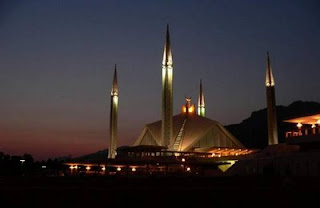
"Islamabad is surely the most well-organized,picturesque and endearing city in all of South Asia. Few Indians would, however, know this, or, if they did, would admit it. After all, the Indian media never highlights anything positive about Pakistan, because for it only 'bad' news about the country appears to be considered 'newsworthy'. That realization hit me as a rude shock the moment I stepped out of the plane and entered Islamabad's plush International Airport, easily far more efficient, modern and better maintained than any of its counterparts in India. And right through my week-long stay in the city, I could not help comparing Islamabad favorably with every other South Asian city that I have visited. That week in Islamabad consisted essentially of a long string of pleasant surprises, for I had expected Islamabad to be everything that the Indian media so uncharitably and erroneously depicts Pakistan as. The immigration counter was staffed by a smart young woman, whose endearing cheerfulness was a refreshing contrast to the grave, somber and unwelcoming looks that one is generally met with at immigration counters across the world that make visitors to a new country feel instantly unwelcome."
Yoginder Sikand
10 June, 2008
Countercurrents.org
Resurgent, Prosperous Middle Class:

"On the ground, of course, the reality is different and first-time visitors to Pakistan are almost always surprised by the country's visible prosperity. There is far less poverty on show in Pakistan than in India, fewer beggars, and much less desperation. In many ways the infrastructure of Pakistan is much more advanced: there are better roads and airports, and more reliable electricity. Middle-class Pakistani houses are often bigger and better appointed than their equivalents in India.
Moreover, the Pakistani economy is undergoing a construction and consumer boom similar to India's, with growth rates of 7%, and what is currently the fastest-rising stock market in Asia. You can see the effects everywhere: in new shopping centers and restaurant complexes, in the hoardings for the latest laptops and iPods, in the cranes and building sites, in the endless stores selling mobile phones: in 2003 the country had fewer than three million cellphone users; today there are almost 50 million."
William Dalrymple
14 August, 2007
The Guardian
Absurd Notions About Pakistan:

"Suicide bombs, battles in tribal areas, and states of emergency tend to put off casual tourists. But the impression such events convey can often be misleading and unrepresentative of a country as a whole. A few days ago I was sitting in a cafe sipping best Italian espresso and reading a news magazine. The front page was full of furious faces and clenched fists under the headline, The Most Dangerous Nation in the World isn't Iraq, it's Pakistan. The cafe was in a smart bookshop in Pakistan's capital, Islamabad. I sighed and turned to the article inside.
It was a revealing analysis of some penetration of a few places in Pakistan by the Taleban and al-Qaeda. I pondered the magnifying-glass effect of dramatic news coverage. The suicide bomb attack on Benazir Bhutto's homecoming parade in Karachi in October, which killed an estimated 140 people, and the assault on a Taleban pocket in the Swat valley, a tourist destination, took place while I was in Pakistan.
But neither event had a noticeable effect on the general sense of security and stability where I was in Islamabad or on the road. The notion that Pakistan is more dangerous than Iraq is absurd."
Bill Sykes
BBC News
12 November, 2007
Pakistan as Attractive Investment Opportunity:

"A little more than six years ago, immediately after the Sept. 11 attacks on U.S. cities, few sane investment advisers would have recommended Pakistani stocks.
They should have. Their clients could have made a fortune.
Since 2001, the nuclear-armed South Asian country, blamed for spawning generations of Islamic militants and threatening global security, has been making millionaires like newly minted coins.
As Western governments have fretted about Pakistan's nuclear weapons falling into the hands of militants, the Karachi Stock Exchange's main share index has risen more than 10-fold."
Mark Bendeich
Reuters
Jan 10, 2008
These eyewitness accounts of Pakistan by serious individuals are a reminder of the fact that fly-by-night journalism and sensational media reports are not reliable sources of information to guide policy on relations with Pakistan, investment decisions in Pakistan, the ongoing war on terror, and Pakistan's role in it. Let's hope that the international policy makers consider sources beyond the traditional commercial media when making important strategic decisions on crucial issues.
Islamabad: Well Organized, Welcoming:

"Islamabad is surely the most well-organized,picturesque and endearing city in all of South Asia. Few Indians would, however, know this, or, if they did, would admit it. After all, the Indian media never highlights anything positive about Pakistan, because for it only 'bad' news about the country appears to be considered 'newsworthy'. That realization hit me as a rude shock the moment I stepped out of the plane and entered Islamabad's plush International Airport, easily far more efficient, modern and better maintained than any of its counterparts in India. And right through my week-long stay in the city, I could not help comparing Islamabad favorably with every other South Asian city that I have visited. That week in Islamabad consisted essentially of a long string of pleasant surprises, for I had expected Islamabad to be everything that the Indian media so uncharitably and erroneously depicts Pakistan as. The immigration counter was staffed by a smart young woman, whose endearing cheerfulness was a refreshing contrast to the grave, somber and unwelcoming looks that one is generally met with at immigration counters across the world that make visitors to a new country feel instantly unwelcome."
Yoginder Sikand
10 June, 2008
Countercurrents.org
Resurgent, Prosperous Middle Class:

"On the ground, of course, the reality is different and first-time visitors to Pakistan are almost always surprised by the country's visible prosperity. There is far less poverty on show in Pakistan than in India, fewer beggars, and much less desperation. In many ways the infrastructure of Pakistan is much more advanced: there are better roads and airports, and more reliable electricity. Middle-class Pakistani houses are often bigger and better appointed than their equivalents in India.
Moreover, the Pakistani economy is undergoing a construction and consumer boom similar to India's, with growth rates of 7%, and what is currently the fastest-rising stock market in Asia. You can see the effects everywhere: in new shopping centers and restaurant complexes, in the hoardings for the latest laptops and iPods, in the cranes and building sites, in the endless stores selling mobile phones: in 2003 the country had fewer than three million cellphone users; today there are almost 50 million."
William Dalrymple
14 August, 2007
The Guardian
Absurd Notions About Pakistan:

"Suicide bombs, battles in tribal areas, and states of emergency tend to put off casual tourists. But the impression such events convey can often be misleading and unrepresentative of a country as a whole. A few days ago I was sitting in a cafe sipping best Italian espresso and reading a news magazine. The front page was full of furious faces and clenched fists under the headline, The Most Dangerous Nation in the World isn't Iraq, it's Pakistan. The cafe was in a smart bookshop in Pakistan's capital, Islamabad. I sighed and turned to the article inside.
It was a revealing analysis of some penetration of a few places in Pakistan by the Taleban and al-Qaeda. I pondered the magnifying-glass effect of dramatic news coverage. The suicide bomb attack on Benazir Bhutto's homecoming parade in Karachi in October, which killed an estimated 140 people, and the assault on a Taleban pocket in the Swat valley, a tourist destination, took place while I was in Pakistan.
But neither event had a noticeable effect on the general sense of security and stability where I was in Islamabad or on the road. The notion that Pakistan is more dangerous than Iraq is absurd."
Bill Sykes
BBC News
12 November, 2007
Pakistan as Attractive Investment Opportunity:

"A little more than six years ago, immediately after the Sept. 11 attacks on U.S. cities, few sane investment advisers would have recommended Pakistani stocks.
They should have. Their clients could have made a fortune.
Since 2001, the nuclear-armed South Asian country, blamed for spawning generations of Islamic militants and threatening global security, has been making millionaires like newly minted coins.
As Western governments have fretted about Pakistan's nuclear weapons falling into the hands of militants, the Karachi Stock Exchange's main share index has risen more than 10-fold."
Mark Bendeich
Reuters
Jan 10, 2008
These eyewitness accounts of Pakistan by serious individuals are a reminder of the fact that fly-by-night journalism and sensational media reports are not reliable sources of information to guide policy on relations with Pakistan, investment decisions in Pakistan, the ongoing war on terror, and Pakistan's role in it. Let's hope that the international policy makers consider sources beyond the traditional commercial media when making important strategic decisions on crucial issues.
Comments
KARACHI: Governor Sindh Dr Ishrat Ul Ebad has said that mega economic hub like Karachi that houses millions of people, needs lots of recreational and entertainment places where entertainment-starved citizens could find some peace, comfort and entertainment which provides much-needed breather to continue with our hectic schedules.
Governor Sindh expressed these views while inaugurating the much-awaited Port Grand Food and Entertainment Complex on Saturday. Federal Minister for Ports and Shipping Babur Khan Ghauri and Shahid Firoz, Managing Director Grand leisure Corporation was also present.
----
Dr Ishrat ul Ebad said that Port Grand Complex is an effort to revive the culture and traditions of old Karachi as well as to celebrate it as the City of Lights. “It would surely revive the harbor culture in a port city like Karachi,” Ebad said.
He appreciated Grand Leisure Corporation for resurrection of history and heritage as it has not only preserved the 19th century’s Napier Mole Bridge but has also converted it into a world-class tourist spot that would ultimately attract millions of people from all over the world.
---
Babar Ghauri said that Port Grand is a bold initiative by a private sector company despite the economic, law and order and political uncertainties in the country. He applauded the relentless efforts of Shahid Firoz, Managing Director Grand Leisure Corporation for making it a reality.
Babar Ghauri said that Port Grand project is country’s only-sea-side food and entertainment enclave, which would offer matchless attractions for the whole family to enjoy together. “Port Grand is expected to attract around 4 to 5 thousand people daily from across the country,” he hoped.
The Port Grand Complex, which has been built at 19th century’s Napier Mole Bridge (old native jetty bridge) was conceived and built by Grand Leisure Corporation with an investment of over Rs 1 billion. GLC’s scope of work includes financing, construction, maintenance and operation of all aspects pertaining to the Port Grand.
About 40 outlets have been made operational at this stage while more outlets would be opened soon. The entry fee for the Port Grand would be Rs 300 per person out of which Rs 200 would be redeemable at different food outlets and shops inside the project. The project would be open for public from Sunday evening.
Shahid Firoz, Managing Director Grand leisure Corporation informed that Port Grand project, that stretches along the 1000 feet. Karachi’s ancient 19th century native jetty bridge, spreads over an area of 200,000 square feet. The one kilometer bridge has been transformed into an entertainment and food enclave housing numerous eateries totaling 40,000 sq ft of climate-controlled area and space for kiosks of exotic Pakistani and foreign food and a variety of beverages.
He informed that the work on the project commenced in 2005 and it was expected to be completed by 2009 but the old native jetty bridge was in very bad shape after being abandoned for any transportation usage and it was also set to be demolished when Port Grand project was conceived and ancient 19th centaury monument was preserved for generations to come. GLC had to almost rebuild the whole 1 mile Old Napier Mole Bridge that includes removal of old deck slab, cleaning of rust and scaling of existing structure, strengthening of sub-structure and laying of new deck slab. This all work took around 2 year to completely revamped the bridge thus delayed the project for around 2 years.
Warren Buffett has gobbled up a bunch of newspapers in recent years. Among them are many community papers, not the big titles that vanity publishers pursue. And an explanation for that acquisition pattern comes from the 2012 report of Buffett’s Berkshire Hathaway Inc.:
Newspapers continue to reign supreme, however, in the delivery of local news. If you want to know what’s
going on in your town – whether the news is about the mayor or taxes or high school football – there is no substitute for a local newspaper that is doing its job. A reader’s eyes may glaze over after they take in a couple of paragraphs about Canadian tariffs or political developments in Pakistan; a story about the reader himself or his neighbors will be read to the end. Wherever there is a pervasive sense of community, a paper that serves the special informational needs of that community will remain indispensable to a significant portion of its residents.
http://www.washingtonpost.com/blogs/erik-wemple/wp/2013/03/01/buffett-disses-coverage-of-pakistan/
It was my fourth and last day in Islamabad, and this reaction from a handicrafts shop salesman didn’t surprise me anymore. I’d been getting it from the first day, this outpouring of warmth and generosity from Pakistanis the moment I mentioned India, and it never failed to charm me.
When I flew from Mumbai to Islamabad earlier this month, I was excited about finally getting a glimpse of India’s estranged midnight twin, about meeting the people who are ‘just like us’ but still the perpetual ‘other’.
I was preparing for four days of spotting similarities and differences, but the only striking difference I was able to discern was one that left me with a twinge of shame: all the Pakistanis I encountered love Indians, but most Indians don't return the love.
You must have some tea
I was in Islamabad for an International Women’s Empowerment conference organised by the American Embassy in Pakistan, and my precious single-city visa was valid for just seven days.
---
First, it came from the otherwise sombre immigration officials at Islamabad’s Benazir Bhutto airport where we landed: a lady officer, while scanning our documents, grinned mischievously at us and said, “India waale toh suspicious hote hai” – Indians are objects of suspicion, right?
We grinned back and proceeded for the airport police verification for foreigners, where the official took a break from an argument with another man to say, “You are from India? You must have some tea!”
One Potato, Two Potato
Outside our hotel, we had time to grab a quick lunch before the conference began, and the only restaurant open on a Friday afternoon in Jinnah Market was OPTP – One Potato Two Potato – serving American fast food. We had been dreaming of kebabs and biryani, but for now, burgers and fries it had to be.
I still hadn’t had time for foreign exchange, so Ashwaq – my fellow Indian traveller – offered to pay for lunch with the Pakistani rupees that she had acquired from an agent in Delhi. But the cashier wouldn’t take them. “These are outdated notes, madam,” he said, shrugging his shoulders. "They are no longer valid."
We pleaded, and after a minute of thumb-twiddling, he double-checked with a friend and came back with the same response: the notes couldn’t be accepted any more.
Tired and hungry, we cursed the dubious Delhi agent – and then it began.
“Delhi? Are you from India?” the cashier said. “Well, it’s okay. I’ll take the old notes. You are our guests.”
He insisted, and the burgers and fries, and the free cheese dips he threw in didn’t taste so American any more.
---
On my third night, while gorging on meaty street food at the Melody Food Park, this dildaari moved me to do something I never imagined I would: I drank a whole cup of tea, a beverage I dislike almost as much as coffee (I’m weird, I know).
For journalists, sharing chai with sources is often the smoothest way to break the ice and win trust, but I always wriggle out of the ritual by claiming I’m allergic to tea.
But this tea – a steaming cup of Peshawari kahwa – was a treat from a humble vendour of chappal kebabs, who couldn’t contain his excitement when he found out I was Indian.
“I’ve always wanted to go to India! You have to let us show you our hospitality!” he said, and served us a complimentary kebab along with kahwa.
I’m still no fan of any kind of tea, but that cup definitely left me warm inside.
And Indians?
So, what answer did I have to the one question that so many hospitable Pakistanis in Isloo, as they call Islamabad, asked of me so eagerly, both in and outside the conference?
The question would typically come after heartfelt conversations about India, Pakistan, Kashmir and the politics that separates us:
“We really love Indians – after all, we’re basically the same people. Do Indians feel the same way about us?”
http://www.dawn.com/news/1172832/
http://scroll.in/article/713950/Ordinary-Pakistanis-seem-to-love-Indians.-Do-we-love-them-back
http://tribune.com.pk/story/958632/pakistan-the-worlds-best-kept-secret/ …
I have been an extensive traveller, a true backpacker, having visited numerous countries on all continents. Pakistan had never figured in my calculus until I developed friendships with two Pakistanis; one gentleman from Lahore and the other from Karachi. These two shared a dormitory with me during my studies at the National University of Singapore (NUS). I found these individuals to be poles apart from the general depiction of Pakistanis that the media regularly portrays. What I had always gleaned from the media was that Pakistan was a country mired in terrorism and religious extremism, and was a highly unsafe place, especially for foreigners. Stories about how women were treated in the country were just as dismal. In stark contrast to these images, my Pakistani friends exuded warmth and wit; they were generous, well-meaning and easy to relate to. My curiosity about their country often led me to lengthy discussions with them. Their advice to me was that the only way to truly understand Pakistan was by paying it a visit. As my Lahore-based friend returned to Pakistan upon his graduation from NUS, I thought of grabbing a chance to visit the country. His response was very encouraging. My biggest problem, however, was my mother, who when learning of my plan, screamed and proclaimed me to be crazy. I cannot blame her, as her only knowledge about the country was through the media, which is solely interested in displays of violence and misogyny, thus missing 99.9 per cent of the Pakistan story.
However, as I had made up my mind to visit Pakistan, nothing was going to stop me. Since I desired to visit the Northern Areas as well, my friend from Lahore not only lined up a visit for me, he also took a break from his office to give me company. My journey from Singapore to Lahore (via Bangkok) felt strange, or rather unique, as I was the only foreigner on the flight. The gentleman sitting next to me was a doctor from Lahore. His amazement as to why I had chosen Pakistan as my holiday destination unhinged me for a moment. Later I understood that this was genuine curiosity rather than a voicing of concern regarding my security.
I was received at the airport by my friend. While driving to his home, I saw alleys of trees and greenery, clean streets and orderly traffic — quite unlike how I imagined Lahore to be. The next day, I woke up to a beautiful sunny morning and went around the city: to the historic fort and the Badshahi Mosque. I was wearing the traditional shalwar kurta that my friend’s father had kindly gifted to me. Contrary to my expectations, nobody on the street gave me strange ‘look-there’s-a-foreigner’ looks. The evening was spent sitting on the rooftop of a restaurant on food street, listening to live instrumental music against the backdrop of the splendidly-lit Badshahi mosque, presenting an awe-inspiring spectacle. The desi cuisine was delicious and the spices were toned down at my request. The decor and architecture of the street were indescribably beautiful. I visited shopping areas, busy malls, high-end restaurants and roadside dhabas. There was not a moment, which gave me the feeling that I was at a dangerous or a conservative place. People were open, cheerful and absolutely normal while they went about their daily lives.
The bus ride from Lahore to Islamabad on the motorway was an experience in itself. Passengers were offered complimentary high-speed WiFi internet, sandwiches, juices and headphones, should they want to listen to music or watch a film. While in Islamabad, a visit to a local coffee shop was an eye-opener. I could see petite girls, walking in re-assuredly, hanging out with their friends late into the night, giggling and chatting. My stereotypes as to how women in Pakistan lived were now gradually fading away; more so when I saw so many of them all alone and independent, trekking the woods of the Astor Valley.
.
Taking a chance, we knocked tentatively at the door of the house. A middle-aged man opened the latch, and asked us who we wanted to meet. My mother said apologetically, ‘We are so sorry to trouble you, and intrude suddenly in this way. But I lived as a child in Gawal Mandi, before Partition, when we had to leave for India. I think this maybe was our home.’
The house-owner’s response was spontaneous and immediate. ‘Mataji, why do you say that this was your home? It continues to be your home even today. You are most welcome’. And he led us all in. Before long, my mother confirmed that this was indeed her childhood home. She went from room to room, and then to the terrace, almost in a trance, recalling all the while fragments of her childhood memories in various corners of this house.
For months after we returned to Delhi, she would tell me that recollections of the house returned to her in her dreams.
Half an hour later, we thanked the house-owners and said that we would be on our way. But they would not hear of it. ‘You have come to your childhood home, then how can we let you go without you having a meal with us here?’ They overruled all our protestations, and lunch was prepared for around eight members of our party, including not just my family but also our Pakistani hosts. Only when they were sure that we had eaten our fill, and more, did they allow us to leave.
After we returned to India, news of our adventure spread quickly among family and friends. The next year, my mother-in-law, a wheel-chair user, requested that we take her also to Pakistan to visit her childhood home, this time in Gujranwala.
Given the joys of my parents’ successful visit, I was more confident. But then many elderly aunts and an elderly uncle joined the trip, and in the end my wife and I were accompanying six older people to Pakistan.
Our experience this time was very similar to a year earlier. The owner of their old ancestral haveli in their Gujranwala village took my mother-in-law around the sprawling property on her wheel-chair, and after we had eaten with them asked her, ‘Would you not like to check out your farmlands?’
On both visits, wherever my wife visited shops, for clothes, footwear or handicrafts, if the shopkeepers recognised her to be Indian, they would invariably insist on a hefty concession on the price. ‘You are our guests’, they would say. ‘How can we make a profit from our guests?’
As news of these visits travelled further, my associates from an NGO Ashagram for the care and rights of persons living with leprosy in a small town Barwani in Madhya Pradesh—with which I had a long association since its founding—demanded that I organise a visit for them also to Pakistan.
Once again, the Pakistani High Commission granted to them visas and they were on their way. There was only one catch, and this was that all of them were vegetarian. They enjoyed greatly the week they spent in Pakistan, except for the food.
Every night they would set out looking for a wayside shop to buy fruit juice. Each night they found a new shop, and each night without exception, the shopkeeper refused to accept any money for the fruit juice.
‘We will not charge money from our guests from India,’ they would say each time. This happened for a full seven days.
I have travelled to many countries in the world in the sixty years of my life. I have never encountered a people as gracious as those in Pakistan.
This declaration is my latest act of sedition.
Cliches about the warmth of Pakistani hospitality are true. But you can also encounter kindness among ordinary Pakistanis that has nothing to do with a culture of looking after your guests. At the Pakistan International Airlines counter in Lahore, a young man helpfully suggests that i check my carry-on bag at the gate to avoid paying for excess baggage. In the Indian imagination, particularly on the Hindu Right, Pakistan brings to mind only fanaticism and violence. But a visitor can experience it instead as a land of many small kindnesses.
The Indian view of Pakistan is increasingly shaped by a kind of national hysteria, an inability to view the country dispassionately as a geographical space that happens to be inhabited by a kindred people whose ancestors were Indians. In general, educated Pakistanis are less ignorant about India than their Indian counterparts are about Pakistan. (They are alarmingly up-to-date on Bollywood gossip.) But here too distortions abound. For Pakistanis, India is north India. Indian politics is the politics of the Hindi heartland.
----------------
On television, Indians are fed a diet of jingoism that is detached from reality. For instance, while Pakistan’s global influence may have declined precipitously – in large measure because of its sclerotic economy – the idea that India can isolate a nuclear-armed nation with more than 200-million people is preposterous. As things stand, Pakistan enjoys a strong relationship with China, has largely repaired its once strained relations with America, and is open to overtures from Russia.
Perhaps one day the politicians who run India and the generals who run Pakistan will feel secure enough to allow Indians and Pakistanis to visit each other freely and experience each other’s countries for themselves. Until such contact becomes commonplace, the odds of South Asia becoming more like Southeast Asia – united by economics rather than divided by politics – remain vanishingly slim.
Aiyar presents a picture of Pakistan that is not just different to, but almost the polar opposite of, everything Indians have been told about and led to believe of Pakistan.
https://thewire.in/south-asia/mani-shankar-aiyar-karan-thapar-pakistan
In an interview to discuss his four years as India’s Consul-General in Karachi, a key part of his recently published autobiography Memoirs of a Maverick, as well as his overall view of Pakistan – a country he has visited 40 times in the last 40 years – Mani Shankar Aiyar says Pakistan is his second favourite country.
In an extensive interview to Karan Thapar for The Wire, Aiyar presents a picture of Pakistan that is not just different to, but almost the polar opposite of, everything Indians have been told about and led to believe of Pakistan. He shatters the false misconceptions and outright lies that colour the traditional Indian perception of our western neighbour.
This interview is full of the most delightful stories and anecdotes, told with Aiyar‘s riveting sense of drama and laced with his irresistible humour.
Many of his stories will astound Indian viewers because they speak of a Pakistan we know nothing about. They portray a country that far from being narrow and fundamentalist is fun-loving, welcoming of Indians and Hindus and where Islamisation has not impinged on the right of people to drink alcohol in their homes. And, boy, do they!